How to Start Growing Hazelnuts in Croatia: A Step-by-Step Guide
Content generated by artificial intelligence — verify before application
This article was automatically compiled from a collection of hazelnut literature using artificial intelligence and may contain errors or outdated information. It serves as a starting point for further research, not as professional advice. Dosages, products, and timing are informative and depend on the cultivar, location, and current regulations — always consult with an advisory service and official sources before application.
Hazelnut (Corylus genus), whose fruit is the hazelnut, is one of the most resilient and relatively low-maintenance fruit crops that can be grown in Croatia. Due to its modest soil and care requirements, long orchard lifespan (producing nuts for 50 to 70 years), and stable demand, the number of producers establishing permanent orchards has increased over the last twenty years — ranging from small homesteads to plantations spanning several dozen hectares. This guide walks you through the entire producer journey: from the initial decision and site analysis, through cultivar selection, soil preparation, and planting, to the timeline for entering production and the first harvest. The goal is to show in what order decisions should be made, as mistakes in the initial phase (wrong site, wrong cultivar, lack of pollinizers) will affect the orchard for decades.
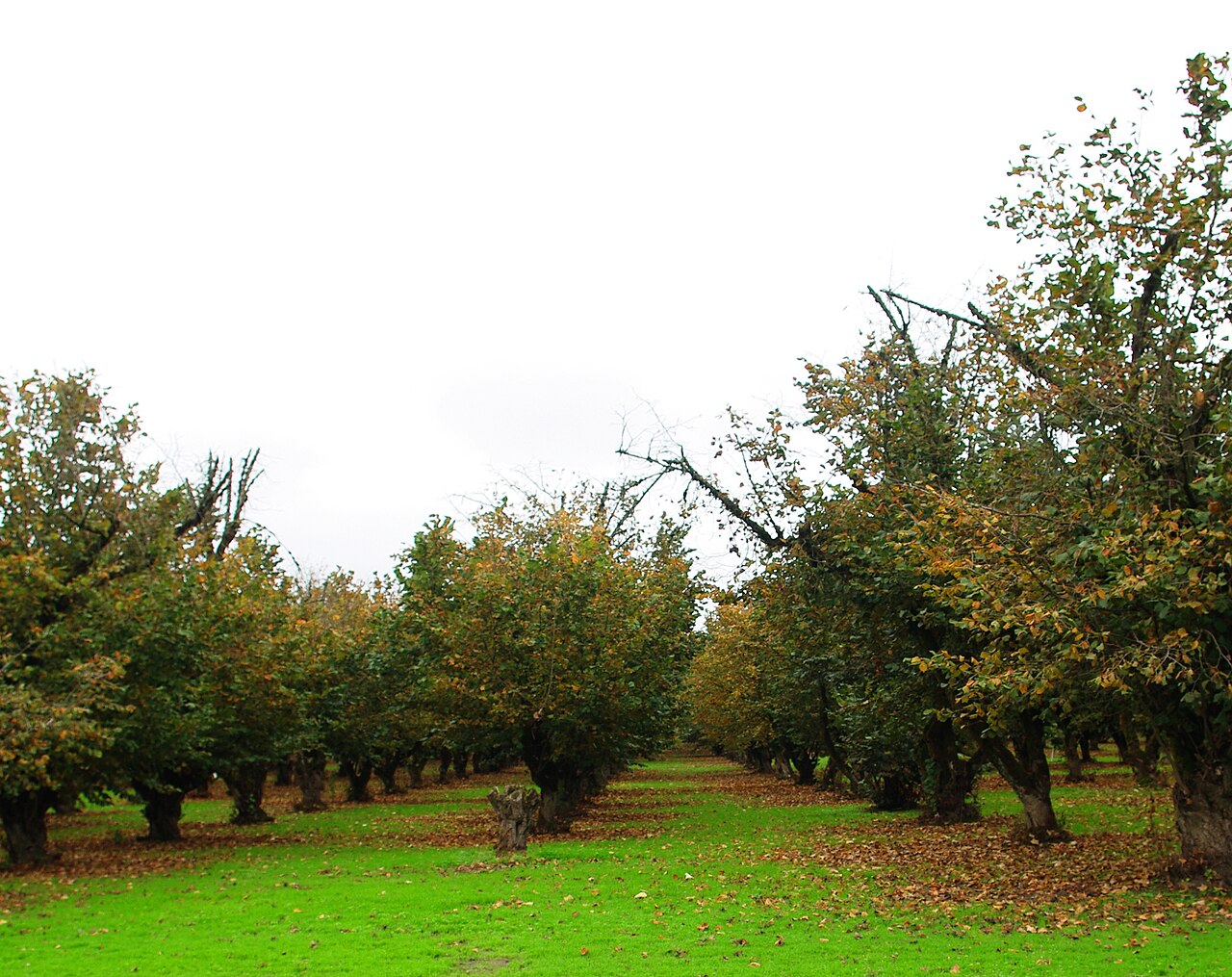
Why hazelnuts and is it right for you
Organized hazelnut cultivation in Croatia has a long but interrupted history. Production emerged in the 1970s, and the first major expansion occurred in the 1980s when PP Orahovica established approximately 230 hectares of orchards, and the "Kraš" factory, through the Commercial Bank, initiated the establishment of nearly a hundred plantations to secure a raw material base. These connections were later severed, forcing producers to navigate the market independently. A new wave of interest arrived in the early 2000s, when the state introduced incentive measures, and it became clear that hazelnuts could be successfully cultivated in continental conditions, not just in their wild form.
Before you begin, be aware of two key facts derived from the literature:
- Hazelnut is heliophilous and thermophilic — it loves light and heat; it is a Mediterranean plant origin and does not tolerate frequent temperature fluctuations well. In the continental part, sheltered positions should be chosen.
- The main cost is not planting, but harvesting and processing mechanization. This is the most frequently cited problem for Croatian producers. Expensive equipment (vacuum harvester/combine, dryer, grader, cracking machine) is often acquired through service contracts or cooperation.
Check before investing
Before planting, an economic profitability analysis is recommended. Only after that does the technical part follow — soil analysis and cultivar selection. The sequence "first the calculation, then the shovel" saves years.
Decision sequence: Overview of the producer's path
Establishing a hazelnut orchard generally follows the same steps as establishing any other fruit orchard. The logical sequence of decisions is as follows:
| Step | Decision / Action | Approximate timeline before planting |
|---|---|---|
| 1 | Economic profitability analysis and market assessment | 12+ months |
| 2 | Site selection and evaluation (climate, exposure, water) | 12 months |
| 3 | Soil analysis (pedological) and fertilization recommendation | 9–12 months |
| 4 | Selection of main cultivar and pollinizer cultivars | 9–12 months |
| 5 | Ordering certified saplings | 6–12 months |
| 6 | Soil preparation: clearing, meliorative fertilization, deep ripping/subsoiling | Summer before planting |
| 7 | Layout design (spacing, blocks, roads, pollinizers) | Before planting |
| 8 | Planting (preferably in autumn) | Autumn |
| 9 | Care in the first years + irrigation | Years 1–4 |
| 10 | Entering production (3rd–4th year) and full production (5th–8th year) | — |
Steps 1–2: Site selection, climate, and position
Hazelnut thrives best on moderately moist, medium-depth, humus-rich soils with favorable structure, and tolerates calcareous loams and stony soils well. The recommended pH range is 6.0 to 8.0.
Regarding regions:
- The most favorable is the Mediterranean part, especially Istria — milder winters and heat suit the heliophilous plant.
- In the continental part, sheltered positions with a gentle slope are preferred, where the risk of late spring frosts and sudden temperature changes is lower.
In Dalmatian/coastal conditions, producer experiences emphasize that the microclimate of the plot is crucial, and due to the smaller number of growers, it is harder to rely on others' experiences, making local knowledge of the terrain increasingly important.
Water is part of site selection
Intensive production is practically impossible without irrigation, especially in the first years. When selecting the plot, check the water source and pumping possibilities (often requiring appropriate permits/expert reports).
Step 3: Soil analysis and meliorative fertilization
After deciding to establish the orchard, the first technical step is soil analysis to determine nutrient status and define remediation measures. Based on pedological analyses and expert recommendations, NPK (meliorative) fertilizer is spread widely before deep ripping.
Soil preparation includes:
- Clearing and leveling the surface.
- Meliorative fertilization according to soil analysis.
- Deep tillage — subsoiling and plowing, or deep ripping. This reduces compaction, improves porosity, and allows for better root development.
Reference figures from the literature:
| Parameter | Value (informative) | Note |
|---|---|---|
| Ripping depth | 50–70 cm | Greater on drier soils |
| Optimal time for ripping | July – first half of August | When soil is maximally dried |
| Soil pH | 6.0–8.0 | Favorable range |
Quantities and products are informative and depend on the soil analysis result, cultivar, and location — develop a fertilization recommendation with an agronomist/advisory service.
Step 4: Cultivar selection and — mandatory — pollinizers
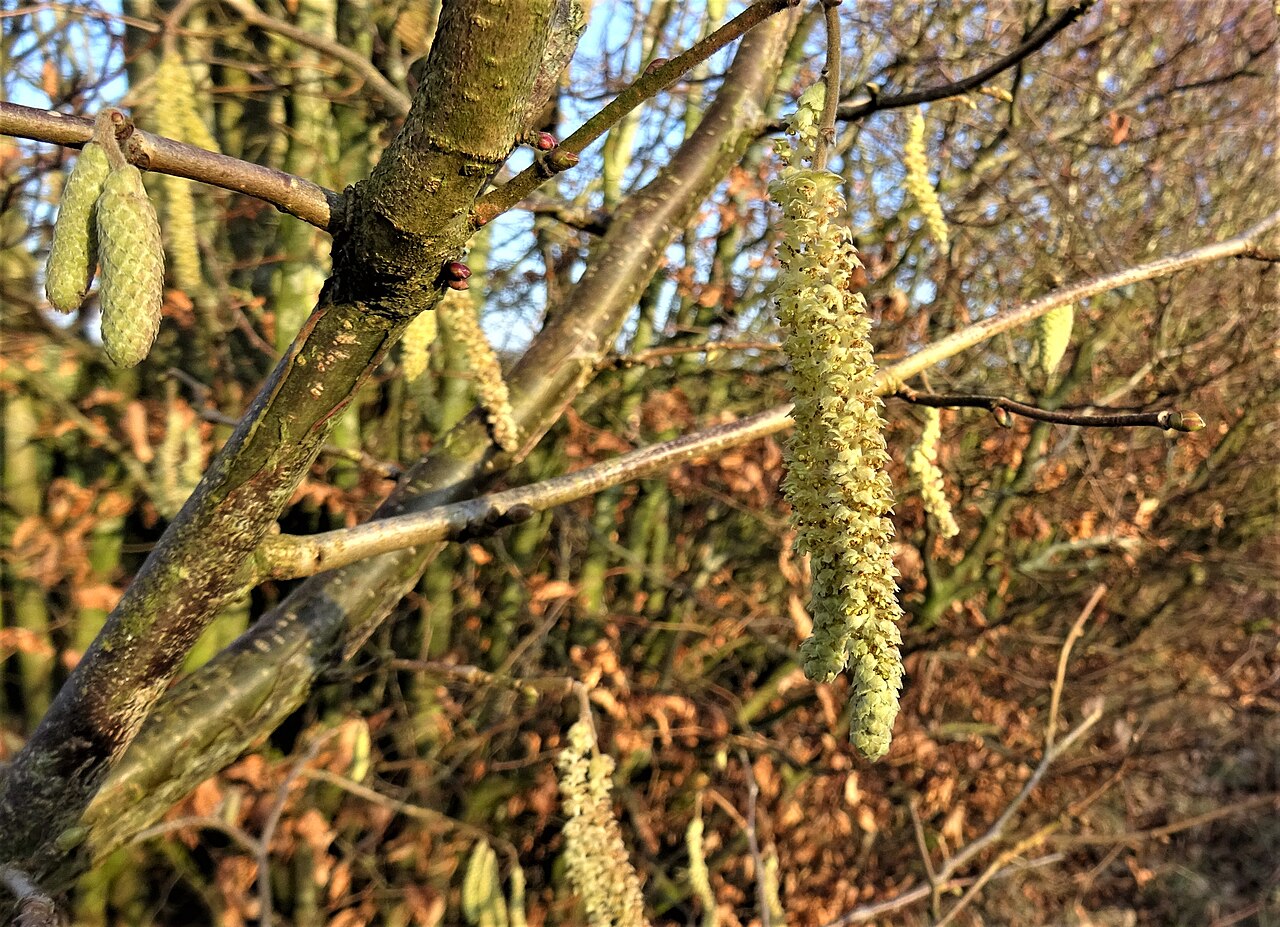
Cultivar selection is often cited as the first step in establishing the orchard because the entire subsequent technology (cultivation, harvest, processing) and market adaptation depend on it. This is where the most common beginner mistake lies: hazelnut is largely autosterile (self-incompatible), so a single cultivar does not guarantee a reliable crop.
Rule of thumb from practice:
- Plant 1 or 2 main cultivars along with 2 or 3 pollinizer cultivars.
- Cultivars bloom at different (or at least approximately similar) times, so pollinizers must cover the flowering period of the main cultivar temporally — the recommendation is early, mid, and late pollinizers so that pollen is available throughout the entire period of female flower blooming.
Frequently mentioned cultivars in Croatian conditions:
| Type | Cultivars | Note |
|---|---|---|
| Main (continental) | Istarski duguljasti, Rimski (Tonda romana) | Istarski duguljasti dominates in part of the plantations |
| Main (coastal) | Tonda gentile delle Langhe, Tonda gentile romana, Tonda di Giffoni | Italian cultivars |
| Decorative/Additional | Crvenolisni Lambert | In the orchard alongside other cultivars |
Hazelnut is most commonly grown on its own roots in Croatia; saplings are produced by ring grafting and budding root suckers. For planting, well-developed rooted shoots are used, and better results are achieved with two-year-old saplings. A smaller portion of orchards are planted with grafted saplings on Corylus colurna (Turkish hazel) rootstock, which does not produce root suckers.
Distribute pollinizers throughout the orchard
In denser orchards, it is common to place a pollinizer approximately as every third tree in every third row (3 × 3 layout), so that pollen is evenly available. Wind is the main pollen vector, so pay attention to the prevailing wind direction.
Steps 5–7: Spacing, training system, and orchard layout
Planting spacing and number of saplings
Spacing depends on the training system, terrain, and mechanization you plan to use.
| Purpose / System | Spacing (informative) | Approx. plants/ha |
|---|---|---|
| Small homesteads/gardens | 3.5 × 4.5 m | ~ 600 |
| Plantation cultivation with mechanization | (4–5) × (5–6) m | ~ 330–500 |
| Bushy vase | 4 × 4 or 4 × 5 m | ~ 500–625 |
| Standard trees | 4 × 3 m | ~ 830 |
For subsidies, practice indicates that you should plant at least around 300 saplings per hectare to qualify for support — always verify this in current calls for proposals as conditions change.
For comparison, the literature cites specific Croatian projects: an orchard of 12.2 ha with 6,800 saplings (≈ 557/ha) divided into 4 blocks, and a large investment of 136.5 ha with a planned 109,200 saplings (≈ 800/ha in the planting area) — illustrating the range of densities from extensive to denser layouts for easier mechanical harvesting.
Training system
The most common training system in Croatia is the modified bushy vase, which best suits the hazelnut's needs for light and growth. Typically, a vase with four primary branches and secondary branches every ~50 cm is formed. In newer orchards, there is an increasing trend towards the tree training system and denser layouts, as they facilitate mechanical harvesting and reduce the problem of root suckers.
Layout and blocks
Larger plots are divided into blocks connected by technological roads, with areas for machinery turning and, if necessary, water accumulation for irrigation. Even at the design stage, include the layout of pollinizers (see above).
Step 8: Planting
Timing: Autumn planting is recommended; spring planting is possible but less recommended. If planting in spring, it is good to prepare the holes already in autumn, so the soil can "settle" over winter and saturate with moisture.
Practical planting procedure (synthesis from multiple sources — figures are informative):
- Prepare a planting hole of approximately 60 × 60 cm, depth ~50 cm (other sources mention a hole diameter/depth of around half a meter).
- Add humus and mineral fertilizer to the bottom (orientational ~0.5 kg mineral fertilizer and ~10 kg humus per hole), along with wetting the hole with water.
- Place the sapling so that the root collar remains about 5 cm above soil level; fill the hole, compact the soil, and if necessary, drive in a stake and tie the sapling.
- Water generously immediately after planting (cited as 30–40 L per bush, other sources 3–5 buckets), regardless of whether the soil is moist.
- After water absorption, mulch the zone around the trunk with a layer of humus/sawdust/peat 3–5 cm thick (sometimes 30–50 mm).
- After planting, the bush can be pruned to ~30 cm above soil level to form the shape.
Dosages are orientational
Quantities of fertilizer, water, and mulch vary among sources and depend on soil, cultivar, and climate. Align them with the soil analysis result and local practice.
Step 9: Care in the first years
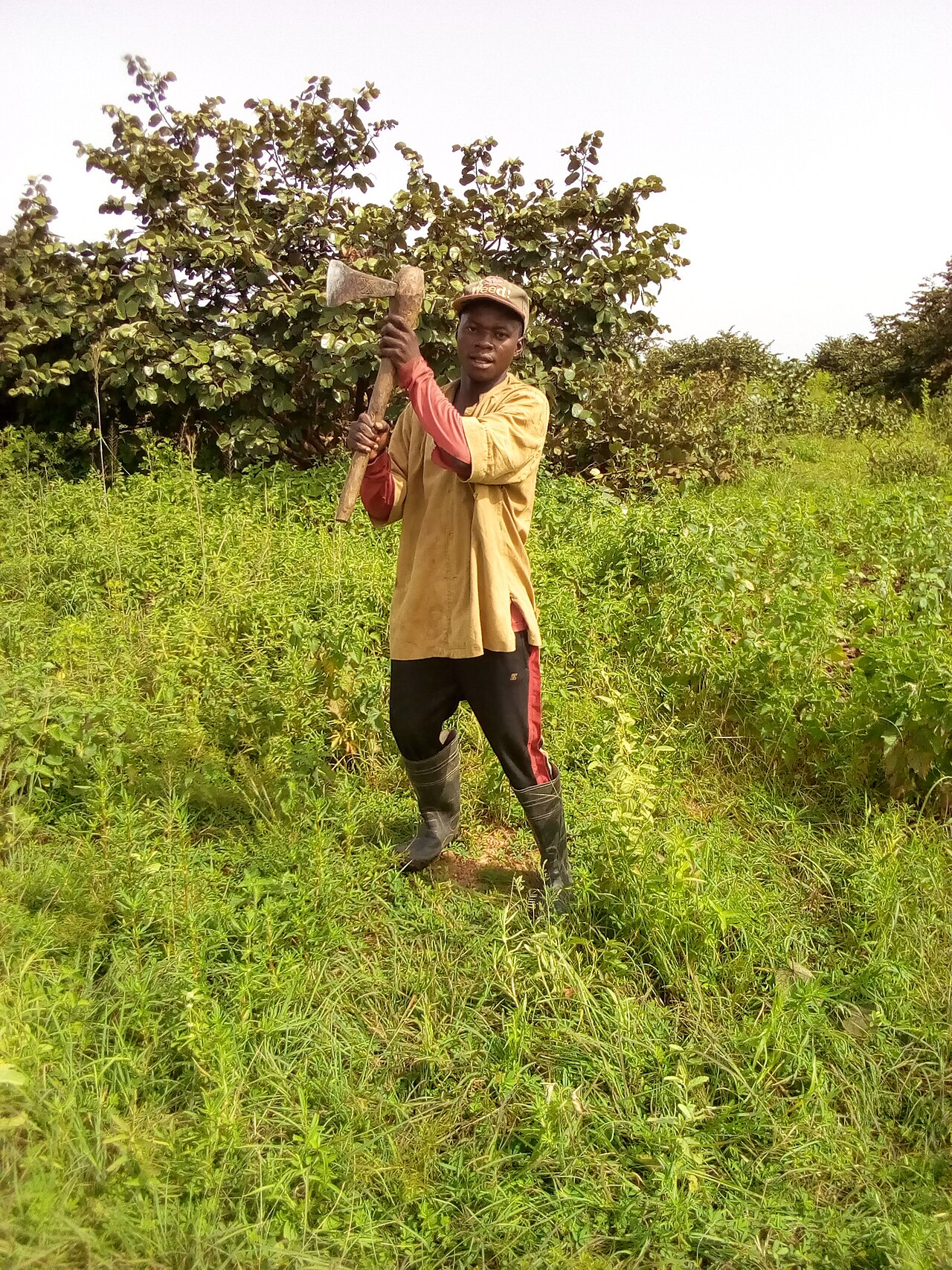
In the first years, the goal is survival and the development of a strong root system and plant skeleton. Based on Croatian technical reports, agronomic interventions during the first 3–4 years typically include:
- Manual pruning (formative) and gathering of pruned branches.
- Fertilization — nitrogen in early spring during the first years; later, NPK complex in autumn and CAN (calcium ammonium nitrate) in spring.
- Hoeing between rows and cultivation around young seedlings (removing weeds, aerating the shallow root zone).
- Protection (using ecological preparations in organic orchards).
- Irrigation — regular, especially in summer.
Approximate figures for care (informational, from literature):
| Intervention | Approximate Value | Note |
|---|---|---|
| Watering after planting | One week after planting, then ~every 30 days | ~6–7 times during the growing season |
| Watering rate | ~30–50 L per plant | depends on soil and weather |
| NPK (from Croatian reports) | ~150 kg/ha | according to recommendations for the specific orchard |
| Irrigation (report) | up to ~2,500 L per tree annually | project value |
| Pruning | ~3 cuts per tree annually | formative phase |
Hazelnut roots are shallow, so cultivation must be shallow. In the first 2–3 years in continental, cooler areas, shoots may need to be protected from winter (using cover material or bending branches for covering).
Timeline: from idea to first harvest
Hazelnut starts bearing in the third or fourth year, but only in a small percentage — at this stage, harvest is still mostly manual. It enters full production between the fifth and seventh (sometimes seventh–eighth) year.
| Phase | Year since planting | What to expect |
|---|---|---|
| Preparation and planting | 0 | trenching, planting, mulching |
| Development | 1–3 | formative pruning, care, irrigation |
| Start of bearing | 3–4 | small, symbolic yield; manual harvest |
| Increasing yield | 5–6 | yield increases year by year |
| Full production | 5–8 | stable yields, transition to mechanical harvest |
Yields in full production (informational):
- per plant: 4–10 kg (other sources cite 8–12 kg per tree in full production, of which ~50% is shell);
- per hectare: approximately 2.2–3.6 t/ha, depending on training system, density, and age.
Harvest and post-harvest
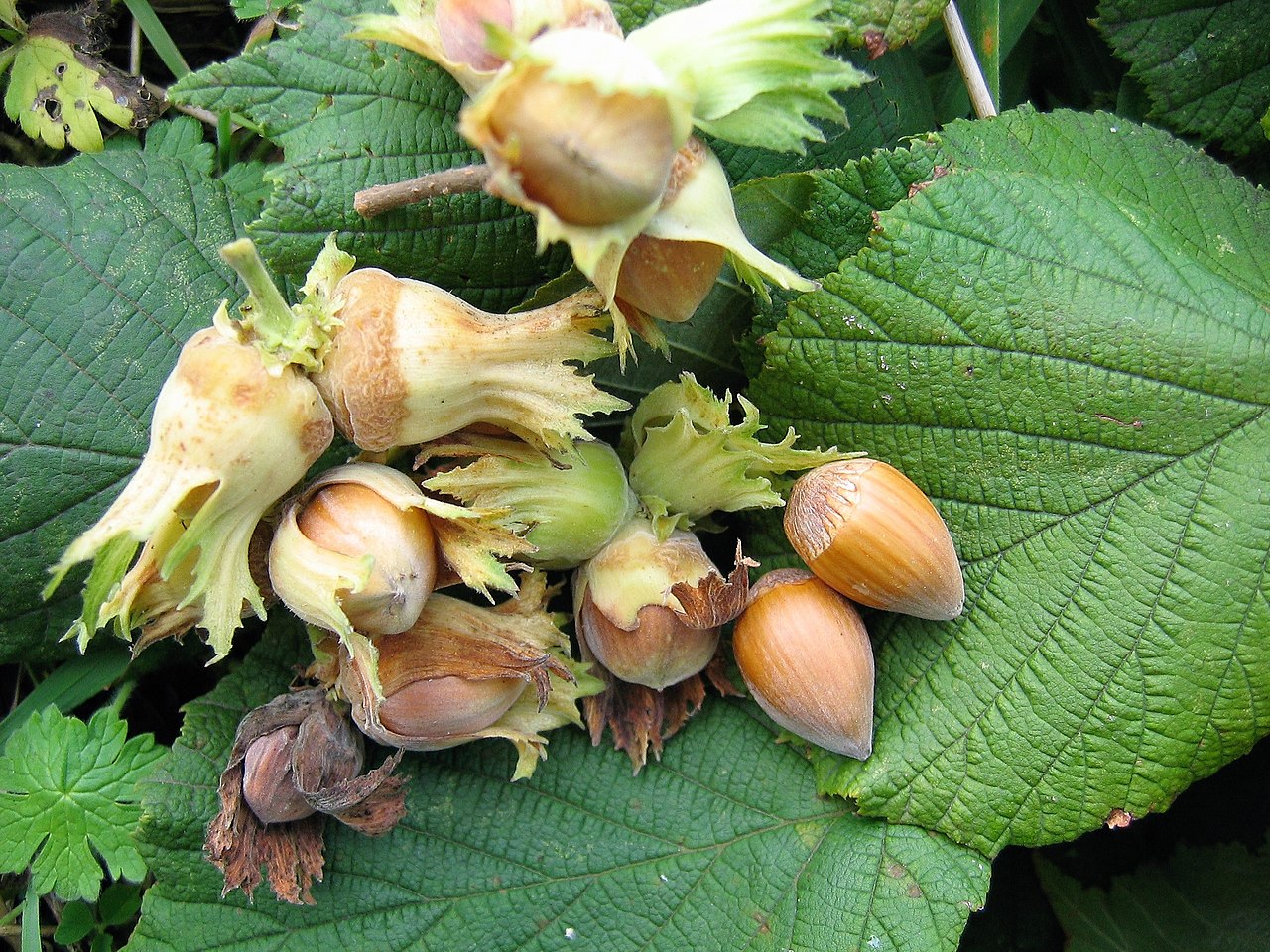
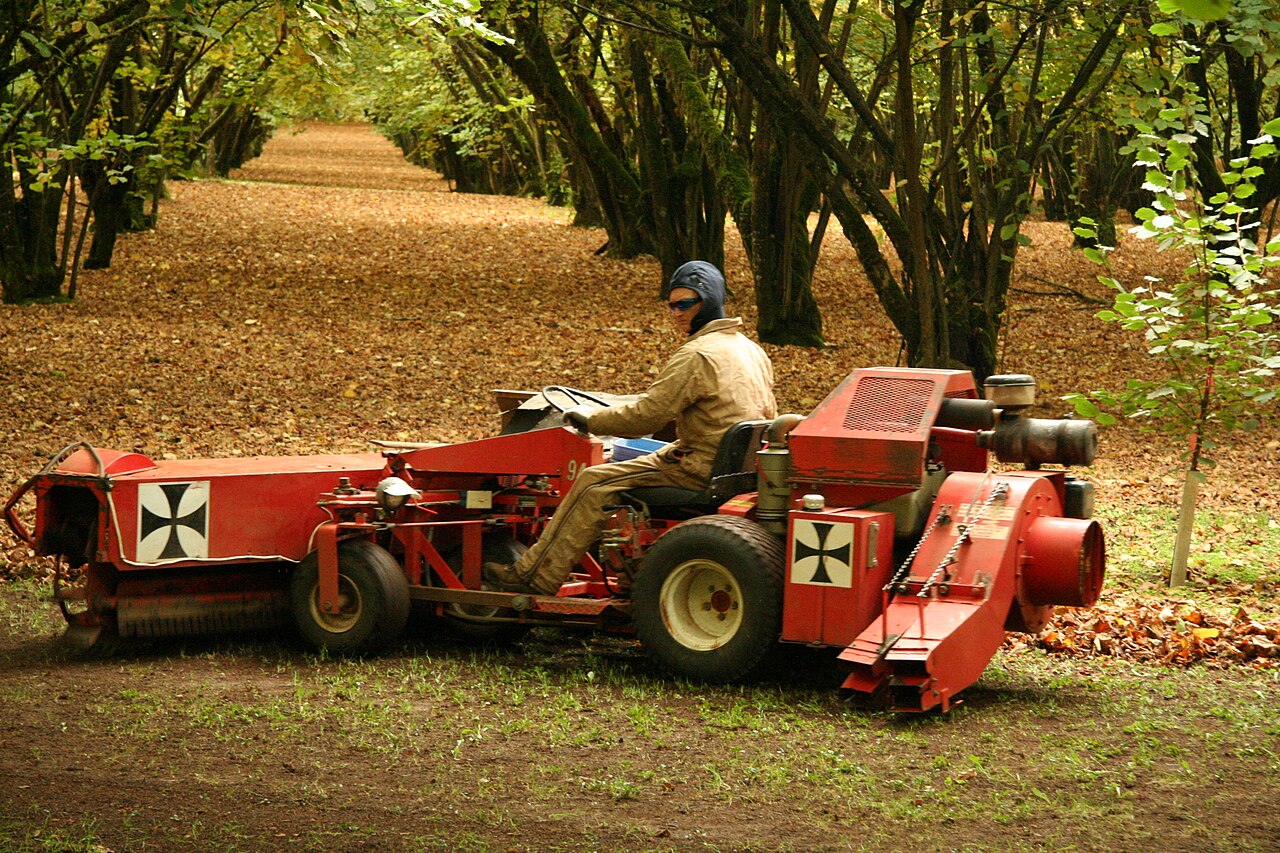
Harvest usually takes place from late July to early October, most commonly from late August to mid-September, in intervals of two to three weeks, as nuts do not ripen simultaneously. Nuts are ripe when they change color to yellowish-brown and fall off the husk to the ground. They are gathered by raking and vacuuming (or with a harvester in larger orchards). At harvest, the nut contains ~30–35% water, so it must be dried (up to ~40 °C) until moisture drops to ~10%; before processing, it is usually dried for three to four weeks in a dry, ventilated place.
Regulations, incentives, and ecology
- Incentives: To qualify for support, there is usually a minimum number of plants per hectare (often cited as around 300/ha) — conditions change, so check current calls for proposals (e.g., APPRRR / Ministry of Agriculture).
- Environmental permits: For larger orchards and irrigation (pumping groundwater) in Croatia, environmental protection reports are prepared and an opinion from the competent authority (county) is obtained regarding whether an environmental impact assessment is required. For some orchards, it has been determined that the procedure is not necessary, but this is resolved on a case-by-case basis.
- Organic production: Part of the orchard is established under organic production systems (protection with ecological preparations, removal of root suckers), which can bring additional support and market advantage.
Practical recommendations and common mistakes
Recommendations
- Start with an economic analysis and market assessment, and only then with soil and cultivars.
- Always perform a soil analysis and corrective fertilization before trenching.
- Plant multiple cultivars (main + 2–3 pollinizers) and distribute pollinizers throughout the orchard.
- Plan irrigation from day one; without water, there is no intensive production.
- Choose two-year-old, certified seedlings from a reliable nursery.
- Adjust spacing and training system to the mechanization you will use for harvest.
Common mistakes
- Planting a single cultivar without a pollinizer → poor or no yield.
- Wrong site (cold frost pockets, shaded locations) for a heliofilous (sun-loving) plant.
- Too-deep cultivation near the shallow root system and lack of mulch.
- Underestimating the cost of harvest and drying — this is the main financial burden, not planting.
- Expecting a quick return: full production only after 5–8 years.
Sources
This article is an AI summary generated from an internal collection of hazelnut literature (RAG corpus of technical papers, reports, and web sources) and publicly available sources. Data, dosages, and timelines are informational — verify them in official sources and with the advisory service before application. Main sources used:
- Vujević P. et al., State and Importance of Hazelnut Cultivation in the Republic of Croatia (2018.) — RAG corpus.
- State and Trends in Hazelnut Production and Consumption in Croatia (2017), doi:10.31727/gzb.42.3.9 — RAG corpus.
- Environmental Protection Report — Establishment of a Permanent Hazelnut and Plum Orchard, Grubišno Polje (2020.) — RAG corpus.
- Environmental Protection Report — Establishment of a Hazelnut Orchard and Groundwater Pumping, Donji Hrastovac, Municipality of Sunja (2021.) — RAG corpus.
- Business Plan for Hazelnut Seedling Production (2019.) — RAG corpus.
- Huzjak A., Technology and Economics of Organic Hazelnut Production on OPG Hobolić Alen (2021.) — RAG corpus.
- Economic Analysis of Hazelnut Production (2023.) — RAG corpus.
- Economics and Establishment of a Hazelnut Orchard on OPG Balog (2021.) — RAG corpus.
- Ministry of Agriculture — Advisory Service, Hazelnut Cultivation (Guide) — https://savjetodavna.mps.hr/wp-content/uploads/2025/03/Uzgoj-lijeske.pdf
- Advisory Service, From Planting to Hazelnut Harvest — https://savjetodavna.mps.hr/2017/10/24/od-sadnje-do-berbe-lijeske/
- Agroklub, Incentives for Beginners: How Many Seedlings Are Enough — https://www.agroklub.com/vocarstvo/poticaji-za-pocetnike-koliko-je-sadnica-dovoljno-za-ostvarivanje-potpore/68271/
- Agroklub, Does Hazelnut Cultivation Have a Future and How to Make Money from Hazelnuts — https://www.agroklub.com/vocarstvo/ima-li-uzgoj-lijeske-buducnost-i-kako-zaraditi-na-ljesnjaku/93885/
- OSU Extension, Growing Hazelnuts in the Pacific Northwest: Orchard Design — https://extension.oregonstate.edu/catalog/em-9077-growing-hazelnuts-pacific-northwest-orchard-design
- OSU Extension, Growing Hazelnuts in the Pacific Northwest: Pollination and Nut Development — https://extension.oregonstate.edu/catalog/pub/em-9074-growing-hazelnuts-pacific-northwest-pollination-nut-development
- West Coast Nut, Orchard Layout in Hazelnut — https://wcngg.com/2021/10/01/orchard-layout-in-hazelnut-take-orchard-spacing-variety-and-equipment-into-consideration/