Weed control in the row and herbicide application
Content generated by artificial intelligence — verify before application
This article was automatically compiled from a collection of hazelnut literature using artificial intelligence and may contain errors or outdated information. It serves as a starting point for further research, not as professional advice. Dosages, products, and timing are informative and depend on the cultivar, location, and current regulations — always consult with an advisory service and official sources before application.
Weeds in hazelnut orchards are direct competitors with young and bearing shrubs for water, nutrients, and space, and in mature orchards, they become a serious obstacle to mechanized harvesting. Weed management in hazelnut is specific because the production area is clearly divided into the row (protective strip under the shrubs) and the inter-row space. In the row, complete cleanliness is aimed for — either by herbicide or mechanically — while the inter-row space is most often kept grassed and mowed regularly. This article consolidates recommendations from Croatian and regional hazelnut cultivation literature and experiences from global growing areas, focusing on chemical and non-chemical weed control in the row, herbicide selection and application, and why a clean strip is crucial for machine harvesting.
For space division, soil surface management system selection, and inter-row grassing, see the related article Soil Surface Management; here we focus exclusively on the row (protective strip) and herbicides.
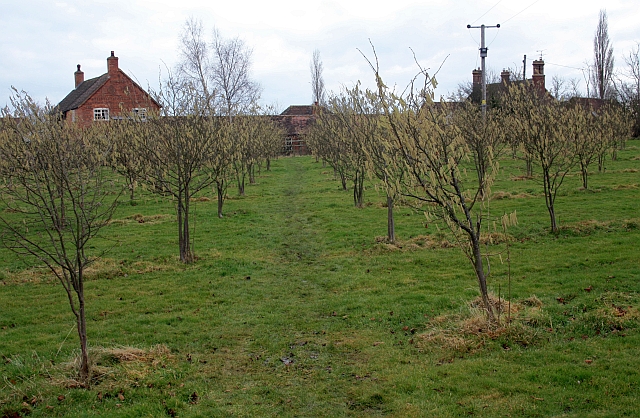
Why a clean row is critical specifically for hazelnut
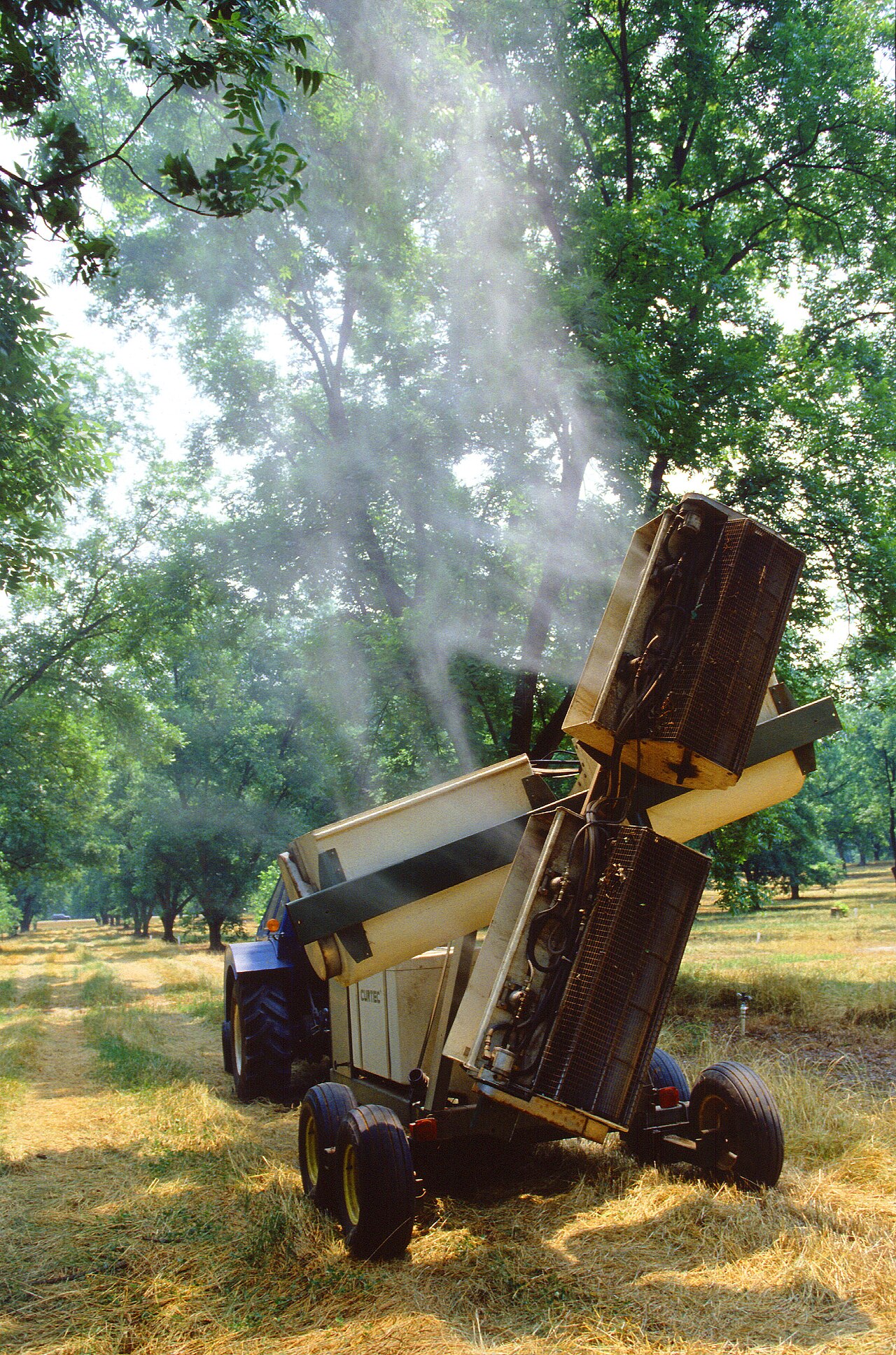
Hazelnuts are increasingly harvested mechanically, using collector machines, because manual collection of nuts from the ground is difficult and expensive, and the time window for quality harvesting is short. Mature hazelnut nuts fall to the ground beneath the shrub, where collector machines gather them from the soil surface. This means that harvest quality and speed depend directly on the soil condition in the row:
- Tall and dense weeds retain nuts, hinder their collection, and cause yield losses.
- Wet, weedy grass increases the proportion of impurities and moisture in the collected material, thereby increasing processing and drying costs.
- Fallen nuts in weeds are exposed longer to pests (hazelnut weevil), birds, and rodents, as well as faster deterioration.
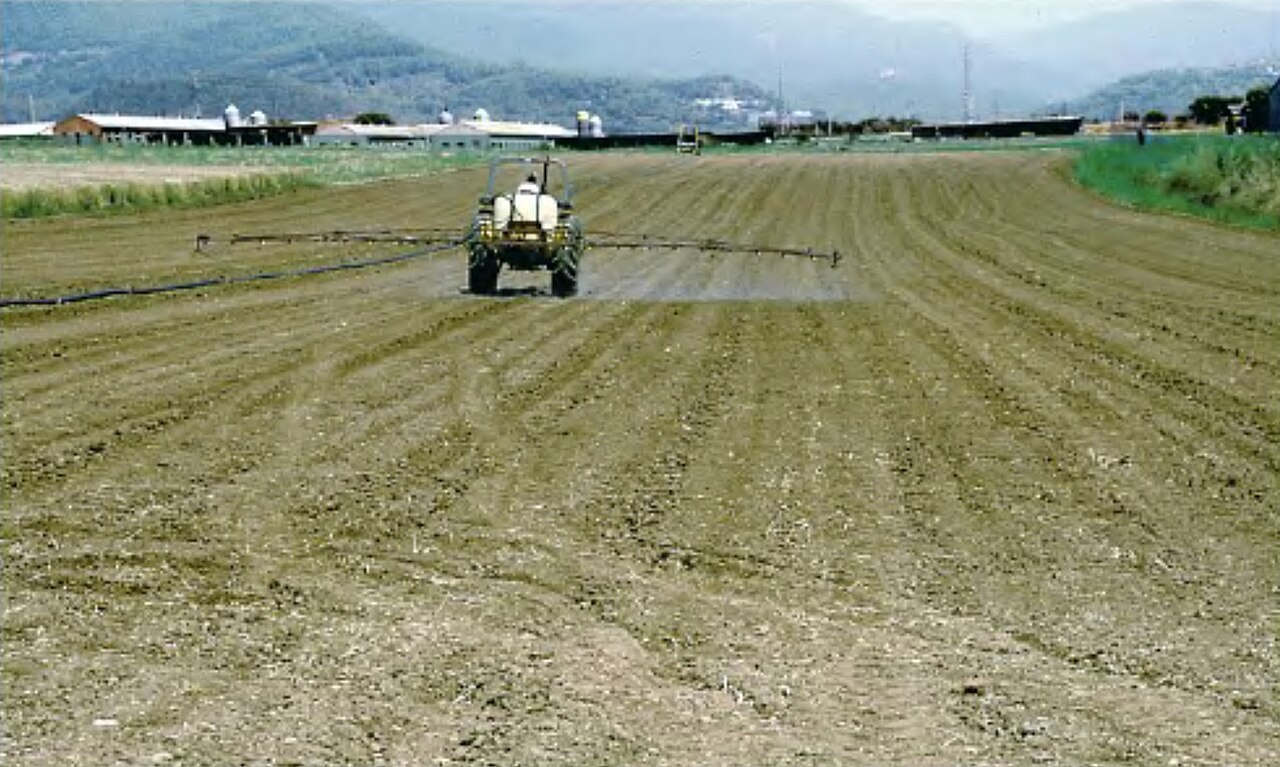
Therefore, literature explicitly states that in orchards with mechanized harvesting, keeping the soil in a grassed state (grassed over the entire surface) is not recommended, as this would hinder nut collection. Instead, the soil in the row is maintained as a clean strip (a sort of "fallow stubble" in the band under the shrubs), while the inter-row is grassed and mowed. The protective strip in the row must be completely free of weeds from early spring until autumn, especially in the first few years after planting.
Strip width rule
The protective (herbicidal) strip under the shrubs usually occupies about 30% of the inter-row width, or at most 1/3 of the distance between rows. The remainder (inter-row space) is kept grassed and mowed regularly.
Non-chemical weed control in the row
Non-chemical measures are the foundation of weed management in the early years of the orchard, in organic production, and in agri-environmental measures, but increasingly also in integrated production as a way to reduce pressure on herbicides. The EU "Farm to Fork" strategy and national programs for the sustainable use of pesticides encourage replacing chemical control with mechanical, thermal, and biological alternatives, so it is good to know the full range of options.
Mechanical methods
Mechanical weed control in the row is performed with machines with movable working bodies ("intra-row" mowers and cultivators), which operate within the row in the protective strip and automatically move away from the trunk using sensors. Main mechanical methods:
- Soil treatment in a strip (shallow cultivation, tilling, disc harrowing). From fruit growing practice: treatment must not be too deep — maximum around 10 cm — and is done only enough to suppress weeds, so as not to damage the shallow root system and stimulate moisture evaporation.
- Mowing / mulching (flail/impact mowers) in the row and inter-row; chopped weeds remain as cover.
- Harrow (comb harrow) and cultivation — on smaller ecological areas and hoeing.
The advantage of the mechanical approach is the absence of residues and weed resistance; disadvantages include the higher number of passes, fuel consumption, and the risk of trunk injury and stimulation of root suckers by cutting roots.
Mulching (covering)
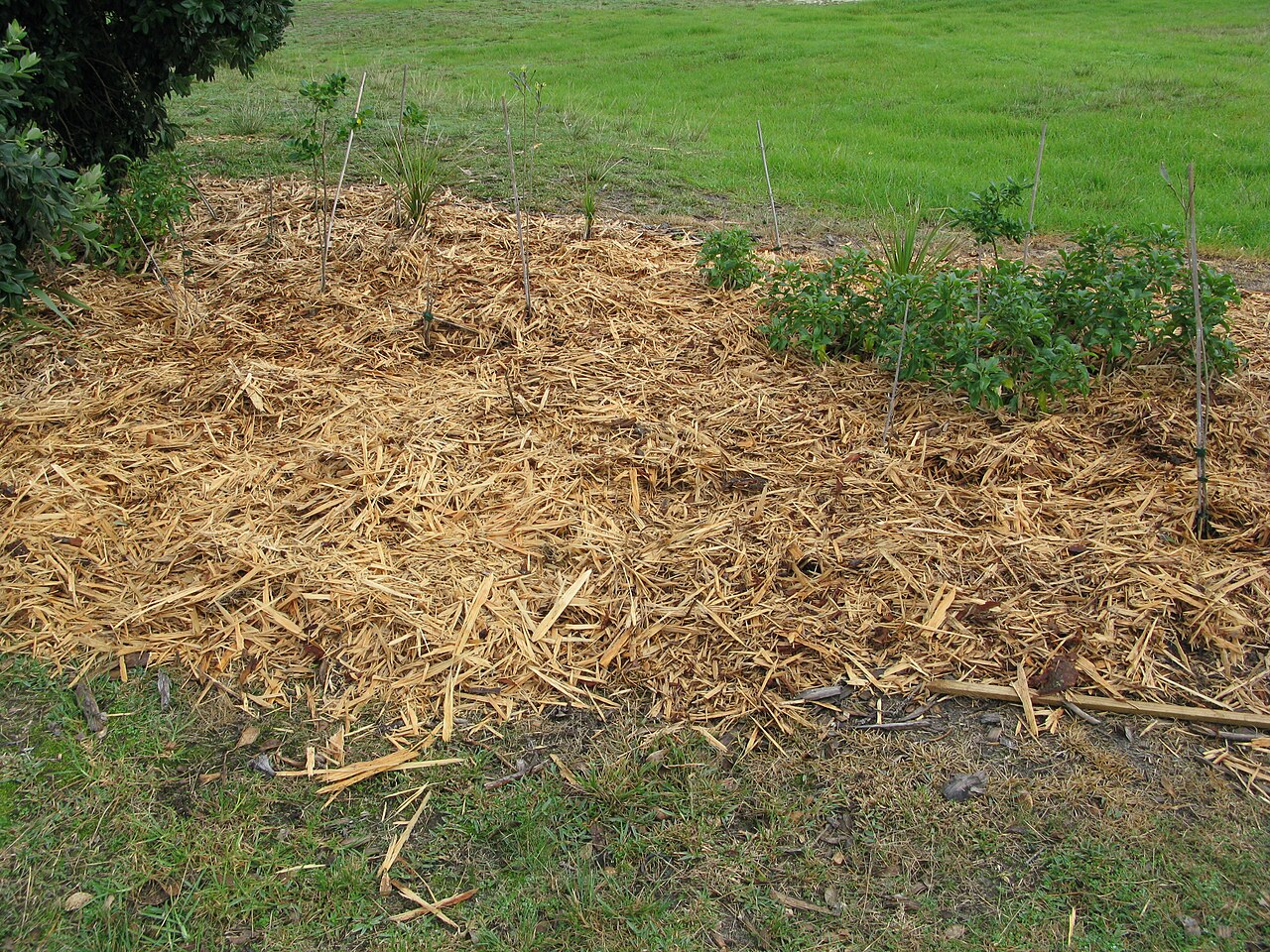
Mulching with cover material around the shrubs physically prevents weed germination and simultaneously reduces moisture evaporation:
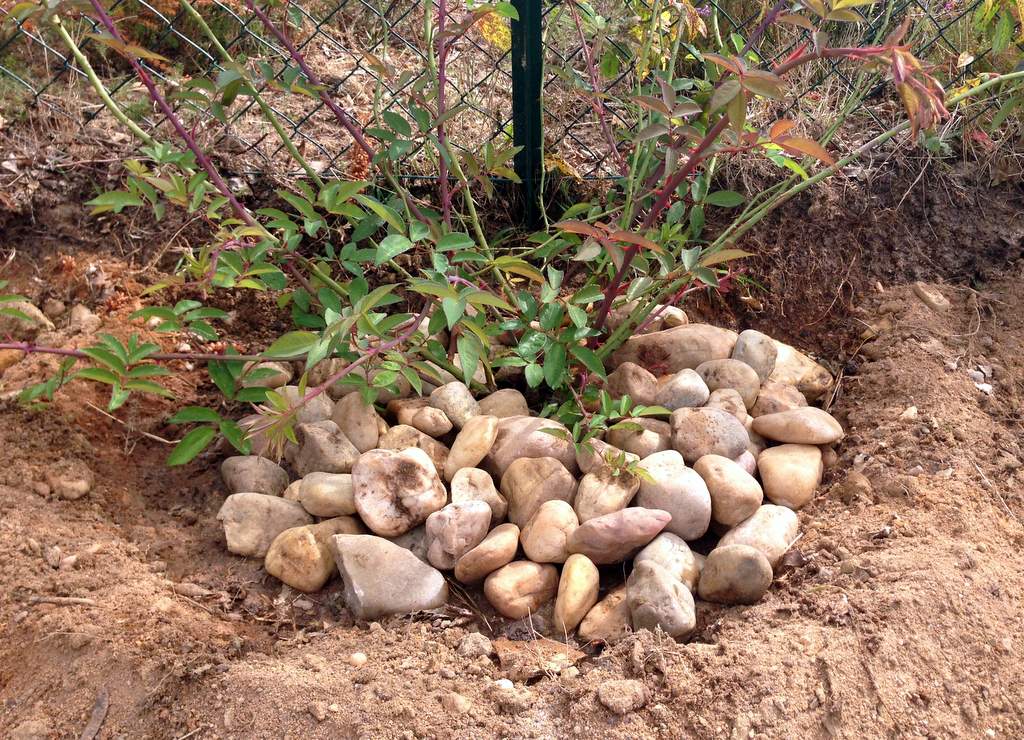
- Organic mulch (chopped wood material, straw, composted bark, hazelnut shells). In addition to weed suppression, it enriches the soil with organic matter.
- Fabric/film (agrotekstil) in the row — effective, but requires investment and careful placement around the trunk.
Thermal control
In ecological and sensitive orchards, thermal (flame) control of weeds using propane-butane torches is also used. Heat destroys the cell membranes of young weeds; the method leaves no residues, but consumes energy, is effective only on very young weeds (up to a few leaves), and requires caution due to fire risk and damage to the bark of young shrubs. It is more practical for individual treatment than for entire long rows.
Pelargonic acid (nonanoic acid) — "natural" contact herbicide
Pelargonic acid is a natural fatty carboxylic acid present in plants and animals (0.2–400 mg/kg), and as a herbicide, it has been registered in the USA since 1992 and is on the list of approved active substances in the EU (Regulation 1107/2009). It acts contact-wise: the lipophilic part destroys the cell walls of the epidermis and causes rapid drying of tissue — the effect is visible within two hours of application.
Key features for organic cultivation:
- Breaks down in soil into CO₂ and water, leaves no toxicological metabolites or residues, and poses no risk of air pollution — suitable for organic production and also listed as a biocide.
- No systemic action — does not destroy the root, so for perennial weeds, it only suppresses the above-ground part and requires repeated passes.
- Most effective in early weed development stages.
- Used for controlling root suckers (green shoots), mosses, algae, and lichens.
Status in Croatia
Although pelargonic acid is approved at the EU level, for a long time no preparation based on it was registered for agricultural use in Croatia. Before purchase and application, always check the current registration in the FIS database — the list changes.
First year = mechanics
In the first years after planting, herbicide application is generally not recommended, to avoid contact between the seedling (young, thin, and sensitive bark) and the herbicide. During this period, weeds in the row are controlled mechanically (and if necessary, by mulching). This is consistent with experiences from other perennial orchards, where weeds in the row and inter-row are removed only by non-chemical means in the first year.
Control of root suckers (green shoots)
In hazelnut, especially in orchards on own roots, a large number of root suckers (green shoots, "suckers") appear, which deplete the mother shrub and weed the strip. Their control is part of row management:
- Mechanical removal (cutting, pulling) — labor-intensive, but residue-free.
- Contact preparations (pelargonic acid; see pirflufen-ethyl below) — applied while the shoot is young and not lignified, up to a length of about 15 cm.
- Sucker control can be combined with weed correction in the protective strip in the same pass.
Change in permitted substances for suckers
Croatian research from earlier years (Bošnjak, 2013.) cited high efficacy of glufosinate, diquat, paraquat, and flumioxazin for controlling suckers — most of these substances are now banned in the EU/Croatia. Paraquat and diquat (Reglone, Gramoxone) were withdrawn in January 2015 due to harm to birds and beneficial insects, and glufosinate (Basta) after 2018 (see next chapter). Today in Croatia, a preparation based on pirflufen-ethyl (Mizuki) is used for suckers.
Chemical Weed Control and Herbicide Selection
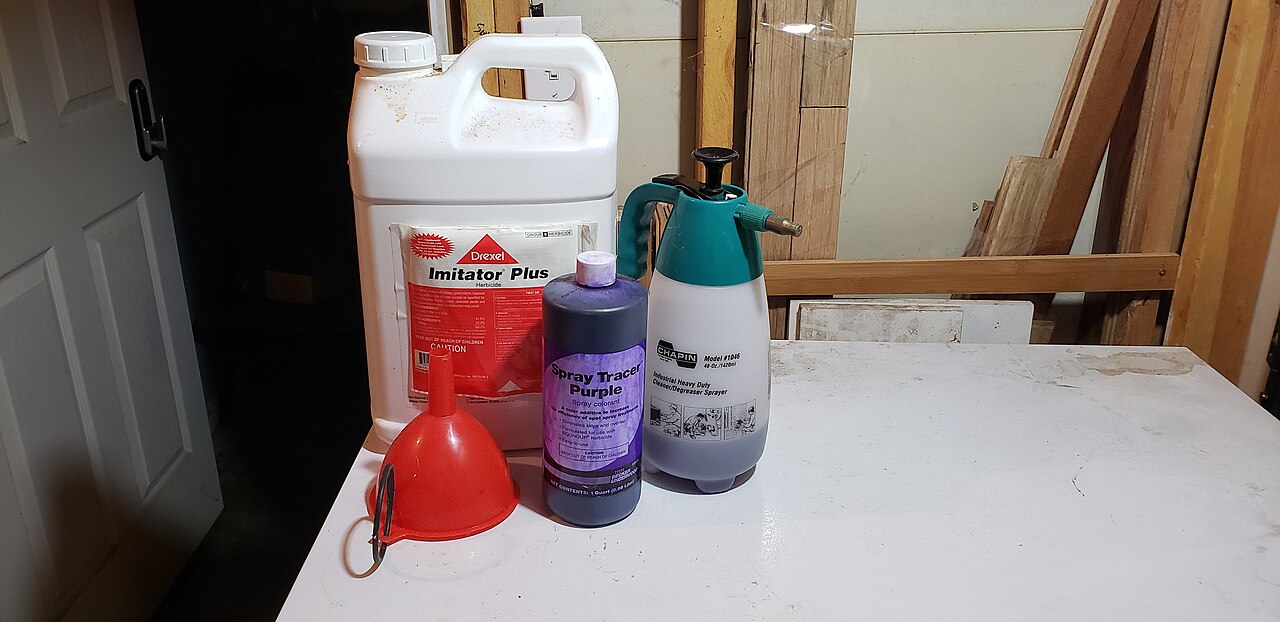
Herbicides in hazelnut orchards are applied in the strip under the bushes (row/protective belt), not over the entire surface. The professional community maintains a constant warning: the number of registered preparations for hazelnut is very small and tends to decrease further. In recent years, several active substances have been withdrawn from the EU market, so it is crucial to clearly distinguish what is actually permitted versus what is merely illustrative data taken from programs for other crops (fruit growing, viticulture, raspberry cultivation).
Regulatory Status of Key Active Substances (EU/HR)
| Active Substance | Status in EU/HR | Note |
|---|---|---|
| Glyphosate | Approved in EU until 15 December 2033. | Renewal by Implementing Regulation (EU) 2023/2660 of 28 Nov 2023; individual preparations for hazelnut must be separately registered in the FIS |
| Fluazifop-P-butyl (graminicide) | Approved in EU (check preparation/crop in FIS) | Selective for narrow-leaved plants (grasses) |
| Pelargonic acid | Approved in EU | Check preparation status for HR in FIS |
| Pyrifluquinazon (Mizuki) | Available in HR, contact action | Primarily for shoots/broad-leaved weeds |
| Glufosinate-ammonium (Basta 15) | WITHDRAWN / BANNED in EU since 2018. | Due to potential reproductive toxicity; must not be applied in HR |
| Paraquat, Diquat (Reglone, Gramoxone) | Withdrawn (January 2015) | Harmful to birds and beneficial insects |
| Flumioxazin | Check current status in FIS | Previously used for shoots; status has changed |
Glufosinate is withdrawn — do not use
Glufosinate-ammonium (Basta 15 SL) was long the main active substance for "diserbo e spollonatura" (weed and sucker control) in hazelnut orchards in Italy and elsewhere, but it was approved in the EU only until 2018, after which it was banned due to presumed reproductive toxicity. It is therefore banned in the Republic of Croatia. Older programs and literature citing it are outdated — you must not purchase or apply glufosinate-based preparations.
Glyphosate — what renewal until 2033 means
After years of controversy and a citizen initiative with over a million signatures, the European Commission at the end of 2023 (when member states failed to achieve a qualified majority) itself renewed the approval of glyphosate for 10 years, until 15 December 2033. This means that the active substance is permitted at the EU level, but this does not guarantee that every specific preparation is registered specifically for hazelnut in HR — preparation registration and approved crops are checked in the FIS.
Herbicide Groups by Mode of Action
| Group | Example Active Substance | Action | Typical Use in Row |
|---|---|---|---|
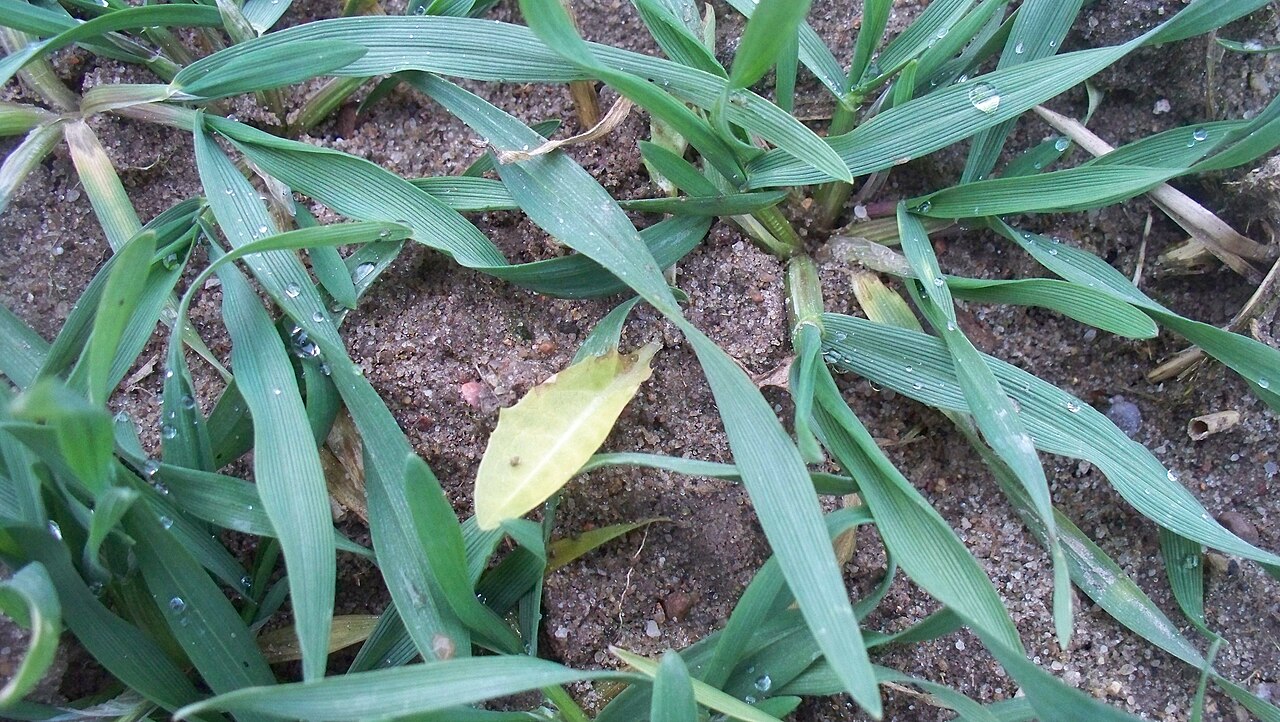
| Total, systemic (translocating) | glyphosate | Penetrates through leaf to root | Perennial and annual weeds in the belt |
| Selective for narrow-leaved (graminicides) | fluazifop-P-butyl | Controls grasses, sparing broad-leaved plants | Grassy weeds in the belt |
| Contact ("natural") | pelargonic acid | Burns above-ground parts, no residues | Quick "cleaning" of young weeds, suckers; eco-friendly |
| Contact (synthetic) | pyrifluquinazon (Mizuki) | Burns above-ground parts of broad-leaved plants | Suckers and resistant broad-leaved weeds |
Registration is mandatory
The list of active substances and registered preparations changes from year to year and differs by country. In Croatia, before every application, check the valid registration in the Phytosanitary Information System (FIS), Ministry of Agriculture — https://fis.mps.hr/trazilicaszb — and always follow the preparation label. All doses and concentrations listed below are informative, taken from literature, and depend on cultivar, location, weed flora, and permissions.
What is Actually Permitted in Hazelnut vs. What is Illustrative
It is very important to distinguish two levels of data:
- Actual choice for hazelnut in HR is limited to a small number of contact and systemic options (e.g., glyphosate preparations registered for perennial plantings; pyrifluquinazon/Mizuki for suckers; pelargonic acid if/when a registered preparation exists). In emergency situations, it is possible, in accordance with Art. 53 of Regulation (EC) 1107/2009, to obtain temporary permission (maximum 120 days) for an unregistered substance.
- Illustrative data from other crops. Doses such as those for Herkules, Kabuki 2.5 EC, or Spektrum come from protection programs for fruit growing, viticulture, and raspberries and serve only as an orientation on the order of magnitude and purpose, and are not proof of registration for hazelnut.
Informative Doses and Concentrations from Literature (ILLUSTRATIVE — not proof of registration for hazelnut)
| Preparation / Substance | Informative Dose | Purpose | Source (Context) |
|---|---|---|---|
| Glyphosate (solution) | 1% (1 L per 100 L water) | Most effective on weeds 5–15 cm high | Orchards/vineyards (advisory) |
| Glyphosate 480 g/L | 2–12 L/ha; pre-harvest interval 35 days (fruit, grapevine) | Annual and perennial narrow-leaved and broad-leaved weeds | Protection program (Galenika, 2025) |
| Kabuki 2.5 EC | 0.8 L/ha (weed 15–20 cm) | Annual shoots/weeds of raspberry | Regional program (raspberries) |
| Spektrum | 0.8–1.3 L/ha | Annual and perennial narrow-leaved weeds | Regional program |
| Mizuki (pyrifluquinazon 10.6 g/L) | up to 2.0 L/ha | Broad-leaved weeds and suckers, contact action | Label (Belchim) |
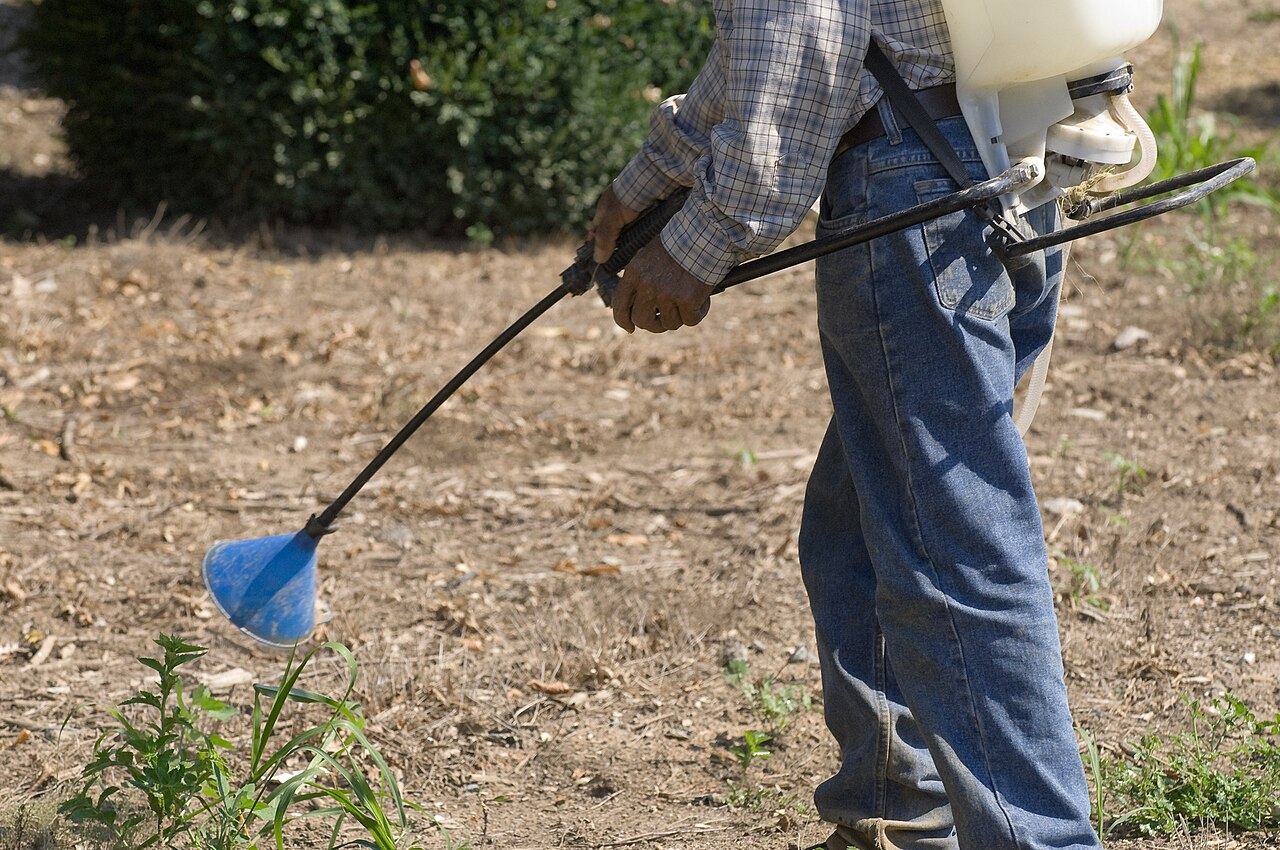
Spray volume (water): for strip ("band") application under bushes, 200–300 L of spray per hectare is recommended. Glyphosate is most effective on weeds 5–15 cm high, and for optimal action, it is desirable that no rain falls for 24 hours after application.
Timing and Application Conditions
- Time of day: early morning or afternoon, without wind, to avoid drift onto bushes and neighboring crops.
- Weed phenological stage: act while the weed is young and actively growing (5–15 cm for glyphosate); treat perennial weeds (dandelion, thistle, bindweed) during the phase of intensive growth / beginning of flowering.
- Season: glyphosate preparations work best in autumn, after harvest; some residual preparations are applied only in spring (check label).
- Trunk protection: prevent contact of herbicide with the trunk and green parts of the bush; for young bushes, use shields or protective tubes on the trunk.
- Bees and environment: do not treat during bee flight periods; soil (residual) herbicides should generally be applied no more than once a year.
Managing Weed Resistance
Repeated, exclusive use of glyphosate has led to the emergence of resistant weeds in hazelnut orchards worldwide (e.g., glyphosate-resistant Italian ryegrass; research in Oregon has also shown populations resistant to glufosinate). To avoid this:
- Rotate modes of action — do not rely solely on glyphosate; introduce graminicides or contact preparations with different modes of action.
- Combine mechanics and chemistry — periodic cultivation/mowing reduces pressure on herbicides and breaks the cycle of resistant populations.
- Control early and completely — preventing weed seeding reduces the soil seed bank.
- Monitor weed flora — changes in weed composition (dominance of one species) are an early sign of resistance development.
Practical Recommendations and Common Mistakes
Good Practice
- Divide the space: clean strip in the row + grassed, regularly mowed inter-row. This is optimal for mechanical harvest.
- Prepare the soil for harvest in time: the strip must be clean and the soil leveled before fruit drop; mow/level the surface under the bushes before harvest.
- In young orchards, use only non-chemical measures (mechanics, mulch) with trunk protection, until a stable bark is established.
- Check FIS before every purchase — substance status (glyphosate approved until 2033, glufosinate banned) and preparation registration for hazelnut change.
- Measure, do not estimate: adjust doses and water consumption to the actual strip width (g/ha of active surface, not total area).
Common Mistakes
- Use of withdrawn substances: glufosinate (Basta), paraquat/diquat (Reglone, Gramoxone) — banned; do not use.
- Herbicide on young bush: contact of glyphosate with the thin bark of young seedlings causes phytotoxicity and growth retardation.
- Bare soil over the entire surface in an orchard with mechanical harvest — losses and impurities during collection.
- Monotherapy with glyphosate year after year — development of resistant weeds.
- Deep cultivation (>10 cm) — damage to shallow roots and stimulation of suckers.
- Treatment of overly large/woody weeds or in wind and rain — poor efficacy and drift.
Summary
- Hazelnut requires a clean row (protective belt) and a grassed, mowed inter-row; bare soil over the entire surface is incompatible with mechanical harvest.
- Non-chemical methods (mechanics up to ~10 cm, mowing, mulching, thermal control, intra-row machines) are mandatory in the first years and in organic production and form the basis for reducing herbicide use.
- Regulatory status: glyphosate is renewed in the EU until 15 Dec 2033 (EU Regulation 2023/2660), but the preparation for hazelnut must be registered in the FIS; glufosinate (Basta) has been banned since 2018, as well as paraquat/diquat since 2015.
- Distinguish between permitted and illustrative: doses for Herkules, Kabuki, or Spektrum come from other crops and are not proof of registration for hazelnut.
- Eco-options: pelargonic acid (contact, no residues), mulching, and thermal control are the main alternatives to herbicides.
- A clean strip immediately before and during harvest is crucial for yield, quality, and the economic efficiency of mechanical fruit collection.
Gallery
Sources
This text is an AI-generated summary compiled from an internal hazelnut literature collection (RAG corpus) and public internet sources. Main sources used:
- Phytosanitary Information System (FIS) — search engine for registered plant protection products, Ministry of Agriculture — https://fis.mps.hr/trazilicaszb
- Commission Implementing Regulation (EU) 2023/2660 on the renewal of approval of glyphosate (approved until 15 December 2033) — https://eur-lex.europa.eu/eli/reg_impl/2023/2660/oj
- EC adopts decision on extension of glyphosate use (until 2033) — Agroklub / Index.hr — https://www.agroklub.com/ratarstvo/glifosat-komisija-predlozila-odobrenje-koristenja-za-jos-10-godina/90064/
- Hazelnut cultivation: GUIDE for hazelnut cultivation — Ministry of Agriculture / Advisory Service (2024)
- From planting to hazelnut harvest — Advisory Service, Ministry of Agriculture — https://savjetodavna.mps.hr/2017/10/24/od-sadnje-do-berbe-lijeske/
- Possibilities and limitations of weed control in orchards and vineyards — Ministry of Agriculture / Advisory Service — https://savjetodavna.mps.hr/2026/03/18/mogucnosti-i-ogranicenja-suzbijanja-korova-u-vocnjacima-i-vinogradima-3/
- Master's thesis: Effect of organic acids on suppression of hazelnut root suckers (2024) — glufosinate/paraquat ban in the EU, replacement with carfentrazone-ethyl and pyraflufen-ethyl, pelargonic acid
- Pacchiarelli et al. (2022), "Advances in Sucker Control for Sustainable Hazelnut" — glufosinate banned in the EU after 2018; paraquat in 2015
- Galenika-Fitofarmacija — Plant protection and nutrition program (2025) — indicative doses of glyphosate, Kabuki 2.5 EC, Spektrum (for other crops)
- Belchim Crop Protection — Mizuki (pyraflufen-ethyl) label / technical sheet
- Hazelnut protection (2012) — environmentally acceptable herbicides in the narrow strip along the row, application season for glyphosate/glufosinate/oxifluorfen
- HCPHS / Proceedings of the 13th Croatian Fruit Growers Conference (2017/2018) — pelargonic acid as a herbicide for organic production
- Recommendation for permanent hazelnut orchard owners (2025) — Art. 53 of Regulation (EC) 1107/2009, emergency authorizations; Mizuki for suckers
- Update of calculations for Measure 11 — Organic production (2022) — mechanical measures (harrowing, cultivation, hoeing)
- Growing Hazelnuts in the Pacific Northwest: Orchard Floor Management — OSU Extension (EM 9079) — https://extension.oregonstate.edu/catalog/pub/em-9079-growing-hazelnuts-pacific-northwest-orchard-floor-management
- Hazelnut orchard floor management — Province of British Columbia — https://www2.gov.bc.ca/gov/content/industry/agriculture-seafood/agriservice-bc/production-guides/hazelnuts/hazelnut-orchard-establishment/managing-established-nut-bearing-trees/orchard-floor-management
- Green Sucker Control in Hazelnuts — PNW Pest Management Handbooks — https://pnwhandbooks.org/weed/horticultural/orchards-vineyards/tree-fruits-nuts/green-sucker-control-hazelnuts
- Protecting hazelnut trunks from herbicide injury — UC Weed Science — https://ucanr.edu/blog/uc-weed-science-weed-control-management-ecology-and-minutia/article/protecting-hazelnut-trunks