Drainage and Water Regime Management
Content generated by artificial intelligence — verify before application
This article was automatically compiled from a collection of hazelnut literature using artificial intelligence and may contain errors or outdated data. It serves as a starting point for further research, not as professional advice. Dosages, products, and timing are informative and depend on the cultivar, location, and current regulations — always consult with an advisory service and official sources before application.
Hazelnut is a fruit species that tolerates two extremes poorly: prolonged drought and, even more dangerously, water stagnation in the root zone. Its root system is relatively shallow: the majority of the roots (about 80%) lie in the top 40–50 cm of soil, so this layer suffers first when water remains "standing" after rains or snowmelt. Water displaces air from the pores, the root is deprived of oxygen, begins to rot, and opens the door to diseases such as root rot (Phytophthora). Therefore, managing the water regime of the plot — surface and subsurface drainage, preventing water retention, and managing slope and runoff — is not a secondary detail but a fundamental prerequisite for a healthy, long-lived, and productive orchard. This article explains how to recognize the problem of water retention, how to measure it, and how to resolve it before planting, while it is still possible to do so across the entire soil profile depth.
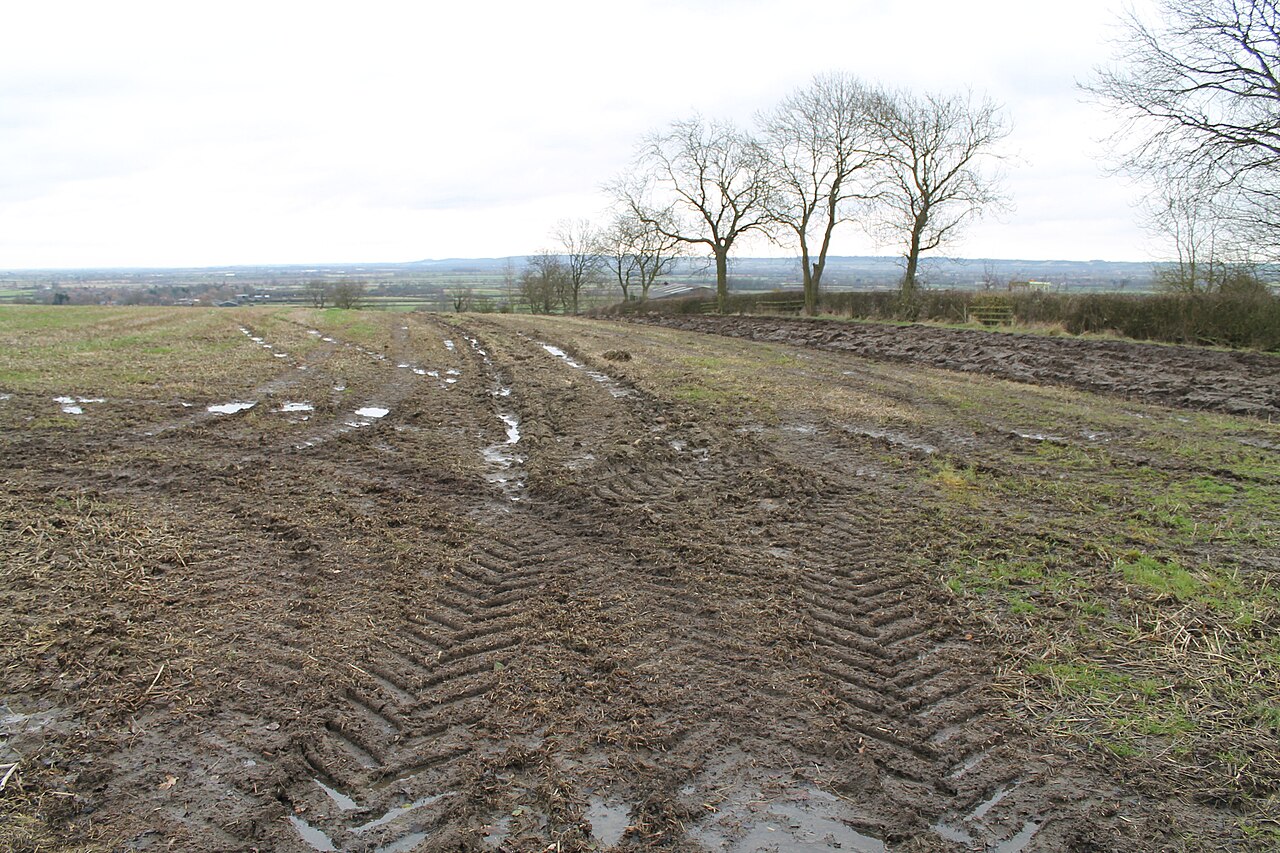
Why hazelnut cannot tolerate excess water
Literature repeatedly emphasizes that hazelnut "suffers from water stagnation" and that it is mandatory to check whether the soil retains water before planting. The reasons are biological:
- Shallow root system. The main mass of roots is located at a depth of 10–40 cm, and up to 80% of the total root mass is found up to about 40–50 cm. Some roots reach 70 cm or even over 1 m, but they serve primarily to anchor the plant and supply water from depth on dry days. The shallow main mass means that the "fight for oxygen" takes place precisely in the layer that remains saturated the longest after rain.
- Sensitivity to oxygen deficiency. When soil pores are filled with water, the root cannot breathe; under such conditions, roots rot easily, and trees lag in growth, produce low and uneven yields, or die.
- Unfavorable soils. Planting on pseudogleys and areas where surface water stagnates — micro-depressions and locations with a high groundwater table — is explicitly recommended to be avoided. Hazelnut "does not tolerate dry, cold, and compacted soil"; compaction and impermeable layers directly cause water retention.
Key figure
Assume that the zone you need to drain and aerate extends to about 50 cm depth — this layer must be fertile, loose, and permeable. Below it, there must be no impermeable layers (hard horizons that roots do not penetrate or clayey layers that do not allow water through).
Assessing plot drainage before planting
The water regime is managed before planting, as the most important interventions (breaking up impermeable layers, laying drainage pipes, coarse leveling, and shaping slopes) are carried out only while the plot is not yet planted. Assessment is based on direct profile inspection and observing water behavior.
Excavation of control pits (probe profiles)
The best practical test cited in literature is mechanized excavation of several control holes:
- dig 2–3 pits in different parts of the plot (using a mini-excavator),
- go to a depth of about 1 meter,
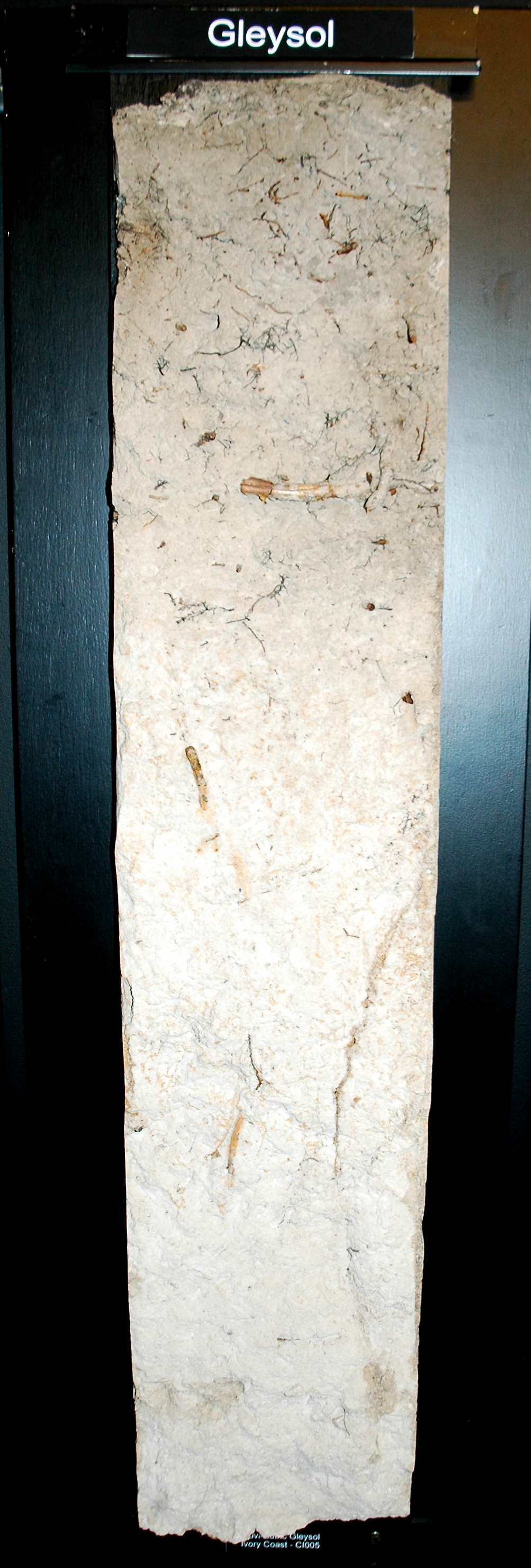
- observe the layers: where color and texture change, is there a clayey ("heavy") horizon, are there signs of gleying (grayish-blue and rusty spots indicating periodic water saturation),
- after heavier rains, check if water remains at the bottom of the pit and how long it stays.
Suitable soil, according to literature, has a cultivated layer of about 50 cm that is fertile and loose (not too clayey), and below it there are no impermeable layers. Stones in the profile are not a flaw — on the contrary, they facilitate water percolation.
What to pay attention to
| Sign in the field | Indicates | Measure |
|---|---|---|
| Water stands in micro-depressions after rain | poor surface drainage, flat or depressed micro-relief | coarse leveling, slope shaping, drainage ditches |
| Gray/rusty spots in the profile (gleying) | periodic saturation, high/unstable groundwater level | subsurface drainage, avoiding the lowest parts |
| Hard, compacted layer ("plow pan", impermeable horizon) | roots do not penetrate, water accumulates above it | deep subsoiling/ripping to break up the layer |
| Heavy, clayey soil that absorbs water slowly | poor infiltration and permeability | closer spacing of subsurface drainage + structure improvement |
| High groundwater level (visible in pit) | permanent risk for roots | drainage to maintain the water table below the root zone |
Pseudogleys and micro-depressions
Pseudogleys and local depressions are the most common cause of young hazelnut orchard failure due to water. If the plot has such parts, either bring them under control through amelioration (drainage + leveling) before planting, or simply exclude them from planting.
Surface drainage and slope management
Surface drainage removes excess precipitation (surface) water before it is retained or infiltrates into the root zone. The goal is to control and slowly drain water from the plot without creating puddles, but also without causing erosion.
Slope and micro-relief management
- Gentle slope of the plot (orientatively on the order of a few per mille to a few percent) directs water towards edge ditches or the lower part of the plot. Completely flat, "pancake-like" depressed surfaces are problematic because water has nowhere to flow.
- Coarse leveling (grading) of the terrain before planting removes micro-depressions where water stands. Leveling should be coordinated with the row direction and the drainage plan.
- Row direction is preferably oriented to support drainage, but on sloped terrain, care must be taken regarding erosion. On pronounced slopes, rows are run approximately along contour lines (across the slope), with a grass cover in the inter-row space that slows runoff and soil washing.
Drainage ditches and channels
- Edge (perimeter) ditches collect water flowing onto the plot from higher adjacent surfaces and divert it around the orchard.
- Collector ditches/channels within or at the edge of the plot collect surface water and subsurface drainage water and direct it to a natural recipient (stream, channel, retention basin).
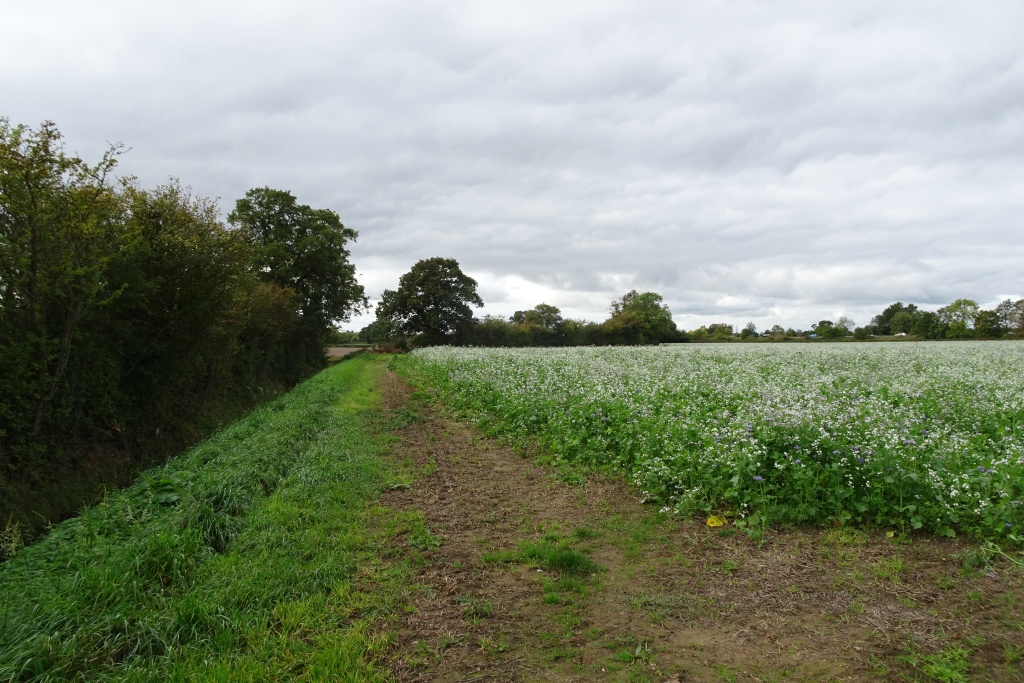
- The outlet of drainage and ditches must have a safe, regulated recipient. In Croatia, watercourses and channels are under the jurisdiction of Hrvatske vode (Croatian Waters) — for interventions affecting the water regime (including connection to public channels or watercourses), it may be necessary to obtain water rights conditions/acts. Check obligations before implementation.
Double benefit of rainwater
Surface water does not necessarily have to be just "drained away." Part of the hazelnut orchard is practically irrigated using collected rainwater (reservoirs, cisterns). Well-designed drainage can feed a retention basin/reservoir for "drip by drip" irrigation during the dry part of the year (April–August), turning the same water from a problem into a resource.
Subsurface (pipe) drainage
When the problem is not just surface water but also water retention in the profile or a high groundwater table, surface measures are insufficient and subsurface (pipe, "tile") drainage is required. It lowers and maintains the groundwater table below the root zone and accelerates the percolation of excess water from the soil after rains.
Working principle
Perforated drainage pipes (today most commonly ribbed PE/PVC pipes lined with a filter) are laid in trenches under a gentle, continuous slope towards the collector and outlet. Water from the saturated soil enters through the perforations, flows by gravity through the pipes, and exits into the recipient.
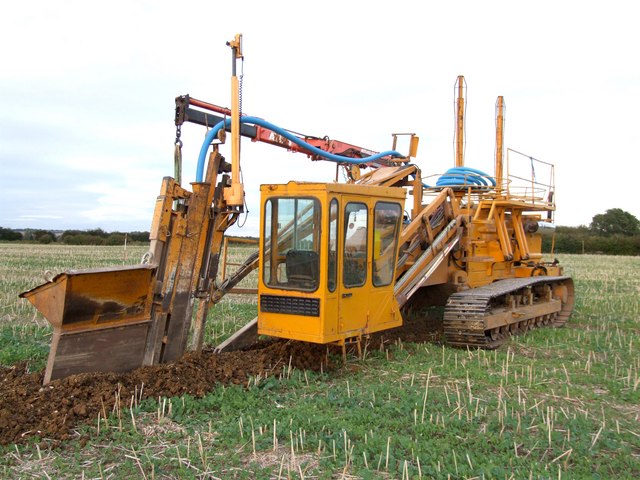
The system is usually executed in a parallel arrangement (lateral rows connected to a main collector) or in a herringbone arrangement, depending on the relief.
Depth and spacing of drains
Orientational values from professional literature for permanent plantations (orchards) and general drainage projects:
| Parameter | Orientational Value | Note |
|---|---|---|
| Depth of drainage pipes (permanent plantations/orchards) | 1.2–1.6 m | deeper than for arable crops; maintains water table below roots |
| Depth of drains (lighter/sandy soils) | about 1.5 m | to keep the water table at that depth or lower |
| Spacing between parallel drains — sandy/sandy-loam soils | 9–12 m | more permeable soils require wider spacing |
| Spacing between drains — heavier (clayey) soils | 7.5–9 m | less permeable soils require closer spacing |
| Slope (longitudinal gradient) of pipes | continuous, gentle | must ensure constant gravitational flow to the recipient |
Figures are orientational
The stated depths and spacings are informative and taken from literature on hazelnut and general drainage (mostly conditions of the Pacific Northwest USA and general engineering manuals). Actual spacing, depth, and slope must be calculated for your plot based on soil texture and permeability, groundwater level, precipitation amount, and slope. This is the work of amelioration/hydro-technical specialists — a drainage project is prepared by a licensed engineer.
Rule for spacing: heavier soil, denser drainage
The logic is simple: in more permeable soils (sand, sandy loam), water moves more easily towards the pipes, so drains can be spaced further apart (9–12 m). In heavier, clayey soils, water moves slowly, so drains must be closer together (7.5–9 m) so that the saturated zone empties within a reasonable time. Excessive spacing on heavy soil means the middle between two drains remains wet.
Combination with soil preparation
Subsurface drainage is most effective in conjunction with deep tillage (subsoiling/ripping) that breaks up the compacted impermeable horizon. Drainage pipes remove water, but water must be able to reach them through the profile; if an impermeable layer remains above the pipes, water will continue to accumulate in the root zone regardless of the drainage. Therefore, the trench for laying pipes and breaking up the plow pan are planned together. When planting next to tree rows, the trench for pipes is sometimes also used as an expanded planting space.
Groundwater Level and Hydrological Context
When assessing a parcel, the broader hydrological picture is also relevant, which is regularly documented in Croatian environmental impact assessment reports:
- Groundwater body beneath the parcel and its status (e.g., catchment areas such as Lonja–Ilova–Pakra, Kupa, Korana, Lekenik–Lužani are mentioned in hazelnut orchard reports). A high and fluctuating groundwater table is a direct risk to the shallow root system.
- Water protection areas and sanitary protection zones of water sources — if the parcel is within a protection zone, there are restrictions on interventions and the application of inputs; this also affects drainage and irrigation solutions.
- Annual water balance. The same parcel may have issues with excess water in winter and spring, and water shortages in summer. Therefore, water regime management is typically addressed holistically: drainage (removal of excess water) + accumulation/well + drip irrigation (adding water during shortages). Irrigation is usually planned for the period of April–August.
Leverage existing documentation
The status of water bodies and groundwater for your location can be verified with Croatian Waters (Hrvatske vode) and through documentation for water rights permits. These data facilitate drainage design and applications for funding calls (where irrigation and drainage systems are often required as part of the investment).
Practical Recommendations and Common Mistakes
Recommendations
- Diagnosis first, then solution. Dig test pits up to 1 m deep and observe the soil profile and water behavior after rain before planting anything or purchasing pipes.
- Address water issues before planting. Drainage, breaking up impermeable layers, and rough leveling are carried out on an empty parcel; the deeper profile becomes inaccessible later.
- Coordinate all measures. Surface drainage (slope, ditches), subsurface drainage (pipes), and deep tillage (breaking up the plow pan) must work as a system — one alone often does not solve the problem.
- Adjust drain spacing to soil type. Closer spacing on heavy (clayey) soil, wider spacing on permeable (sandy) soil.
- Ensure a safe discharge point and proper paperwork. The outlet must have a slope and an approved recipient; check water rights obligations.
- Integrate drainage with irrigation. Collected rainwater in an accumulation reservoir addresses summer water shortages.
Common Mistakes
- Planting in micro-depressions or on pseudogley without amelioration — the most common cause of early tree decline due to root rot.
- Relying solely on surface drainage when the problem is high groundwater or water retention in the profile.
- Drainage installed above an impermeable layer — water cannot reach the pipes; the layer must be broken up first.
- Excessive drain spacing on heavy soil — the area between drains remains wet.
- Insufficient pipe depth — the water table remains in the root zone; for permanent orchards, greater depths are targeted (approximately 1.2–1.6 m).
- Planting too deep with poor drainage — a combination that further pushes roots into the water-retention zone.
Gallery
Sources
This article is an AI-generated summary compiled from an internal collection of hazelnut literature (RAG corpus of reports, professional and thesis papers) and public web sources. Numerical data (drain depths and spacings, root depth) are indicative and depend on soil, location, and regulations — always verify them in the project design and with advisory services. Main sources used:
- Economic analysis of hazelnut production (2023.) — RAG corpus; root depth and distribution, avoiding pseudogley and water stagnation.
- State and trends in production and consumption (Zrinski, 2017.) — RAG corpus; hazelnut root structure and depth, drought resistance, mycorrhiza.
- Impact of low temperatures on frost damage (Miljković, 1991.; 2021.) — RAG corpus; shallow root depth and soil structure requirements.
- PDF "Hazelnut Cultivation" (pdfcoffee, 2009.) — RAG corpus; need for deeper, well-drained soils and irrigation on shallower soils.
- Italian handbook on hazelnut soil (RAG corpus, "untitled") — test pits up to 1 m, 50 cm tillage layer, requirement for no impermeable layers below, hazelnut does not tolerate water stagnation.
- Environmental impact assessments for hazelnut orchards in Croatia (Donji Hrastovac/Sunja; Vojnić/Utinja; Dragodinac/Orahovica; Nova Kapela; Glina; Zmajevac; Donja Pištana, 2020.–2023.) — RAG corpus; groundwater levels and status, recipients, rainwater collection, drip irrigation, irrigation period.
- Drainage — Province of British Columbia (hazelnut orchard design) — https://www2.gov.bc.ca/gov/content/industry/agriservice-bc/production-guides/hazelnuts/hazelnut-orchard-design/drainage
- Growing Hazelnuts in the Pacific Northwest: Orchard Site Selection, OSU Extension (EM 9076) — https://extension.oregonstate.edu/catalog/pub/em-9076-growing-hazelnuts-pacific-northwest-orchard-site-selection
- Hazelnut Reference Guide (IAF BC, rev. 2023.) — https://iafbc.ca/wp-content/uploads/2023/05/HAZELNUT-REF-May-2023_.pdf
- Designing a subsurface drainage system, University of Minnesota Extension — https://extension.umn.edu/agricultural-drainage/designing-subsurface-drainage-system
- Subsurface Drainage — ScienceDirect Topics (drain depths for permanent crops) — https://www.sciencedirect.com/topics/agricultural-and-biological-sciences/subsurface-drainage
- The Basics of Agricultural Tile Drainage, University of Wisconsin Extension — https://fyi.extension.wisc.edu/drainage/files/2015/09/Basic_Eng_-Princ-2_2017.pdf