Climate Change and Adaptation Models for Hazelnut Cultivation
Content generated by artificial intelligence — verify before application
This article was automatically compiled from a collection of hazelnut literature using artificial intelligence and may contain errors or outdated data. It serves as a starting point for further research, not as professional advice. Dosages, products, and timing are informative and depend on the cultivar, location, and current regulations — always consult with advisory services and official sources before application.
Hazelnut (Corylus avellana L.) is a perennial crop planted with a productive lifespan of 30 to 50 years, meaning an orchard established today must produce in the climate that will prevail in the mid-to-late 21st century — not in the climate from which our experience and most manuals originate. This is precisely why climate change is not an abstract topic for hazelnut growers: it directly changes where it is profitable to plant, which cultivars to choose, how to schedule agronomic practices throughout the year, and what level of risk from frost, drought, and diseases must be factored into the business plan. This article links climate projections for growing areas, habitat suitability modeling tools, and concrete guidelines for adapting cultivar selection and agronomy, relying on a collection of hazelnut literature and publicly available scientific sources.
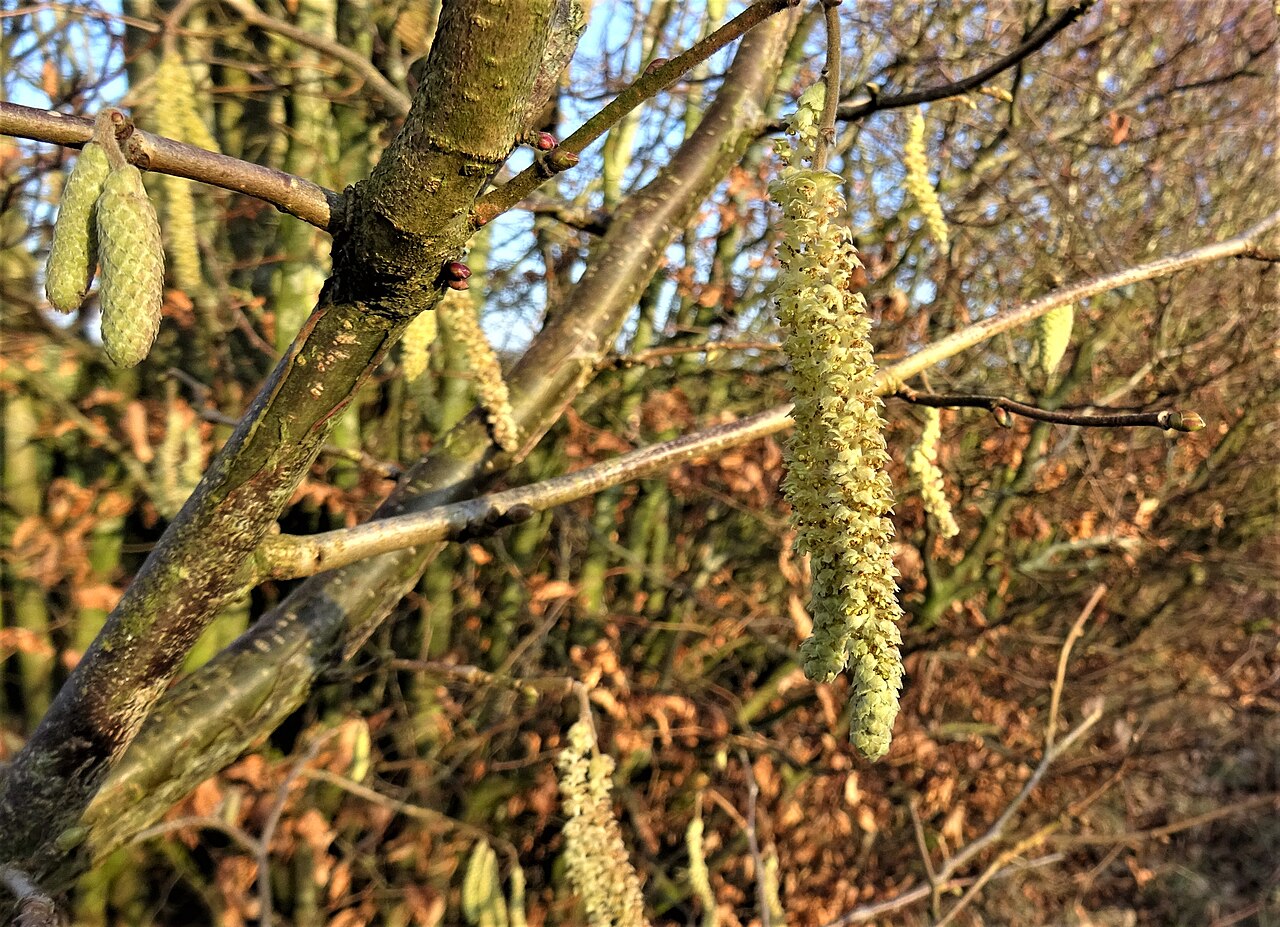
Why hazelnut is sensitive to climate
Hazelnut has two characteristics that make it particularly exposed to climate change, more so than most other fruit species:
- It blooms in winter. Catkins (male flowers) and small female flowers open and are pollinated during the coldest part of the year, typically from December to February. This means that generative organs are exposed to winter cold and late frosts precisely at the moment that determines future yield. Literature notes that in Croatia, the main limitation for hazelnut cultivation is low temperatures because hazelnut blooms in winter, and low temperatures cause freezing of the flower buds.
- It is sensitive to summer drought. Hazelnut is relatively sensitive to drought, especially during the period of nut filling and ripening (June–August). Water stress during these phenological phases reduces the number and size of nuts and increases the proportion of empty and undeveloped shells.
Additionally, hazelnut requires sufficient winter chilling (chilling) to break dormancy and start vegetation uniformly. A warm winter can lead to uneven bud break, poor pollination, and prolonged flowering — paradoxically, climate warming can thus worsen yield even in areas where frost is not a problem.
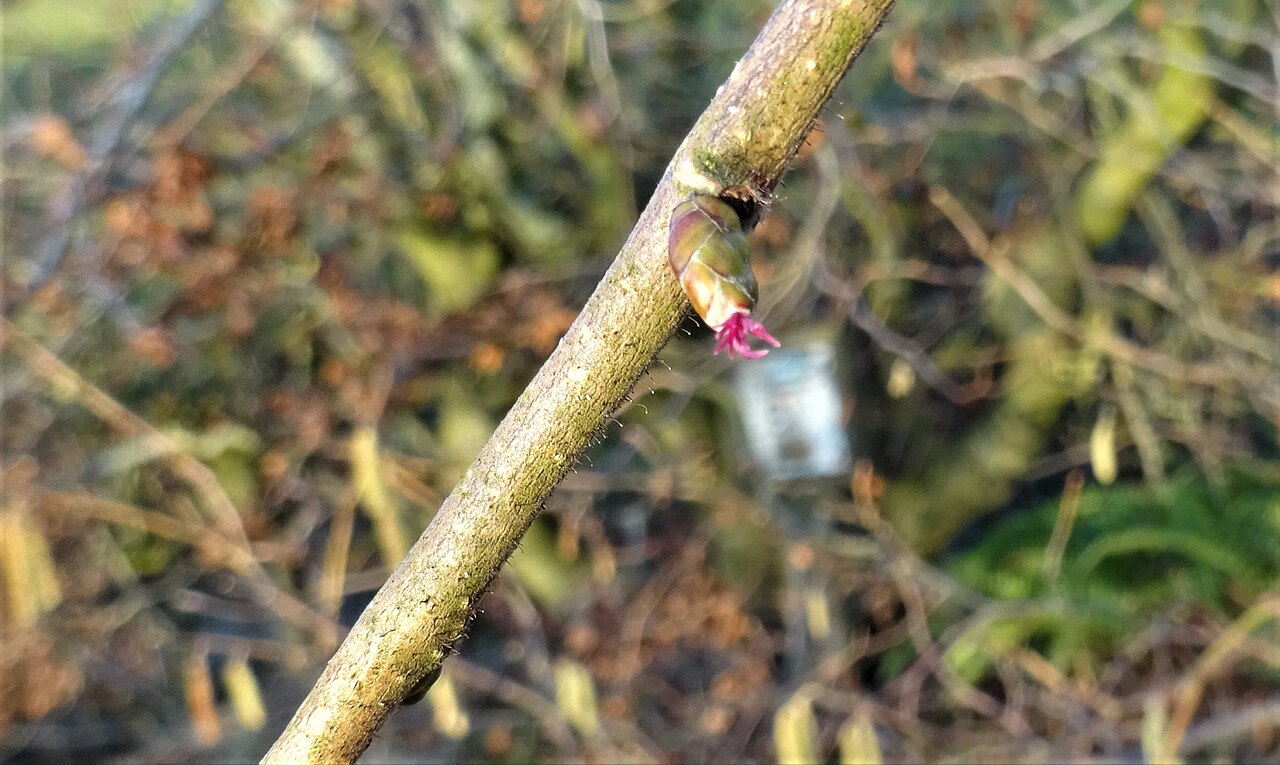
In summary, several climatic factors act simultaneously on hazelnut, changing in different directions, so assessing the overall effect is not trivial and requires a modeling approach.
| Climatic Factor | Direction of Change (Projections) | Main Risk for Hazelnut |
|---|---|---|
| Mean air temperature | increase | lack of winter chilling, faster water depletion |
| Summer temperatures and heatwaves | increase in frequency | heat stress, sunscald on nuts, lower yield |
| Late spring frost | still present, sometimes more pronounced | freezing of flower buds and young shoots |
| Summer precipitation | decrease | drought in critical phenological phases |
| Winter/spring precipitation | increase or variable | waterlogging, difficult harvest, diseases |
| Extreme events (storms, hail, heavy rain) | increase | mechanical damage to orchard, erosion |
Climate Projections for Growing Areas
Croatia and Continental Cultivation
Domestic professional and administrative literature (especially environmental protection assessments for establishing hazelnut orchards) contains useful, locally grounded projections. For the continental part of Croatia, projections indicate:
- An increase in mean seasonal temperature of about 2.2 to 2.5 °C in some scenarios by mid-century, with the increase being more pronounced in the continental part of the country.
- A decrease in summer precipitation accompanied by an increase in the number and duration of dry periods that would affect most of Croatia; the summer signal of precipitation reduction is clearly expressed.
- Variable winter and spring precipitation signals — for mid-century (around 2050), a winter precipitation increase of about 5 % to 15 % is projected across the entire continental Croatia area and along the Adriatic coast, while a more significant decrease (-15 % to -25 %) is expected in some seasons in certain areas.
- Greater risk of fires and drought in the continental part of the country as a consequence of temperature rise.
A practical conclusion from these projections is that continental hazelnut cultivation in the future will likely be limited less by cold, but rather by summer water deficit and extreme events. This shifts the focus of adaptation from frost protection to irrigation, soil water management, and the selection of more resilient cultivars.
Mediterranean and Traditional Production Areas
Globally, modeling studies for major production areas (Black Sea region in Turkey, central Italy) show a concerning pattern: ideal habitats currently extending along the coast could almost disappear by the end of the century (2091–2100), and suitable conditions will shift and fragment towards higher altitudes. In the Turkish study for the Black Sea region, warming is projected to negatively affect the 0–250 m a.s.l. belt, while areas above 1500 m, currently unsuitable, could become suitable — this is a literal "climbing" of cultivation up slopes (vertical shift).
Modeling studies for central Italy document increasing irrigation needs due to rising evapotranspiration and decreasing summer precipitation, which imposes irrigation as an adaptation measure even in traditionally "dry" cultivation.
Emission Scenarios and Yield
Newer studies using artificial intelligence and climate scenarios (SSP) for Turkey show a clear dependence on how quickly the world reduces emissions:
- Low-emission scenario (SSP1-1.9) largely maintains favorable conditions for cultivation.
- High-emission scenario (SSP5-8.5) leads to a significant drop in yield, up to about 17 %, mainly due to moisture-induced fungal diseases and frost events.
For Australia, conversely, some projections predict an increase in yield in southeastern areas — highlighting that the effect of climate change on hazelnut is regionally specific and generalizations do not apply; each area needs its own assessment.
Habitat Suitability Models: How to Assess
A "suitability model" is a tool that combines climatic, field, and pedological data to provide a map or score of how suitable a location is for hazelnut — today and in the projected future. Three groups of tools are particularly useful for hazelnut growers.
1. GIS and Multi-Criteria Suitability Analysis
GIS (Geographic Information System) allows for the overlay of multiple data layers (altitude, slope, exposure, soil type from the soil map, climatic indicators) to generate a thematic map of cultivation suitability.
In a domestic study for Vukovar-Srijem County, the greatest weight was given to altitude and soil suitability, with the far east of the county (Ilok area) proving most favorable. The same logic can be applied to any location: layers are collected and standardized, weights are assigned, and they are overlaid into a composite score.
2. Climate Exposure and Sensitivity Models (Assessments)
In Croatian practice, the mandatory procedure for assessing the impact of interventions on the environment already contains a structured model for assessing the sensitivity and exposure of the intervention to climate change. It is prepared for climatic variables and associated hazards, and evaluation is presented in a table of levels:
| Location Exposure | Current Climate | Future Climate |
|---|---|---|
| High | significant trend of change recorded | significant change expected with potentially catastrophic consequences |
| Moderate | moderate trend recorded | moderate, statistically significant change of known direction expected |
| Low | change recorded but not significant | possible change without clear direction or negligible |
| Not Exposed | no change | no change expected |
Sensitivity analysis is conducted for four components of the intervention — assets and processes at the location, inputs (water, energy), outputs (product, market, demand), and transport routes — and is evaluated according to a series of hazards: average and extreme temperature, average and extreme precipitation, wind, humidity, solar radiation, storms, floods, soil erosion, fire, and landslides. This framework is not just an administrative formality: it is a ready-made checklist for any investor wishing to systematically assess location risks.
3. Winter Chilling (Chilling) and Phenological Models
Winter chilling models (e.g., Chilling Hours, Utah/Chill Units, Dynamic Model / Chill Portions) estimate how much cold a location will accumulate and whether it will be sufficient for the cultivar to properly break dormancy. A sensitivity study of these models to projected warming (for the Central Valley in California) showed that different models give significantly different estimates of chilling loss — in one comparison, the range of estimated loss varied from about 14 % to 33 % depending on the model. The message for practice: assessing available winter chilling helps predict whether a cultivar will produce well and when to plan measures (e.g., dormancy-breaking treatments), but the result depends on the chosen model, so one should not rely blindly on a single number.
For hazelnut, the range of required chilling for leaf buds in the literature is very wide — approximately 365 to 1690 hours below 7 °C, depending on the cultivar — meaning that selecting a cultivar adapted to the local winter is a key input for any phenological model.
Cultivar Adaptation
The cultivar is the cheapest and most durable "climate regulator" in the orchard because it is chosen once and influences production for decades. Domestic literature already distinguishes recommendations by climatic zones:
| Area / Climate | Recommended Cultivars (examples from literature) | Selection Logic |
|---|---|---|
| Continental Croatia | Istarska duguljasta, Rimska, Haleška (Halle) | More resistant to low temperatures than the highest-quality industrial cultivars |
| Coastal / Mediterranean | Tonda Gentile delle Langhe, Tonda Gentile Romana, Tonda di Giffoni | Top-tier industrial quality, but less resistant to cold |
The adaptability of high-quality industrial cultivars to the continental climate is under investigation; therefore, adopting an "Italian" cultivar portfolio in the north without verification carries risk. Guidelines for cultivar selection in the context of climate change:
- Match chilling requirement with projected winter. In areas where winters are becoming milder, choose cultivars with lower chilling requirements to avoid uneven bud break and poor pollination.
- Flowering time and frost resistance of flowers remain critical where frost still poses a threat; later-flowering and frost-resistant cultivars reduce the risk of crop loss.
- Diversify the cultivar portfolio. Planting multiple cultivars with different flowering times and chilling requirements spreads risk across years—if one cultivar suffers from frost or heat, others may still produce.
- Ensure pollinizers compatible with the main cultivar; phenological shifts due to climate may desynchronize the flowering of the main cultivar and the pollinizer, so pollinizer selection should be revised in light of projections.
- Windbreaks can also serve as pollinizers—e.g., wild hazel or bear hazel simultaneously protects against cold winds during flowering and serves as a pollen source.
Rates, timings, and cultivars are informative
Cultivar names, chilling requirements, and recommendations are approximate and depend on location, rootstock, and fruit purpose. Before planting, verify the current recommended cultivar portfolio with the advisory service and the cultivar registry.
Agrotechnical Adaptation
Once the orchard is established, climate risk is mitigated through agrotechnics. The greatest impact comes from measures related to water, flower protection, and soil health.
Water Management and Irrigation
Since projections for continental Croatia highlight summer drought as the primary growing risk, irrigation moves from "desirable" to "critical," especially in organic production and on lighter soils. Domestic studies provide approximate data on water consumption of around 2,500 liters per tree annually, or in one project approximately 605 m³/ha annually with total project volumes around 45,000 m³. These figures strongly depend on soil, planting density, climate, and cultivar, and serve only as an order of magnitude.
Complementary water retention measures in the system:
- Permanent grass cover and mulching reduce evaporation and erosion and improve soil structure; hazelnut orchards already use permanent low grass mixtures due to mechanical harvesting from the ground.
- Increasing organic matter in the soil (target humus content approx. ≈ 3%) improves water retention capacity and buffers against drought.
- Drip irrigation systems with central control use water efficiently and can be managed according to water balance (evapotranspiration).
Frost and Heat Stress Protection
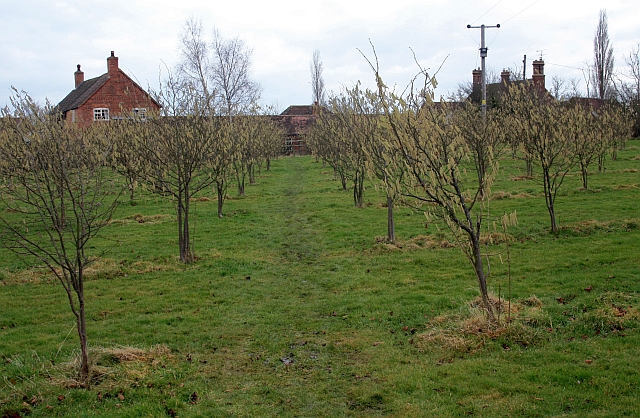
- Site and aspect selection: Choose elevated, well-ventilated terrain on gentle slopes where cold air does not stagnate; avoid low, "frost-prone" depressions and areas where cold air and fog accumulate. This is a measure that "cannot be fixed later," making it crucial during orchard establishment.
- Windbreaks mitigate cold winds during flowering (hazelnut is not tolerant of cold winds during flowering) and reduce mechanical damage from storms.
- Aspect: In warmer regions, northern and northeast aspects are more favorable, as they delay premature bud break and reduce heat stress on the nuts.
- Altitude as an adaptation tool: Commercial cultivation is recommended at 200–500 m a.s.l. (depending on latitude), up to 600 m in moderately continental areas and up to 800 m in warmer regions; avoid areas below 20 m near the coast. As the climate warms, higher positions within this range become relatively more favorable.
Plant Protection and Orchard Health
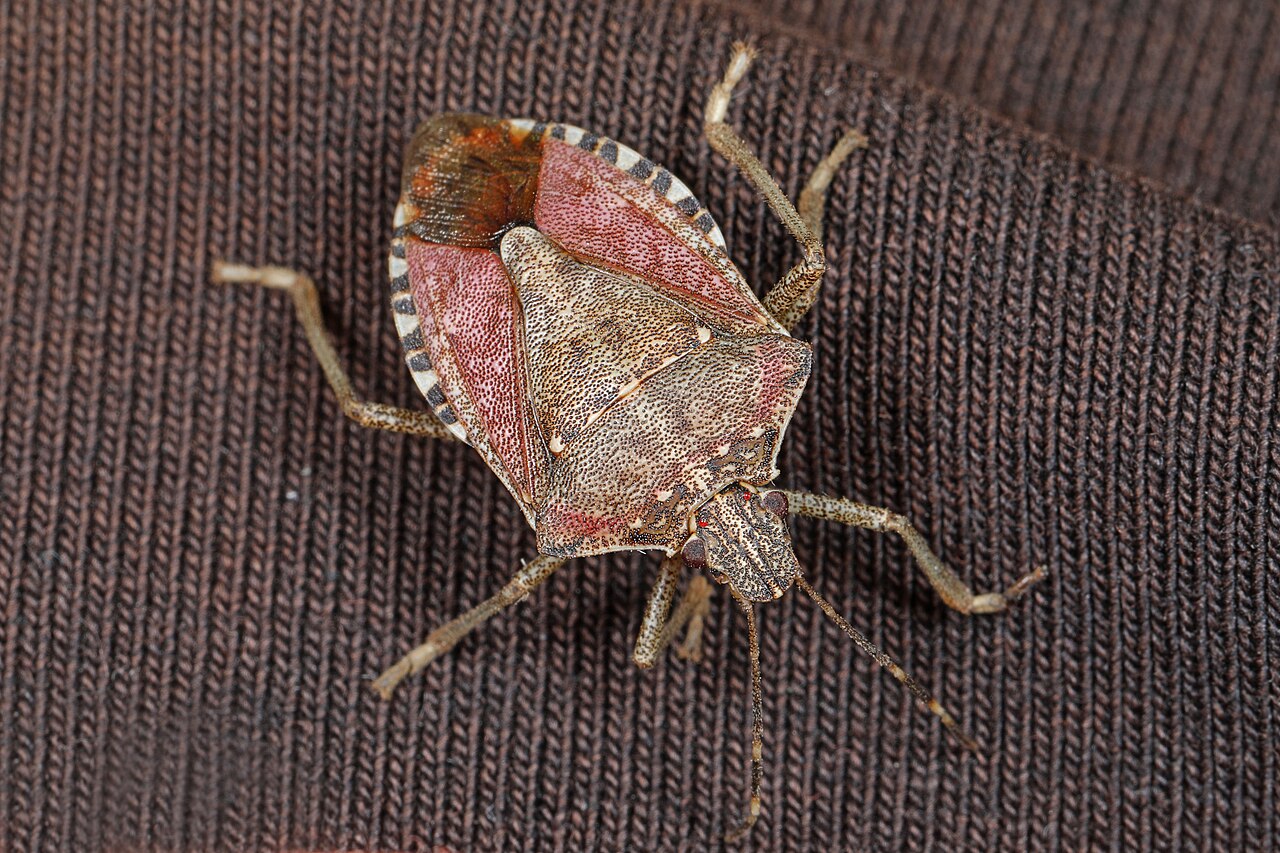
Warmer and wetter periods, along with mild winters, favor the spread of new diseases and pests. Literature already links declines in global hazelnut production with high summer temperatures, water shortages during critical phenological phases, mild winters, and late spring frosts. Fungal diseases (e.g., hazelnut canker, Cytospora spp.) reduce yield potential, and the most effective defense is preventive—agronomic and pomological measures, as well as biological methods within integrated pest management (IPM). Climate change also alters pest emergence (e.g., stink bugs), which are spreading to new areas, making monitoring and timely response more important than ever.
Low-Carbon Contribution and Subsidies
It is worth mentioning the other side: establishing a permanent hazelnut orchard, especially through restructuring existing orchards, contributes to carbon sequestration and aligns with the Low-Carbon Development Strategy of the Republic of Croatia to 2030 with a view to 2050 (NN 63/21). Climate change adaptation measures also fit into the national adaptation framework, which may be relevant when applying for subsidies and in environmental impact assessment procedures.
Practical Recommendations and Common Mistakes
Recommendations:
- Before planting, conduct a site assessment based on an exposure/vulnerability model (temperature, precipitation, wind, frost, fire, erosion) and, if possible, a GIS suitability map.
- Design irrigation from the start, even if it currently "works without it"—summer drought is the primary growing risk.
- Diversify the cultivar portfolio by flowering time and chilling requirement; ensure compatible pollinizers and wind protection.
- Build soil health (organic matter, permanent cover) as a "water reservoir" and buffer against extremes.
- Invest in disease and pest monitoring; preventive and biological protection is cheaper than treating an epidemic.
Common Mistakes:
- Relying on historical climate and "grandfather's experience" for an orchard that will produce for 30–40 years.
- Adopting top-tier Mediterranean cultivars on colder continental sites without verifying frost resistance.
- Planting in frost depressions and low areas where cold air stagnates—a mistake that cannot be corrected later.
- Relying on a single winter chill model as an "exact number" rather than a range of estimates.
- Neglecting wind protection and pollinizers, which results in poor pollination as phenology shifts.
Sources
This article is an AI summary from an internal literature collection on hazelnut (RAG corpus) and publicly available sources. Figures (temperature and precipitation trends, chilling requirements, water volumes) are informative and depend on cultivar, location, and current regulations. Main sources used:
- Environmental Impact Assessment — Establishment of a Permanent Hazelnut and Plum Orchard at the "Grubišno Polje" Site (2020.) — exposure/vulnerability models, precipitation projections for Croatia.
- Environmental Impact Assessment (OPUO Borg) (2024.) — temperature increase of 2.2–2.5 °C, drought, carbon sequestration, Low-Carbon Development Strategy of the Republic of Croatia.
- Hazelnut Cultivation: A GUIDE (Ministry of Agriculture / Advisory Service, 2024.) — climatic indicators, site selection, location choice.
- Organic Production and Organic Hazelnut Products in Croatia (2022.) — recommended cultivars by climatic zones.
- Impact of Low Temperatures on Hazelnut Frost Damage (2021.) — altitude, aspect, frost damage.
- Use of GIS in Agricultural Production Planning — Hazelnut Cultivation (2017.) — GIS and multi-criteria suitability analysis.
- Cascading Use of Hazelnut By-products / Hazelnut Canker (Cytospora) (2025.) — sensitivity to drought and low temperatures, diseases, and climate challenges.
- Wenden et al. / Luedeling et al., Sensitivity of winter chill models for fruit and nut trees to climatic changes expected in California's Central Valley (2009) — winter chill models.
- The effects of climate change on spatiotemporal changes of hazelnut cultivation areas in the Black Sea Region, Turkey (2014) — ResearchGate
- AI-Enhanced Projections of Hazelnut Production Under Climate Change: a Regional Analysis from Turkey, Applied Fruit Science (2025) — Springer
- Mid-Term Impact of Climate Change on Hazelnut Yield, Agriculture (2020) — MDPI
- Trend Analysis of Different Climate Parameters and Watering Requirements for Hazelnut in Central Italy Related to Climate Change, Horticulturae (2023) — MDPI
- Climate change impacts on phenology and yield of hazelnut in Australia, Agricultural Systems (2021) — ScienceDirect
- Biological Flora of Britain and Ireland: Corylus avellana, Journal of Ecology (2022) — Wiley