Filling gaps and replacing dead saplings in a young orchard
Content generated by artificial intelligence — verify before application
This article was automatically compiled from a collection of hazelnut literature using artificial intelligence and may contain errors or outdated data. It serves as a starting point for further research, not as professional advice. Dosages, products, and timing are informative and depend on the cultivar, location, and current regulations — always verify with an advisory service and official sources before application.
No matter how carefully you plant a hazelnut orchard, some saplings will fail to establish. This is not a sign of failure but a normal, expected occurrence in the planting of any woody perennial. The first, and partly the second, vegetation period after planting is the time of highest loss: the root system is damaged during nursery extraction, the plant undergoes transplant shock, and it is only then building a new root system. The difference between a good and a poor manager is not whether they will have losses — but whether they anticipated them, have reserve saplings, and how quickly and correctly they fill the gaps. If the filling is done unprofessionally or too late, a permanent problem of "patchy vigor" arises in the orchard: rows with trees of different ages and sizes, with uncoordinated flowering, difficult fertilization, and difficult protection. This article explains how much loss to realistically plan, when and how to plant replacement saplings (reset) without falling behind, how to select stronger saplings for filling, and how to equalize the filled spots with the rest of the orchard.
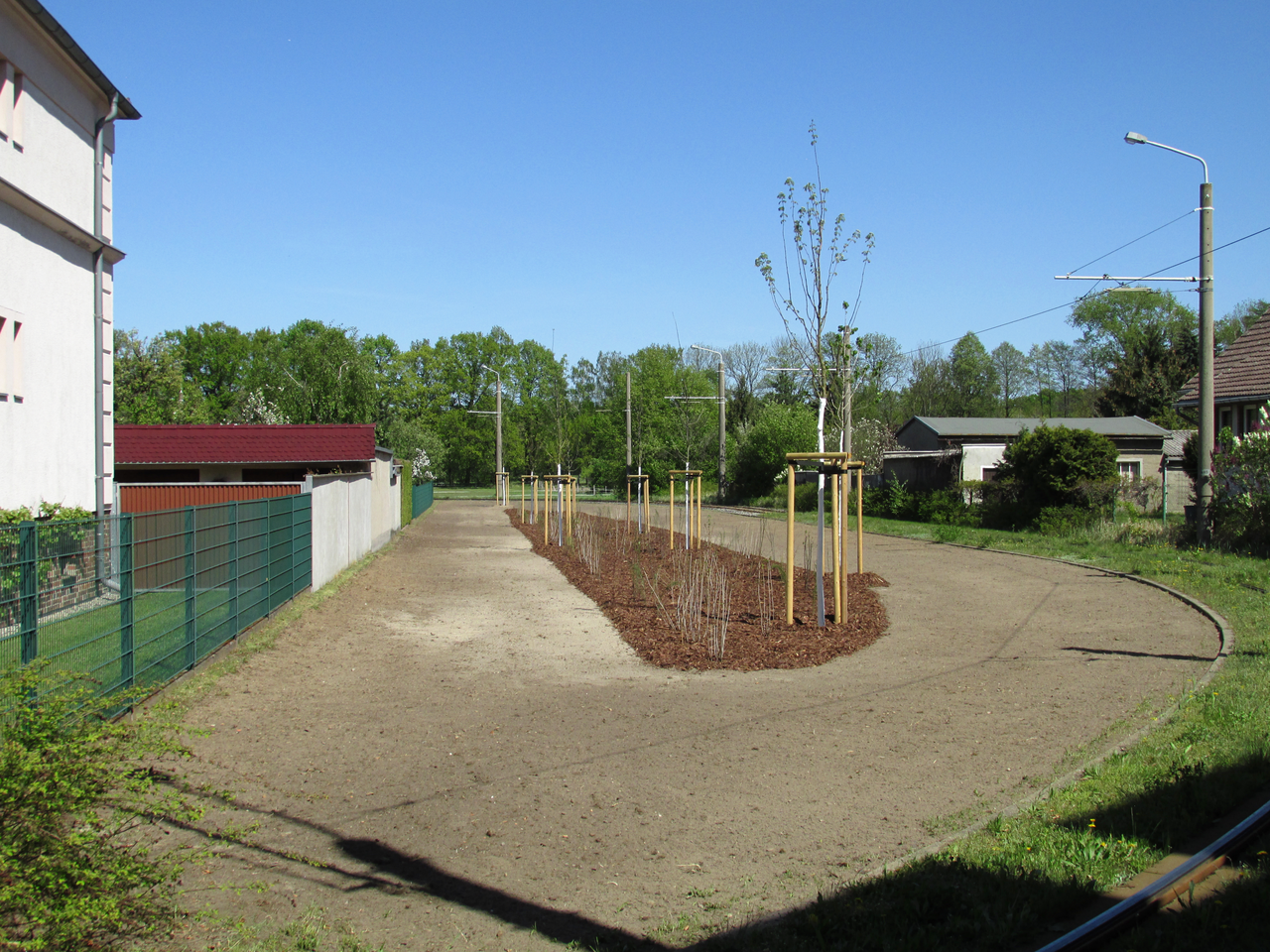
Why saplings die in the first and second year
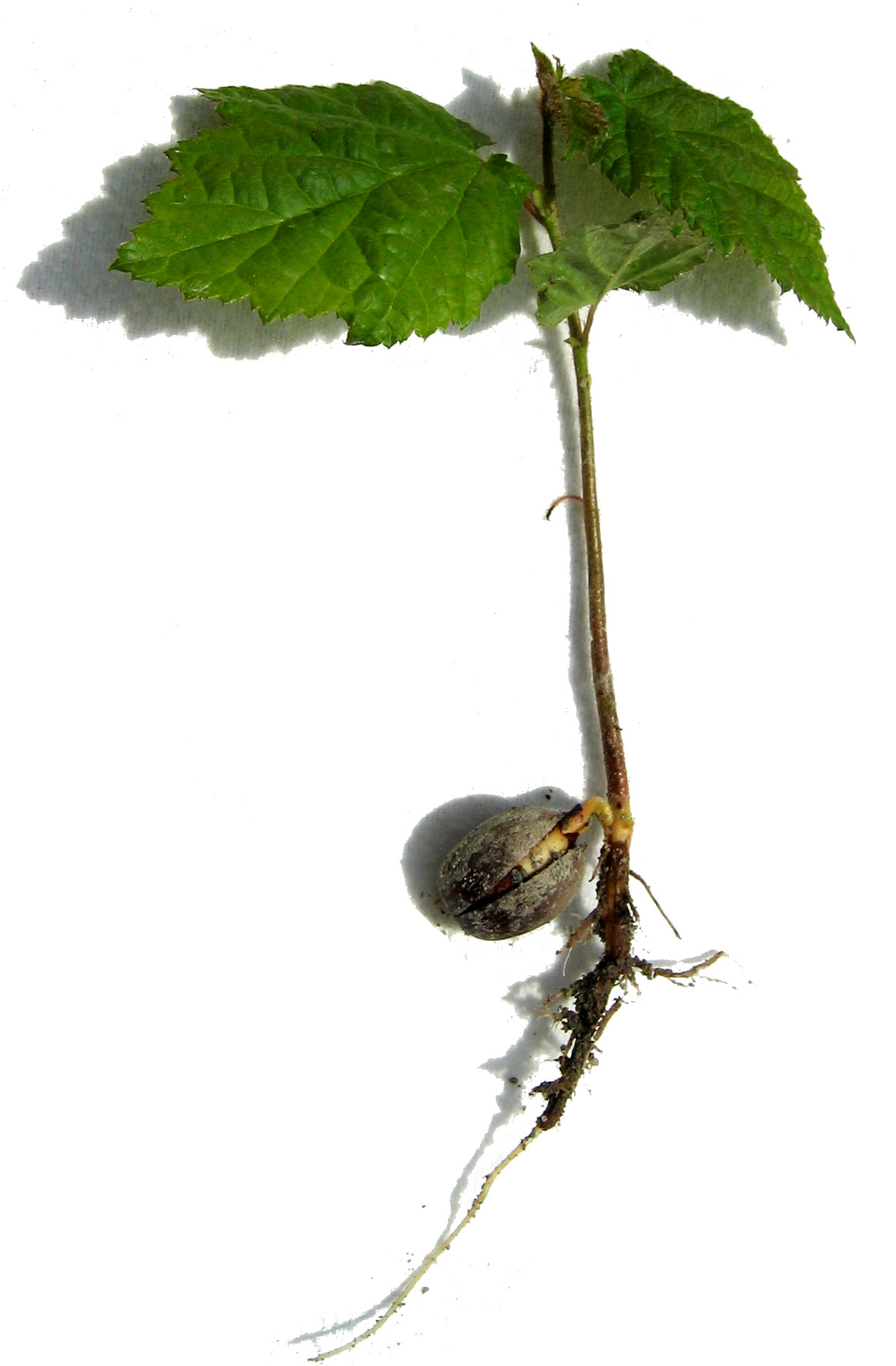
The main cause is transplant shock. When dug up from the nursery, the sapling loses a large portion of the fine, absorptive root hairs that take up water, making it sensitive to drought, wind, low temperatures, diseases, and weed competition after planting. Literature emphasizes that in the first one or two years, almost all the sapling's energy goes into root development, and only after the plant is well-rooted and anchored does rapid shoot growth follow (RAG corpus, Hybrid Hazelnuts: An Agroforestry Opportunity, 2014). From this, it follows that the first year is indeed the period of greatest vulnerability.
Most common causes of death in young hazelnut saplings:
- Root desiccation before and during planting (bare-root sapling exposed to air and sun).
- Lack of water in the first and second vegetation periods — newly planted hazelnut often requires supplemental irrigation (RAG corpus, 2014).
- Wind and desiccation of leaves; wind protection significantly increases survival and growth in the first year.
- Weeds that steal water and nutrients — the area around the sapling should be kept clear in a diameter of about 1 m (approx. 3 feet).
- Poor planting — air pockets around the roots, planting too deep or too shallow, loose soil.
- Weak or damaged saplings, damage from wildlife and rodents, as well as diseases and low winter temperatures.
How much loss to realistically plan — a practical figure
For planning, having a realistic figure is crucial. In the hazelnut literature corpus, there is no single official percentage for first-year mortality, but broader professional literature on establishing woody orchards provides a consistent range that you can use as a starting point.
| Source / Context | 1st Year Mortality | Note |
|---|---|---|
| Tree sapling review (Belgium) | 6.5–19.7 % (avg. ~11.3 %) | Highest mortality occurs in the 1st year |
| Urban/Street trees (Sacramento, USA) | ~12.2 % | Approximately double that of subsequent years |
| Reforestation (Tropical/Subtropical Asia) | ~18 % (1st yr.), ~44 % (after 5 yrs.) | Highly dependent on location and care |
| Irrigated vs. Non-irrigated | 97.7 % vs. 73.8 % survival | Irrigation is crucial for establishment |
Values refer to woody saplings in general and are informative; actual loss depends on the quality of planting material, location, care, and year.
Figure for planning sapling reserves
For a well-prepared and maintained hazelnut orchard with quality, declared planting material, plan a reserve of about 5–10 % of saplings for filling. On riskier locations (drought, wind, wildlife, no irrigation), it is reasonable to anticipate 10–15 %. It is better to have a few extra reserve saplings than to leave permanent gaps.
Calculation example for 1 hectare
At a conventional spacing of 5 × 4 m, approximately 500 saplings/ha are planted (RAG corpus, various elaborates on hazelnut orchard establishment). Assuming expected loss:
| Loss | Saplings needed to fill 500/ha | Saplings needed to fill 500 × 10 ha |
|---|---|---|
| 5 % | ~25 | ~250 |
| 10 % | ~50 | ~500 |
| 15 % | ~75 | ~750 |
Interestingly, even in practice among large producers, reserves are not unusual: one Croatian nursery annually grows about 100,000 hazelnut saplings, of which about 25,000 are used specifically to restore their own orchards (RAG corpus, Orahovica — Fruit Growing). This shows that filling and replacement is a permanent, planned item, not an incidental cost.
Timing of filling — when to plant reset
The rule is: fill as early as possible, but with the right planting material. The goal is for the replacement sapling to lag as little as possible in time behind the orchard.
First option: same year (autumn) or next dormancy
Ideally, fill empty spots already in the first dormancy after planting — that is, in autumn/winter of the same year when you determine which saplings failed to establish, or at the latest in the next dormancy period. Hazelnut planting is done during dormancy: in autumn (2–3 weeks before permanent cooling) or early spring before sap flow begins (RAG corpus). The sooner you react, the smaller the time gap between the new and surrounding saplings.
How long is it worth filling — the "patchy vigor" limit
A key limitation is stated in Croatian technological guidelines: replacement of saplings is possible "provided they do not disrupt production, i.e., if the time deviation of the replacement material is not multi-year"; otherwise, problems with patchy vigor within the orchard arise, impossibility of proper and balanced fertilization, uncoordinated flowering, difficult pollination, and difficult application of plant protection products (RAG corpus, Technological Guidelines for Orchards for 2023., trust ~0.58).
In other words: filling in years 1–2 makes sense and the sapling can be "caught up" with a stronger start. Filling an orchard that is already several years old with a one-year-old sapling often makes no sense — the new plant will forever remain in the shadow of its neighbors, produce less, and become a burden. In that case, consider a stronger (two-year-old or container-grown) sapling, or consciously accept a smaller number of empty spots.
| Age of orchard when gap is noticed | Recommendation |
|---|---|
| During/end of 1st year | Fill with same or slightly stronger sapling in next dormancy |
| End of 2nd year | Fill must be with a stronger, older sapling (2-yr. / container) |
| 3rd year+ | Critically assess: strong sapling + intensified care, or leave empty |
Technique for reset filling without lagging
1. Use exclusively declared planting material
Croatian guidelines are clear: filling the stand is done exclusively with declared (certified) planting material (RAG corpus, Technological Guidelines 2023.). Only certified reproductive material may be placed on the market in accordance with the Rulebook on placing reproductive planting material on the market (NN 09/17) (RAG corpus). This ensures that the replacement sapling is of the same, correct cultivar and healthy — a wrong cultivar in an empty spot would permanently disrupt the pollinizer scheme.
2. Prepare the planting site as new, not as a "patch"
At the site of the dead sapling, the root may have left a void, disease, or compacted soil. Dig a hole twice as wide as the root ball, remove remnants of the old sapling and roots, and refill the hole with a mixture involving compost (RAG corpus describes planting with a hole twice as wide as the ball and filling with a mixture of compost and sand). Place the root at the depth where the sapling was in the nursery (approx. 25 cm for standard saplings; RAG corpus). Firm the soil well to eliminate air pockets and level it with the surrounding ground.
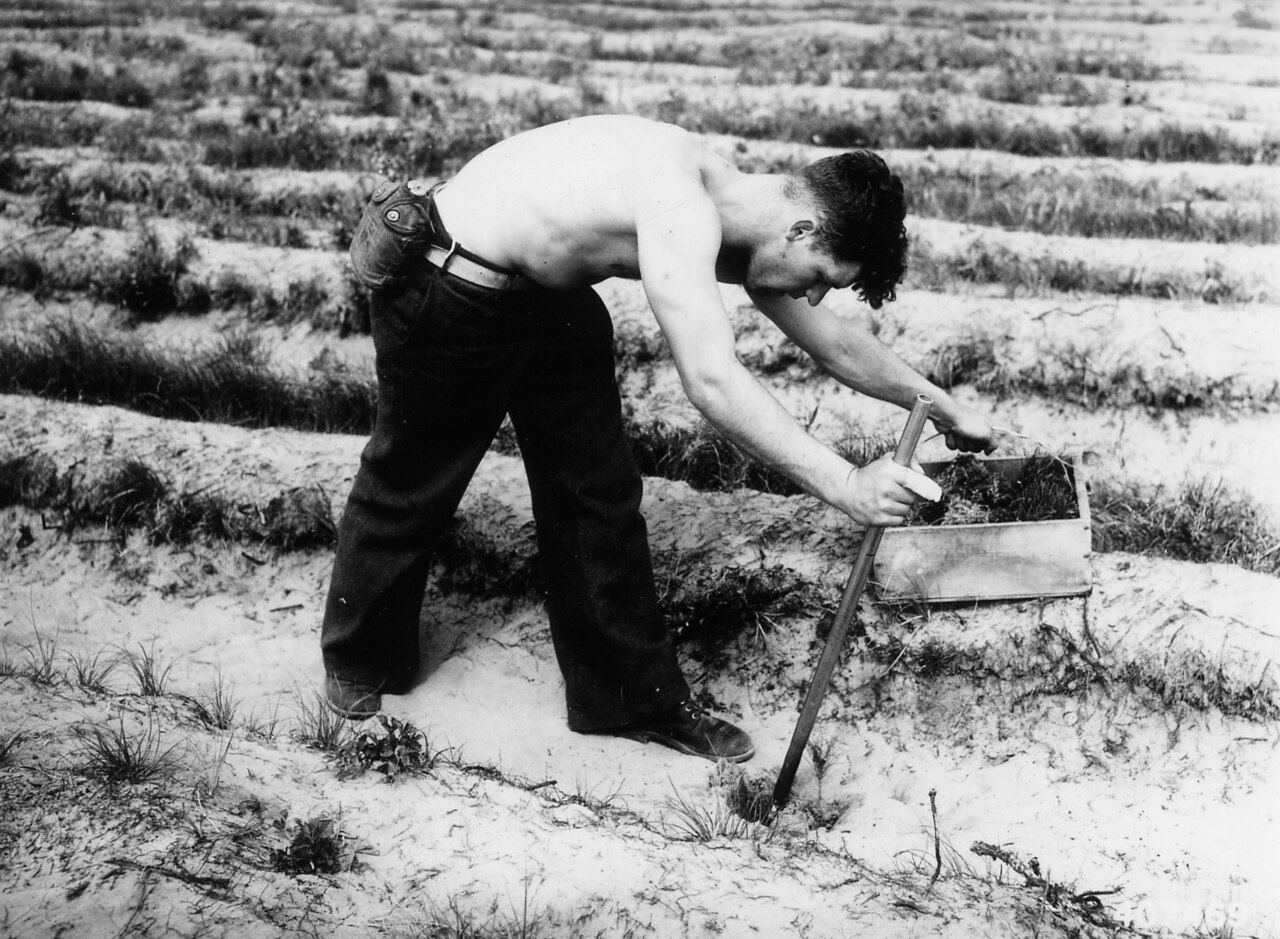
3. Plant a stronger sapling
For the fill to "catch up" with the orchard, the replacement sapling needs an advantage. Use:
- Older and more developed sapling — two-year-old instead of one-year-old, or container-grown (with ball) instead of bare-root. The corpus notes that two-year-old (and grafted) saplings are most in demand; indicative prices range from approx. ~25 kn (own root) to ~50 kn (grafted), which is informative and depends on cultivar and year (RAG corpus, Poljinos, 2019).
- Container-grown sapling whenever possible — it has the entire root ball, less transplant shock, and can be planted even outside the narrow dormancy period, which accelerates catching up with the orchard.
- Quality sapling with stem thickness of 10–15 mm and well-developed roots.
4. Give the fill "intensified" care
Care for the replacement sapling more intensively than the surrounding, already established plants, because it starts with a one- (or two-) year lag:
- Irrigation — fills in the first and second vegetation periods need reliable supplemental watering; irrigation is crucial for survival in literature (97.7 % on irrigated vs. 73.8 % on non-irrigated surfaces).
- Clean, weed-free area in a diameter of about 1 m around the sapling.
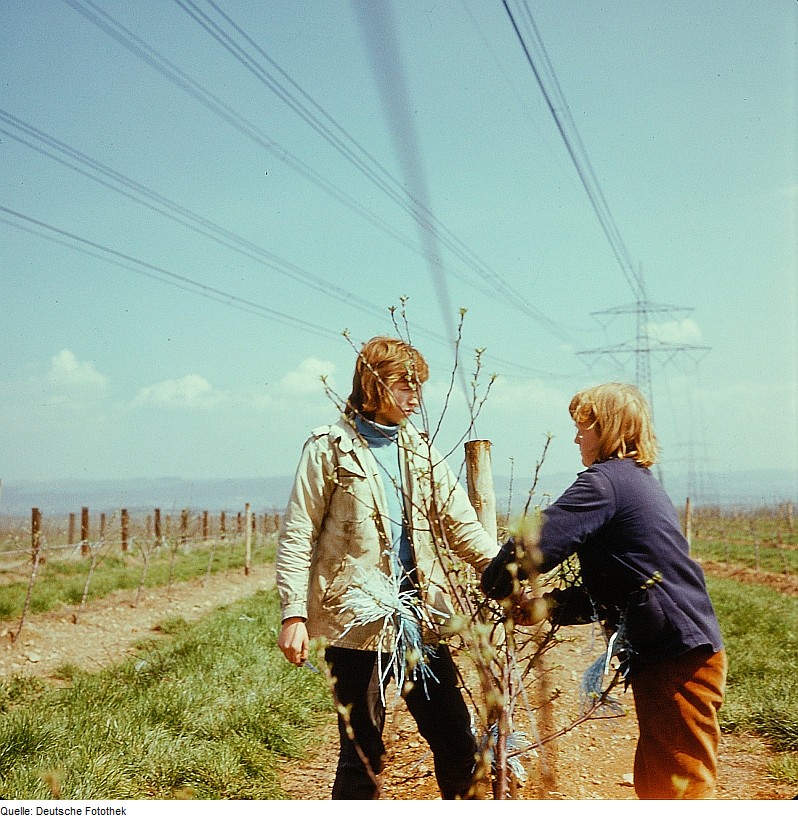
- Protection from wind and wildlife — protective tubes/shields are especially important for survival in the first year; fencing against wildlife around the orchard is also desirable (RAG corpus).
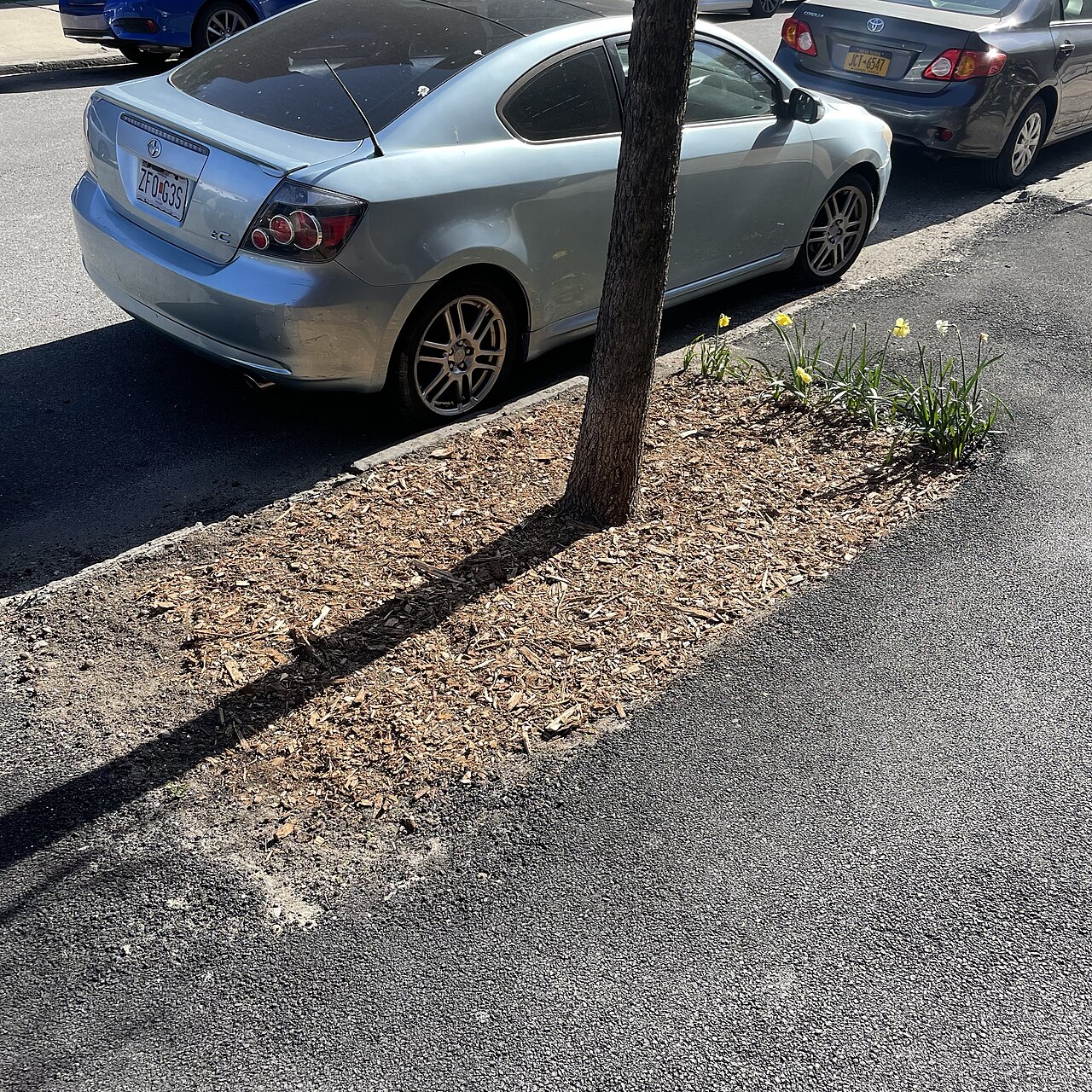
- Mulching to retain moisture and suppress weeds.
- Shallow cultivation of soil 5–8 cm (2–3 inches) annually in the first 2–3 years (RAG corpus, 2014).
Indicative fertilization doses for young/filled saplings
For starter fertilization of young saplings, the corpus cites indicative doses of biostimulators/fertilizers per development phase (informative, depends on product and label):
| Plant Phase | Indicative Dose (per sapling/tree) |
|---|---|
| Saplings | 5–15 g |
| Young trees | 15–25 g |
| Medium-developed trees | 25–50 g |
| Full production | 60–100 g |
Source: RAG corpus, Booklet 2021 (eco) / Indicative protection and fertilization programs (trust ~0.80–0.90). Doses are informative and depend on cultivar, soil, product, and current regulations — check the label and consult with an advisory service.
Equalizing the fill-in with the rest of the orchard
The goal after replanting is that, after a few years, it is no longer visible which seedling was a replacement. This is achieved by standardizing care and training:
- Training the growth form — manage the fill-in according to the same growth form (bush or tree) and the same pruning system as the rest of the orchard. Keep in mind that pruning in the first year often does not affect the (still non-existent) crop, but differences in development clearly show from the second year onwards (RAG corpus, Pacchiarelli et al., 2025).
- Temporary stronger fertilization and irrigation for the fill-in until it reaches the neighbors, then gradually reduce it to the orchard level.
- Removal of suckers according to the same regime as in the orchard, so that the fill-in develops the same habitus.
- Monitoring flowering — since the fill-in enters production slightly later, monitor that pollinizer dynamics remain synchronized; therefore, it is crucial that the fill-in is of the correct cultivar.
Why synchronization is so important
Mismatched vigor and flowering are not just an aesthetic problem. Rows of different ages make uniform fertilization and protection difficult, and unsynchronized flowering reduces pollination and increases the proportion of empty nuts. This is exactly why it pays to invest in a stronger seedling and better care for the fill-in, rather than trying to "patch up" the empty spot somehow.
Practical recommendations and common mistakes
Recommendations
- When ordering seedlings, immediately purchase an additional 5–15 % reserve of the same cultivar and batch for fill-ins.
- Maintain an orchard map with a record of every empty spot and the cultivar intended for it.
- Perform fill-ins at the first possible dormancy period, using a stronger seedling, with intensified care.
- Prepare the planting site as if new (wide hole, compost, no air pockets).
- Ensure water, weed protection, wind protection, and protection from wildlife for each fill-in.
Common mistakes
- Filling in with a one-year-old seedling in an orchard already several years old → permanent lag, "patchy vigor".
- Using undeclared material or the wrong cultivar → disruption of the pollinizer scheme and certification.
- Planting in an old hole without preparation → air pockets, lingering diseases, poor establishment.
- Providing the same care as for established trees → the fill-in never catches up to the orchard.
- Postponing the fill-in "for next year and then the year after" → the age gap increases, and the problem becomes irreparable.
Summary
Loss of some seedlings in the first and second years is normal and expected. Plan for a reserve of about 5–10 % (up to 10–15 % on risky sites), perform fill-ins at the first possible dormancy using only declared material of the correct cultivar, use a stronger (older or container-grown) seedling, and provide it with intensified care until it catches up to the orchard. Draw the line where the time lag becomes multi-year — then choose a strong seedling with intensive care or consciously accept the empty spot, because "patchy vigor" is more expensive than a few empty spaces.
Gallery
Sources
This article is an AI-generated summary compiled from an internal literature collection on hazelnut (RAG corpus) and public internet sources. Figures on dosages, losses, and timelines are informative and should be verified with advisory services and official sources before application.
Main sources used:
- Technological guidelines for orchards for 2023 — Center for Fruit Growing and Horticulture (RAG corpus; replacement seedlings, patchy vigor, declared material).
- Hybrid Hazelnuts: An Agroforestry Opportunity (2014) — root establishment, irrigation, wind protection, soil management. https://scholar.google.com/scholar?q=Hybrid+Hazelnuts+An+Agroforestry+Opportunity
- Orientation programs for protection and fertilization / Knjižica 2021 (eco) (RAG corpus) — orientation doses per seedling development phase.
- Agricultural Enterprise "Orahovica — Fruit Growing" (RAG corpus) — orchard renewal with own seedlings.
- Poljinos / REPUBLIC OF CROATIA (2019) (RAG corpus) — seedling prices and types; Official Gazette NN 09/17 on certified planting material.
- Elaborates on establishing permanent hazelnut orchards (RAG corpus) — spacing and number of seedlings per hectare (e.g., 500/ha at 5 × 4 m).
- Pacchiarelli et al. (2025), Influence of the Plant Training System on Yield and Nut Traits of European Hazelnut — development and differences from the second year. https://doi.org/10.3390/agronomy15020345
- Nearly half of replanted trees die — Mongabay (2022). https://news.mongabay.com/2022/12/nearly-half-of-replanted-trees-die-but-careful-site-selection-can-help/
- Tree Establishment: A Review of Some of the Factors Affecting Transplant Survival and Establishment — Arboriculture & Urban Forestry. https://auf.isa-arbor.com/content/35/1/10
- Beginning Grower: Planning and Planting an Orchard — Penn State Extension. https://extension.psu.edu/beginning-grower-planning-and-planting-an-orchard
- Newly Planted Street Tree Growth and Mortality — Arboriculture & Urban Forestry. https://auf.isa-arbor.com/content/16/5/124