Hazelnut Storage: Conditions for Quality Preservation
Content generated by artificial intelligence — verify before application
This article was automatically compiled from a collection of hazelnut literature using artificial intelligence and may contain errors or outdated data. It serves as a starting point for further research, not as professional advice. Dosages, products, and timeframes are informative and depend on the cultivar, location, and applicable regulations — always consult with an advisory service and official sources before application.
Storage is the final, yet crucial link in hazelnut production. All the effort invested throughout the year — fertilization, protection, timely harvest, and careful drying — can be devalued in a few weeks of improper storage. Hazelnut fruit is rich in oils (often more than 60% fat), making it particularly susceptible to rancidity (fat oxidation), loss of aroma, color change, and mold development, and in the worst case, aflatoxin contamination. The goal of good storage is to slow down all these processes: maintain low temperature, controlled humidity, good ventilation, and, where possible, reduced oxygen levels. In this article, we present practical conditions for quality preservation — from optimal temperature and humidity, through the differences in storing whole nuts versus kernels, to packaging, preventing rancidity, and realistic shelf-life.
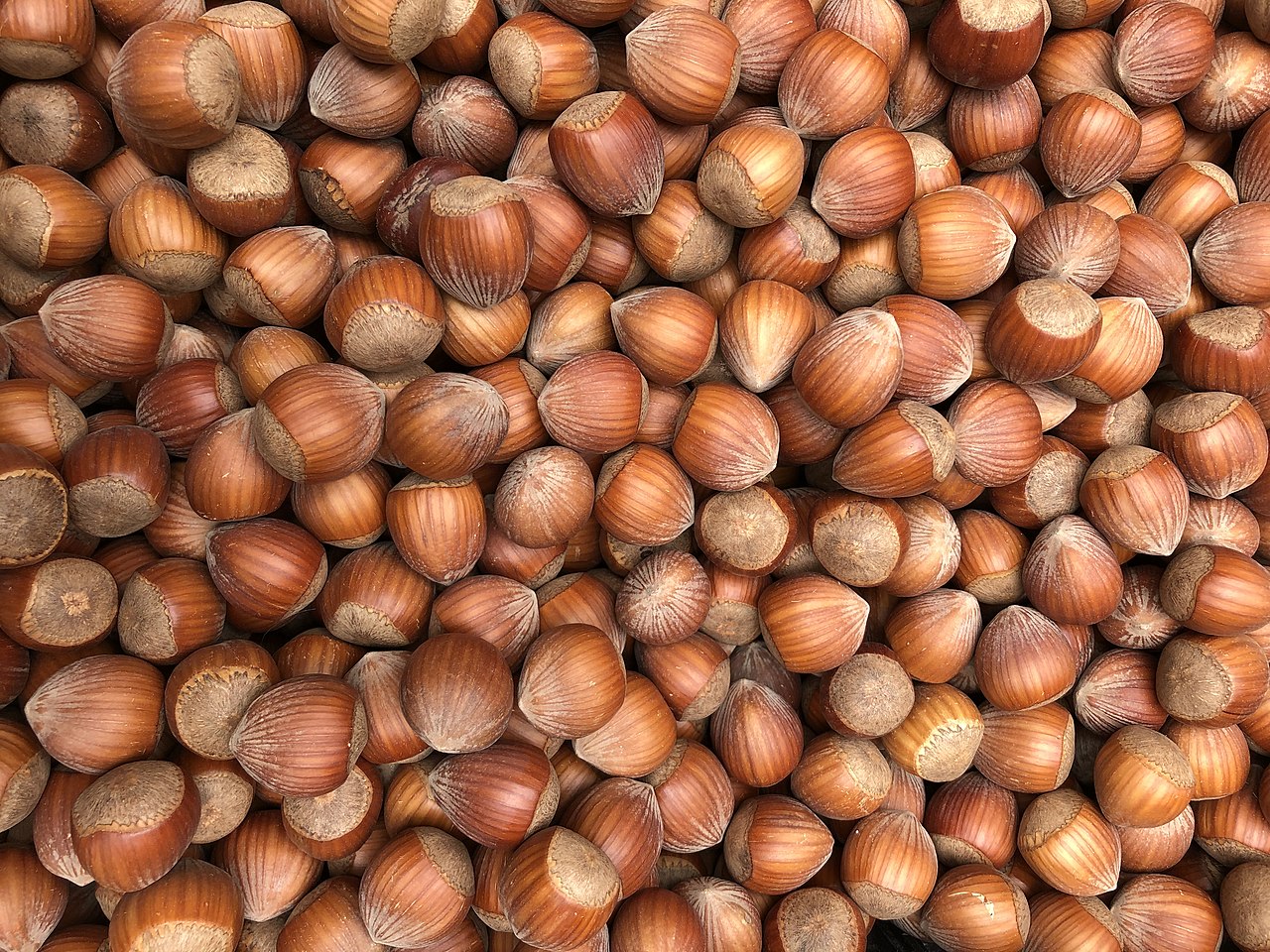
The Prerequisite for Everything: Properly Dried Fruit
Before any discussion of storage, the fruit must be properly dried. Freshly harvested hazelnuts have 30–35% water, and this moisture must be reduced to levels where microbial activity and mold development are halted.
| Fruit State | Target Moisture Content | Note |
|---|---|---|
| Fruit in shell (for storage) | approx. 7–10 % | Lower limit around 7% provides longer shelf life |
| Kernel | approx. 4–6 % | For long-term storage, target even 3.5–5 % |
| Drying Temperature | up to approx. 40 °C (range 32–34 °C as a milder mode) | High temperatures destroy aroma and promote rancidity |

Drying is carried out immediately after harvest; the sooner the target moisture is achieved, the lower the risk of early rancidity and mold development. Moisture is the most important single parameter: if it is too high, mold appears; if it is too low, the fruit dries out, loses weight, and changes color.
Figures are informative
The percentages and temperatures provided are approximate and depend on the cultivar, climate, and equipment. Check recommendations for your specific cultivar and location with the advisory service.
Optimal Storage Temperature
Low temperature is the most effective and universal means of extending the storage life of hazelnuts. At lower temperatures, enzymatic and chemical rancidity, vitamin E degradation, and microbial activity are significantly slowed.
The general rule from literature: a temperature below 10 °C already significantly slows down negative processes. The colder, the better — but with due consideration of energy costs.
| Temperature | Effect / Purpose | Approximate Shelf Life |
|---|---|---|
| Room / non-refrigerated storage | Common due to costs, acceptable in winter | Shorter shelf life, higher risk of rancidity |
| < 10 °C | Significantly slowed negative processes | Fruit in shell up to ~24 months |
| 4–5 °C | Recommended for kernels, good balance | Kernels up to ~1 year |
| 0–2 °C | Long-term storage, lowest peroxide levels | Up to ~2 years with appropriate moisture |
Experiments show that compared to 4 °C and 10 °C, a temperature of 4 °C was consistently better across all treatments. During two years of kernel storage, peroxide levels (an indicator of rancidity) were highest at 10 °C, lower at 5 °C, and lowest at 0 °C.
In practice, many producers keep fruit in shell during winter in ordinary, non-refrigerated warehouses because temperatures are naturally low and acceptable then, only moving the goods to refrigerated chambers at the beginning of spring (e.g., early March) before the weather warms up.
Air Humidity and Ventilation
Along with temperature, relative air humidity (RH) is the second key parameter. The goal is humidity low enough to prevent mold growth, but not so low that the fruit dries out and loses mass.
- RH must never exceed ~70 % — above this, the risk of mold and microbial spoilage increases.
- For long-term cold storage, RH around 60–70 % is recommended (e.g., refrigerated chambers at 0–2 °C with 65–75 % RH; some sources cite even 55–65 % as optimal).
- For kernels, lower values are cited: 55–60 % RH at 4–5 °C.
- According to tree-nut storage research, the ideal wider range is 40–60 % RH with low temperature and darkness.
| Product Type | Temperature | Relative Humidity |
|---|---|---|
| Fruit in shell, refrigerated chamber | 0–2 °C | 65–75 % |
| Kernels, cold storage | 4–5 °C | 55–60 % |
| Tree-nuts (general, long-term) | 4–15 °C | 40–60 % |
Ventilation
Good air circulation is just as important as the humidity level itself. Ventilation prevents the formation of "pockets" of high humidity where mold develops locally, and removes excess moisture and heat released by the fruit.
Practical measures from literature and practice: - Thin layers. The fruit is spread in thin layers and occasionally stirred to prevent absorbing unpleasant odors and to ensure even aeration. - Sacks on pallets. Good results are achieved by storing sacks (e.g., jute) on pallets in a space with good air circulation, in a ventilated area. - Electric fans ensure air circulation and remove excess moisture; modern warehouses also use dehumidifiers for precise RH control. - Quicklime (calcium oxide) in the warehouse absorbs excess moisture from the air — a traditional, inexpensive aid. - Regular airing and continuous monitoring of temperature and humidity.
Warehouse Layout
The space itself must be dry, light, and isolated from moisture:
- Floor concrete and isolated from moisture; dry boards are recommended to be placed over the concrete.
- Walls plastered and limed on both sides, well insulated to prevent moisture ingress.
- No foreign odors. Other products with strong odors must not be stored in the same space — hazelnuts absorb odors very easily, which reduces their quality.
- Pest protection. Ensure the space is protected from insects, birds, and rodents that damage the nuts and open the door to mold.
- If necessary, sulfur strips are traditionally burned periodically to control fungi (while strictly observing regulations and safety measures — check for permission).
Storage in Shell vs. Kernel
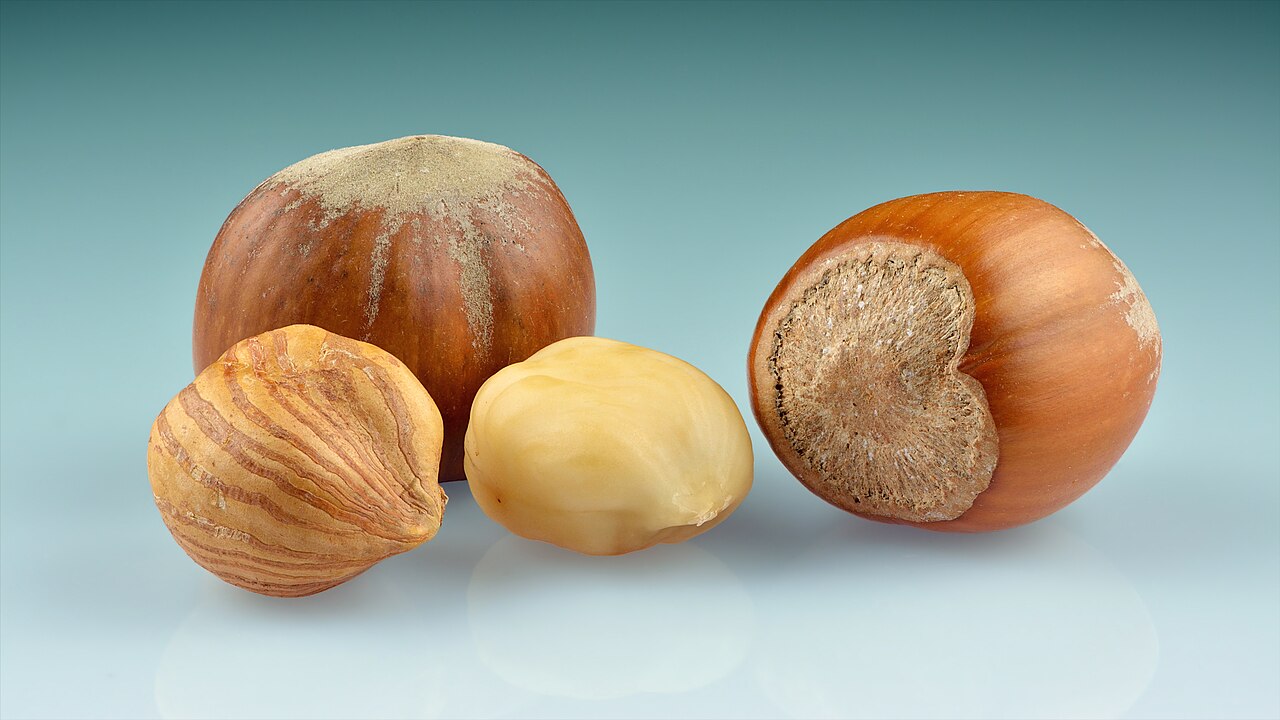
This is one of the most important practical decisions. The shell is a natural protective barrier against air, light, and moisture, so fruit in shell lasts longer and is more stable. Shelled kernels are more sensitive and go rancid faster, but take up half the space.
| Criterion | Fruit in Shell | Kernel (Shelled) |
|---|---|---|
| Protection against oxidation | Better (shell protects) | Weaker, goes rancid faster |
| Shelf Life (Cold) | Up to ~24 months at < 10 °C | Up to ~1 year at 4 °C / 55–60 % RH |
| Space Required | Larger | Half as much |
| Target Moisture | ~7–10 % | ~4–6 % (lower for long-term storage) |
| Recommendation | Long-term storage, sale in shell | Faster processing/sale, vacuum packing |
Practical guidelines: - Store kernels in the dark (light accelerates oxidation), in a cool and dry place, e.g., in cardboard boxes lined with cellophane, dark glass jars, or vacuum-packed. - For long-term kernel storage, vacuum packing of well-dried nuts is recommended — this best preserves aroma and quality. - Fruit in shell for home conditions can be kept in jute sacks in a ventilated place; with very low air humidity, it can last up to two years with occasional turning.
Modified / Controlled Atmosphere
Along with cooling, reducing oxygen further slows rancidity. Research clearly favors atmospheres with low oxygen content:
- Oxygen concentration below 10 % (ideally < 2.5 % for tree-nuts) combined with low temperature is cited as the best solution for delaying rancidity.
- In experiments, nitrogen atmosphere (100 % N₂) at 4 °C gave the best results: less color change, better freshness and elasticity, no unpleasant odor.
- Interestingly, CO₂ treatment (at both 4 °C and 10 °C) showed greater susceptibility to yellowing than nitrogen — thus, not all modified atmospheres are equally good; N₂ proved better than CO₂ for color preservation.
Modified atmosphere requires equipment and investment, so it is typically an option for larger facilities and high-value goods, while for most family farms, a combination of good drying, low temperature, and controlled humidity is a realistic foundation.
Preventing Rancidity — Summary of Measures
Rancidity (fat oxidation) is the main enemy of hazelnut quality. To delay it:
- Dry the fruit immediately after harvest to target moisture (shell ~7–10 %, kernel ~4–6 %).
- Keep at the lowest possible temperature you can afford (< 10 °C, ideally 0–4 °C).
- Humidity 55–70 % RH, never above 70 %.
- Darkness — especially for kernels.
- Reduce oxygen where possible (vacuum, N₂ atmosphere).
- Store in shell if the goal is long-term storage.
- Avoid foreign odors and non-dedicated storage facilities.
- Regularly check temperature, humidity, and the odor of the goods.
Shelf Life: Realistic Timeframes
| Form / Conditions | Approximate Shelf Life |
|---|---|
| Fruit in shell, < 10 °C | Up to ~24 months with minimal quality loss |
| Kernels, 4 °C / 55 % RH | Up to ~1 year |
| Kernels, vacuum / dark, cold | ~1 year (frozen up to ~2 years) |
| Roasted hazelnuts, 0–10 °C | Up to ~6 months before noticeable rancidity |
| Well-dried fruit, room conditions | 2–3 years possible, but with weight loss, color change, and quality decline |
Although it is stated that well-dried hazelnuts can be kept for 2–3 years, practice and economics recommend storage for no longer than one year: after that, the fruit loses weight, changes color, its aroma weakens, and market value drops. The most favorable approach is relatively quick sale after harvest, drying, and sorting.
Packaging and Sales
- For long-term kernel storage: vacuum-packed packages of well-dried fruit; dark packaging or dark space.
- For fruit in shell: breathable sacks (jute) on pallets; cardboard boxes for kernels.
- When selling, moisture, impurities, and yield (kernel ratio) are measured, which determines the price — another reason to keep moisture under control (over-dry goods = less weight, too moist = risk and rejection of purchase).
- Adhere to applicable regulations on quality, labeling, and packaging (e.g., Croatian regulations and EU standards for legumes) and hygiene requirements to prevent aflatoxins.
Common Mistakes
- Storing insufficiently dried nuts → mold, aflatoxins, rapid spoilage.
- Layers that are too thick without turning → moist “pockets,” unpleasant odors.
- Damp or uninsulated storage space → deterioration and loss of color.
- Storing near aromatic products → hazelnuts absorb odors.
- Storing “for a better price” for too long → loss of mass, color, and quality.
- Kernels exposed to light and heat → rapid rancidity.
Sources
This article is an AI-generated summary compiled from an internal hazelnut literature collection (RAG corpus) and publicly available sources. Figures and recommendations are informative and depend on the cultivar, location, equipment, and applicable regulations. Main sources used:
- Vrtodušić et al. (2022). Harvest, drying, and storage technology of hazelnuts: A literature review. Journal of Central European Agriculture, 23(2). — https://hrcak.srce.hr/279707 ; https://jcea.agr.hr/articles/772314_Tehnologija_berbe_su_enja_i_skladi_tenja_lje_njaka_Pregled_literature_hr.pdf
- HAZELNUT CULTIVATION (2009.) — overview of storage technology and experiments with modified atmosphere (N₂/CO₂); source: Massantini, R. et al. (2009.) The consumption of fresh hazelnuts: quality and storage.
- Hazelnut — Plant (Moj Vrt) — drying at ~40 °C, nitrogen atmosphere, storing shelled nuts.
- Hazelnut (Vrtlarica.hr) — drying temperatures and storage durations.
- Protecting hazelnut nuts from mold: A comprehensive guide — storage facility management, ventilation, vacuum packing, quicklime.
- Antonija Huzjak / Technology and economic efficiency of organic hazelnut production at Hobolić Alen Family Farm (2021.) — practical storage conditions and durations.
- Economic analysis of hazelnut production (2023.) — refrigerated chambers at 0–2 °C, RH 65–75 %, foreign odors.
- Advantages of hazelnut cultivation (Gospodarski list) — thin layers, turning, sulfur strips.
- Maness (2016); Fontana et al. (2014); Ghirardello et al. (2013); Ebraheim et al. (1994); Silvestri et al. (2021); Moscetti et al. (2012) — primary references cited in the literature review.
- Effect of storage conditions on chemical and physical characteristics of hazelnut (Corylus avellana L.) — ScienceDirect: https://www.sciencedirect.com/science/article/abs/pii/S0925521413000586
- Maintaining the quality of unripe, fresh hazelnuts through storage under modified atmospheres — ScienceDirect: https://www.sciencedirect.com/science/article/abs/pii/S0925521411002419
- Pacific Hazelnuts — Storage Instructions: https://www.pacifichazelnuts.com/storage-instructions
Recommended equipment
🔎 food dehydrator — Amazon →Affiliate links — we may earn a small commission at no extra cost to you.
Food Dehydrator
For controlled drying of small batches.
| Use Case | Option Type | What to Check Before Purchase |
|---|---|---|
| Small batch drying | Stackable tray model | Tray material and airflow design |
| Uniform drying | Fan-powered unit | Temperature control accuracy |
| Commercial volume | Industrial dehydrator | Professional capacity and energy use |