Economics of Mechanized vs. Manual Harvest
Content generated by artificial intelligence — verify before application
This article was automatically compiled from a collection of hazelnut literature using artificial intelligence and may contain errors or outdated data. It serves as a starting point for further research, not as professional advice. Dosages, products, and timing are informative and depend on the cultivar, location, and applicable regulations — always consult an advisory service and official sources before application.
Harvest is by far the most expensive single operation in hazelnut production — according to multiple sources, it accounts for nearly half of the variable production costs. Therefore, the decision to harvest manually or mechanically is one of the most critical economic decisions a grower makes, and it is not a one-time decision but one made every time the orchard expands. Manual harvesting requires no capital but consumes a large amount of expensive labor; mechanical harvesting requires significant initial investment but reduces labor to a few hours per hectare. This article compares the cost structure (labor vs. capital) of both methods and explains how to calculate the break-even point for a harvesting machine depending on orchard size.
Note on currency and conversion HRK → EUR
Croatia adopted the euro on January 1, 2023, at a fixed conversion rate of 1 € = 7.53450 HRK. Many domestic sources and calculations used in this article were published before that date in Croatian Kuna (HRK). For comparability, alongside each Kuna amount, we provide the conversion to Euros at that fixed rate. The amounts are informative: prices for labor, fuel, and machinery change from year to year and depend on location, season, and labor source.
Why harvest is the economic bottleneck
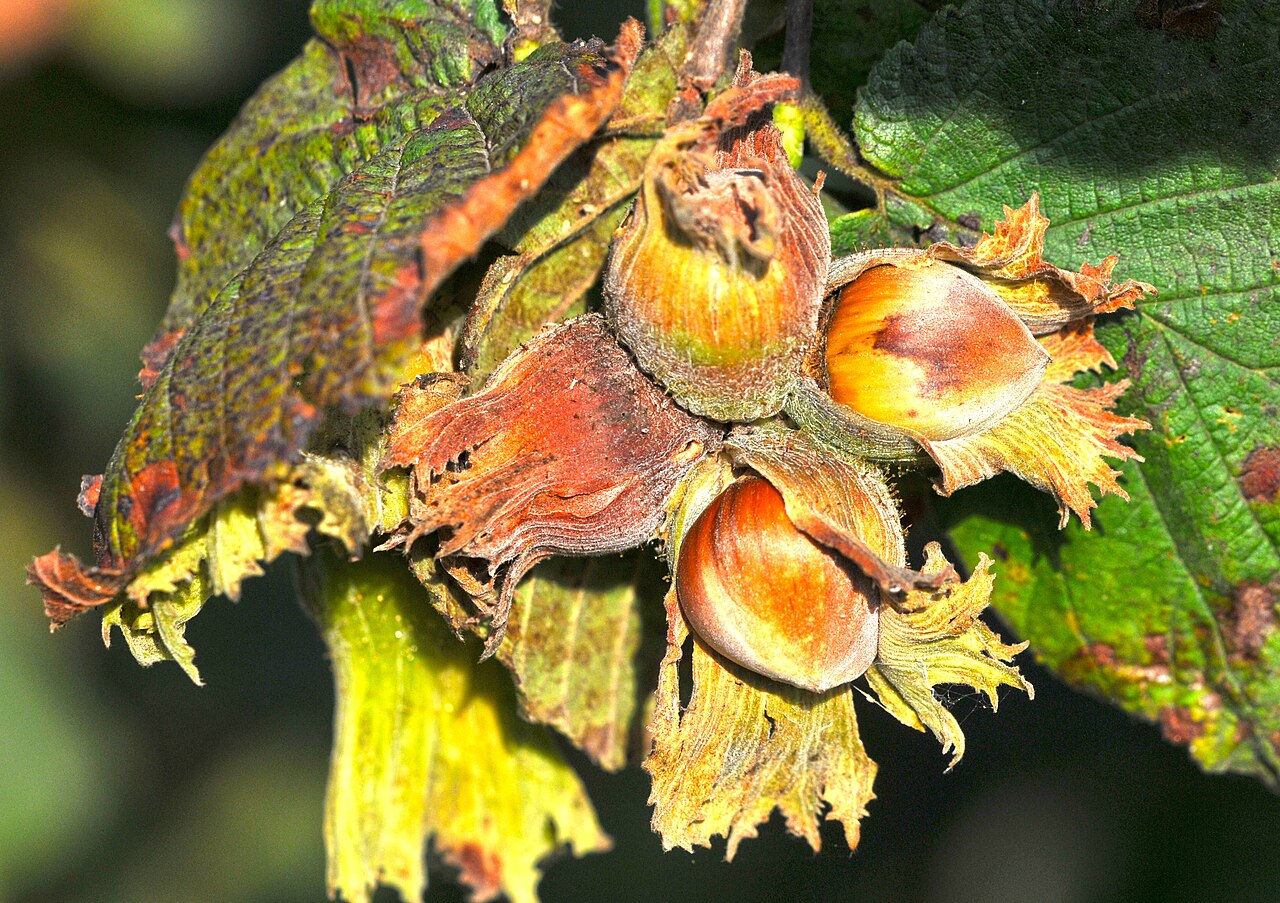
Hazelnuts do not ripen uniformly: fruits from the same bush mature and drop from the husks over several weeks (usually from August to early October), so harvesting is typically carried out in two or more passes. This means the orchard needs to be visited multiple times in a short window, before rains and before rodents, birds, and wild boars consume part of the crop from the ground. This combination — a large amount of labor squeezed into a short time — makes harvest both the most expensive and logistically sensitive operation.
From Croatian literature (master's theses and professional papers on hazelnut production economics), the same conclusion is repeatedly drawn: "Without the application of mechanization, hazelnut production is not economically viable," and "the largest variable cost is harvest." Several authors state that harvest costs account for about 50% of total production costs. This is the starting point for the entire analysis.
Manual harvest: cost is almost exclusively labor
Manual harvest means workers collect fruits by hand — from the ground or by shaking branches onto spread tarps/films. Initial capital is negligible (baskets, tarps, sacks), but efficiency is low, so labor costs escalate quickly with area.
Yield per picker — and how to distinguish yield from calculated norm
It is important here to distinguish between two concepts often confused in the literature:
- Actual picker yield — how much one person realistically harvests. Croatian sources cite around 6–8 kg of hazelnuts per hour, or up to ~50–60 kg per day per picker. One source cites a more conservative "about 20 kg for eight hours" on difficult terrain, and another "one worker for one day about 50 kg, but that is an indicative norm." This refers to yield per day, not per hour.
- Calculated harvest norm — the figure official calculations use as the basis for cost accounting (kg per hour × hourly rate). This is a technical assumption of the model, not a measured yield of an individual picker.
Correction: „60 kg/h" is an error — the norm is 60 kg per day
In older versions of the text and in some summaries, the figure „60 kg/h" for manual harvest is propagated. This is a unit error. The actual picker yield is 6–8 kg per hour; the figure 50–60 kg refers to the entire working day. Confusing hours and days underestimates the estimated cost of manual harvest by up to eight times, so always check which time unit the figure refers to in your own calculations.
| Manual harvest indicator | Value (informative) |
|---|---|
| Actual yield per picker | 6–8 kg/h, up to ~50–60 kg/day |
| Main advantage | picker immediately separates bad/empty nuts (less post-harvest cleaning) |
| Main disadvantage | slow, "laborious and very expensive" (quote from literature) |
| Initial capital | very low (tarps, baskets, sacks) |
| Most suitable for | small orchards, uneven/rocky terrain, cultivars with long husks (e.g., 'Istarski duguljasti') |
How much this costs per hectare
The most concrete domestic figures come from the Catalog of Variable Cost Coverage Models (2022) of the Directorate for Professional Support to Agricultural Development (Ministry of Agriculture). The catalog provides two models, depending on the region, and in both, harvest is by far the largest item:
| Model (Catalog 2022.) | Yield | Harvest norm | Labor price | Harvest cost | Share of var. cost |
|---|---|---|---|---|---|
| Continental (740 trees/ha, vase shape) | 20,000 kg/ha | 30 kg/h | 35.00 HRK/h (≈ 4.65 €/h) | 23,333 HRK/ha (≈ 3,097 €/ha) | ~33% of ~70,106 HRK (≈ 9,305 €) var. cost |
| Mediterranean (1,125 trees/ha) | 33,000 kg/ha | 60 kg/h | 50.00 HRK/h (≈ 6.64 €/h) | 27,500 HRK/ha (≈ 3,650 €/ha) | ~46% of ~59,800 HRK (≈ 7,937 €) var. cost |
The difference in norm (30 vs. 60 kg/h) between models is due to assumptions about labor organization and orchard density in the calculation, and not the actual yield of one picker (which remains 6–8 kg/h). In the Mediterranean model, harvest alone accounts for ~46% of variable costs — an exact confirmation of the rule "harvest ≈ half the cost."
For comparison, an older university calculation for continental conditions (2015, yield 2,000 kg/ha) cites a harvest cost of 5,714.29 HRK/ha (≈ 758 €/ha) within a total variable cost of 15,806.69 HRK/ha (≈ 2,098 €/ha) — a lower absolute amount because the assumed yield was significantly smaller.
Labor hourly rate is rising
In updated calculations for the ecological measure (Measure 11), the hourly labor rate for harvesting perennial crops increased from 20 HRK/h (≈ 2.65 €/h) in the period 2014–2017 to 25 HRK/h (≈ 3.32 €/h) in 2018–2019, while newer catalogs calculate with 35–50 HRK/h (≈ 4.65–6.64 €/h). The trend is clear: as the price and availability of seasonal labor rise, the economics shift faster in favor of the machine. The figures are informative and depend on location, season, and labor source.
Mechanical harvest: capital replaces labor
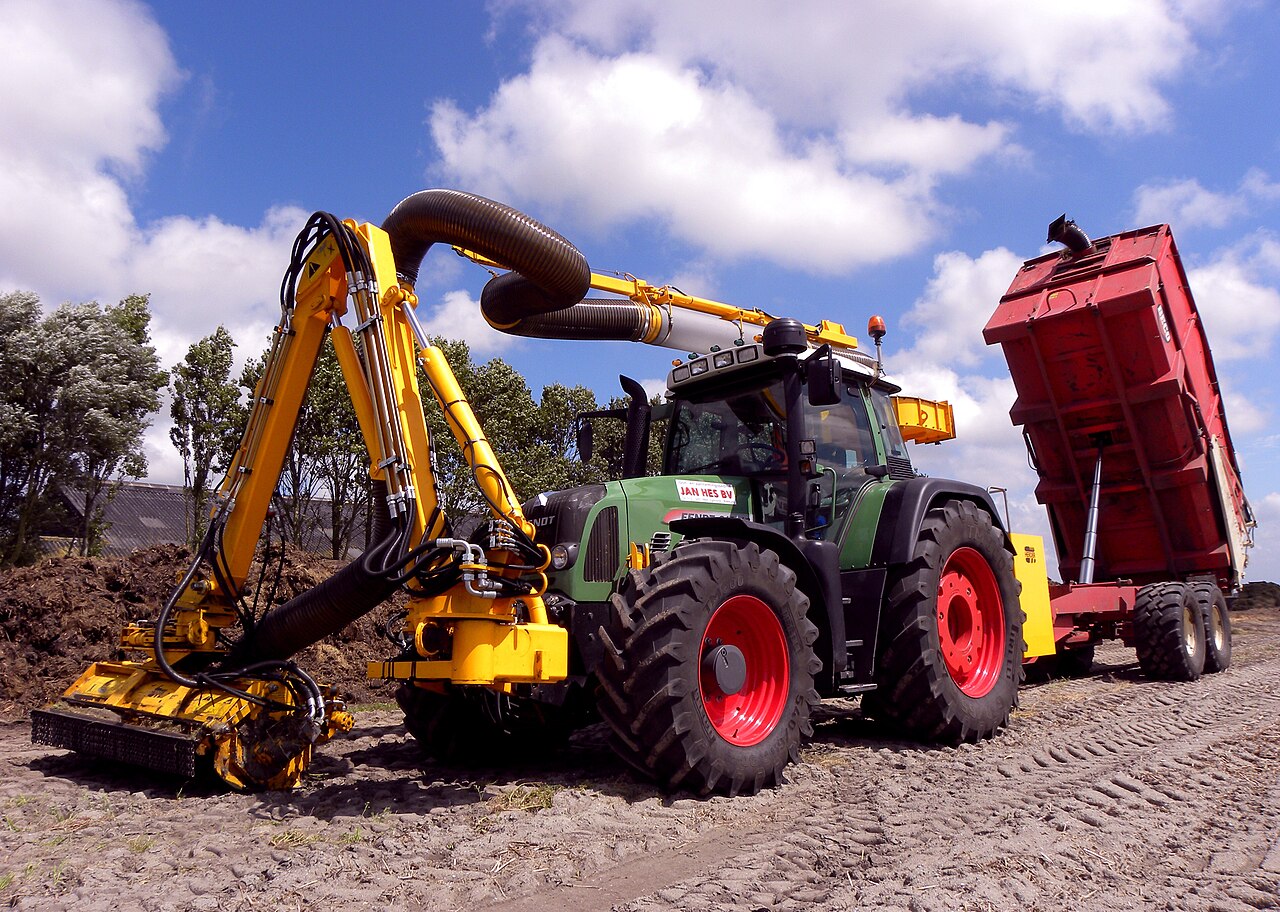
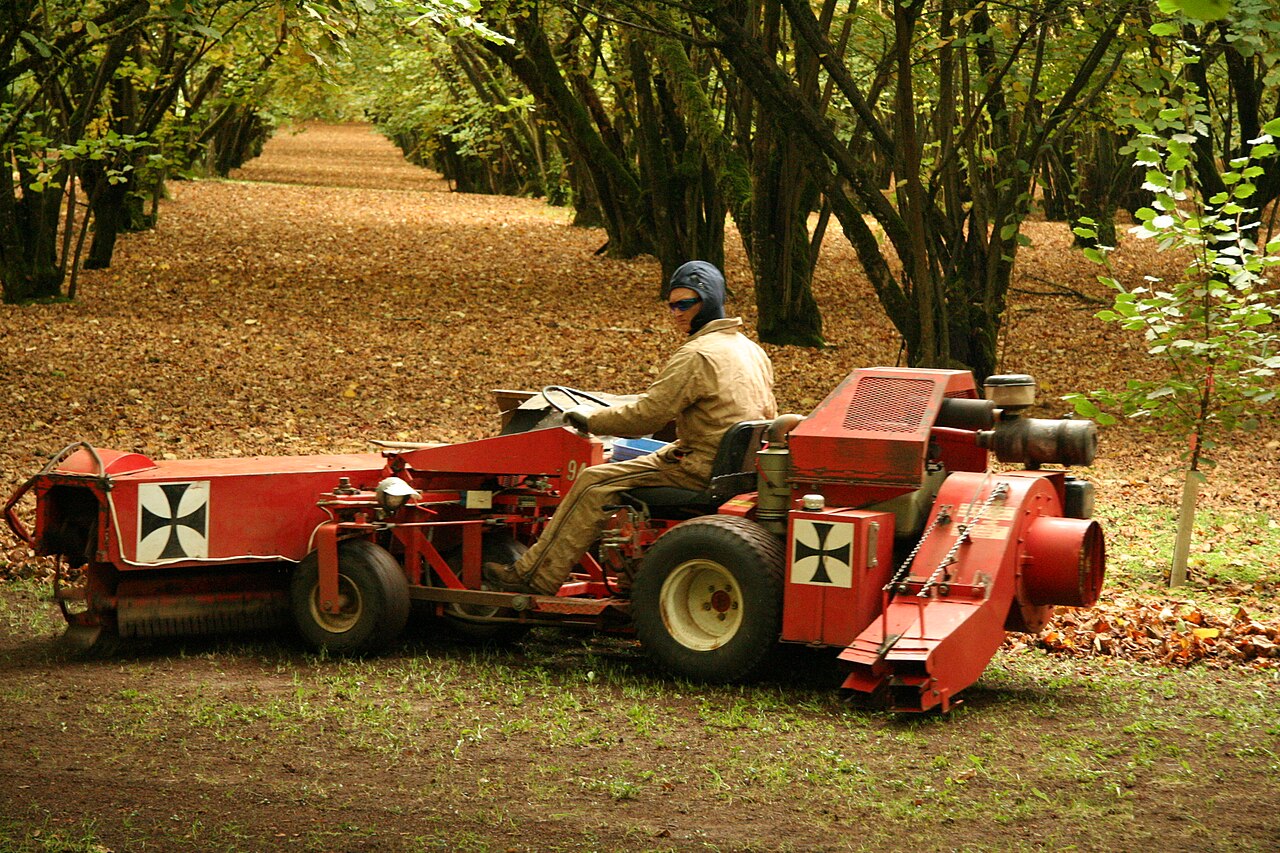
Mechanical harvest collects fruits from the ground with a collector machine (suction/brush collector), either as a tractor attachment (power via PTO and hydraulics, ~30 HP and up) or as a self-propelled machine. Between these two extremes is semi-mechanized harvest (backpack vacuums), intended for smaller orchards — more efficient than hand labor, and significantly cheaper than a full combine.
What changes in the cost structure
Switching to a machine shifts the cost from the "labor" column to the "capital and operation" column:
- Initial investment in the machine (from a few thousand to >10,000 € for self-propelled collectors; trailed shakers in domestic support limits were cited, e.g., around 35,370 HRK ≈ 4,694 €).
- Fixed annual costs: depreciation, interest on invested capital, insurance, storage. According to the FADN handbook, mechanization and equipment are depreciated if their purchase price is greater than 465 € and their useful life is longer than one year.
- Variable labor costs of the machine: fuel, lubricants, maintenance and repairs, and reduced human labor (1–2 operators instead of dozens of pickers).
Yield and working hours
Yield figures vary greatly with machine generation. From the literature:
| Method | Yield / working hours | Source (type) |
|---|---|---|
| Manual harvest | 6–8 kg/h per picker (~50 kg/day) | HR professional paper |
| Early mechanization | ~100 kg/h | HR review (Miljković, 2018.) |
| Older collectors | 120–500 kg/h | HR review (Modic, 1985.) |
| Modern collectors (60 HP) | up to ~1,200 kg/h | machine catalog |
| Modern equipment, 5 people | ~80 ha in 10 days | HR book (indicative) |
| Mechanical harvest (Italian/Turkish trial) | 156.9 h/ha | scientific trial |
| Manual harvest (same trial) | 99.2 h/ha | scientific trial |
Attention to the „paradox" of working hours
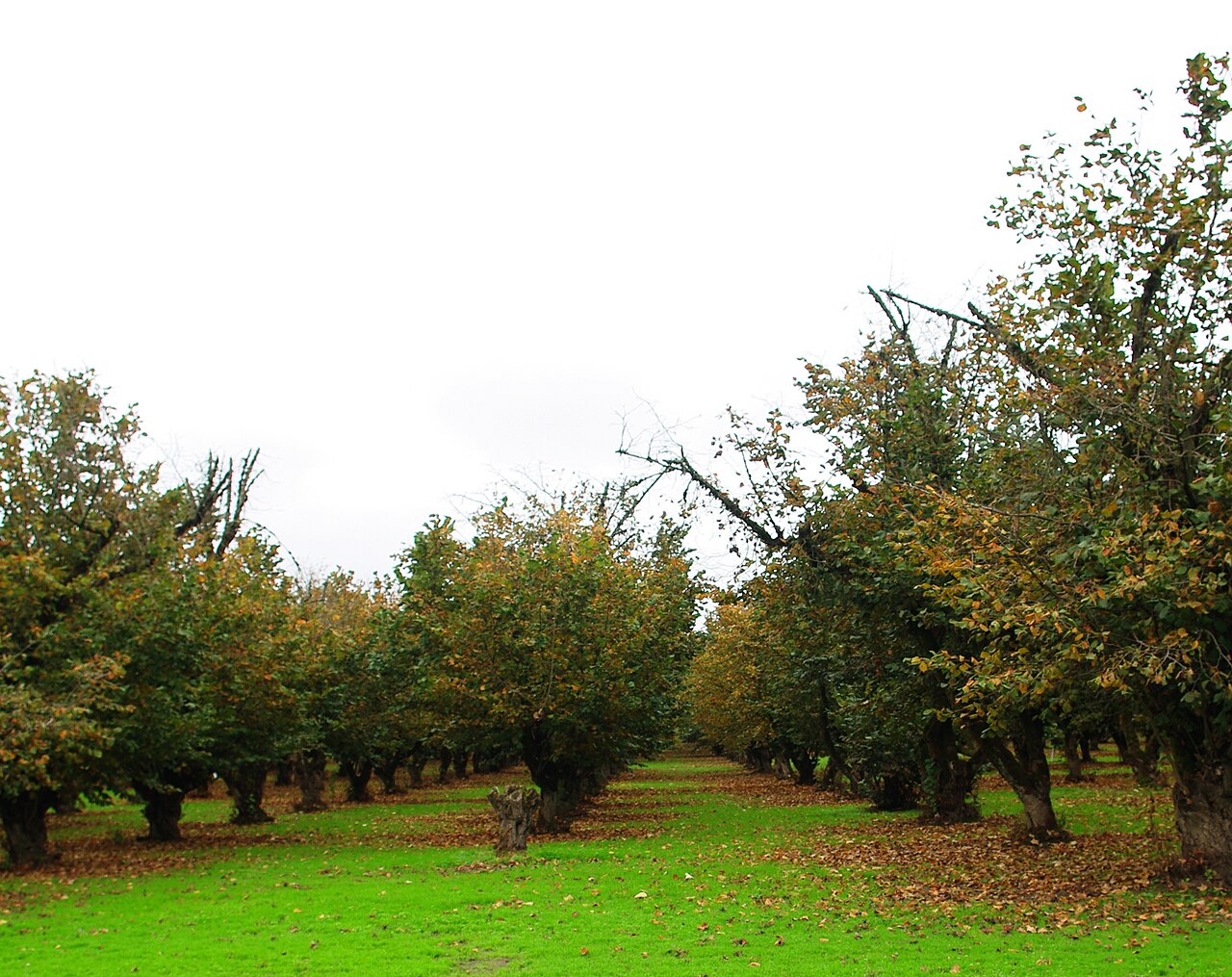
One peer-reviewed trial (Turkey/Italy) recorded that mechanical harvest required MORE hours per hectare (156.9 h/ha) than manual (99.2 h/ha). This is not an error, but a warning: on steep, terraced, or poorly prepared terrain, the machine works slowly and inefficiently, so mechanization does not guarantee savings on its own. Savings only come when the terrain is flat, clean, and the orchard is designed for the machine (spacing, aligned strip under the row, removed root suckers). Therefore, literature emphasizes: "All agrotechnical interventions in the orchard should be adapted to the harvest technology as well."
How much mechanical harvest reduces costs
Synthesized data from multiple sources show the order of magnitude of savings:
| Item | Manual | Mechanical | Savings |
|---|---|---|---|
| Harvest cost (US data, per acre) | > $450/acre | < $175/acre | > 60% |
| Harvest cost (Turkish trial, best variant) | ~6,666 TL/ha | ~1,637 TL/ha | ~75% |
| Share of labor in annual management costs | can reach ~20% | significantly lower | — |
The domestic conclusion is identical: "Since manual fruit collection is a difficult and expensive job... harvest is carried out mechanically, with collector machines. In this way, harvest costs are significantly reduced and efficiency increased." Several domestic sources estimate that manual harvest is 2 to 5 times more expensive than mechanical, and that a self-propelled combine is twice as cheap per kg as a trailed one.
Break-even point: When does the machine pay off
This is the core of the economic decision. The break-even point is the area (or annual yield) at which the annual cost of owning and operating the machine equals the cost of hand-harvesting the same quantity. Below this threshold, it is cheaper to harvest by hand (or hire a service); above it, the machine pays off.
Calculation Logic
- Annual fixed machine cost = (purchase price − residual value) / lifespan + interest + insurance.
- Savings per hectare = (hand harvest cost/ha) − (machine harvest cost/ha, incl. fuel, maintenance, operator).
- Break-even (ha) = annual fixed machine cost / savings per hectare.
Illustration of the method (caution against transferring figures)
The Agroforestry Handbook (Perennial Pathways, 2018.) develops this calculation using an example of a berry harvester (aronia), which can be repurposed for other crops:
- With a machine price of $30,000 and a wage of $7.25/h, the break-even area is ~0.66 acres (≈ 0.27 ha).
- Only when the machine is upgraded with additional equipment for multiple crops and steeper terrains, raising the price to $60,000, does the break-even area rise to ~1.16 acres (≈ 0.47 ha).
The 0.47 ha threshold is an ILLUSTRATION of the method, not a rule for hazelnuts
The figure "~0.47 ha" (and its lower variant "~0.27 ha") comes from a foreign calculation for a different crop and labor market (US wages, aronia harvester). It only shows the mechanics of the calculation—that with very expensive hand harvesting and a cheap machine, the break-even point is low. It must not be taken as the break-even point for a hazelnut harvester in Croatia. The actual threshold for hazelnuts depends on local labor costs, yield, machine price and efficiency, and terrain, and domestic practice provides a completely different reference point (see below). Always calculate your own threshold using your own figures.
Practical rule from Croatian practice
Domestic literature provides a concrete reference: on areas larger than ~3 ha of hazelnuts in full production, it is practically essential to have a harvester, because "harvesting is faster, requires less labor, and thus mechanized harvesting costs are much lower." Below ~3 ha, hand or semi-mechanized harvesting, or harvesting services, usually prevail.
Three scenarios based on orchard size
| Orchard Size (full production) | Recommended Technology | Explanation |
|---|---|---|
| < 1 ha (homestead, hobby) | Hand harvesting | Capital investment in a machine is not recovered; terrain is often irregular |
| ~1–3 ha | Semi-mechanized (backpack vacuum), harvesting service, or machine ring | Lower entry cost; avoids tying up capital in an expensive harvester |
| > 3 ha | Own self-propelled harvester / combine | Labor savings outweigh the machine's fixed costs |
| Large areas (e.g., > 10 ha) | Self-propelled / "straddle" harvesters | Lowest cost per kg, but require flat terrain and adapted configuration |
Turkish field data confirm this distribution: in farm surveys, the share of machine harvesting increases with farm size—on the smallest plots, machines are almost non-existent, while on larger ones, their share increases significantly.
Alternatives to purchase: harvesting services, machine rings, and cooperatives
For orchards on the edge of profitability (~1–3 ha), there is not just the choice of "buy or harvest by hand." Three models without own capital investment in machinery lower the break-even threshold.
Harvesting service (custom harvest) — typical prices in Croatia
The simplest option is to pay a contractor to come with their own machine. The price is negotiated per hour, per kg, or per hectare. From domestic sources (agricultural forums, columns) regarding hazelnut/walnut harvesting, the following approximate amounts are mentioned (indicative, changing, and dependent on terrain and distance):
| Service | Typical Price (HRK) | Conversion (€) |
|---|---|---|
| Harvesting with tractor + harvester | ~250 HRK/h | ≈ 33 €/h |
| Harvesting with machine only (no tractor) | ~150 HRK/h | ≈ 20 €/h |
| Complete post-harvest processing (cleaning, grading, cracking, separation) | ~2 HRK/kg | ≈ 0.27 €/kg |
| Drying (additional) | ~0.1 HRK per % moisture removed | ≈ 0.013 €/% |
Advantage of the service: no capital investment or fixed costs. Disadvantage: dependence on the availability of contractors during the short, common harvest window—in peak days, the contractor may not arrive in time, carrying the risk of quality and yield loss.
Machine rings and cooperatives
A machine ring is an association of growers who jointly use machinery for more efficient operation. Several small orchards share one machine, distributing its fixed cost (depreciation, interest, insurance) over more hectares and shifting the break-even point downward for each member. Domestic technological-economic guidelines explicitly state that "forming machine rings, or renting machinery for service, is one way to reduce production costs while simultaneously leveraging all the advantages of modern mechanization."
Reality of machine rings in Croatia
Although establishing machine rings in Croatia has been possible since 2008 (there are also concrete examples, e.g., Strojni prsten radobojskih voćara), in practice they have not taken off on a broad scale, primarily due to the lack of targeted institutional support. Experts, however, emphasize that—since the number of working hours determines machine profitability—forming associations is a logical path for small and medium orchards. When sharing machinery, organizational limitations must be considered: bulky "straddle" harvesters are less suitable for sharing between distant plots due to size and transport constraints, and the peak harvest window means all members need the machine at the same time—so the schedule must be agreed upon in advance.
Gradual mechanization
The third path is gradualness: starting with a backpack vacuum (semi-mechanized harvesting), moving to a tractor-mounted attachment only when the orchard enters full production and justifies the investment, and only then—if the area and terrain allow—acquiring a self-propelled combine. This prevents capital from being tied up before the yield begins to cover costs.
Hidden costs and quality—not just the hourly rate
Comparing "HRK/ha" or "€/ha" does not capture everything. A complete economic picture must include:
- Post-harvest processing. Hand harvesting allows the picker to immediately discard hollow, dried, and wormy nuts, so subsequent cleaning/sorting is less intensive. Machine harvesting picks up stones, leaves, and twigs, thus requiring an additional cleaning and drying process—this is a cost that partially "eats" the savings on harvesting (see processing prices above).
- Timeliness. Machine harvesting is fast, so the entire orchard is harvested within a narrow optimal window (before rain, before pests). Hand harvesting can be "stretched out," resulting in yield and quality losses—this is a real, albeit hard-to-measure, cost.
- Preparation for the machine. For the machine to operate cheaply, the strip under the row must be leveled and clean (mowing, desiccation of the sward ~one month before harvest, control of root suckers which manually "can account for up to one-fifth of annual management costs"). These preparation costs belong to the machine scenario.
- Terrain and cultivar. On steep/rocky terrain and for cultivars with long shucks (nuts do not fall off naturally), ground-based machine harvesting is inefficient or impossible—hand harvesting remains the only option regardless of area.
Practical recommendations and common mistakes
Recommendations
- Calculate the threshold using your own figures: actual hourly labor cost in your location, actual yield/ha, and realistic machine price/efficiency. The "3 ha" rule is a reference, not a verdict; foreign break-even figures (e.g., 0.47 ha) are only an illustration of the method.
- Before purchasing a machine, try a harvesting service for one or two seasons—you will get a realistic cost (e.g., ~150–250 HRK/h ≈ 20–33 €/h) and check if the terrain is suitable for the machine.
- Design the orchard for harvesting from planting: row spacing adapted to the machine, flat and clean strip under the row, sucker control, grouping cultivars by ripening time. Subsequent adjustments are expensive.
- For 1–3 ha, seriously consider a machine ring / cooperative instead of independent purchase.
Common mistakes
- Confusing units — stating "60 kg/h" instead of "60 kg/day" for hand harvesting drastically underestimates labor cost and incorrectly shifts the break-even point.
- Buying a machine too large for a small orchard — fixed costs (depreciation, interest) are then never covered.
- Ignoring processing costs in machine harvesting — comparing only the "harvest hour" overestimates savings.
- Mechanization on unsuitable terrain — as in the cited experiment where the machine required more hours per hectare than hand labor.
- Late harvesting due to lack of labor (hand scenario) — losses from pests and rain can eat up the entire apparent capital savings.
Summary
Hand harvesting is capital-light but labor-expensive: ~6–8 kg/h per picker (up to ~50–60 kg/day) and accounts for up to half of variable costs. Machine harvesting is capital-intensive but labor-cheap: with good terrain, it reduces harvesting costs by 60–75%, and domestic estimates say hand harvesting is 2–5 times more expensive. The break-even point depends on labor cost, yield, and machine price, but domestic practice provides a robust reference: above ~3 ha of hazelnuts in full production, mechanization almost always pays off, while below that, hand/semi-mechanized harvesting or harvesting services (~150–250 HRK/h ≈ 20–33 €/h) prevail, and joint machine use (machine ring) shifts this threshold downward. Foreign break-even figures (e.g., 0.47 ha) are useful only as a demonstration of the calculation method, not as a ready-made rule.
Gallery
Sources
This article is an AI-generated summary compiled from an internal hazelnut literature collection (RAG corpus) and public sources. Key sources used:
- Catalog of Variable Cost Coverage Models for Agricultural Production 2022 (Ministry of Agriculture of the Republic of Croatia) — hazelnut harvest calculations: continental model 30 kg/h, 35 HRK/h, 23,333 HRK/ha; Mediterranean model 60 kg/h, 50 HRK/h, 27,500 HRK/ha
- Update of Calculations for Measure 11 — Organic Production (2022) — hourly labor rates for harvesting/pruning of perennial orchards (20 → 25 HRK/h)
- "Economic Comparison of Different Hazelnut Training Systems" (University of Josip Juraj Strossmayer, 2015) — continental conditions calculation (harvest cost 5,714.29 HRK/ha)
- "Economic Viability of Hazelnut Production" (2022) — costs and profit per hectare
- "Mechanization in Hazelnut Production and Processing at MINAS-ZRNO Company" (2021) — necessity of a harvester for orchards over 3 ha
- "Technological and Economic Characteristics of Hazelnut Cultivation" — CORE (2018) — https://doi.org/10.46584/lm.v36i2.1141
- "Tractor Attachment for Hazelnut Harvesting" (2020) — impact of manual harvesting 6–8 kg/h, 60 HP collector up to ~1,200 kg/h, semi-mechanization
- Environmental Protection Study — Hazelnut Orchard Vojnić/Utinja (2021) — mechanical vacuuming from the ground, surface preparation, and pasture desiccation
- "Establishing New Fruit Orchards (Technological-Economic Guidelines)" (2006) — mechanical rings and machinery rental
- "Established Association of Mechanical Ring Harvesting Fruit Growers" — savjetodavna.mps.hr — https://savjetodavna.mps.hr/2009/01/27/osnovana-udruga-strojni-prsten-radobojskih-vocara/
- "Why the Mechanical Ring Didn't Take Off..." — Agroklub — https://www.agroklub.com/poljoprivredne-vijesti/zasto-strojni-prsten-nije-zazivio-i-kako-biti-konkurentan-s-rashodovanom-mehanizacijom/56170/
- "What is Important to Know When Choosing Machinery and Equipment for Hazelnut Cultivation?" — Agroklub — https://www.agroklub.com/vocarstvo/sto-je-vazno-znati-kod-odabira-strojeva-i-opreme-za-uzgoj-lijeske/57470
- "Price of Hazelnut/Walnut Cleaning Service" — Agricultural Forum (harvest service prices ~150–250 HRK/h, processing ~2 HRK/kg) — https://poljoprivredni-forum.com/threads/pitanje-cijena-usluge-ciscenja-ljesnjaka-oraha.23274/
- FADN Handbook 2023 — machinery depreciation thresholds (acquisition value > €465)
- HNB — fixed exchange rate conversion 1 € = 7.53450 HRK — https://www.ecb.europa.eu/press/pr/date/2022/html/ecb.pr220712~b97dd38de3.hr.html
- "Labor requirements and work efficiencies of hazelnut harvesting" / "Assessment of hazelnut mechanical harvesting productivity" — comparative labor hours (99.2 vs 156.9 h/ha) and costs (TL/ha)
- "Hazelnut postharvest technology: A review" (2022) — machine effects 100–500 kg/h, manual ~50 kg/day
- Perennial Pathways: Planting Tree Crops (2018) — calculation of machinery profitability threshold (0.66 acres at $30,000; 1.16 acres at $60,000)
- Oregon State University, Orchard Economics: Costs and Returns (AEB 0068, 2022.) — https://appliedecon.oregonstate.edu/sites/agscid7/files/oaeb/pdf/aeb0068.pdf
- Midwest Hazelnut Development Initiative — "Can I make money growing hazelnuts?" — https://www.midwesthazelnuts.org/uploads/3/8/3/5/38359971/fact_sheet_series_3_can_i_make_money_growing_hazelnuts.pdf
- Hazelnut Hub — Innovations in Hazelnut Harvesting — https://hazelnuthub.com/hazelnut-harvesting-innovations/
- Financial Models Lab — Hazelnut Farming KPIs — https://financialmodelslab.com/blogs/kpi-metrics/hazelnut-farming
Recommended equipment
🔎 nut gatherer roller — Amazon →Affiliate links — we may earn a small commission at no extra cost to you.
Handheld Nut Roller Collector
For gathering nuts from the ground on small areas.
| Use Case | Option Type | What to Check Before Purchase |
|---|---|---|
| Small area collection | Manual roller device | Wheel traction and debris clearance |
| Uneven terrain | Heavy duty rollers | Frame strength and wheel size |
| Large orchards | Mechanical sweepers | Professional machinery for efficiency |