Site Suitability Criteria: Climate, Slope, and Aspect
Content generated by artificial intelligence — verify before application
This article was automatically compiled from a collection of hazelnut literature using artificial intelligence and may contain errors or outdated data. It serves as a starting point for further research, not as professional advice. Dosages, products, and timing are informative and depend on the cultivar, location, and applicable regulations — always consult with advisory services and official sources before application.
Site selection is a decision made only once, yet its consequences are felt for three to four decades — the productive lifespan of a hazelnut orchard. Unlike fertilization, pruning, or pest control, which can be adjusted from year to year, a poorly chosen location remains a permanent constraint. Therefore, assessing site suitability is not a mere formality before planting, but the most critical individual step in establishing an orchard. This article integrates climatic, topographic, and logistical criteria into a single comprehensive site evaluation: optimal climate, altitude, slope, slope aspect, wind protection, and plot accessibility.
The Three Ecological Pillars: Climate, Soil, and Position
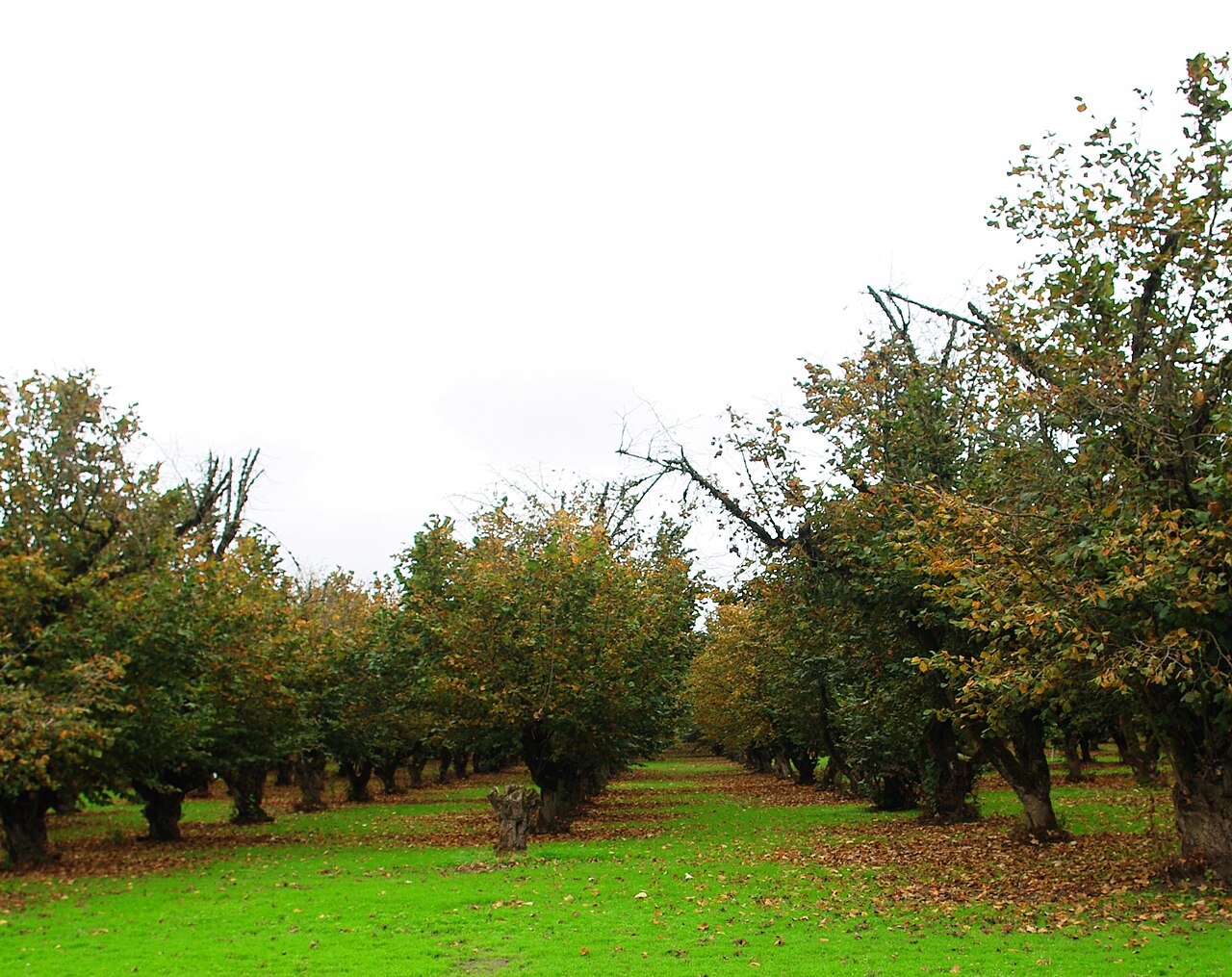
All reviewed literature reduces site selection to three interrelated ecological factors — climate, soil, and position (topography) — and their interactions. Ignoring climatic factors can permanently jeopardize production, as favorable conditions during flowering and fertilization, combined with a good site position, guarantee quality and proper fruit development. In other words, no soil can compensate for a location exposed to late frosts, nor does the most favorable microclimate help if water stagnates in the root zone.
This article focuses on climate and position (topography); soil is covered in a separate chapter of this series. However, remember that these factors are always evaluated together — the site is assessed as a whole, not as a sum of separate scores.
Climate — The Main Limiting Factor in Croatia
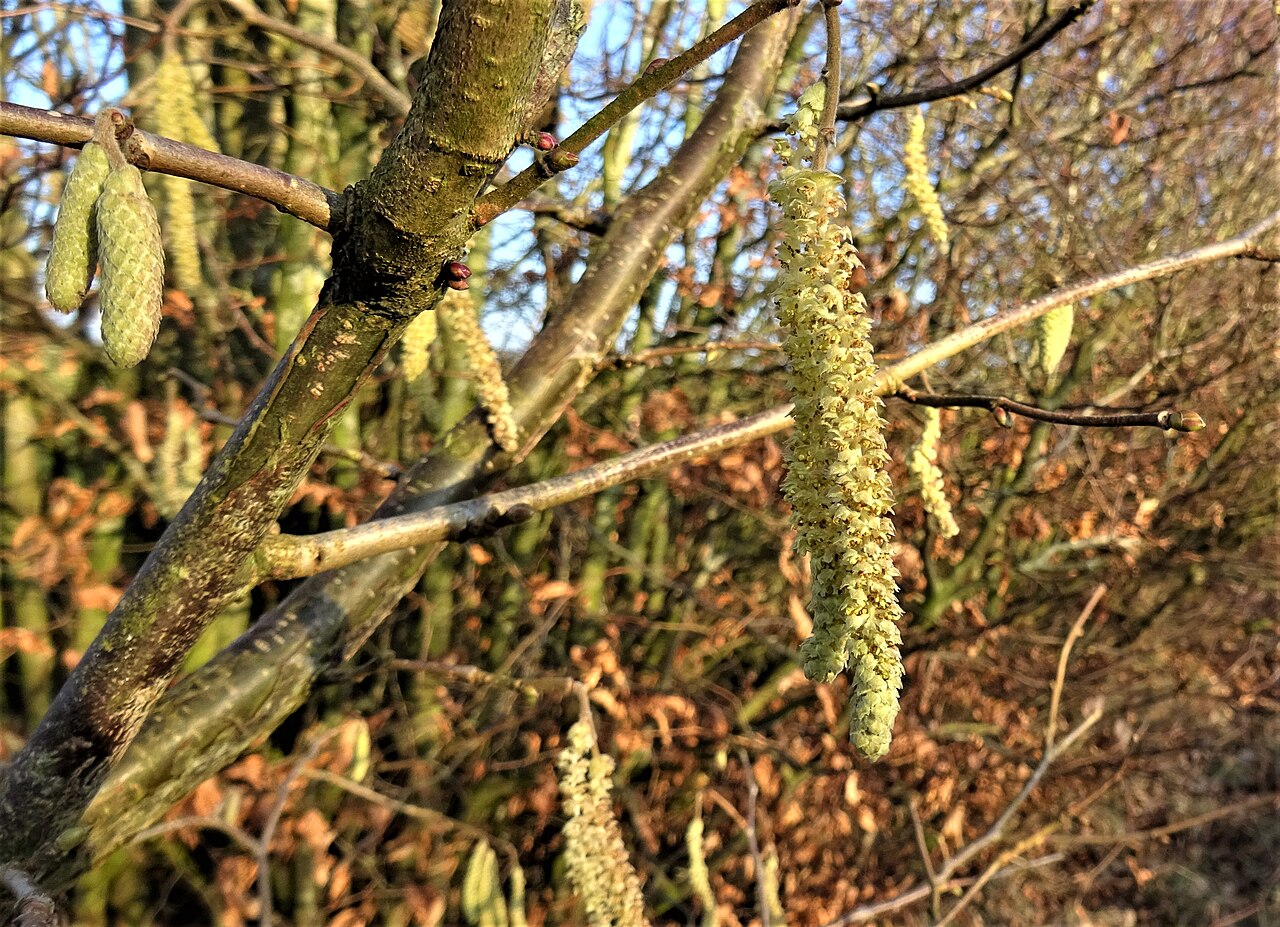
Under Croatian conditions, the main limitation for hazelnut cultivation is not soil or water, but low temperatures — because hazelnuts flower in winter, from December to February, when the risk of frost is highest. This is a biological characteristic that distinguishes hazelnuts from most other fruit species and dictates that all site selection logic is subordinate to avoiding frost during sensitive stages.
Optimal General Climate
For successful cultivation, areas with a temperate climate, featuring slightly cooler summers and moderately harsh winters, are most favorable. Reference values from the literature:
| Climatic Parameter | Reference Value | Note |
|---|---|---|
| Mean monthly temperature | approx. 10 °C | annual average of the favorable region |
| Annual precipitation | 800–1,200 mm | with proper distribution throughout the year |
| Precipitation during vegetation (April–September) | at least 350–400 mm | |
| Precipitation during April–July | approx. 280 mm total | period of growth and fruit set |
In Croatia, the Mediterranean part, especially Istria, stands out as the most climatically favorable region, while in the continental part, protected positions with gentle slopes are preferred. Hazelnut is a Mediterranean plant that generally responds well to the same positions suitable for grapevine cultivation in our region — a useful practical indicator for the initial assessment of a new plot.
Freezing Temperature Thresholds
Different organs of the hazelnut freeze at different temperatures, with the flowers being the most sensitive as they are active in the middle of winter. The following table summarizes thresholds consistently repeated in the literature (values are informative and vary among cultivars):
| Organ / Stage | Freezing Temperature |
|---|---|
| One-year-old shoots | approx. −30 °C |
| Vegetative buds | approx. −25 °C |
| Unopened male and female flowers | −18 to −16 °C |
| Opened male and female flowers | −7 to −10 °C |
| Leaf buds at the start of vegetation | −3 to −5 °C |
It is generally considered that hazelnut can tolerate short-term temperatures down to −25 °C, and many cultivars can withstand brief episodes down to −30 °C; a temperature around −26 °C during deep winter dormancy is considered risky. The key message, however, is not the absolute minimum, but the fact that even −3 to −5 °C during flowering and vegetation flush can destroy the crop. Therefore, in addition to winter extremes, late spring frosts are particularly dangerous.
Practical Consequence: Avoiding "Frost Pockets"
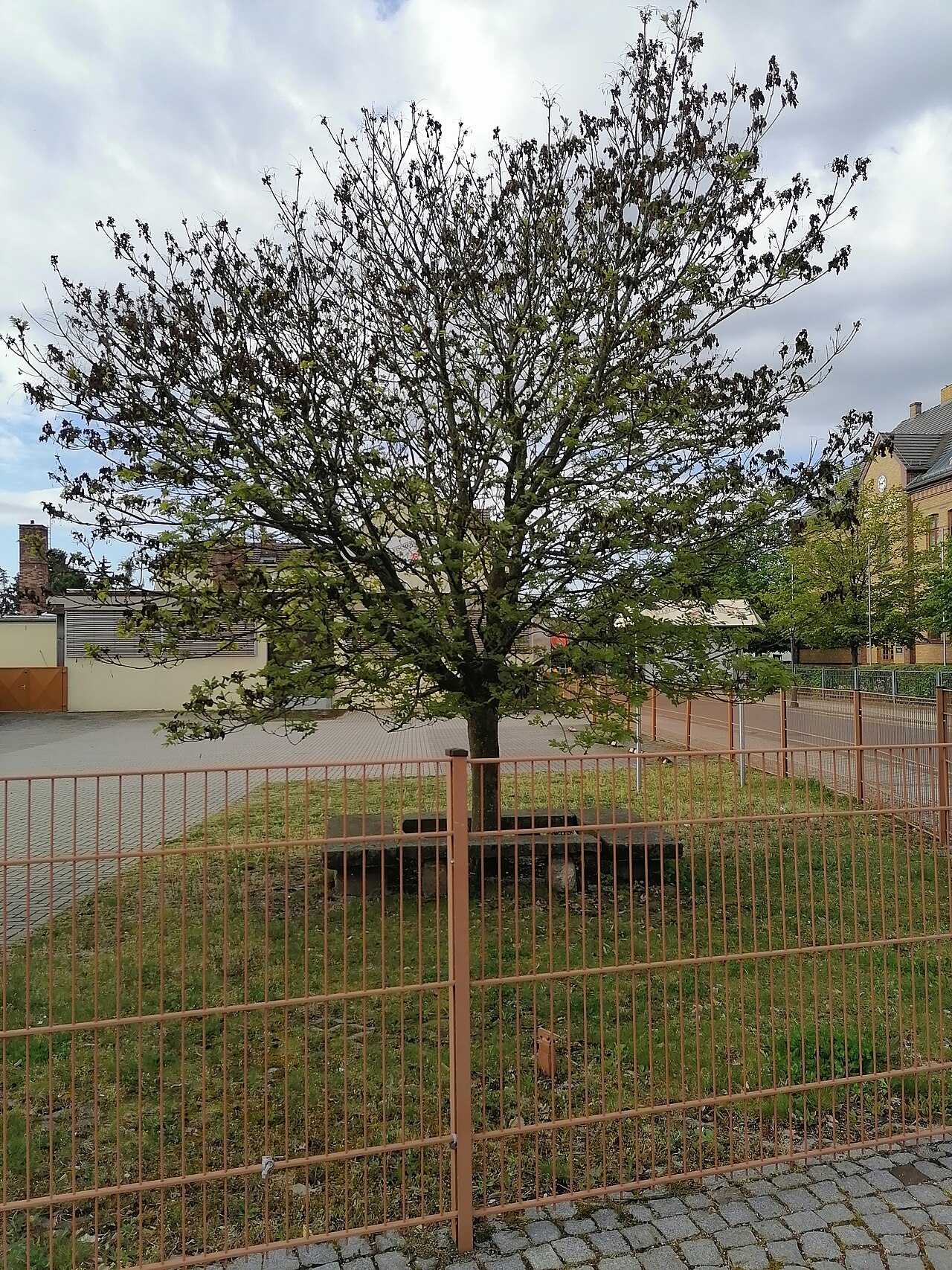
The sensitivity of flowers directly leads to the most important topographic rule: avoid depressions, hollows, and lower terrain where cold air, fog, and lower temperatures stagnate. Cold air is denser and flows downhill due to gravity, creating "frost pockets." Therefore, hazelnuts should be planted on elevated, well-protected positions on gentle slopes, where air drainage is ensured — unimpeded flow of cold air down the slope. A practical rule from international practice: higher positions with gentle slopes and open, cleared space below the orchard boundary allow cold air to "drain" away from the orchard, preventing the formation of frost pockets in spring.
Altitude
Recommendations for altitude vary by source and latitude, but cluster within a recognizable range. The following table consolidates values from the corpus:
| Source / Context | Recommended Altitude |
|---|---|
| Hazelnut Cultivation Guide (Ministry of Agriculture, HR) | 100–400 m (optimal) |
| Continental Croatia / Bosnia and Herzegovina (boundary values) | 140–600 m |
| Commercial cultivation (depending on latitude) | 200–500 m |
| Moderately continental climate | up to 600 m |
| Southern, warmer areas | up to 800 m with good yields |
| Lower limit near the coast | not below 20 m (sea air damages leaves and organs) |
Cultivated varieties can grow at significantly higher altitudes — up to 1,500 m — but this is not the same as economically viable, regular production. For continental Croatia, a practical guideline is: positions above 140 m with appropriate topography, with a focus on the range 140–600 m.
Note the apparent contradiction: lower terrains are warmer, but they are simultaneously prone to the accumulation of cold air and fog. Therefore, the lowest (warmest) possible position is not sought, but rather a slightly elevated position with good air drainage — a combination that avoids both excessive cold from altitude and frost pockets at the valley bottom.
Slope
Slope simultaneously affects air drainage, runoff of excess water, erosion, and the possibility of mechanized cultivation and harvest. We seek the "golden mean": sufficient slope for air and water drainage, but not so steep as to endanger the soil and machinery.
| Slope | Assessment for Hazelnut |
|---|---|
| Flat (≈ 0 %) | risk of water and cold air retention; poor air drainage |
| 3–10 % | optimal range according to the Croatian guide |
| up to ≈ 5° (≈ 9 %) | cited as most favorable for fruit in general (gentle slope) |
| 5–10 % | successful in practice (e.g., recorded orchards) |
| Steep slopes | lower yields, stronger erosion, difficult harvest and mechanization |
On overly steep slopes, hilltops suffer from erosion which reduces rooting depth, and harvest and mechanization are difficult — which directly impacts costs and yield. On the other hand, on completely flat ground, air and surface drainage are absent.
Practical recommendation for planting on a slope: plant in contours, i.e., along the contour lines. This reduces erosion, facilitates cultivation, and achieves a neater, more aesthetic orchard appearance. When planning rows, align the contour direction with mechanization needs.
Aspect (Slope Direction)
Aspect determines how much sun and heat the slope receives and when the orchard breaks dormancy — and for winter-flowering hazelnuts, this is a double-edged sword.
- The Croatian Guide cites north–south aspect orientation as optimal, with a slightly undulating configuration and regular plot shape.
- According to frost resistance, literature recommends: in warmer regions, northern, northeastern, and northwestern aspects; in colder areas, northeastern, northwestern, and western aspects.
- International practice (e.g., Pacific Northwest USA) explicitly warns against southern aspects where frost is a threat, because warmer, sunnier south-facing slopes promote premature flowering and bud break, which then suffer from subsequent frost.
The logic is consistent: the goal is not maximum heat, but avoiding premature vegetation break. Cooler (northern and eastern) aspects keep the plant in dormancy slightly longer and help it "skip" the most dangerous winter and early spring frosts. On cold, frost-prone sites, even a warm south-facing slope can be a trap, while on very mild, warm sites, a moderately warm aspect is not a problem. Therefore, aspect is always assessed together with the general climate of the site, not in isolation.
Light — Hazelnut is a Heliophyte
Hazelnut is a typical heliophyte — a light-loving plant. In shade, it produces weak and irregular crops, so for intensive orchards, a sunny, open habitat is essential. Open space also favors wind pollination (hazelnut is wind-pollinated), so enclosed, shaded plots surrounded by tall vegetation are not suitable for regular production.
Here it is important to distinguish two requirements that seem contradictory: the orchard needs enough light and gentle air flow for pollination, but it must simultaneously be protected from strong wind (see next section). The solution is an open, sunlit position with wind protection on the exposed side.
Wind Protection and Proximity to Water and Forest
Wind has a dual role. Gentle wind is beneficial as it facilitates pollination. Strong wind, especially during the flowering stage, is very harmful — it can dry out catkins and female flowers, disrupt pollination, and mechanically damage branches; hail can also be harmful.
Two practical recommendations emerge from the corpus:
- Sheltered positions. In the continental part of Croatia, protected positions with gentle slopes are preferred, where natural topography or windbreak belts mitigate wind impacts.
- Proximity to water and forest surfaces. This is desirable because it moderates temperature oscillations (water and forest act as thermal buffers) and thus reduces the risk of extremes. However, the rule of mandatory air drainage still applies — proximity to water must not mean placement in a wet hollow.
When planning wind protection, ensure it does not create an obstacle to the flow of cold air down the slope, as a dense belt on the lower side of the orchard could trap cold air and turn the plot into a frost pocket.
Logistics and Plot Shape
The technical suitability of the plot determines labor and harvest costs in the long term:
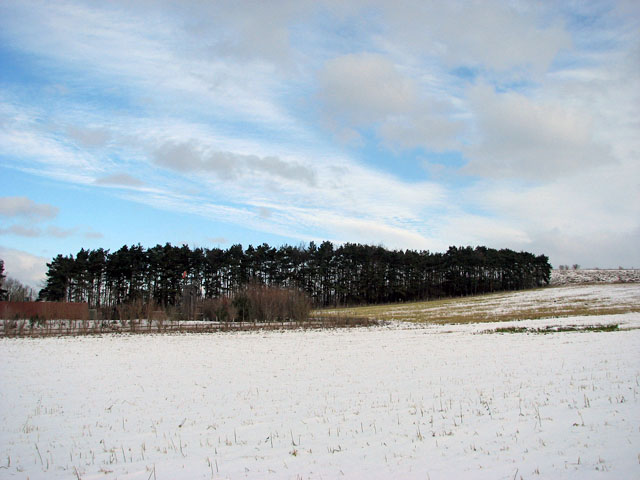
- Shape and configuration: A slightly undulating configuration and regular (geometric) plot shape are desirable, as they facilitate row layout and machinery movement.
- Soil drainage: Hazelnuts require well-drained, permeable soils; soils with a high groundwater table and soils in micro-depressions where surface water stagnates are unfavorable (leading to root asphyxiation and tree decline).
- Accessibility and mechanization: Gentle slopes and regular shapes allow for mechanized harvesting and inter-row cultivation; steep terrain increases costs and complicates these operations.
- Irrigation water: Hazelnuts are sensitive to drought, with the highest water demand occurring during fruit set; availability of irrigation water (especially for organic production) should be included in the site assessment.
- Wildlife protection: In practice, orchards are fenced (e.g., with woven wire) to protect against wildlife, particularly wild boars—a cost that depends on the surrounding landscape and proximity to forests.
Integrated Site Assessment — Summary Checklist
Evaluate the site as a whole. The following table serves as a quick guide (values are indicative and depend on cultivar, micro-location, and regulations):
| Criterion | Favorable | Unfavorable / Caution |
|---|---|---|
| General climate | Moderate, ≈ 10 °C, 800–1,200 mm | Areas with frequent late frosts |
| Altitude (cont. HR) | 140–600 m, optimal 100–400 m | < 20 m near the sea; too high, cold positions |
| Topographic position | Elevated, with air drainage | Valleys, depressions, "frost pockets" |
| Slope | 3–10 % (gentle) | Plains (poor drainage); steep slopes (erosion, harvest) |
| Aspect | North–South; cooler sides where frost is a risk | Warm southern slopes in frost-prone locations |
| Light | Open, sunny habitat | Shaded, enclosed positions |
| Wind | Gentle air flow + shelter from strong winds | Exposure to strong winds during flowering |
| Proximity to water/forest | Desirable (mitigates extremes) | Provided there is good drainage |
| Soil and drainage | Permeable, well-drained | High groundwater, stagnation |
| Logistics | Regular shape, machinery access, water | Irregular, inaccessible plot |
Common Mistakes in Site Selection
- Planting in a valley "because it is warmer and has water there." These locations are precisely the ones that most often become frost pockets and areas of water stagnation. Literature explicitly states that mistakes are still frequently made in land selection in our region.
- Neglecting air drainage. Slope is considered only for erosion, forgetting its role in the runoff of cold air.
- Choosing a warm southern slope in a frost-prone location. This promotes premature flowering and exposes the bloom to subsequent frost.
- Planting on overly steep terrain. Land that is short-term accessible and cheap becomes expensive for harvesting in the long term and accelerates erosion.
- Placing in shade or enclosed spaces. As a heliophyte and anemophilous species, hazelnut yields poor and irregular crops in such conditions.
- Lack of an irrigation plan. Hazelnuts are drought-sensitive; a site without accessible water carries the risk of yield loss in dry years.
Sources
This article is an AI summary compiled from an internal collection of hazelnut literature (RAG corpus) and supplemented with public sources. Values (altitude, slope, temperature thresholds, precipitation) are indicative and may vary depending on cultivar, micro-location, and applicable regulations — consult advisory services and official sources before implementation.
Main sources used:
- Hazelnut Cultivation Guide — Ministry of Agriculture / Advisory Service (HR) — https://savjetodavna.mps.hr/2017/10/24/od-sadnje-do-berbe-lijeske/
- Technological and Economic Characteristics of Hazelnut Cultivation (2018.) — https://doi.org/10.46584/lm.v36i2.1141
- Impact of Low Temperatures on Hazelnut Frost Damage (2021.) — RAG corpus (altitude, aspect)
- Investment Study for the Production of Innovative Hazelnut-Based Products, Corylus avellana L. (2019.) — RAG corpus
- Krpina et al. (2004): Hazelnut — Cultivation, Fertilization, Cultivars, Planting — RAG corpus
- Economic Analysis / Economic Viability of Hazelnut Production (2022–2023) — RAG corpus
- Growing Hazelnuts in the Pacific Northwest: Orchard Site Selection, OSU Extension (EM 9076) — https://extension.oregonstate.edu/catalog/pub/em-9076-growing-hazelnuts-pacific-northwest-orchard-site-selection
- Climate-Resilient Hazelnuts in Oregon and Washington, USDA Climate Hubs — https://www.climatehubs.usda.gov/hubs/northwest/topic/climate-resilient-hazelnuts-oregon-and-washington
- Growing, Harvesting and Food Safety (Ontario/OMAFRA factsheet) — https://www.grimonut.com/shared/media/editor/file/OMAFRA%20Factsheet%20-%20Growing%20harvesting%20and%20Food%20Safety.pdf
- Designing and Establishing Orchards — Agroklub — https://www.agroklub.com/vocarstvo/projektiranje-i-podizanje-vocnjaka-od-prvog-do-posljednjeg-koraka/82349/
- Does Hazelnut Cultivation Have a Future and How to Profit from Hazelnuts — poduzetnistvo.org — https://www.poduzetnistvo.org/news/ima-li-uzgoj-lijeske-buducnost-i-kako-zaraditi-na-ljesnjaku
Recommended equipment
🔎 soil ph test kit — Amazon →Affiliate links — we may earn a small commission at no extra cost to you.
Handheld Soil pH Meter
For rapid field checks, but always confirm with laboratory analysis.
| Use Case | Option Type | What to Check Before Purchase |
|---|---|---|
| Quick field screening | Portable digital meter | Calibration stability and probe durability |
| Routine monitoring | Analog or digital | Temperature compensation features |
| Verification needed | Professional lab test | Sample preparation and reporting standards |