Status and quarantine framework for EFB in Croatia and the EU (seedling imports, plant passports)
Content generated by artificial intelligence — verify before application
This article was automatically compiled from a collection of hazelnut literature using artificial intelligence and may contain errors or outdated information. It serves as a starting point for further research, not as professional advice. Dosages, products, and timelines are indicative and depend on the cultivar, location, and applicable regulations — always consult with advisory services and official sources before implementation.
Eastern Filbert Blight (EFB), caused by the fungus Anisogramma anomala, is the most severe disease of European hazelnut (Corylus avellana) in the United States, where it has been destroying orchards in the Pacific Northwest for decades. For Croatian producers, the good news is simple: this fungus is not present in the European Union or in Croatia. The bad news is that almost the entire European cultivar assortment, including all classic Italian cultivars we plant, is highly susceptible to it. Therefore, the EU maintains strict quarantine measures for EFB — the goal is to prevent its entry. This article bridges scientific papers on EFB with what producers need to know in practice: what the regulatory status is, what this means for importing seedlings from the USA, how plant passports function, and how cultivar selection fits into this picture.
What is EFB and why it is relevant now
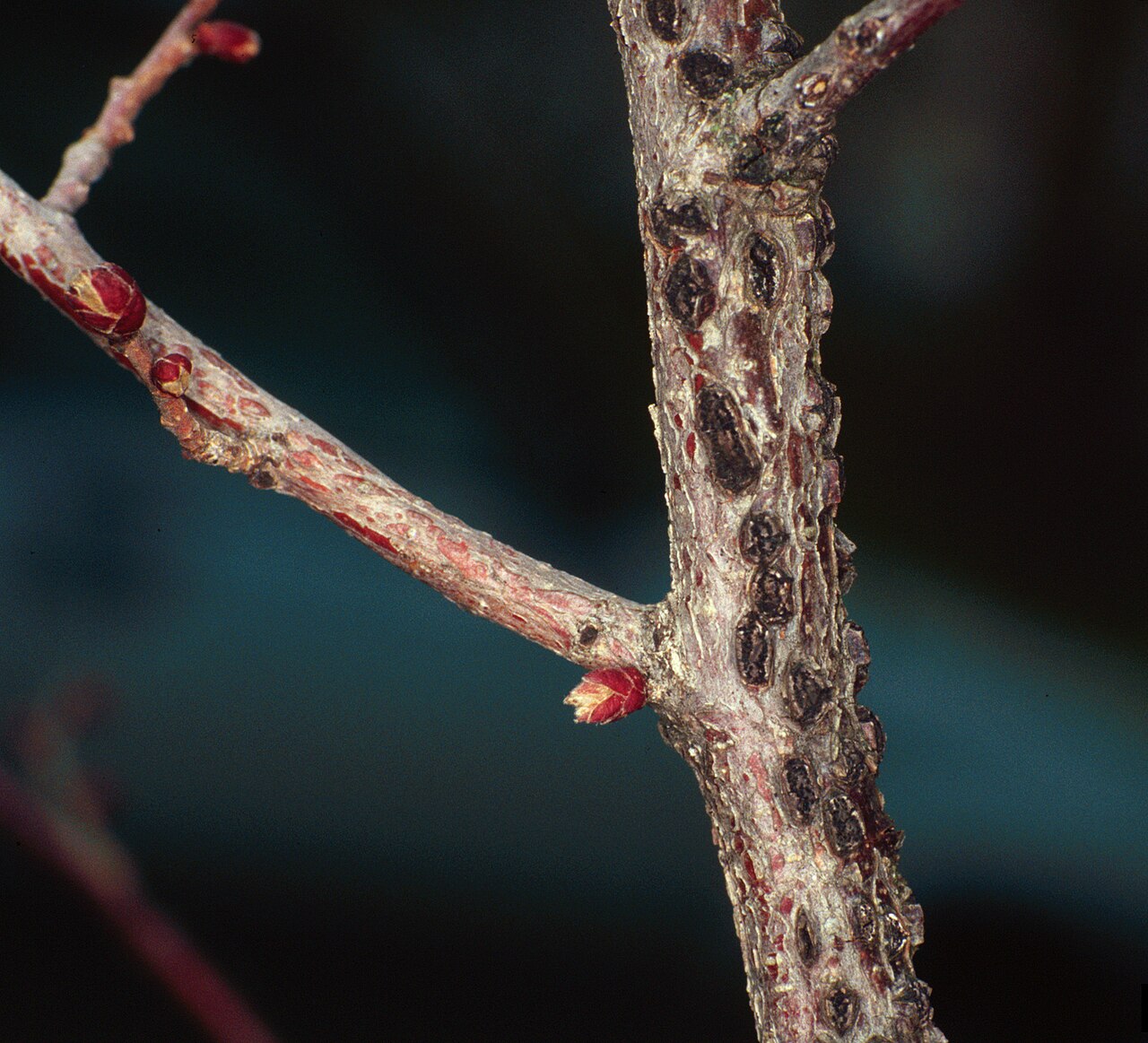
Anisogramma anomala is a biotrophic fungus (ascomycete) originally described on American hazelnut (Corylus americana), where it causes only mild symptoms. On European hazelnut, it causes a devastating disease: perennial cankers with characteristic rows of black stroma develop on branches. The cankers girdle and dry out the branch branch by branch, and in susceptible cultivars, the tree dies within a few years. The disease cycle is slow and insidious — from infection to visible symptoms, 12–16 months pass (a latent period of about one and a half years), and spores are spread by rain and wind, primarily in spring, during the vegetative growth phase.
The disease is more relevant today than ever for two reasons:
- New strains in the USA. Resistance of the Gasaway type (one dominant gene) was long relied upon. However, new strains/races of the pathogen (e.g., Race 1) have been identified in the Pacific Northwest that break through the resistance that previously held. This reminds us that "resistance" is a moving target and that pressure on import controls remains high.
- Increasing trade in planting material and germplasm. Croatia is intensively expanding orchards (see below), and international exchange of cultivars and selection is also growing — precisely the pathways through which the pathogen could enter.
Is EFB present in the EU and Croatia? Regulatory status
The situation is clear and repeatedly confirmed in scientific and regulatory sources:
| Question | Answer |
|---|---|
| Is A. anomala present in the EU area? | No. The pathogen is not reported as present in the EU. |
| Is it present in neighboring countries (Slovenia)? | Slovenia officially reported its absence in 2017. |
| Global distribution | Limited to North America (USA, Canada). |
| EPPO status | On the A1 list of EPPO (organisms absent from the region, recommended for regulation as quarantine pests). |
| Status in EU legislation | Union Quarantine Pest. Historically regulated by Council Directive 2000/29/EC; currently under Regulation (EU) 2016/2031 and Implementing Regulation (EU) 2019/2072. |
| Hosts under prohibition | Plants of the genus Corylus intended for planting (excluding seeds), originating from Canada and the USA. |
Practical translation: since this is a Union quarantine pest, its introduction and spread within the EU are prohibited, and hosts from risky third countries are subject to prohibition or the strictest phytosanitary conditions. EFSA confirmed in the pest categorization (2018) that A. anomala meets the criteria for a quarantine pest and that measures exist to prevent entry, establishment, and spread in the EU.
What 'A1' and 'Union quarantine organism' mean
EPPO A1 — an organism that is not present in the EPPO region; the recommendation is to regulate it to prevent introduction. (A2 would be organisms already present but under control.) Union quarantine organism — a legal category in the EU for which the prohibition of introduction and the obligation to report/eradicate in case of detection apply. EFB falls into both categories.
What this means for importing seedlings from the USA (and Canada)
This is the most important message of the article for anyone considering "American resistant cultivars":
Import of hazelnut seedlings (plants of the genus Corylus for planting, excluding seeds) from the USA and Canada into the EU is prohibited — precisely due to the risk of EFB.
Practical consequences:
- It is not a solution to import an EFB-resistant cultivant from Oregon or New Jersey as a seedling. This is not a bureaucratic hurdle that can be "worked around" — it is about protecting the entire European sector. A seedling from North America can introduce latently infected material that shows no symptoms for a year and a half.
- What is the legal path? The resistance genetics developed in the USA (OSU and Rutgers programs identified over 100 sources of resistance) usually enter the EU through official scientific/breeding channels — under special authorization, in quarantine, and as controlled material (e.g., seeds, which are regulated differently, or in-vitro/scientific introductions under the supervision of the competent authority). This is not a path for a commercial producer ordering seedlings.
- Buy within the EU. To establish an orchard, procure certified seedlings from registered nurseries within the EU. This simultaneously addresses the EFB risk and the issue of other regulated pests (see below).
For comparison, even the movement of hazelnut seedlings within the EU to third countries is subject to phytosanitary certification: e.g., when exporting European hazelnut to some third countries, an official phytosanitary certificate from the member state with additional declarations is required. The system is thus strictly two-way.
Plant passports: your proof of seedling health within the EU
Within the EU, hazelnut planting material (like other planting stock) moves with a plant passport. This is an official label that follows the plant through the chain and confirms that it originates from a registered, controlled entity and meets the Union's phytosanitary requirements.
What the producer needs to know:
- Request and keep the plant passport with every batch of seedlings. It is your proof of origin and health status — and crucial if there is ever an investigation due to the detection of a pest.
- Passports are issued by authorized (registered) entities — nurseries and distributors listed in the official register of the competent authority (in Croatia, this is the phytosanitary system at the Ministry of Agriculture / State Inspectorate). Buying "seedlings by the roadside" or from an untraceable source means you have no guarantee or traceability.
- Passport ≠ cultivar/certification certificate. The plant passport concerns health and traceability; the question of planting material category (pre-basic, basic, certified, CAC) and cultivar authenticity is an additional, separate layer of quality. For a serious orchard, both are desirable.
Regulated Non-Qualified Pests (RNQP) — control in the nursery
In addition to the quarantine EFB, hazelnut planting material in the EU is subject to control of regulated non-quarantine pests (RNQP) — those that are present, but their presence on planting material must be kept below a threshold. For hazelnut, literature includes, for example:
| Organism | Type |
|---|---|
| Pseudomonas avellanae | bacterium (branch drying) |
| Xanthomonas arboricola pv. corylina | bacterial blight of hazelnut |
| Verticillium dahliae / V. albo-atrum | fungus (wilting) |
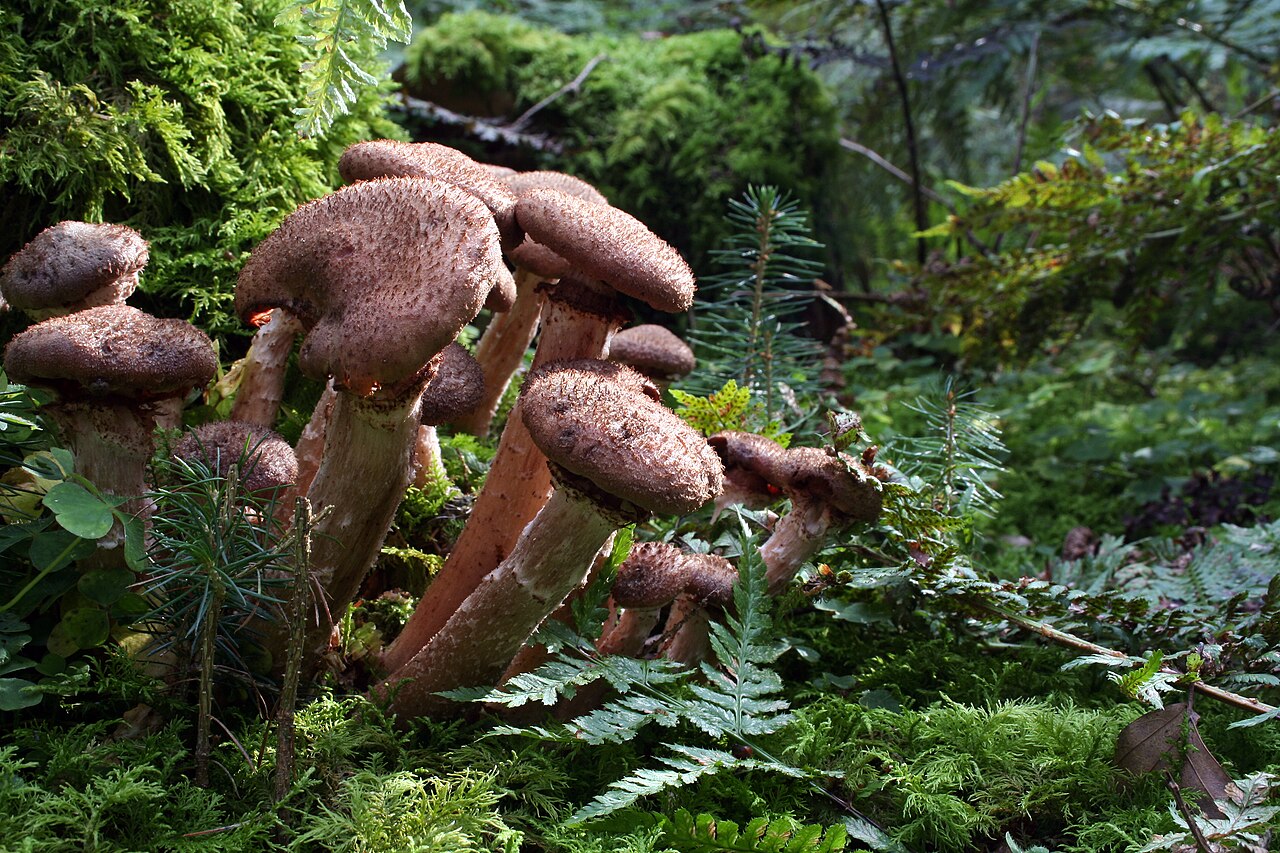
| Armillaria mellea | fungus (root rot) |
For RNQPs, control in the nursery typically includes visual inspection once a year, and in case of suspicion, sampling and laboratory testing; the same regime applies to all categories of planting material (pre-basic, basic, certified, and CAC). The permitted presence (threshold) for the aforementioned organisms practically approaches zero on seedlings. Therefore, purchasing from a controlled source with a passport offers a double benefit: it protects against the quarantine EFB (by prohibiting the import of hosts from America) and against these "domestic" pathogens (through nursery control).
Cultivar selection: how EFB fits into the Croatian context
Here it is important to distinguish between two worlds:
- In the USA, EFB resistance is the primary criterion for cultivar selection. There, cultivars with built-in resistance (e.g., Gasaway type and newer OSU/Rutgers selections) are planted, because without it, the orchard fails.
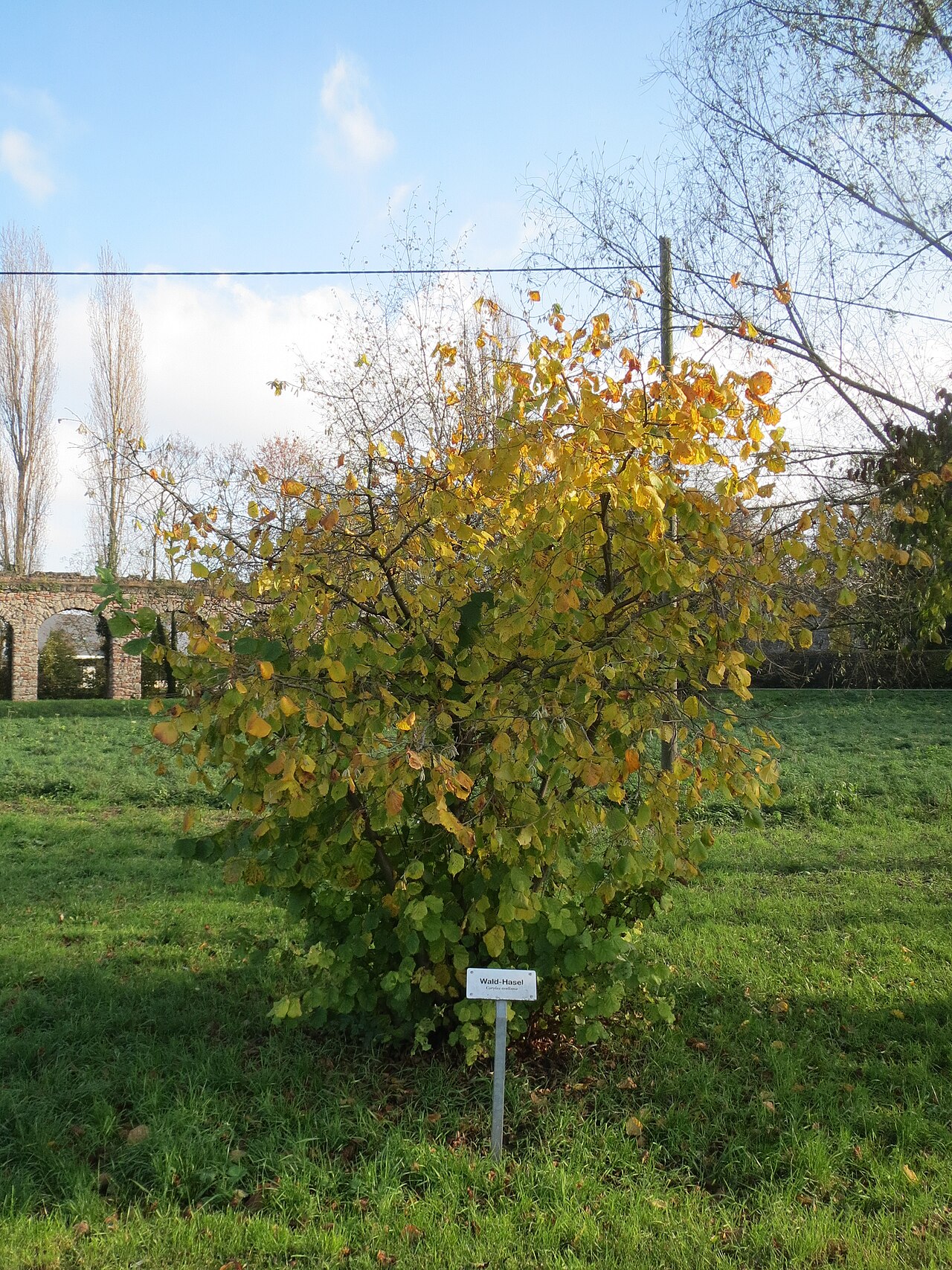
- In the EU/HR, where EFB is absent, resistance to EFB is not an operational criterion for selecting a commercial cultivar. We plant proven cultivars adapted to the market and climate — e.g., Tonda di Giffoni, Tonda Gentile Romana, Ennis, Istarski duguljasti, Rimski okrugli, etc. These cultivars, it should be noted, are highly susceptible to EFB — which is precisely why the quarantine barrier must remain strong.
Practical rules for selection and procurement:
- Select the cultivar based on the market (industry/confectionery vs. in-shell), climate, and pollinizer compatibility — not based on EFB status, as EFB is not present here.
- Procure seedlings within the EU, with a plant passport and, ideally, a category certificate. This way you obtain an authentic cultivar and healthy material.
- Do not attempt to import seedlings from North America even for trial — this is prohibited and represents a real pathway for EFB introduction.
- Monitor the development of resistant cultivars for the future. If EFB ever appears in Europe, resistant cultivars from American programs would become strategically important; until then, this is a matter of breeding and research, not commercial procurement.
Croatian context: why caution is worthwhile
Hazelnut is a fruit species in Croatia undergoing strong expansion. Areas have grown from approximately 1,246 ha (2007) to 3,000–4,000+ ha in the mid-last decade, and newer data mention around 7,900 ha; the largest producer is PP Orahovica (around 660 ha). Domestic production does not meet demand, so significant quantities of kernels are imported (order of magnitude of several hundred tons annually, mostly from Turkey and Italy). In such a sector — young orchards, large investments, dependence on kernel imports — the appearance of EFB would be a direct blow to future productivity and investments.
In other words: the quarantine framework is not an abstraction from Brussels, but a direct protection of the capital that Croatian producers are currently investing in new orchards.
Practical Recommendations (Summary) and Common Mistakes
Recommendations:
- Purchase seedlings exclusively from registered EU nurseries, keeping the plant passport for your records.
- Request and retain the certificate of category/variety authenticity whenever available.
- Select varieties based on market, climate, and pollinizers; EFB resistance is not a criterion for Croatia (HR).
- Conduct regular visual inspections of the orchard (both for RNQPs and for early detection of any new issues).
- If you notice unusual black, elongated cankers with rows of black warts on branches, report this to the plant protection/advisory service — even if EFB is absent, early reporting is mandatory for quarantine organisms.
Common Mistakes:
- “I’ll order a resistant American variety as a seedling.” → Prohibited, and this is precisely the main risk for introducing EFB.
- “I don’t need a passport; the seedling looks healthy.” → EFB has a latency period of ~16 months; appearance guarantees nothing. Traceability is key.
- “I’m choosing a variety based on EFB resistance.” → Incorrect criterion for HR; you are wasting attention on resistance traits that are (still) not relevant here, instead of focusing on agronomic and market characteristics.
- “The passport and certificate are the same.” → They are not; the passport relates to health/traceability, while the certificate relates to variety category and authenticity.
Sources
This text is an AI-generated summary from an internal hazelnut literature collection (RAG corpus) and public sources. Main sources used:
- EFSA — Scientific Opinion on the pest categorisation of Anisogramma anomala (2018), doi:10.2903/j.efsa.2018.5184 — confirmation that the pathogen is not present in the EU, status under Directive 2000/29/EC, and ban on Corylus from Canada/USA.
- EFSA — Pest survey card on Anisogramma anomala (2023), doi:10.2903/sp.efsa.2023.EN-7808.
- EPPO — Datasheet: Anisogramma anomala and PM 7/90(2) Anisogramma anomala (EPPO Bulletin, 2024) — diagnostics, biology, A1 status. https://gd.eppo.int/taxon/ANISAN
- EPPO A1 list of quarantine organisms. https://www.eppo.int/ACTIVITIES/plant_quarantine/A1_list
- Corpus document on regulated (non-)quarantine organisms for hazelnut and thresholds on planting material (visual inspections, sampling, planting material categories).
- Variable response of eastern filbert blight… (2024) and Three Strains of EFB Now Identified… (2025) — new strains/races and resistance sources (OSU, Rutgers).
- Eastern filbert blight resistant Corylus avellana identified… Rutgers University (Frontiers in Plant Science, 2024). https://www.frontiersin.org/journals/plant-science/articles/10.3389/fpls.2024.1502392
- Vujević et al., Status and Importance of Hazelnut Cultivation in the Republic of Croatia (2018) — areas and production in Croatia.
- Technological and Economic Characteristics of Hazelnut Cultivation (2018), doi:10.46584/lm.v36i2.1141 — production/import in Croatia.
- Does Hazelnut Cultivation Have a Future and How… (2024) — recent figures on import/export and areas.
- Note on the EU framework: Regulation (EU) 2016/2031 and Implementing Regulation (EU) 2019/2072 (list of Union quarantine and regulated non-quarantine organisms).