Harvest Logistics: Transport, Temporary Storage, and De-stoning
Content generated by artificial intelligence — verify before application
This article was automatically compiled from a collection of hazelnut literature using artificial intelligence and may contain errors or outdated data. It serves as a starting point for further research, not as professional advice. Dosages, products, and timelines are informative and depend on the cultivar, location, and applicable regulations — always consult with an advisory service and official sources before application.
Harvesting hazelnuts (Corylus avellana L.) does not end the moment the nut falls into the trailer. On the contrary — from the moment the nut is collected from the ground until it enters the dryer, it is a race against time. Freshly collected hazelnuts have high moisture content, are mixed with leaves, twigs, soil, and empty shells, and in warm piles, processes begin very quickly that irreversibly damage kernel quality (increase in acidity and peroxide value in the oil, mold, and in the worst case, aflatoxin). Well-organized harvest logistics — that is, smooth flow of the crop from the orchard through temporary storage and rough cleaning to the dryer, with minimal holding time — is often the difference between average and top-quality produce. This article explains how to organize this flow, how and what to use to separate impurities (leaves, twigs, empty shells, soil), and why processing speed is crucial.
Crop Flow: From Orchard to Dryer
Logistics are easiest to view as a series of steps that must "fit" into one another so that no bottleneck forms where wet crop accumulates and waits. The simplified flow looks like this:
- Collection from the ground (manual or mechanical) — the crop with coarse impurities is collected into packaging or a trailer.
- Hauling from the row and loading — the crop is transferred from collectors/baskets into a larger transport trailer (often with dual-height tipping).
- Transport to the farm / processing plant.
- Rough cleaning (separation) — separation of leaves, twigs, soil, and empty shells.
- Temporary storage — only short-term, in ventilated containers, until entry into the dryer.
- Drying (dryer) — lowering moisture to a safe level for storage.
The key principle of the entire chain: each step must be dimensioned so that the crop never stands longer than necessary. The most dangerous point is a pile of fresh, wet crop mixed with organic impurities that sits in the sun or in an enclosed trailer.
Orchard Preparation Reduces Logistics Burden
A large part of "logistics" is resolved even before harvest, through surface preparation. Multiple sources emphasize that before harvest, one should:
- mow the grass and remove mowing residues (clean, short turf significantly facilitates and speeds up mechanical vacuuming of the nuts),
- rake the nuts from the center of the row toward the machine passage line,
- ensure sufficient packaging and prepare space for drying and storage in advance.
The cleaner the surface under the bushes and the fewer residues, the fewer impurities the machine vacuums, the drier the nuts, and the higher the harvest efficiency. In other words — every leaf and twig you do not pick up in the orchard, you do not have to separate later in the plant. Terrain preparation directly reduces the share of impurities burdening the separator and dryer.
Collection and Loading: The First Step of Logistics
The method of collection determines how many impurities enter the chain and how fast the first step is.
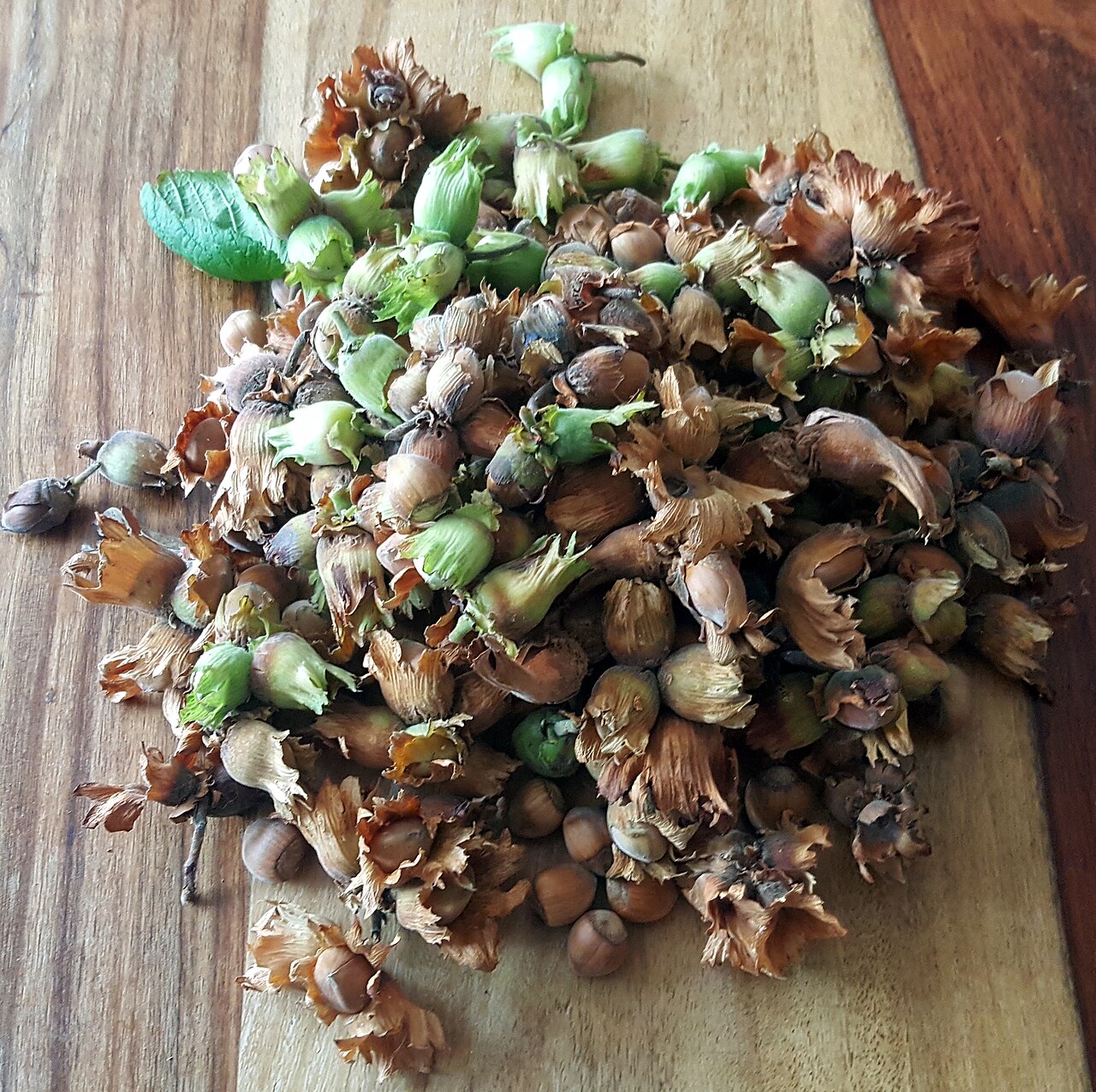
- Manual collection (from the ground or from a tarp/foil under the tree) yields the cleanest crop because the harvester discards leaves and poor-quality nuts along the way, but it is very slow (approximately 6–8 kg/h, up to ~60 kg per harvester per day) and applicable only to small areas.
- Mechanical collection using a self-propelled collector or tractor attachment is fast, but it picks up leaves, twigs, and soil along the way, requiring subsequent cleaning. Practitioners describe that a self-propelled collector completes work on a small orchard in one day, but collects leaves and soil together with the nuts.
In more complex mechanical systems (e.g., the Oregon model), the work is divided between two machines: a sweeper that moves nuts from the space between rows into narrow lines (each 0.6–1.2 m wide), and a collector that lifts them from these lines and fills them into packaging or a trailer.
More complex, professional cleaners (common in processing) combine multiple phases:
- Screen (rotating) — coarse impurities (soil, large residues) are removed first, and separation by size occurs.
- Aspiration (ventilation) — an air stream ejects lighter parts: leaves, empty nuts, twigs, shell fragments.
- Water bath (if necessary) — in some lines, the crop passes through a tank of water where stones and heavy impurities sink, while the nuts float. (If wet cleaning is used, the nuts must go immediately to the dryer afterwards.)
- Final separation of fine fractions.
The approximate capacity of such cleaners ranges, according to literature, from ~600–1200 kg/h for simpler units to ~4000–4500 kg/h for larger industrial lines.
"De-husker" and Husk Separation
For cultivars and cases where the nut emerges together with the cupule (husk, "shell"), a device is used alongside the separator that extracts leaves and twigs and helps peel the remaining husk. A practitioner from the region describes that collected nuts stand in a trailer for a few days, and then are fed into a de-husker which separates leaves and twigs, after which the nuts are so clean that they are vacuum-packed into mesh bags.
The classic, "quiet" way of separating the husk is drying: after initial drying, a large part of the nuts (about 80 %) separate from the husk on their own; those with remaining husks are placed in a storage space in a layer of ~30 cm, where with occasional mixing they remain for 10–12 days to dry out and allow the husk to separate.
Overview of Impurity Separation Methods
| Impurity / Goal | Method / Device | Principle | Note |
|---|---|---|---|
| Leaves, lighter debris during harvest | Combine harvester with strong air current | air thrust | rough, in the field |
| Leaves, twigs, empty shells | Separator / aspirator | difference in specific weight (fan) | motor ~3 kW; output bin for clean nuts |
| Coarse soil, large residues | Rotating screen | separation by size | first step in the line |
| Stones, heavy clods | Water bath (wet cleaning) | flotation (stone sinks, nut floats) | drying mandatory afterwards |
| Remaining husk / shell | De-husker / drying + mixing | mechanical friction + drying | ~80 % separate during drying; remainder 10–12 days in a layer of ~30 cm |
The figures provided (capacities, motor power, layers, and timelines) are informative and depend on the machine, cultivar, nut moisture, and specific processing line.
Temporary Storage: A Necessary Evil That Should Be Shortened
Temporary storage is a bridge between harvest and drying, not a method of preserving produce. It is a short period (hours to at most a few days) during which the crop waits for rough cleaning or entry into the dryer. The rules are simple but critical:
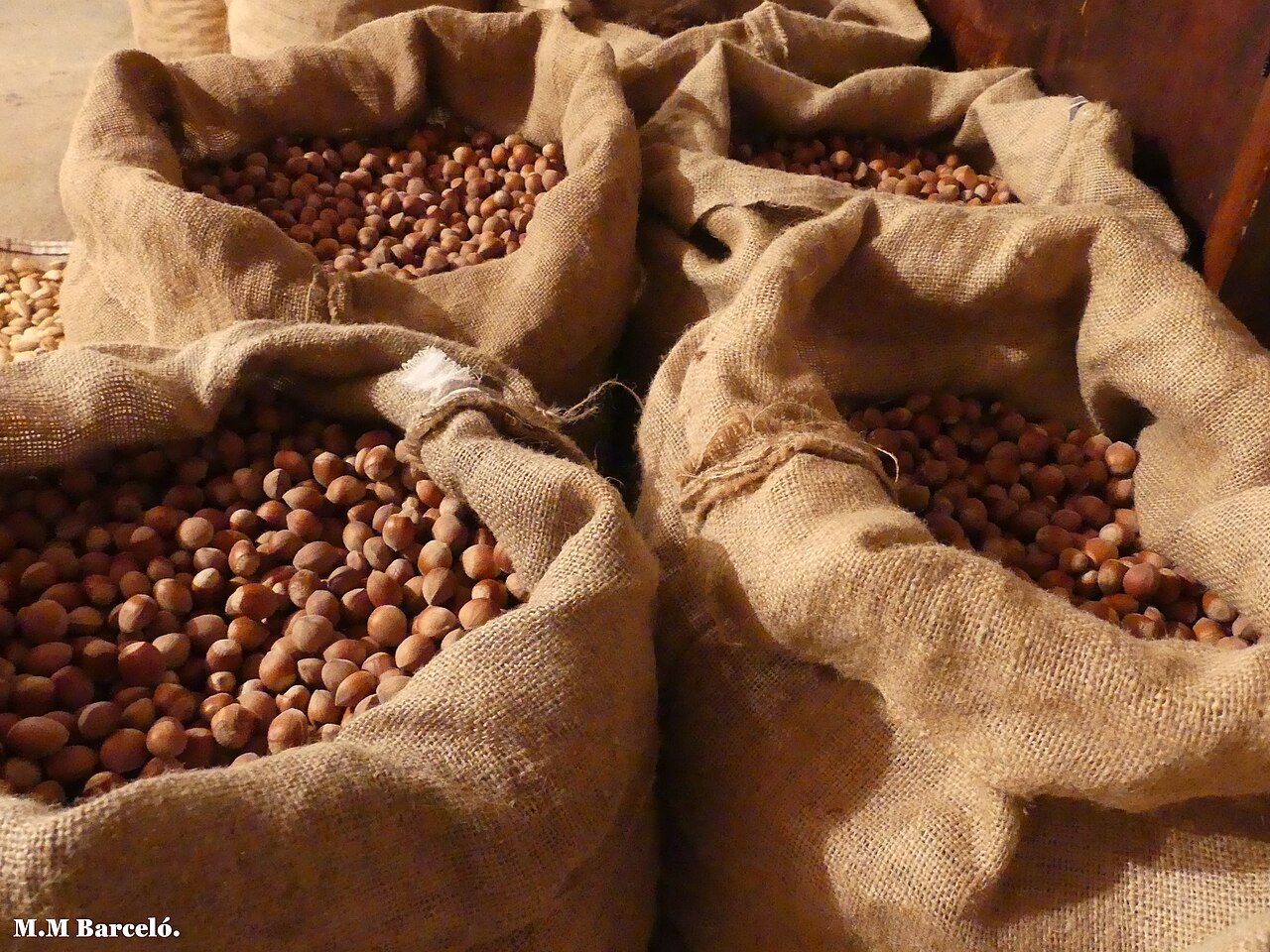
- Ventilation first. Wet nuts must be stored in ventilated containers and spaces — perforated crates (box-pallets), jute sacks (through which air circulates), or shallow layers. Polyethylene (closed) sacks for fresh, wet nuts are a trap because they retain moisture and heat.
- Thin layers, no piling. Deep piles of fresh nuts heat up and "sweat" in the center; heat and moisture accelerate spoilage and mold development.
- Cool and dry. Avoid exposure to sun and rain; store in a covered, ventilated space.
- Never wet nuts in closed packaging. Nuts harvested in rain or with high moisture are the most dangerous and must go to the dryer as a priority.
Biggest Mistake: Traditional Slow "Drying" on Concrete
Sources explicitly warn that one should avoid traditional slow drying of collected nuts on hard or asphalted surfaces (1–2 weeks) on the farm. Such prolonged holding in the kernel increases acidity and peroxide value in the nut oil, permanently lowering quality. Temporary storage is not a substitute for a dryer.
Processing Speed: Why Time is Crucial
If one thing needs to be remembered from the entire article, it is speed. Freshly collected hazelnut is a living, wet biological material mixed with organic residues — an ideal substrate for heating, fermentation, and mold.
- Goal: clean and dry the nuts within the day of harvest (up to ~24 h). Where this is not feasible — in the shortest possible time, especially if the nuts were harvested after rain or have high moisture (>12 %). The longer the nuts stand wet, the greater the risk to the kernel.
- Harvest in multiple passes (2–3 passes) not only reduces losses in the field but also reduces the logistics burden: ripe nuts are held on the ground for as short a time as possible (less contamination and moisture absorption), and the quantities per pass are smaller and easier to process immediately.
- The dryer must "keep up" with the harvest. Drying is slow: approximately ~1 hour of drying is needed to lower moisture by 1 %, and to a safe level usually takes 2–3 days (depending on moisture and equipment). If dryer capacity lags behind harvest, wet nuts accumulate in front of it — so dimensioning the dryer/flow is just as important as the harvest machine itself.
Approximate Moisture and Temperatures in the Chain
| Phase | Indicator | Approximate Value | Note |
|---|---|---|---|
| Nut at harvest | nut moisture | ~25 % (kernel) to 30–35 % (whole nut) | depends on cultivar and weather |
| Risk threshold | moisture above which risk increases | > ~12 % | urgent processing, especially after rain |
| Drying | air temperature | up to ~40 °C (often 32–34 °C; ~50 °C is also cited) | excessive temperature damages the kernel |
| After drying (storage) | shell/kernel moisture | ~7–10 % shell, ~4–6 % kernel | safe level for storage |
| Drying speed | moisture reduction | ~1 % per hour | under optimal conditions |
Values are informative and vary by cultivar, equipment, drying system, and weather conditions — check for your line and cultivar.
Practical Recommendations and Common Mistakes
Recommendations
- Prepare the orchard before harvest: mow and rake — less debris means faster cleaning and drier nuts.
- Balance capacities: harvesting, cleaning, and drying must be balanced so that no pile of wet nuts accumulates anywhere.
- Use breathable packaging (perforated crates, jute sacks) for transport and short waiting periods.
- Clean coarsely as soon as possible — every removed leaf/branch accelerates drying and reduces risk.
- Harvest in multiple passes and immediately initiate processing after each pass.
- Obtain and use a quality moisture meter and dry to the target moisture content.
- Pay attention to equipment hygiene (separator, conveyors, crates) — residues and dust are sources of mold.
Common Mistakes
- Wet nuts in closed (PE) sacks or deep piles — heating, fermentation, mold.
- Leaving nuts on concrete/asphalt "to dry" — increase in acidity and peroxide value, loss of quality.
- Nuts remaining on the ground for too long before collection — contamination and moisture absorption.
- Oversized harvest, undersized dryer — bottleneck before the dryer.
- Excessively high drying temperatures (above recommended levels) — kernel damage and rancidity.
- Neglecting coarse cleaning — leaves and soil retain moisture and slow down drying.
Summary
Hazelnut harvest logistics boil down to one rule: the nuts must flow, not sit. From orchard preparation (clean, mowed surface) through gentle and rapid transfer, coarse removal of debris (separator/aspirator based on specific weight, sieves, water bath and winnower if needed) to short, breathable temporary storage — everything serves to get wet nuts as quickly and cleanly as possible into the dryer, ideally within the day of harvest. Where this chain is well-organized and balanced, kernel quality is preserved; where nuts pile up and wait, quality quietly deteriorates.
Gallery
Sources
This text is an AI summary generated from an internal collection of hazelnut literature (RAG corpus) and public sources. Main sources used:
- Harvesting, Drying, and Storage Technology of Hazelnuts: Literature Review — Journal of Central European Agriculture (JCEA). https://jcea.agr.hr/articles/772314_Tehnologija_berbe_su_enja_i_skladi_tenja_lje_njaka_Pregled_literature_hr.pdf
- Mechanization in Hazelnut Production and Processing at Minas-Zrno Company (description of separator and processing line) — hazelnut literature collection.
- Hazelnut Cultivation: A Growing Guide — Ministry of Agriculture / Advisory Service (orchard preparation, harvesting, drying, and storage). https://savjetodavna.mps.hr/2017/10/24/od-sadnje-do-berbe-lijeske/
- Environmental Impact Assessment — Establishment of Permanent Hazelnut and Plum Orchard (Grubišno Polje) (mechanical harvesting, vacuuming, 1.5 m³ trailer, two-level shaking). https://bbz.hr/doc/uprava/elaborat_zastite_okolisa_visegodisnji_nasadi_lijeske_i_sljive.pdf
- Tractor Attachment for Hazelnut Harvesting (Marcel Gojak, diploma thesis, FSB) — harvest waves, nut moisture, efficiency.
- Hazelnut Fruit Rot (advice: cleaning of bracts, rapid drying to 12% moisture, breathable storage, avoiding drying on concrete) — hazelnut literature collection.
- Advantages of Hazelnut Cultivation — Gospodarski list (drying, hull removal, layer ~30 cm, 10–12 days, temperature 32–34 °C).
- Hazelnut — With Good Drying and Storage (practical experience: self-propelled collector, winnower, packaging in mesh sacks) — hazelnut literature collection.
- Cleaning and Drying of Hazelnut — USAID, post-harvest guidelines. https://issuu.com/usaid_private_sector_activity/docs/post_harvest_guidelines_-_eng
- Harvesting, Handling, and Storing Nuts (FS 146) — Oregon State University Extension. https://extension.oregonstate.edu/sites/extd8/files/documents/12281/harvesting-handling-storing-nuts.pdf
- Hazelnut harvest and post-harvest operations — Province of British Columbia. https://www2.gov.bc.ca/gov/content/industry/agriculture-seafood/agriservice-bc/production-guides/hazelnuts/hazelnut-orchard-establishment/managing-established-nut-bearing-trees/harvest-post-harvest-operations
Recommended equipment
🔎 nut gatherer roller — Amazon →Affiliate links — we may earn a small commission at no extra cost to you.
Handheld Nut Roller Collector
For gathering nuts from the ground on small areas.
| Use Case | Option Type | What to Check Before Purchase |
|---|---|---|
| Small area collection | Manual roller device | Wheel traction and debris clearance |
| Uneven terrain | Heavy duty rollers | Frame strength and wheel size |
| Large orchards | Mechanical sweepers | Professional machinery for efficiency |