Irrigation Systems: Drip and Micro-Sprinklers
Content generated by artificial intelligence — verify before application
This article was automatically compiled from a collection of hazelnut literature using artificial intelligence and may contain errors or outdated data. It serves as a starting point for further research, not as professional advice. Dosages, products, and timing are informative and depend on the cultivar, location, and current regulations — always consult with an advisory service and official sources before application.
Water is one of the most important, and often underestimated, factors in intensive hazelnut cultivation. Hazelnut has a relatively shallow root system and therefore poorly utilizes moisture reserves from deeper soil layers, making it particularly sensitive to water shortages during dry summer months. Modern orchards are almost always equipped with localized irrigation systems — most commonly "drip irrigation," less frequently micro-sprinklers — which deliver water precisely to the root zone, thereby saving water, energy, and fertilizer. In this article, we will compare the two main technologies, explain how to size and filter the system, and provide practical instructions for installation and maintenance in the orchard.
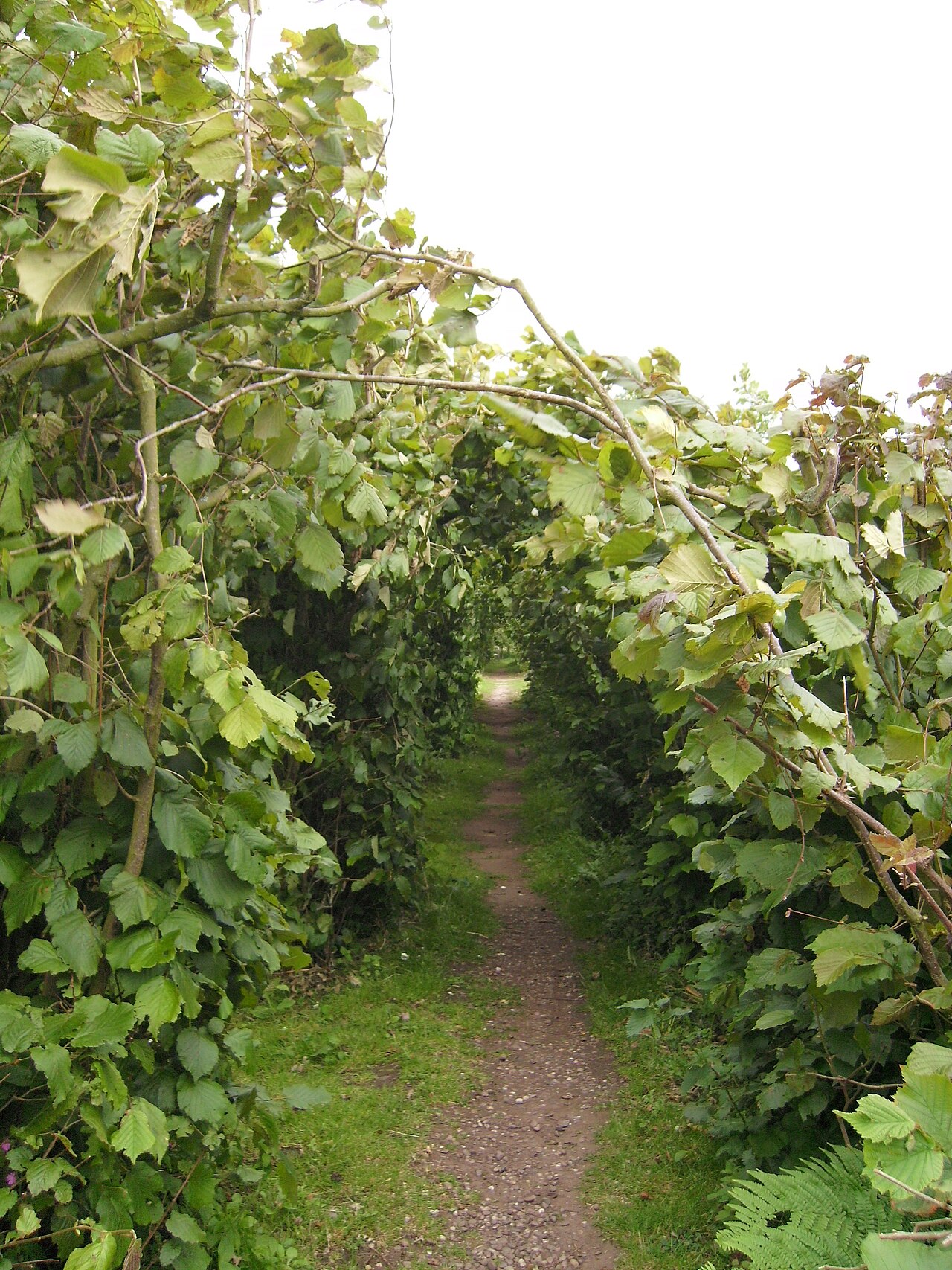
Why Irrigate Hazelnut
Hazelnut requires a moist environment throughout the entire growing season for balanced growth and stable yield. Literature suggests that approximately 800–1200 mm of precipitation should be ensured over the year, with the highest demand occurring during the vegetation phase (April–September). Approximately 350–500 mm is needed during the main growth phase and about 280 mm during later vegetation until July. Where natural precipitation does not meet these needs (and in Croatia, a need for about 800 mm in the driest months is cited to avoid water stress), irrigation becomes essential.
The effects are direct and measurable:
- greater differentiation of flower buds and less flower drop,
- larger leaf area and more vigorous growth,
- yield increase of up to 30% according to multiple sources in the corpus,
- better quality and nut size — irrigation in June positively affects nut growth and size, and in August affects kernel weight,
- lower percentage of empty shells (literature mentions a reduction of 20–25% with controlled irrigation).
Irrigation is particularly important for young seedlings immediately after planting, so they do not become stunted in the first few years. Irrigation is a regular measure in dry conditions, most commonly during the period from May (locally April) to the end of August/September.
Drip vs. Micro-Sprinklers
Both technologies belong to localized irrigation — they moisten only a portion of the surface around the plant and the root zone, while the inter-row space remains dry. This reduces evaporation losses, hinders weed development in the row, and allows for fertigation (application of water-soluble fertilizers through the system).
Drip Irrigation System
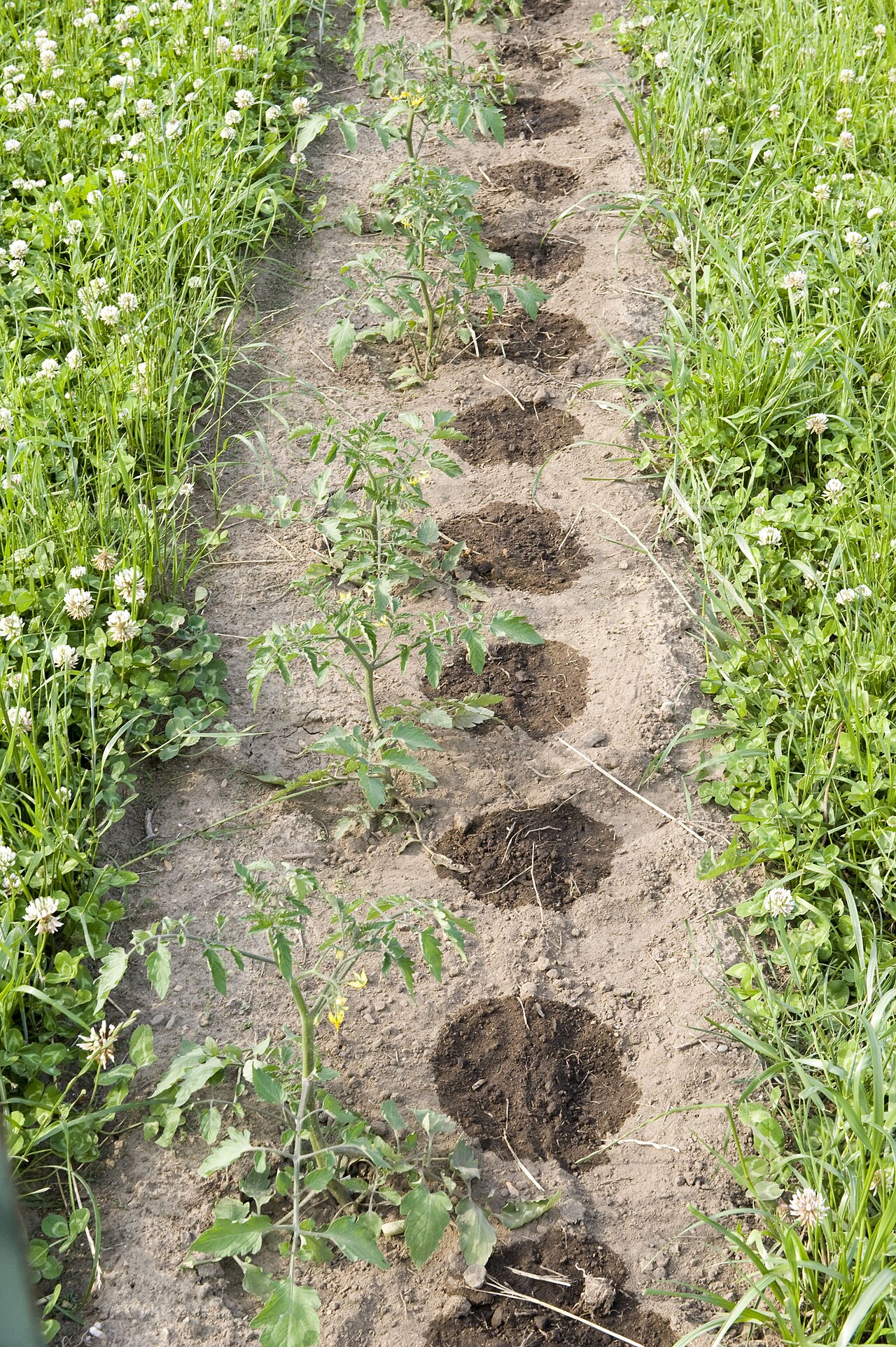
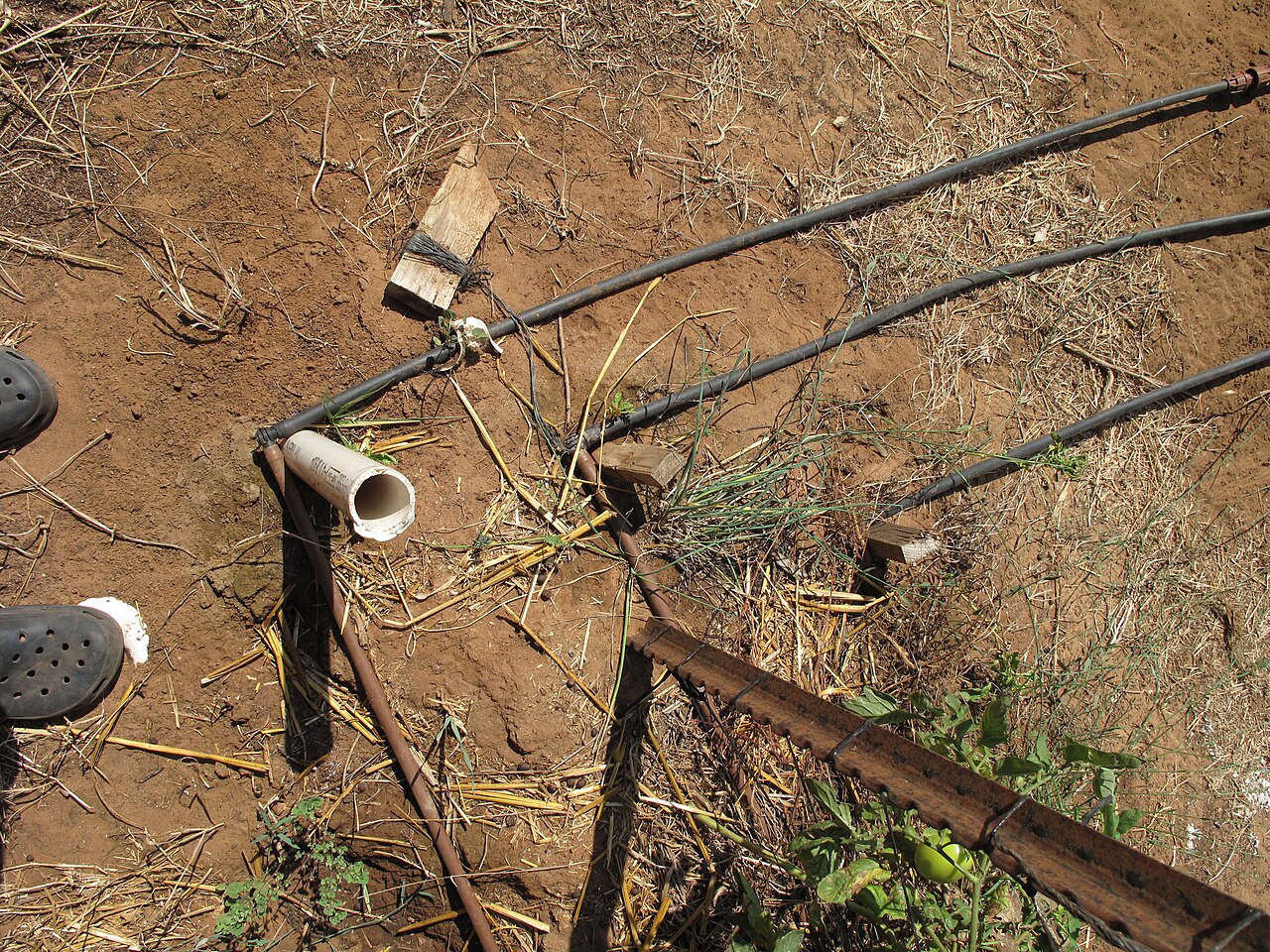
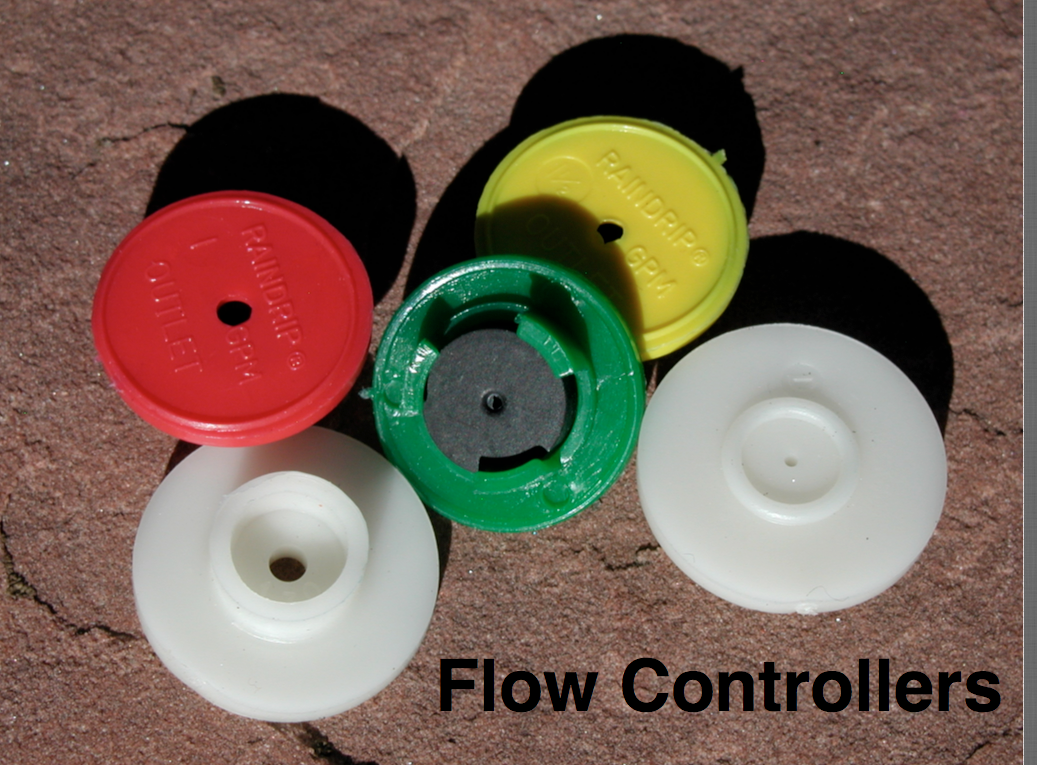
The most common choice in Croatian hazelnut orchards. Water is delivered through lateral pipes (usually polyethylene) to drippers placed immediately next to the plant. The typical flow rate of one dripper is 1.6–2 l/h. In practice, one lateral is often used in the root zone, and self-compensating (pressure-compensating) drippers are recommended, which provide equal flow on slopes and along longer rows, as well as drippers with a self-cleaning mechanism and anti-siphon protection against root intrusion.
Advantages consistently cited in the corpus:
- low water and power consumption,
- only a narrow zone around the plant and within the row is moistened,
- high water use efficiency (80–90 %),
- does not disrupt soil structure,
- possibility of full automation and electronic control,
- relatively low operating and maintenance costs,
- simple fertigation.
Micro-Sprinklers (Micro-Sprinkling)
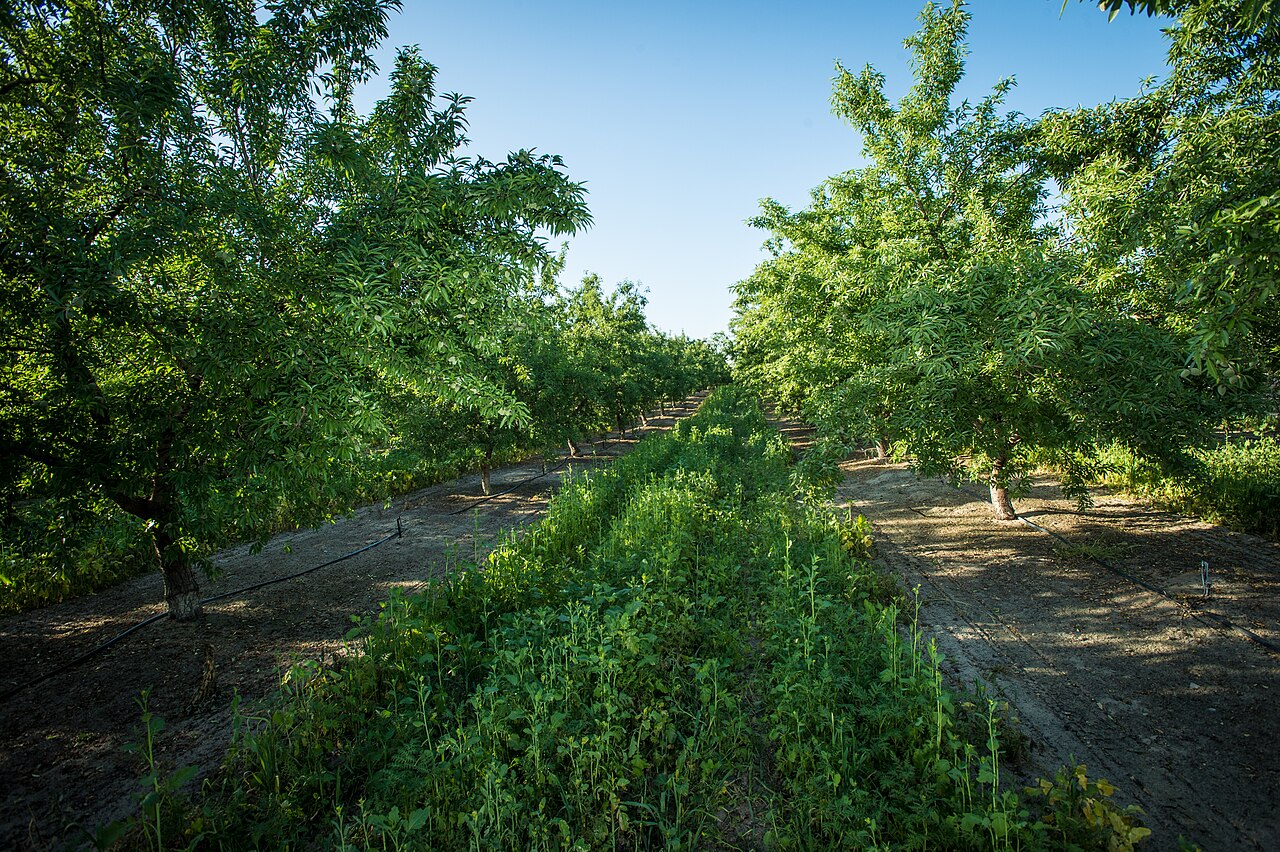
Micro-sprinklers disperse water in a circle under the canopy and cover a larger area than a single dripper. Specific figures from Slovenian literature (micro-sprinkling under the canopy) are cited: flow rate 40–60 l/h and reach of about 2 m, arranged in a row at a spacing of 2.5–3 m; for intermittent irrigation, sprinklers 40–70 l/h at a spacing of 4 × 2 m with an intensity of 5–8 mm/h. Pipes are usually hung about 1 m above the ground on a support wire so as not to interfere with cultivation and mowing. The sprinkler is not mounted directly on the pipe (due to pipe stretching and twisting, it is impossible to ensure a vertical position), but on its own tube attached to a bracket or hung with a weight.
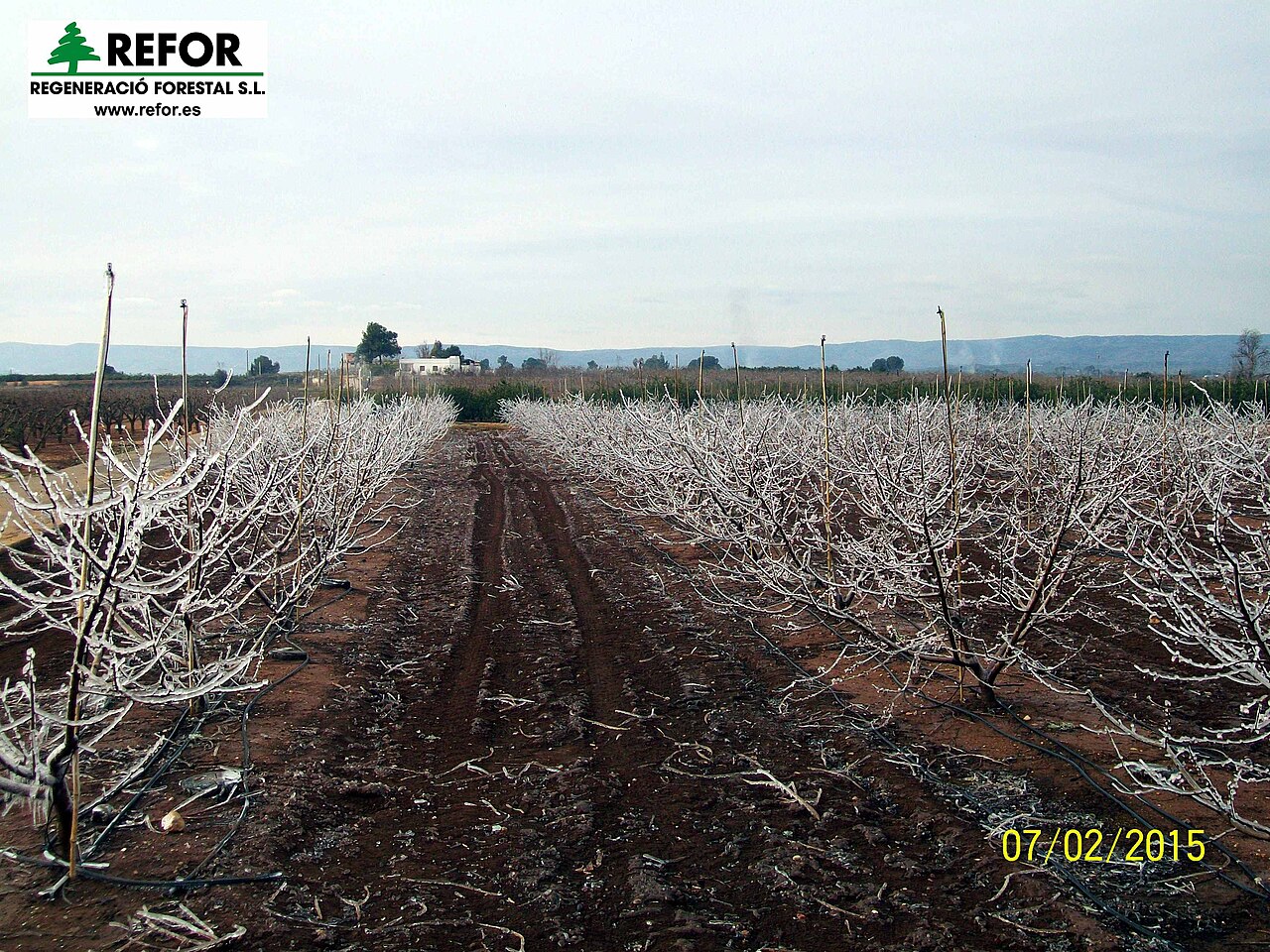
Micro-sprinklers require 20–30% more water than dripping, but are suitable for rocky and heterogeneous soils where water distribution from drippers would be uneven, and with higher flow rates, they can also be used for late spring frost protection (sprinkling). They operate at lower pressure, approximately 1.0–2.5 bar.
Comparative Table
| Feature | Drip Irrigation | Micro-Sprinklers |
|---|---|---|
| Flow per emitter | 1.6–2 l/h (dripper) | 40–70 l/h (sprinkler) |
| Water use efficiency | 80–90 % | Lower; requires 20–30% more water |
| Coverage | Narrow zone next to plant | Circle under the canopy |
| Operating pressure | Low | 1.0–2.5 bar |
| Suitable soil | Most soils | Rocky, heterogeneous soils |
| Clogging | More sensitive (fine drippers) | Less sensitive |
| Frost protection | No | Possible (sprinkling) |
| Interference with mechanical harvest | Low (can be buried) | Pipes hung above ground |
Values are informative and depend on equipment manufacturer, cultivar, soil, and location.
System Sizing
The irrigation system is designed to replenish water lost by the orchard through evapotranspiration in the absence of sufficient precipitation. The starting parameter is the plant's water requirement under given agroecological conditions, after which flow rates, number of sections (zones/blocks), source capacity, and storage are determined.
Water Needs and Frequency
- Irrigation frequency depends on soil type — in practice, irrigation is cited as every 1–3 days.
- The target daily intake in one Croatian elaboration is about 3 mm/day, which is achieved by operating the system in multiple shifts.
- Annual water consumption varies greatly with area and climate; examples from the corpus: ~3,880 m³/year (≈40 ha with limited irrigation), ~5,000–5,200 m³/year (smaller orchards), up to ~113,500 m³/year for a large orchard of ~139 ha. These figures show the range, and the actual requirement is calculated for a specific location.
Spacing and Number of Laterals
Planting spacing in Croatian orchards is often 5 × 4 m (with orchard structure 5 × 8 m). Literature for dripping mentions placing one lateral in the row, while foreign sources mention a density of about 1,666 m of lateral per hectare with one dripping pipe in the inter-row at ~3 m from the trunk. The spacing of drippers is chosen according to soil texture (denser on lighter, sandy soils, sparser on heavier soils), so that moistening zones overlap in a continuous moist band in the row.
Water Source, Storage, and Pump
The system typically consists of three parts: well (source), storage, and irrigation network. Storage is recommended when the source is distant or when there are large elevation differences. Examples of capacities from the corpus: well ~2.77 l/s, storage tanks from 2,000–3,200 m³ up to 30,000 m³, depending on area and safety reserve. The pump and system head are sized according to the flow of the largest section and total pressure loss (safety reserves should also be added). Rule from an Italian catalog: the flow rate of the dosing/section should be equal to or less than the flow requirement of the smallest sector.
System Head (Power Unit)
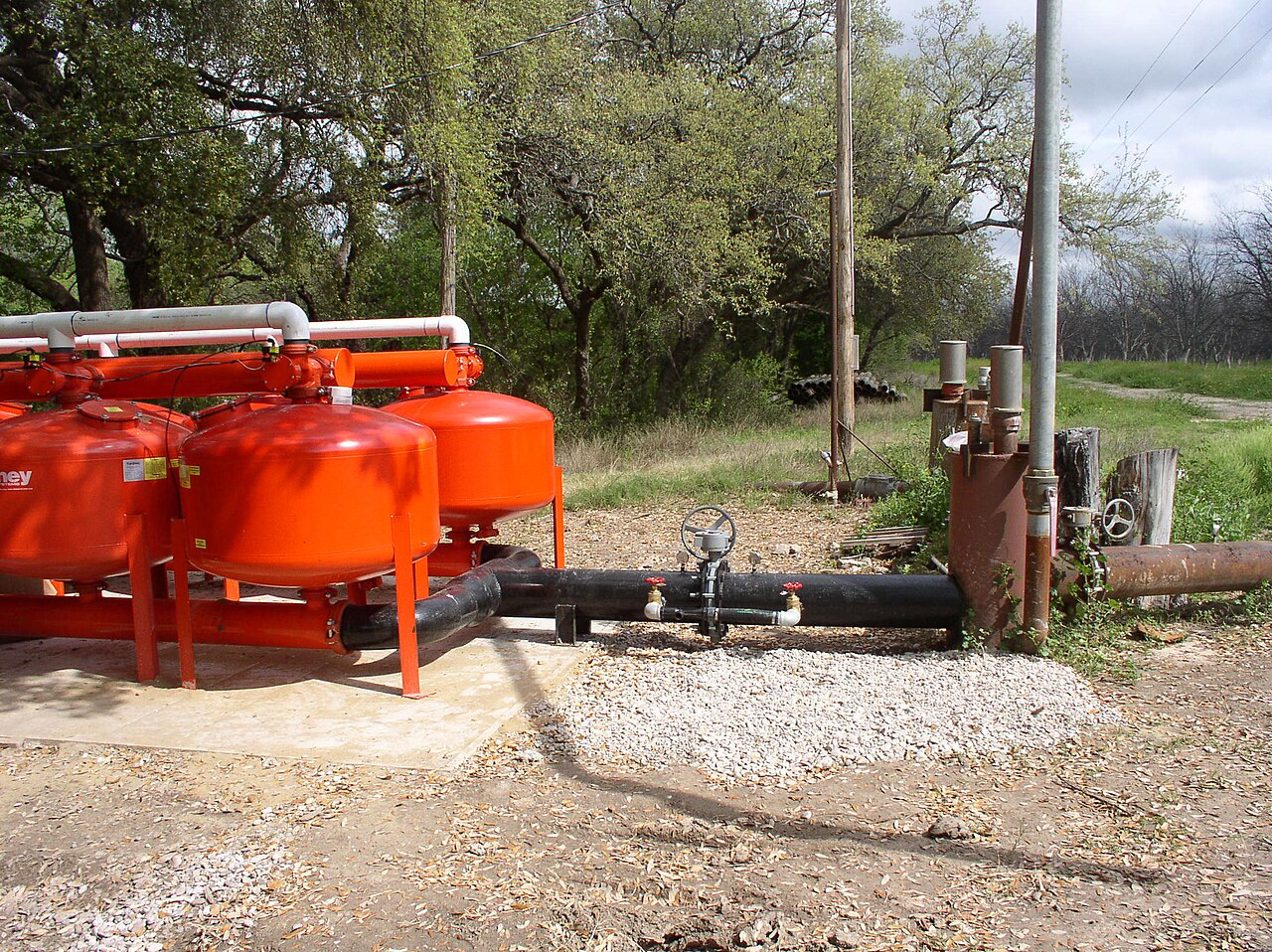
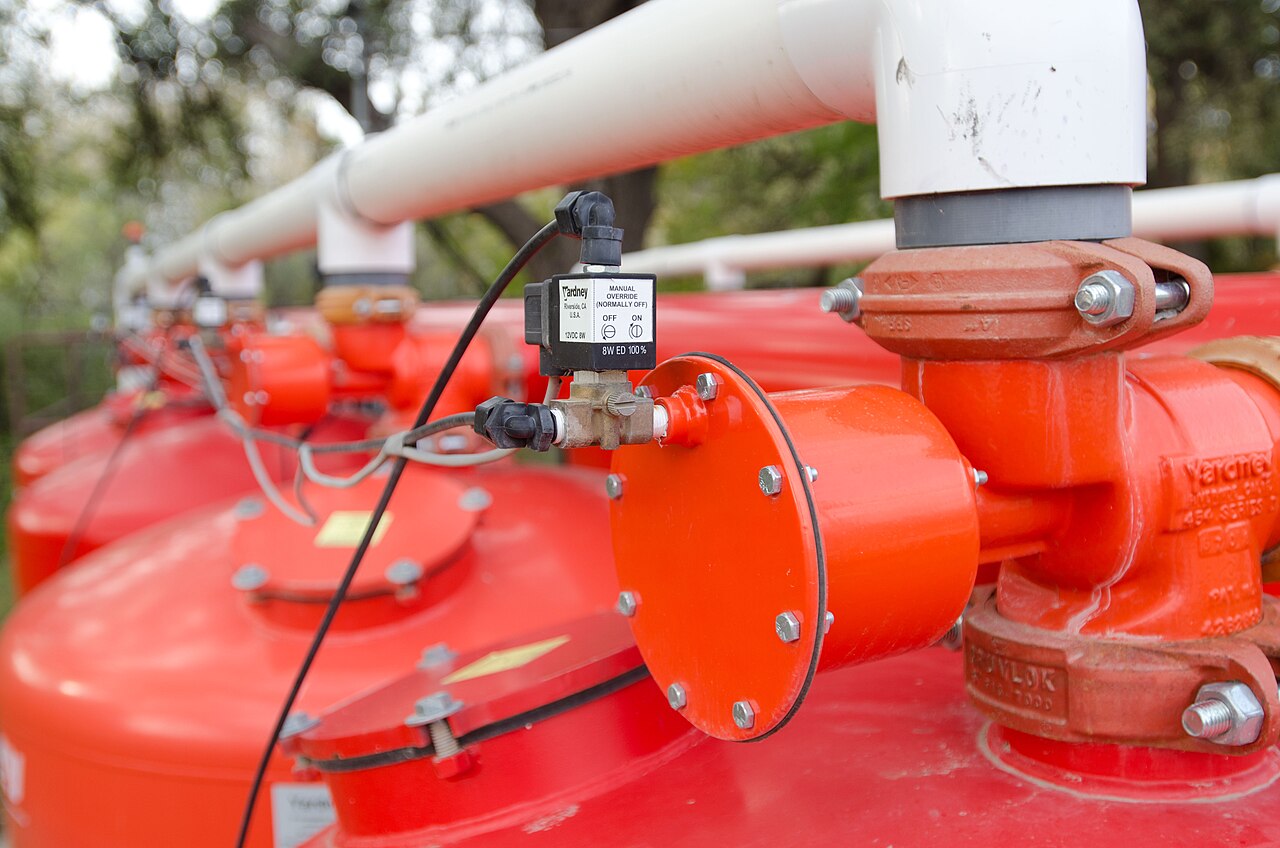
The system head (e.g., 2" diameter) maintains constant and controlled pressure and protects the system. It contains a pump, pressure regulator, water meter, valves, filter, and protections. In one elaboration, a filter with a minimum flow of 12.8 m³/h and filtration degree of 130 microns is cited, along with at least two manometers — one before and one after the filter — to monitor pressure drop.
Filtration
Filtration is crucial for dripping because fine particles (sand, silt, dust, algae) easily clog the small openings of drippers and prevent their operation. The choice of filter depends on water quality, which should be physically and chemically tested before sizing:
| Water Source / Problem | Recommended Filtration |
|---|---|
| Surface water (storage, lake) | Sand (gravity) filter with automatic flushing + safety mesh or disc filter |
| Well water with lots of sand | Hydrocyclone + safety filter |
| General minimum requirement | Primary filtration for sand removal, degree approx. 130 microns (approx. 300 microns for some dosers) |
In addition to the filter, protections against excessive pressure, hydraulic shock (water hammer), and siphoning are installed — pressure/flow limiters, accumulators, and non-return (anti-siphon) valves, especially in systems with risk of back-suction.
Installation in the Orchard
- Young seedlings (first 2–3 years): pipe with drippers is placed above ground, very close to the seedling (about 0.20 m from the trunk), or shallowly buried ~10 cm next to the plant. The lateral is often tied to the first wire of the orchard structure.
- Mature orchard: the majority of the root system is eventually located at a depth of about 0.5 m and ~0.5 m from the trunk. The system can then be buried (subsurface dripping) at a depth of 20–35 cm and 2.5–3 m from the trunk, removing it from the path of mechanical harvest, mowing, pruning, and other operations.
- Subsurface dripping on new orchards: the first two years should be combined with surface ("rescue") irrigation until young roots develop; drippers with anti-root protection against root intrusion are recommended.
- Orchard structure: posts and support wires (e.g., post height ~70 cm for unobstructed mechanical harvest) also serve to hang drip laterals and support pipes for micro-sprinklers.
- Sectioning: the orchard is divided into blocks/tables (e.g., 4 zones on ~12 ha) to align flow with source and pump capacity, and irrigation is carried out in shifts.
System Maintenance
Localized systems have relatively low maintenance costs, but require regular attention to ensure consistent delivery:
- Pressure monitoring: regularly read pressure gauges before and after the filter; an increase in pressure differential indicates that the filter needs cleaning.
- Flushing: periodically flush laterals (by opening the ends) and clean filters with clean water to remove sediment; the more frequent, the better.
- Filters: systems with automatic flushing operate autonomously, but still require monitoring; change fertigation injector seals at least once a year.
- Emitter control: check for clogged or missing emitters and uniform wetting; treat against deposits (chemical flushing according to manufacturer instructions) and algae as needed.
- Automation and sensors: the central unit connected to soil moisture sensors and a weather station turns the system on and off based on actual needs, saving water and fuel while reducing emissions.
- Winter preparation: drain the system before frost; above-ground pipes placed on the ground have a higher risk of water freezing than pipes suspended above the ground.
Practical Recommendations and Common Mistakes
- Do not neglect water analysis before selecting a filter — incorrectly sized filtration is the most common cause of emitter clogging.
- Choose pressure-compensating emitters on sloped or long plots to ensure uniform delivery.
- Size the pump according to the largest section and provide a safety margin for source capacity; the peak summer demand is often underestimated.
- Install anti-siphon valves and water hammer protection — inexpensive components that protect the entire system.
- Do not wait for visible plant stress — irrigate as soon as moisture deficit is felt; plan the season from spring to late summer.
- Bury the system only after root development, and until then, provide surface irrigation for young seedlings.
- Keep records of water consumption and pressure — deviations reveal faults early.
Gallery
Sources
This article is an AI summary generated from an internal hazelnut literature collection (RAG corpus) and publicly available sources. Figures and recommendations are informative; consult advisory services and equipment manufacturers before implementation. Main sources used:
- Environmental impact assessments for hazelnut orchards and groundwater extraction (Donji Hrastovac/Sunja, Vojnić, Nova Kapela, Dragodinac, Glina, Zmajevac, Donja Pištana) — internal RAG corpus (HR).
- Lijeska / Lješnjak (Vrtlarica) — hazelnut cultivation manuals; water needs and irrigation of young orchards — internal RAG corpus (HR).
- Tehnološka navodila za zaščito pred spomladansko pozebo v sadjarstvu (2018) — micro-sprinkler/micro-sprayer parameters (SL) — internal RAG corpus.
- Podizanje novih nasada voćnjaka — tehnološko-ekonomske smjernice (2006) — approximate costs of drip irrigation systems — internal RAG corpus (HR).
- Irrigazione Agricola — Mercato EMEA (Toro, 2023) — flow selection, filtration, and system protection (IT) — internal RAG corpus.
- Irritec — Drip Irrigation for Hazelnut Trees — https://irritec.com/drip-irrigation-for-hazelnut-trees/
- Netafim — Hazelnut crop knowledge and irrigation/fertigation protocol — https://www.netafim.com/en/crop-knowledge/Hazelnut/
- Rivulis — Hazelnut irrigation — https://www.rivulis.com/rivulis-solutions-for-hazelnut-irrigation/
- Pipelife Hrvatska — Localized irrigation (drip) and sprinkler irrigation — https://www.pipelife.hr/navodnjavanje/lokalizirano-navodnjavanje.html
Recommended equipment
🔎 drip irrigation kit — Amazon →Affiliate links — we may earn a small commission at no extra cost to you.
Drip Irrigation Kit
Suitable for small to medium orchards or gardens.
| Use Case | Option Type | What to Check Before Purchase |
|---|---|---|
| Small plots | Basic drip lines | Emitter spacing and flow rate |
| Medium orchards | Complete kit with filters | Pressure regulation and filtration quality |
| Large scale systems | Professional installation | Hydraulic calculation and zoning |