Dryers and Sorters: Equipment for Hazelnut Processing
Content generated by artificial intelligence — verify before application
This article was automatically compiled from a collection of hazelnut literature using artificial intelligence and may contain errors or outdated data. It serves as a starting point for further research, not as professional advice. Dosages, products, and timelines are informative and depend on the cultivar, location, and current regulations — always consult with an advisory service and official sources before application.
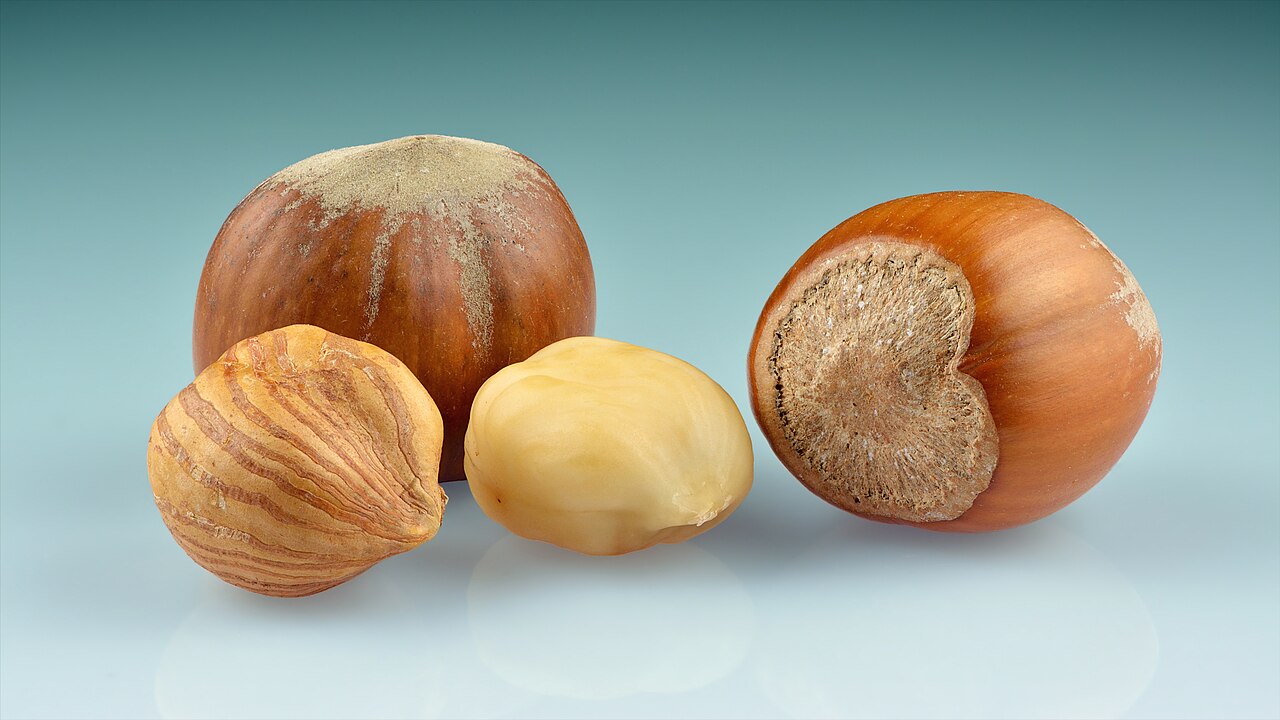
Harvest is only half the job. What determines whether hazelnuts will ultimately fetch a good price — or end up as second-grade goods with deductions for moisture, breakage, and stink bug damage — is processing: drying, cracking (shelling), grading, and sorting. Processing is precisely where the producer transforms the primary raw material "hazelnut in shell" into a value-added product: a clean, graded kernel ready for the confectionery industry. This article guides you through the equipment of a processing line — from the dryer to the optical sorter — with an emphasis on capacities, automation, and the logical integration of machines into a cohesive system. The figures are informative and depend on the cultivar (round vs. elongated), incoming moisture content, and the condition and settings of the machines.
Why processing is critical
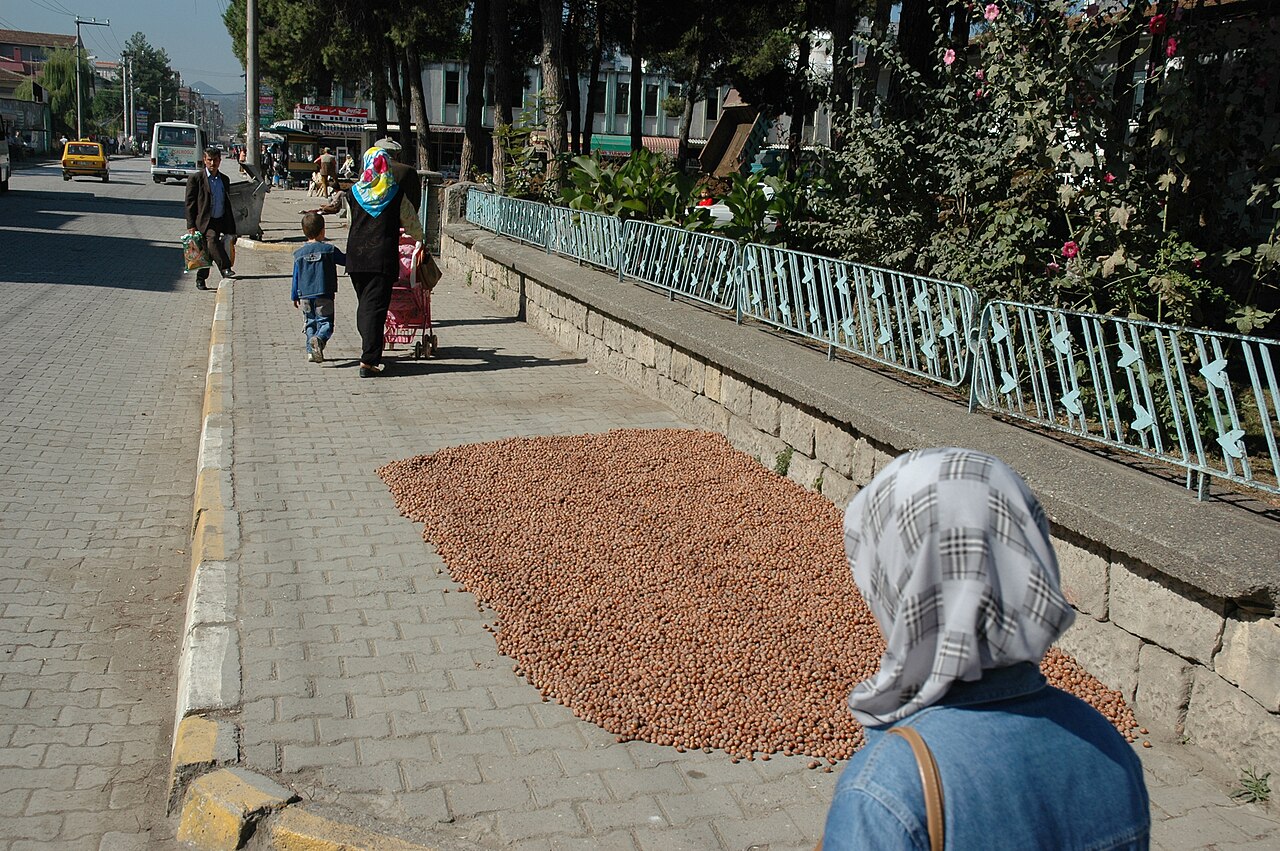
Experience from domestic producers clearly indicates that drying is the "bottleneck" of the entire process. As noted for the Daruvar area: "During rainy autumns, it is very difficult to dry the nuts, and without proper drying, there is no market placement." Without a personal or cooperative dryer, producers depend on the weather, improvised attic drying, and the risk of mold.
The second message is economic. Processing equipment is expensive for medium-sized farms, so it pays off in two ways:
- through added value — selling kernels instead of nuts in shell;
- through contract processing — whoever has the line dries, shells, and sorts for neighbors as well. Literature mentions a business that, with its own ~7.3 ha, "provides processing, drying, and other services to others," and the investment was partially financed through the IPARD program. This is an important model because it spreads the fixed cost of expensive machinery over a larger volume of raw material.
Logic of the entire line
Typical processing sequence: receiving and pre-cleaning → drying → grading (by size) → cracking/shelling → separating kernel from shell → optical/final sorting → weighing and packaging. Each step prepares the raw material for the next; skipping steps (e.g., cracking without grading) results in broken kernels.
Drying: Dryers and Capacities
Freshly harvested hazelnuts in shell have excessively high moisture content for safe storage. The goal of drying is to reduce the kernel moisture to a level where mold and rancidity do not develop (approximately 6 % kernel moisture; always check the buyer's requirements). Drying must be gradual and at moderate temperatures so that the kernel does not "cook" or the oil does not turn rancid.
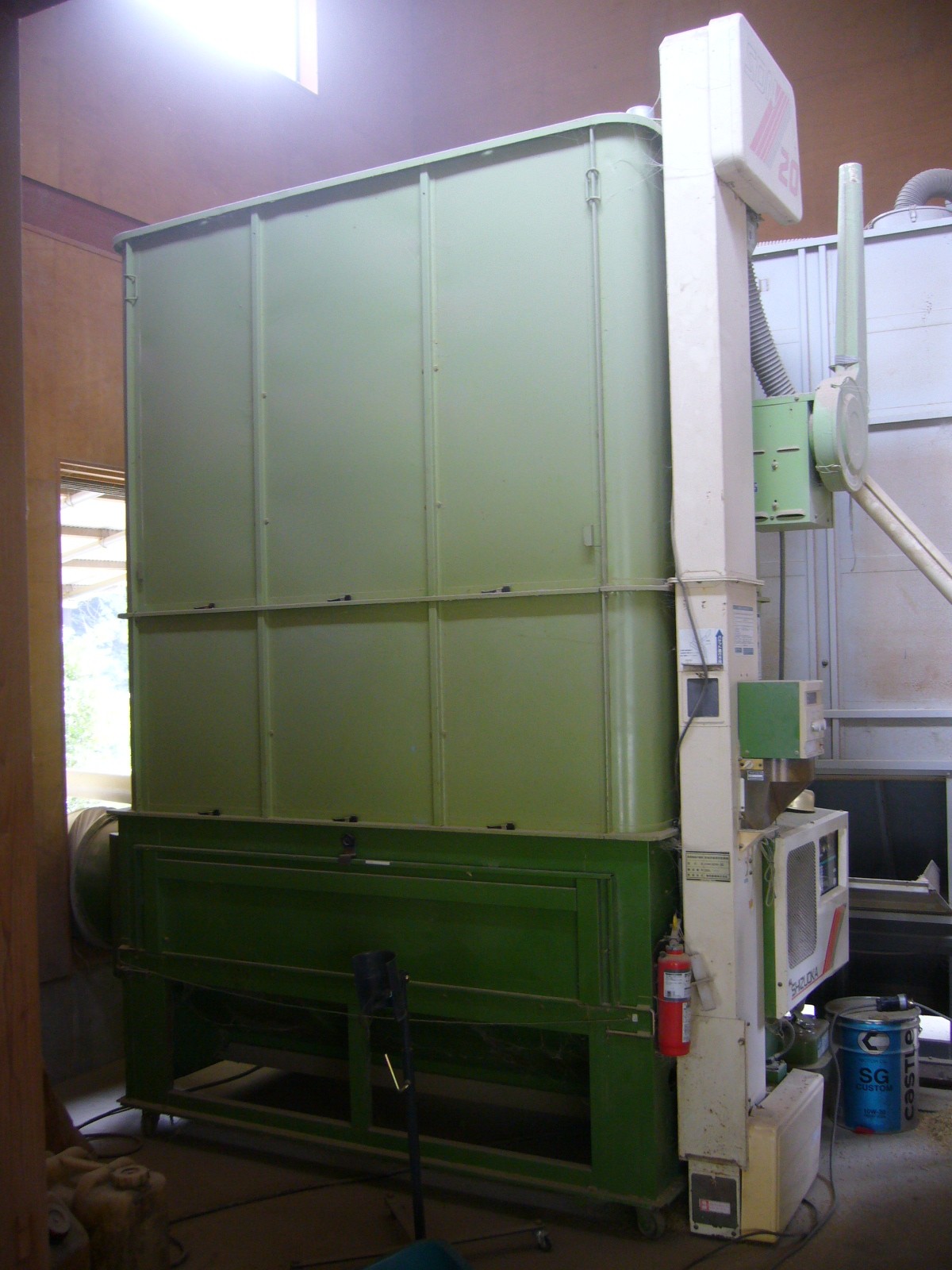
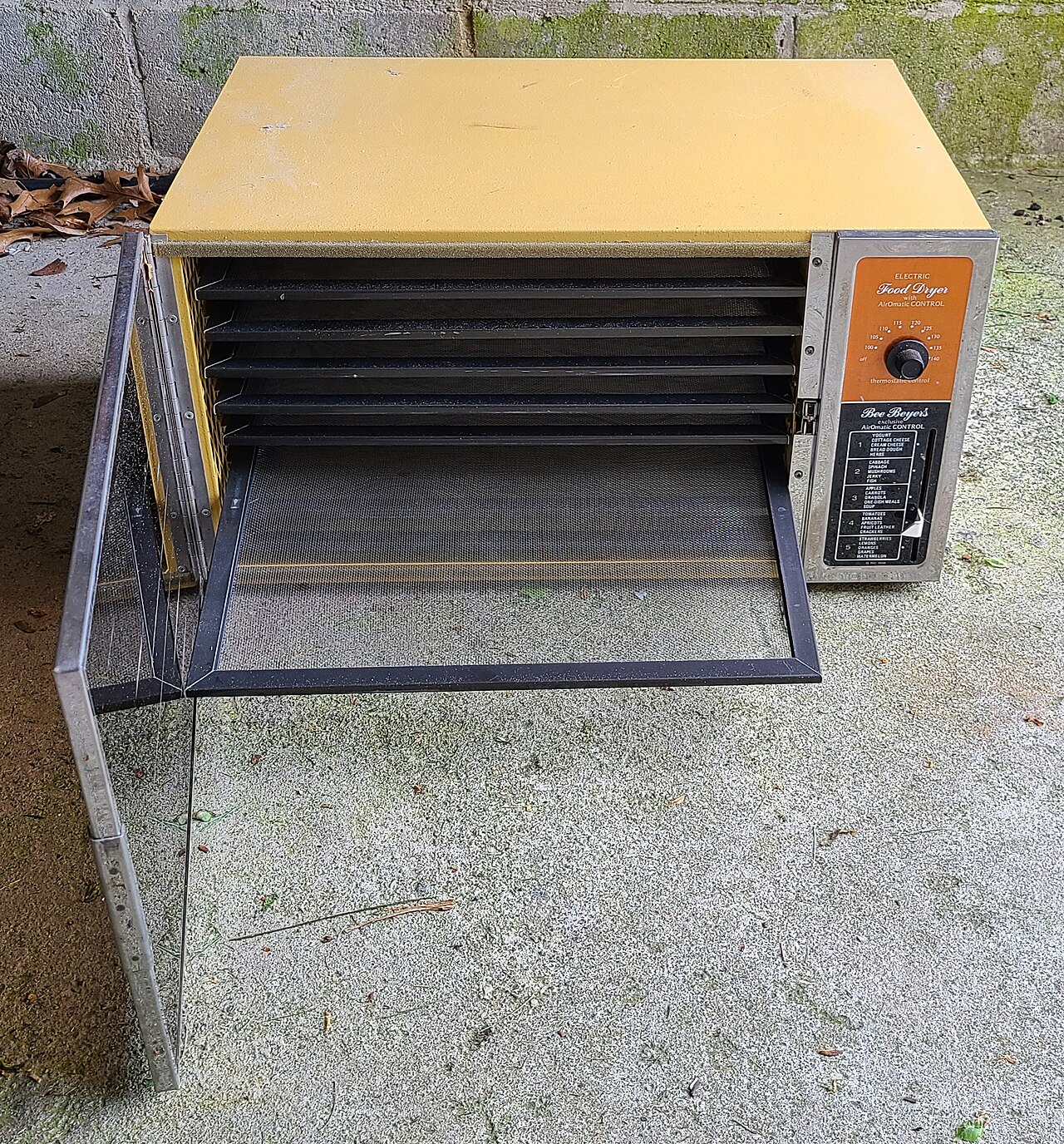
Types of Dryers
| Dryer Type | How it Works | For Whom |
|---|---|---|
| Chamber / Tray (Batch) | Nuts in layers on racks, hot air flow | Small and medium producers, flexible |
| Silo/Bunker with Aeration | Larger quantities in silo, controlled air blowing | Larger orchards, contract processing |
| Continuous (Through-flow) | Nuts constantly pass through the drying zone | Large lines, high throughput |
| Improvised (Attic, Cooler) | No control — not recommended | Last resort |
Capacity — Indicative Figures
One documented domestic example: a donated dryer with a capacity of 7 tons that dries a batch in four days — described as sufficient for the needs of a group of seven producers on ~20 ha. This leads to a practical rule: plan dryer capacity based on peak daily intake during harvest, not the average, because harvest and ripening come in waves.
Practical Guidelines for Drying
- Do not overload layers — too thick a layer dries unevenly and remains moist in the center.
- Prefer lower temperature for longer, rather than high temperature for short time (preserves oil and kernel color).
- Measure moisture, do not estimate by "feel". A moisture meter is a cheap insurance investment.
- Pre-cleaning before drying (removal of leaves, husks, soil) increases efficiency and reduces mold risk.
Pre-cleaning and Grading
Before cracking, the nut must be cleaned and graded by size. Grading is not cosmetic — it is a technological prerequisite for quality cracking.
The logic is as follows: the cracker (cracker mill) is set for a specific nut diameter. If nuts of very different sizes pass through it, small ones will not break, and large ones will be crushed too hard, causing kernel breakage. Therefore, nuts are first separated by grade.
From the corpus, very concretely:
"By grading, hazelnuts are sorted into 7 sizes, each of which is cracked separately. Due to the uniform size of the nuts, after grading, the cracker will crush the nuts with only about 2 % breakage. The capacity of this machine is up to 250 kg/h."
Thus: the grader divides into multiple fractions (e.g., up to 7), and then each fraction is cracked separately with minimal kernel breakage.
| Parameter (Grading/Cracking) | Indicative Value | Note |
|---|---|---|
| Number of size fractions | up to 7 | depends on cultivar and machine |
| Kernel breakage after good grading | ~2 % | with properly set cracker |
| Grader capacity | up to ~250 kg/h | per single pass |
| Grading capacity (elongated cultivars) | ~300–330 kg/h | depends on nut shape |
| Grading capacity (round cultivars) | ~350–380 kg/h | round nuts pass faster |
It is also worth noting from the corpus: capacity depends on shape — round hazelnuts achieve higher throughput than elongated ones (e.g., ~350–380 kg/h for round vs. ~300–330 kg/h for elongated on the same Torrengo Fratelli line).
Cultivar affects cracking
The morphological and physical properties of the nut determine how it behaves under cracking force. In one study, the cultivar 'Istrska dolgoplodna leska' was identified as most favorable for mechanical cracking. The force required for cracking is measured in hundreds of Newtons (indicatively on the order of ~370 N per diameter, ~530 N per nut height), so cracker settings according to cultivar and grade are crucial.
Cracking (Shelling) and Kernel-Shell Separation
After grading, shell cracking and kernel-shell separation follow. The goal is maximum whole kernel yield with minimum breakage and minimal shell residue in the kernel.
Typical flow after the cracker:
- Crushing — nuts are cracked by fraction; performed as many times as there are grades.
- Coarse separation — gravity/air cleaner (aspiration) removes lighter shell, kernel (heavier) remains.
- Fine separation — removal of remaining shell fragments; computer vision helps more here.
- Transport — by elevator into receiving bin (e.g., 500 kg capacity) or further to sorting/roasting.
Examples of machine capacities for cleaning/separation from the corpus and market:
| Machine / Operation | Capacity | Power / Mass | Source |
|---|---|---|---|
| Hazelnut cleaning machine (type P300) | ~60–70 kg/h | ~2.5 kW, ~510 kg | RAG corpus |
| Crusher after grading | up to ~250 kg/h | — | RAG corpus |
| Industrial cracker P80S (Chianchia) | up to ~30 kg/h (small/medium nut) | — | ProduceTech |
| Industrial shelling line (sheller) | ~200–300 kg/h | — | market data |
| Larger shelling plant | ~500–1000 kg/h | modular (multiple units) | market data |
Note: capacities of small "universal" cleaners (tens of kg/h) and industrial shellers (hundreds of kg/h to tons/h) differ by an order of magnitude — choose based on actual annual yield, not "maximum possible".
Optical Sorting: Final Quality Grade
The optical (color) sorter is the pinnacle of the line. Its task is to remove everything that does not belong from the kernel stream: rotten and moldy kernels, stink bug damaged (cimiciato), shell fragments, shell-in-shell, shriveled and damaged nuts, stones, insects, and other impurities. This is a job that the human eye on a moving belt cannot perform either fast enough or reliably enough.
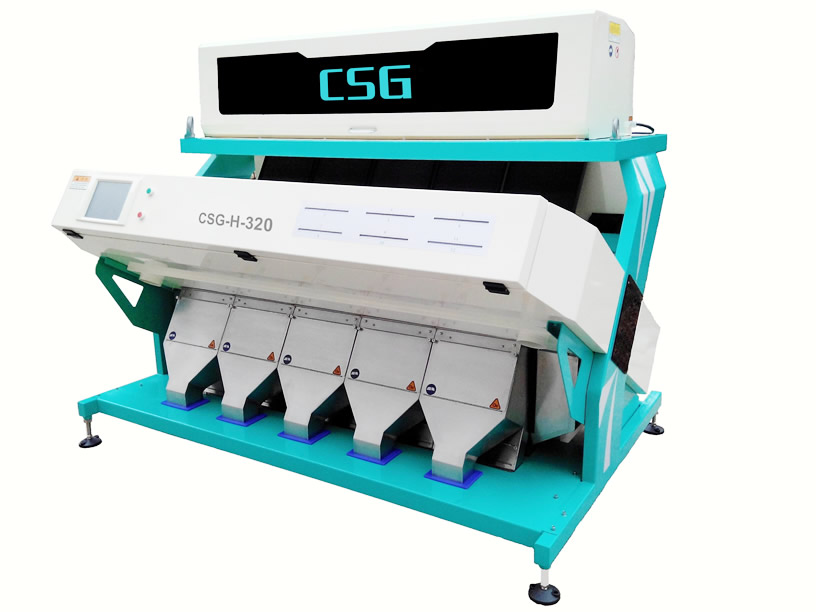
From the corpus, a concrete domestic example (company "Pantera"): a Cimbria (SEA.HY) optical sorter "last generation with AI". The combination of SWIR camera with full-color technology enables material recognition and sorting by type, color, and hyperspectral properties "beyond human eye reach". It is noted that RGB camera scanning speed can reach 18,000 times/s, and the ejection of defective pieces is performed by air jet (nozzles).
How an optical sorter works (simplified):
- kernels/nuts are fed by elevator and leveled on a vibratory feeder;
- they pass in front of cameras (RGB and/or NIR/SWIR) against a defined background color;
- the algorithm classifies each piece in real time;
- a precise air jet "ejects" defective pieces from the main stream.
Market data shows a range of capacities and sensitivities:
| Sorter Grade | Indicative Capacity | Typical Application |
|---|---|---|
| Mini / Entry-level | ~200–500 kg/h | small farms, "cost-effective" |
| Medium industrial | ~1–3 t/h | medium processing |
| Large industrial | ~3–5 t/h | factory line |
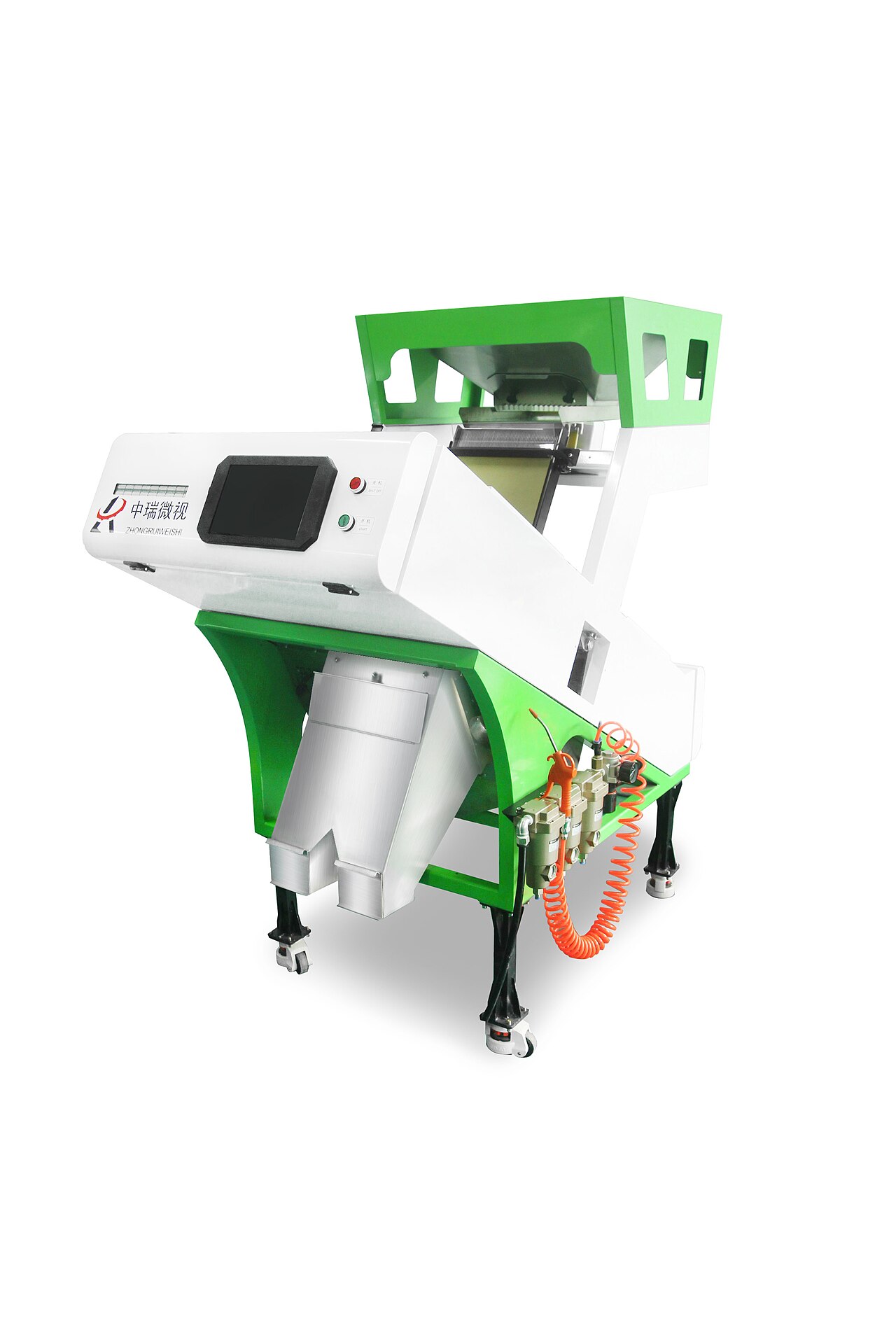
Leading manufacturers of optical sorters for nuts include TOMRA, Cimbria, GroTech, Optimum Sorting, and others. Modern devices declare defect detection smaller than 1 mm and separation by size, color, and shape.
What to look for in an optical sorter
- Ability to detect cimiciato damage (stink bug sting) — this is the main hidden defect that buyers penalize.
- NIR/SWIR channel in addition to RGB if you want to capture what color does not reveal (e.g., shell of same color, internal mold).
- Double pass / "re-sort" output to reduce loss of good kernel through the rejected stream.
- Ease of cleaning and changing "recipe" by cultivar and grade.
Automation and Integration into Processing Lines
Individual machines deliver their full potential only when connected into a line with automated transport, dosing, and control. From the hulling stage, the kernel packaging line is described as a sequence: "hopper, elevator, endless belt for selection/inspection/sorting (with staff working on both sides), cleaning device, elevator, weighing and bagging device, and automatic sewing device — the entire line is controlled by an electrical control panel."
Elements that "glue" the line into a cohesive unit:
- Hoppers and elevators — gravity and vertical transport between stages without manual handling.
- Vibratory feeders — ensure a uniform flow before the calibrator and optical sorter (even layer = better classification).
- Aspiration / gravity separators — remove lighter fractions (shells, dust) at multiple points along the line.
- Automatic scales and dosing — e.g., batch dosing according to the capacity of the next machine (in the hulling stage: the scale doses 55 kg, which the roaster drum accepts; the receiving hopper holds 500 kg).
- Centralized control (control panel / PLC) — synchronizes flow, prevents blockages, and records operations.
Capacity Balancing — The Most Common Mistake
The most expensive error in line design is mismatched phase capacities. If the cracker grinds 250 kg/h, but the optical sorter processes 500 kg/h, the sorter sits idle half the time — you paid for capacity you do not use. Conversely, if the sorter is the bottleneck, kernels pile up in front of it.
| Stage | Typical Capacity (Example) | Comment |
|---|---|---|
| Drying | Batch (e.g., 7 t / 4 days) | plan according to peak harvest |
| Calibrating | ~250–380 kg/h | depends on shape/cultivar |
| Cracking | ~30–300+ kg/h | depends on machine class |
| Optical Sorting | ~200 kg/h to 3–5 t/h | often "too fast" for small lines |
Rule: size the line according to the weakest link and purchase machines whose capacities match, with a small surplus at the output stages (sorting, packaging).
Practical Recommendations and Common Mistakes
- Do not crack without calibrating. The cheapest way to increase the whole kernel yield is good calibrating before the cracker (breakage drops to ~2 %).
- Do not skimp on drying. Moist raw material spoils in storage and lowers the price of the entire batch; a moisture meter and controlled dryer pay back the investment by the first rainy autumn.
- An optical sorter is an investment, but also a marketing tool. The ability to demonstrably separate cimiciato (moldy) and moldy kernels opens doors to demanding customers (confectionery industry).
- Consider contract processing and cooperative models. Expensive machines are profitable when "filled" with others' raw material; IPARD/EU measures can cover part of the investment — check current calls for proposals and conditions.
- Choose cultivars with processing in mind. Cultivars suitable for mechanical cracking (e.g., elongated types like 'Istrska dolgoplodna') and with good skin separation during roasting simplify the entire line.
- Do not buy the "largest" machine. Excessive capacity means frozen capital and machines that stand idle. Size according to actual yield and a realistic contract processing plan.
Gallery
Sources
This article is an AI summary generated from an internal literature collection on hazelnuts (RAG corpus) and supplemented with public internet sources. Figures and recommendations are informative and depend on cultivar, location, equipment condition, and current regulations — consult advisory services, equipment suppliers, and buyers before investing.
Main sources from RAG corpus:
- Hazelnut processing at "Pantera" company — calibrating and crushing (Torrengo Fratelli), Cimbria SEA.HY optical sorter (SWIR/RGB), capacities and receiving hoppers
- Mechanization in hazelnut production and processing at Minas-zrno 1 company — processing machines, IPARD, contract processing
- "Hazelnut cleaning" / calibrating into 7 sizes and ~2 % breakage; crusher up to ~250 kg/h
- P300 hazelnut cleaning machine (capacity, power, mass) — Pakir/Chianchia catalog
- Hazelnut kernel packaging line (hopper, elevators, selection belt, weighing, automatic sewing)
- Automated hazelnut sorter — concept for small producers (computer vision, coarse and fine shell separation), David Klepo (thesis, 2022.)
- Hazelnut cultivation / Agricultural Forum — dryer with 7 t capacity (dries in 4 days) for ~20 ha
- Comparison of morphological and physical properties of fruits from three hazelnut cultivars (suitability for mechanical cracking, 'Istrska dolgoplodna leska')
Public internet sources (supplement):
- Nuttechnology — Industrial line for processing hazelnuts (200 kg/h) — https://nuttechnology.com/product/industrial-line-for-processing-hazelnuts-200-kg-h/
- Nutmachines — Industrial Hazelnut Cracking and Roasting Machine 500 KG — https://www.nutmachines.com/line/hazelnut-cracker-dryer.html
- ProduceTech — P80S Cracking and Shelling Machine for Hazelnuts — https://producetech.com/en/products/p80s-cracking-and-shelling-machine-for-hazelnuts/
- Taizy — Hazelnut Processing Line — https://nuts-machine.com/hazelnut-processing-line/
- TOMRA — Hazelnut optical sorting machine — https://www.tomra.com/food/categories/nuts-and-dried-fruit/hazelnuts
- Optimum Sorting — Optical nut sorters: innovations — https://www.optimum-sorting.com/en/optical-nut-sorters-innovations/
- GroTech — Hazelnuts Color Sorter Machine — https://www.grotechcolorsorter.com/hazelnuts-color-sorter-machine_p36.html
Recommended equipment
🔎 nut harvester machine — Amazon →Affiliate links — we may earn a small commission at no extra cost to you.
Hazelnut Harvesting Equipment
Compare manual, semi-mechanized, and larger solutions.
| Use Case | Option Type | What to Check Before Purchase |
|---|---|---|
| Small gardens | Manual rakes and nets | Handle length and net durability |
| Medium orchards | Semi-mechanized sweepers | Engine power and collection capacity |
| Large plantations | Over-the-row harvesters | Professional machinery specifications |