Defoliators and Leaf Rollers (Lymantria, Operophtera, Archips, Hyphantria)
Content generated by artificial intelligence — verify before application
This article was automatically compiled from a collection of hazelnut literature using artificial intelligence and may contain errors or outdated data. It serves as a starting point for further research, not as professional advice. Dosages, products, and timing are informative and depend on the cultivar, location, and current regulations — always consult with an advisory service and official sources before application.
Under the term defoliators and leaf rollers, we group a set of caterpillars (lepidopteran larvae) that defoliate hazelnut leaves and young shoots, including the gypsy moth (Lymantria dispar), winter moth (Operophtera brumata), leaf rollers (genus Archips and related species from the family Tortricidae), and the fall webworm or sycamore moth (Hyphantria cunea). Although hazelnut has its own, more economically significant pests (hazelnut weevil, hazelnut mite, phytophagous bugs), defoliator caterpillars are occasional but potentially very dangerous attackers — especially in young orchards and in orchards bordering forests, where just a few caterpillars per bush can completely defoliate the plant and halt its development. This article explains how to identify each group, how to monitor their occurrence, and how to control them.
Why defoliators are particularly dangerous in young orchards
Defoliators damage leaves and shoots, not the fruit directly. This means that in a mature, bearing hazelnut orchard, the tree can usually withstand significant leaf loss without major consequences for that year's yield. However, in young, newly planted orchards, the situation is completely different:
- A young plant has few leaves, and every leaf is valuable for photosynthesis and canopy development.
- From domestic literature: "In a newly planted orchard, even one caterpillar per bush can completely destroy the leaves, making regular visual inspections necessary!"
- Leaf loss during critical growth stages slows development, delays entry into bearing, and weakens the plant before winter.
Therefore, the rule applies: in young orchards and orchards bordering forests, the tolerance threshold is very low, whereas in bearing orchards, targeted protection against caterpillars is conducted only when the economic threshold is exceeded.
Overview of defoliator groups
| Pest (EN / lat.) | Family | When it appears | Main damage | Caterpillar identification |
|---|---|---|---|---|
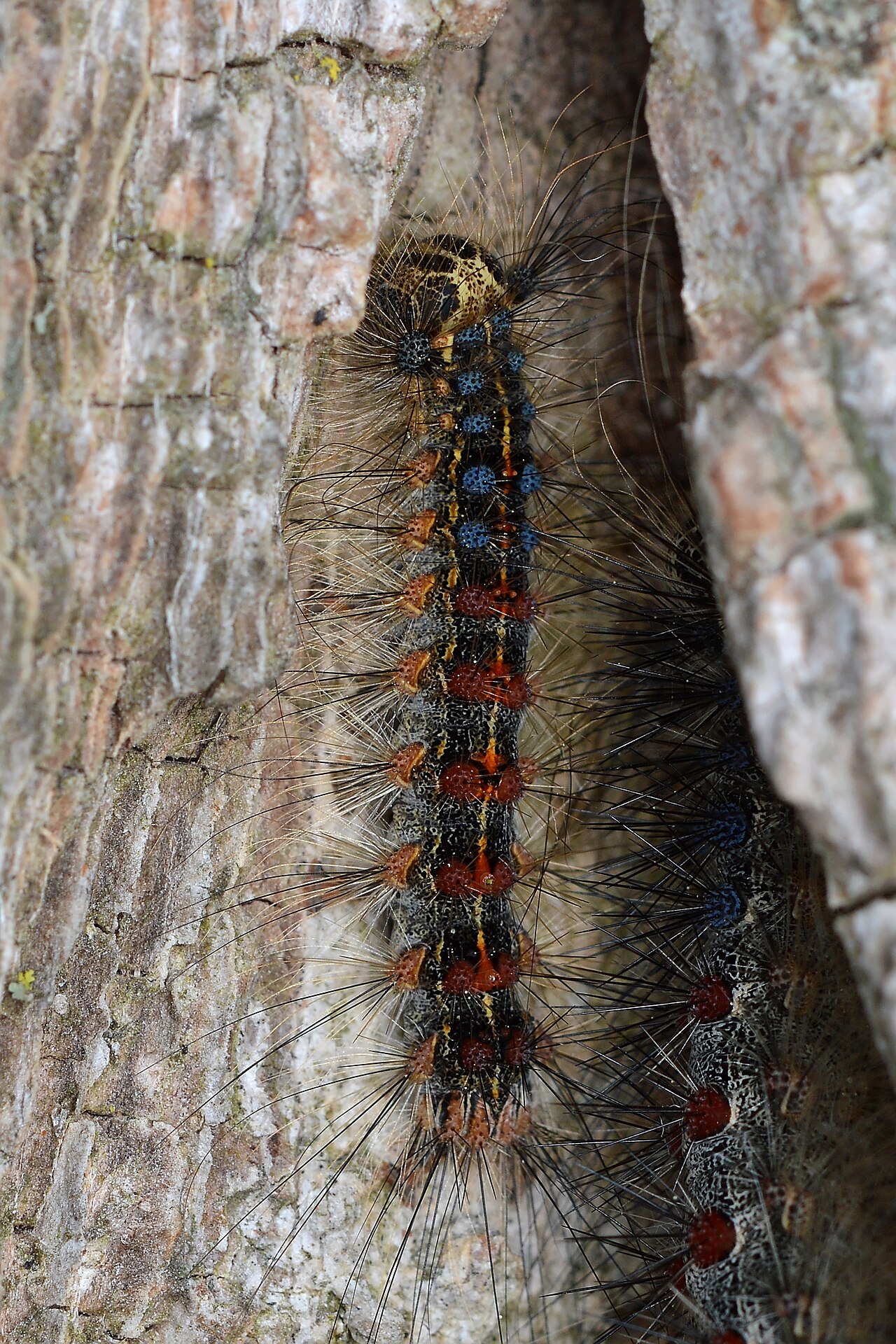
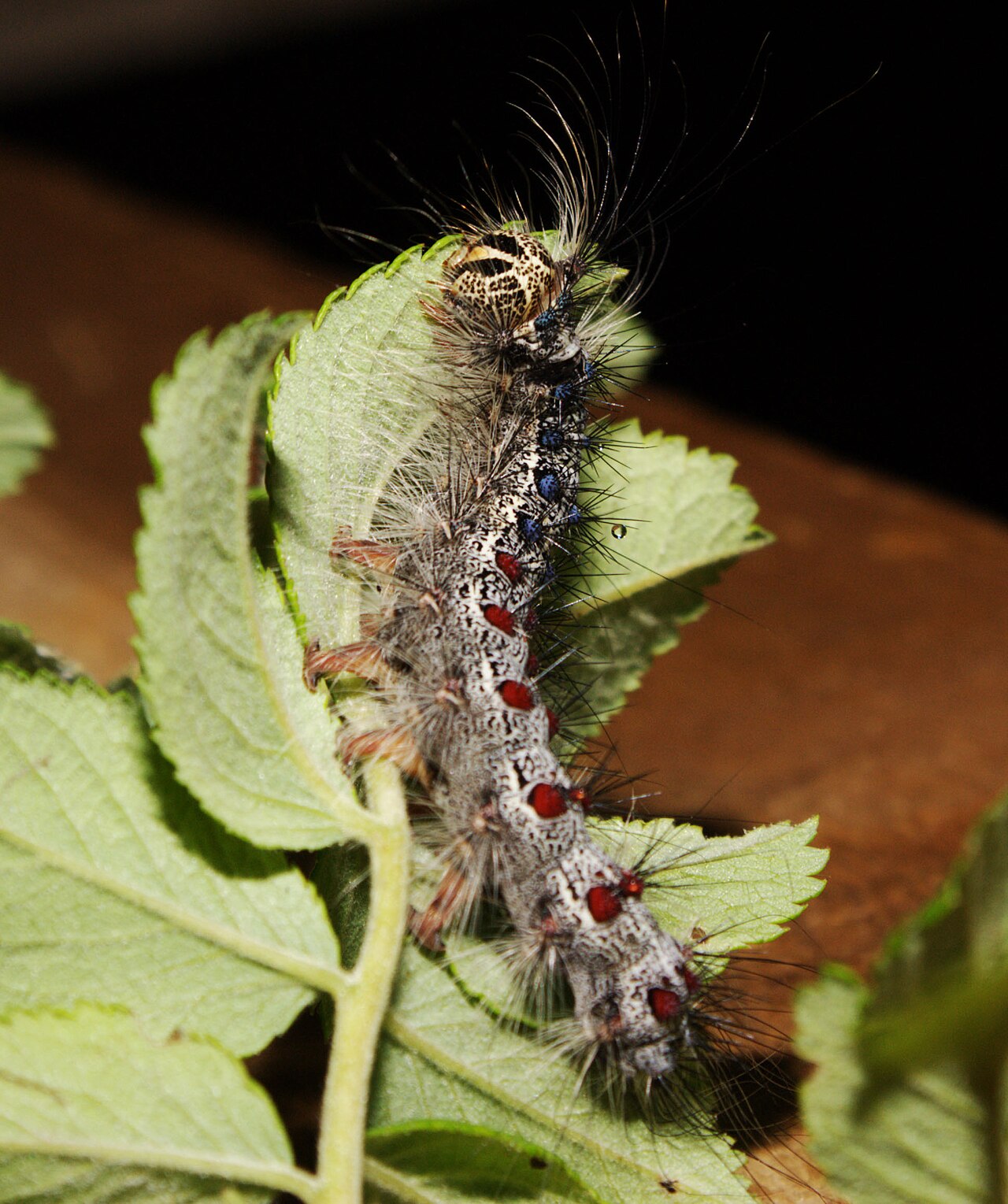
| Gypsy moth / Lymantria dispar | Erebidae (Lymantriinae) | Caterpillars from April; damage most pronounced late June / early July | Defoliation (complete leaf loss) during outbreak years | Hairy, with pairs of blue (front) and red (rear) tubercles on the back |
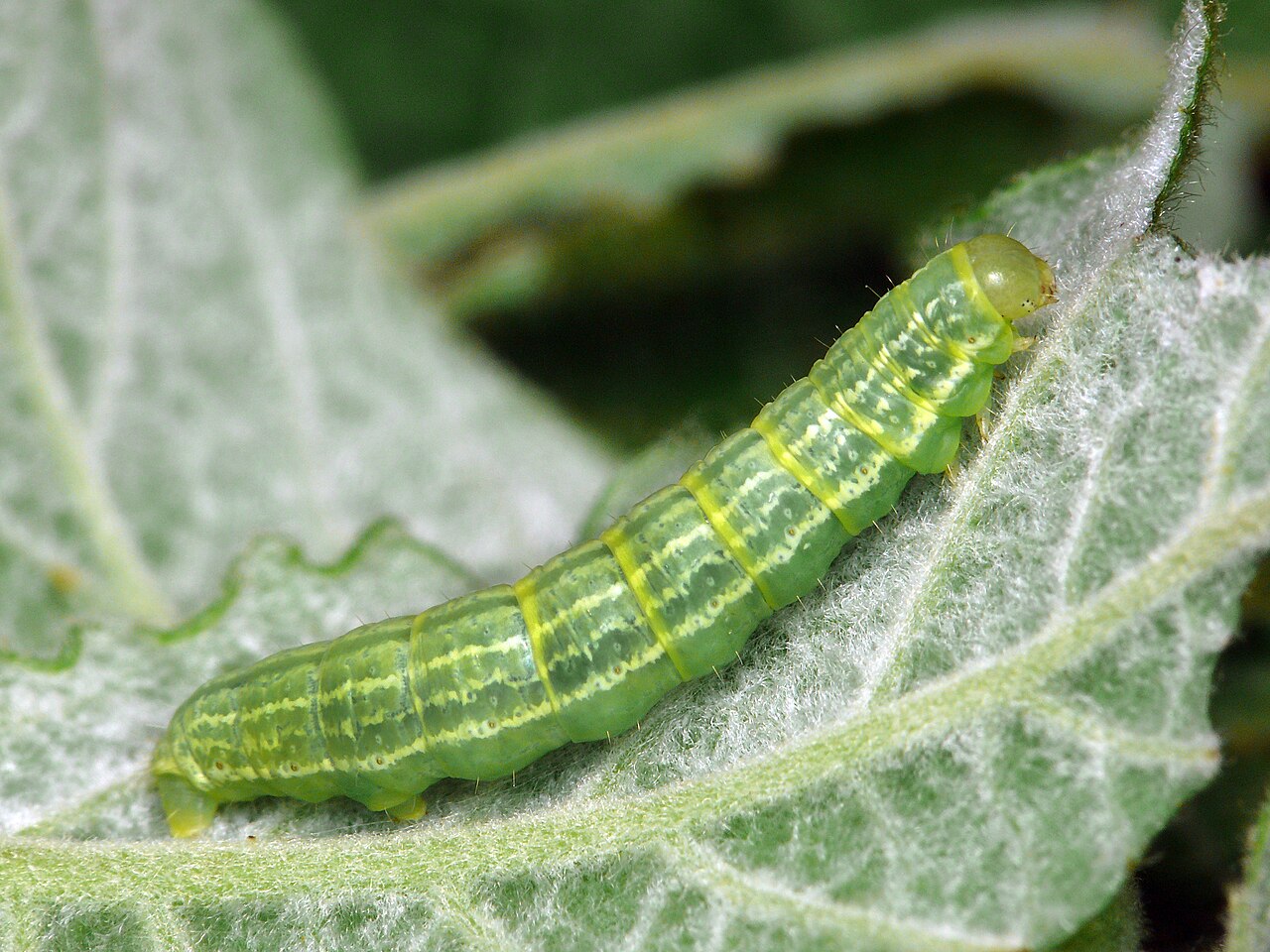
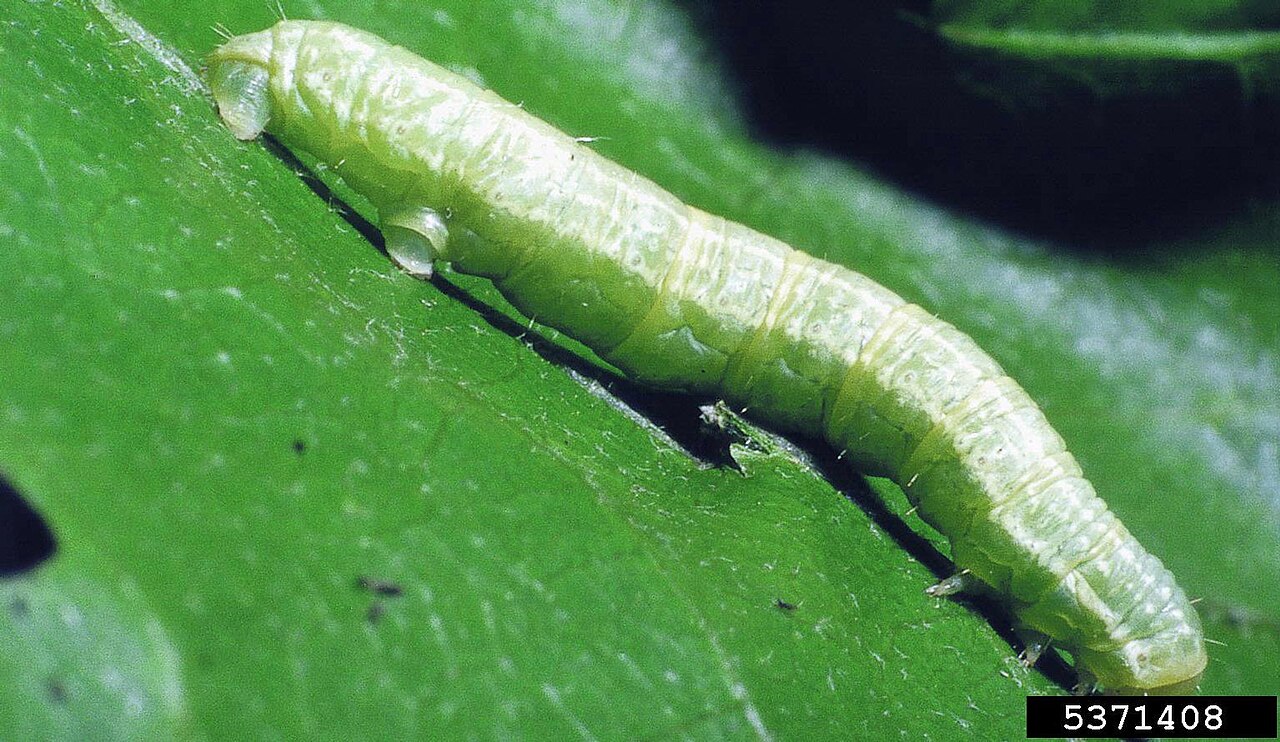
| Winter moth / Operophtera brumata | Geometridae (geometer moths) | Caterpillars with bud burst (spring, May) | Buds, flower clusters, and young leaves | Green "geometer" (inchworm), moves by arching its back; lighter stripes on the sides |
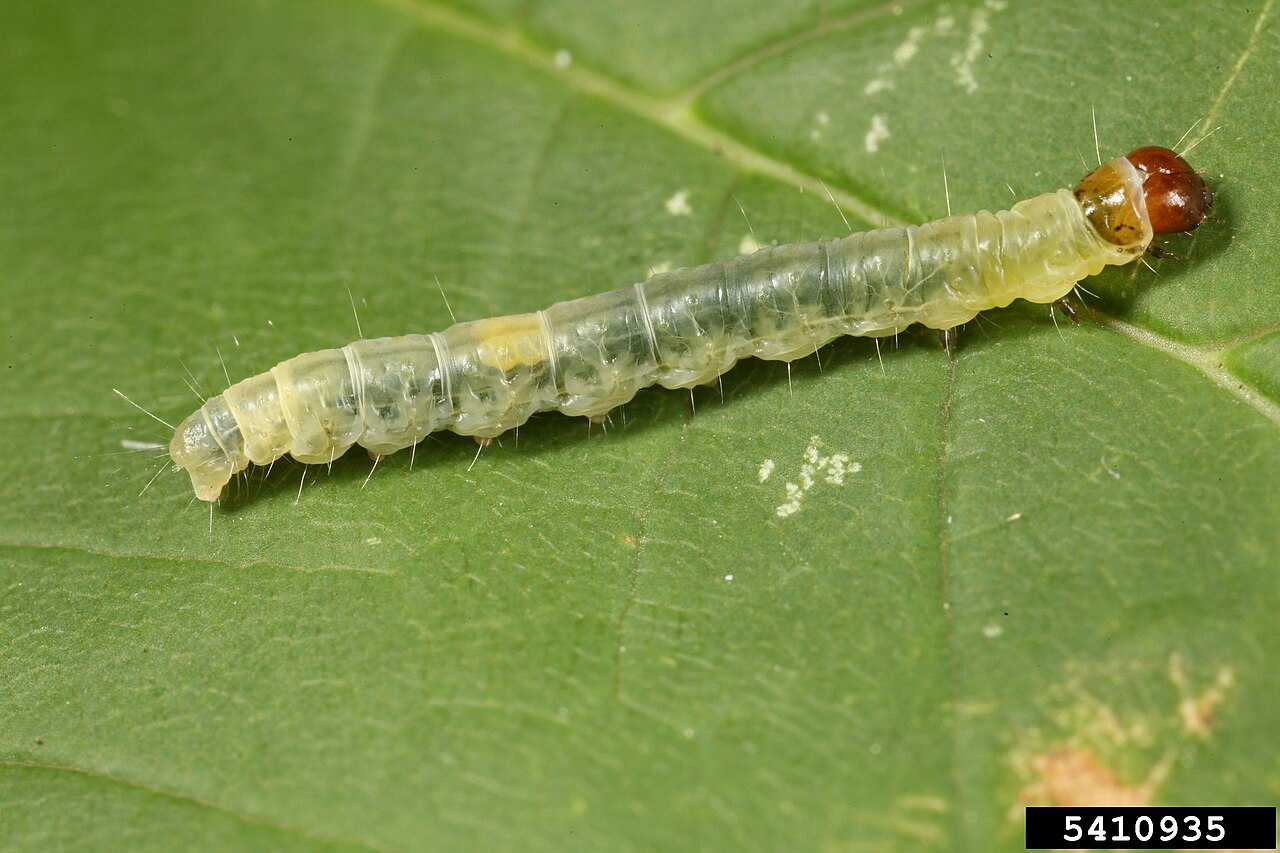
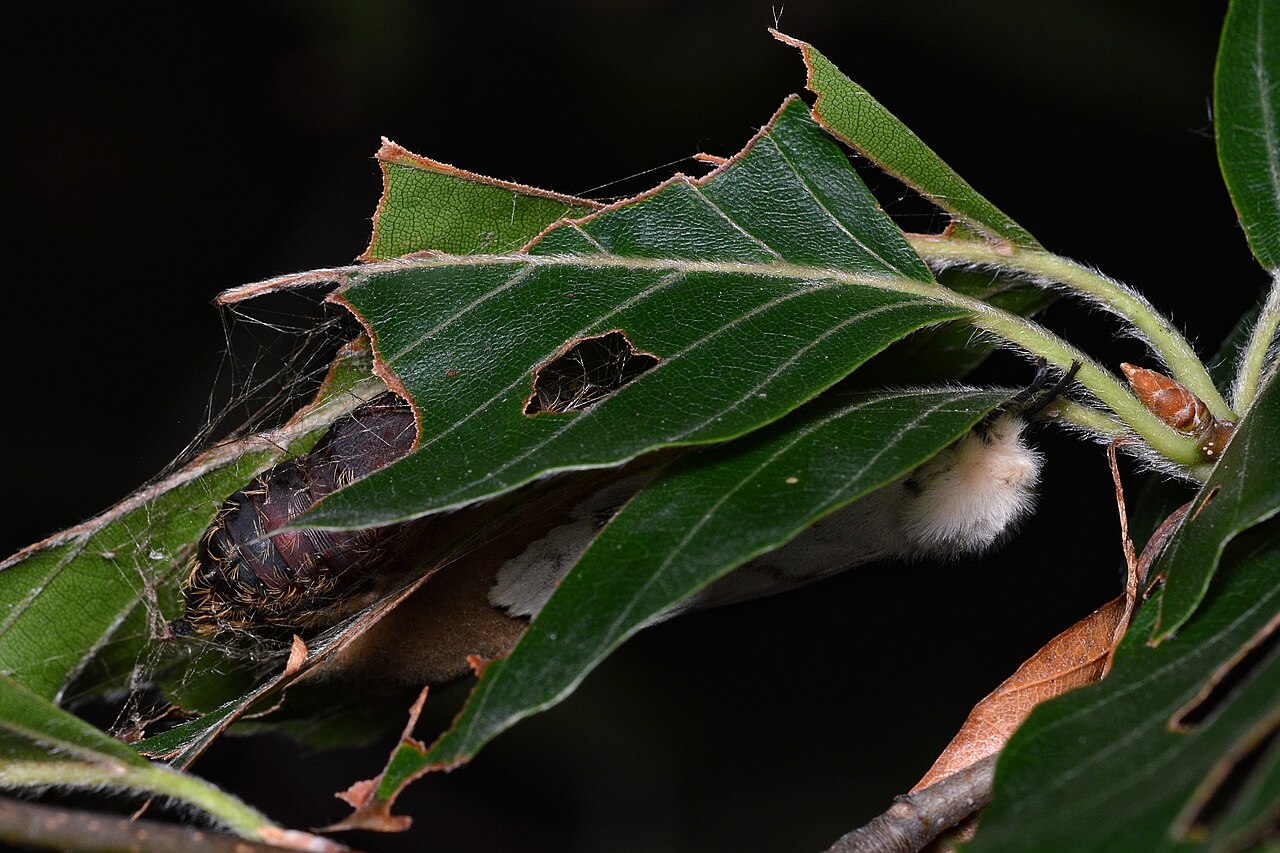
| Leaf/petal rollers / Archips spp., Spilonota, Hedya | Tortricidae | Early spring, on buds and shoots | Buds, clusters, and shoots are spun and chewed; leaves are "rolled" | Small (up to ≈2 cm), greenish, very mobile, "wriggles" backward when touched |
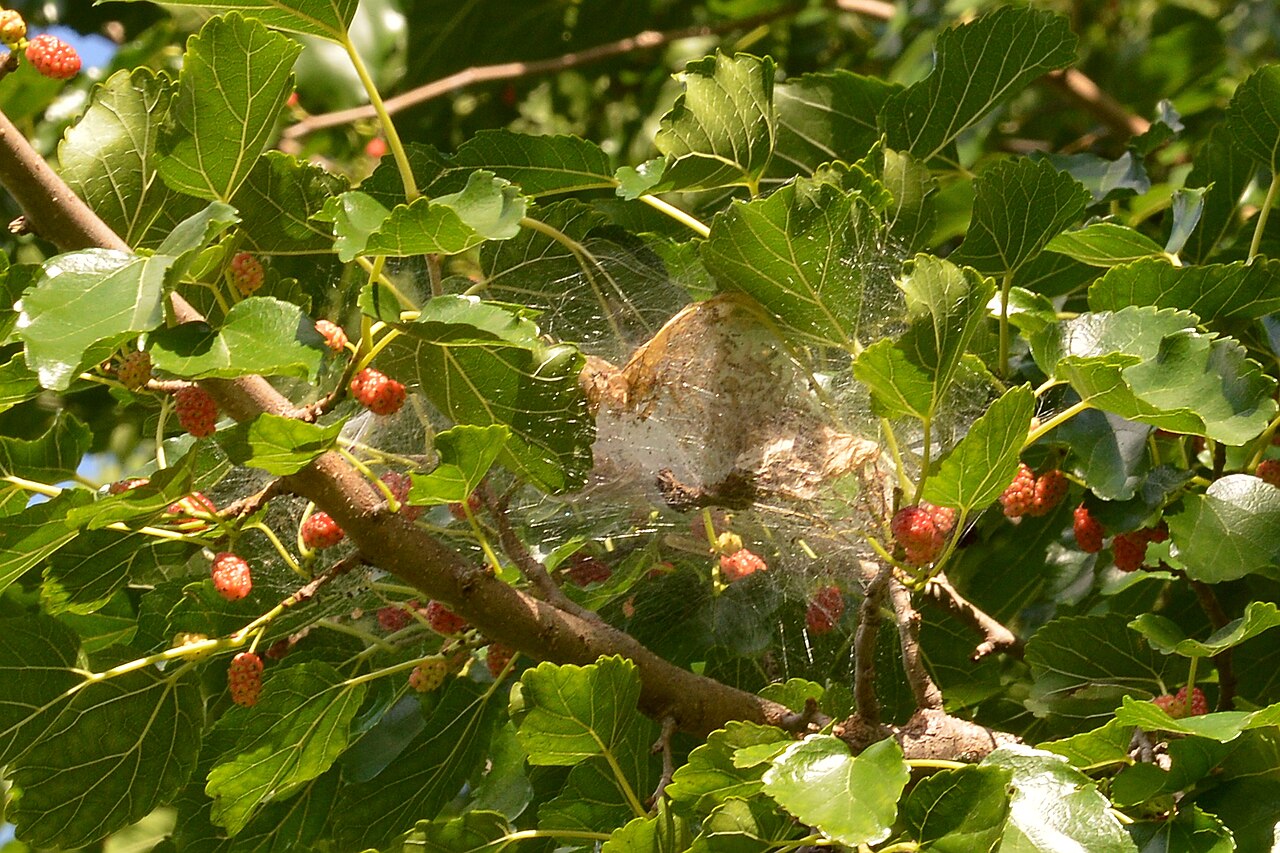
| Fall webworm (sycamore moth) / Hyphantria cunea | Erebidae (Arctiinae) | Two generations (summer and late summer/autumn) | Characteristic white web-like nests on branch tips, defoliation | Hairy, yellowish-gray with dark spots and long light hairs; lives in colonies |
Gypsy moth (Lymantria dispar)
The gypsy moth is one of the most well-known defoliators of deciduous trees; it is originally widespread in both Europe and Asia. It is characterized by outbreaks (overpopulation) that occur cyclically: after several years of low abundance, there is a year or two of population explosion, when caterpillars can completely defoliate entire canopies. Damage on hazelnut occurs mainly when the orchard is located next to oak and other deciduous forests from which caterpillars "migrate."
- Eggs overwinter in clusters (egg masses) covered with yellowish-brown hairs from the female's body; masses are found on trunks, branches, fences, and rocks.
- Caterpillars hatch in spring (from April), climb into the canopy, and feed on leaves; young caterpillars can be dispersed by wind on silken threads ("ballooning").
- Damage is most noticeable in late June and early July, when caterpillars are largest and most voracious.
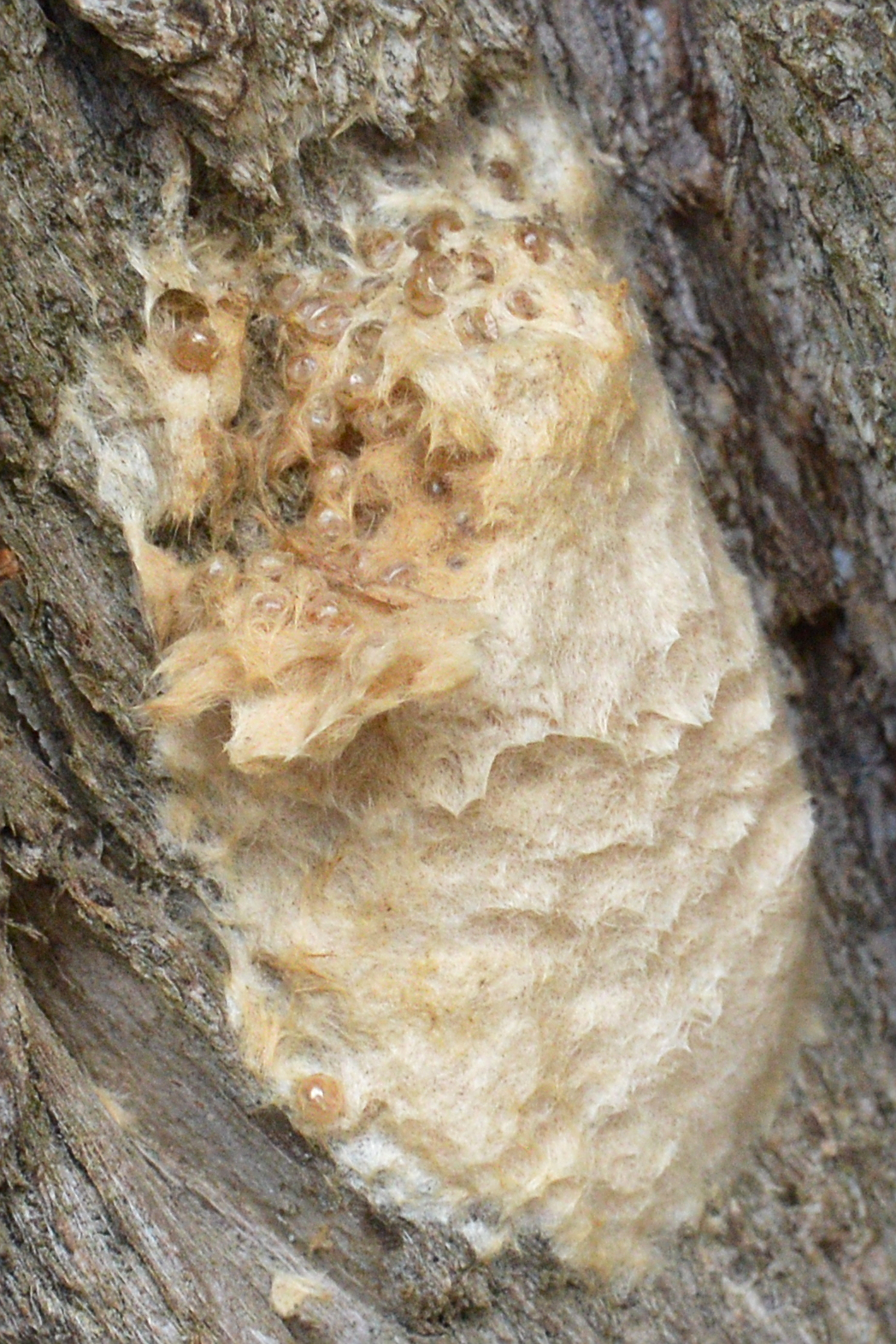
The gypsy moth is one of the species for which date of first appearance, date of mass appearance, and degree of attack are recorded in monitoring (phenological observations).
Winter moth (Operophtera brumata)
The winter moth (winter geometer) is an important defoliator of fruit trees and deciduous trees; its green "geometer" (inchworm) caterpillars feed simultaneously with bud burst, typically in May. This distinguishes it from the gypsy moth, whose damage is visible later (late June/July). This difference in timing is important for monitoring: by directing inspections to specific phenophases, we can attribute damage to the correct cause.
A peculiarity of its biology: females are almost wingless and do not fly, but after emerging from the soil in late autumn, they walk up the trunk to lay eggs. This characteristic enables a very elegant mechanical control measure — sticky bands around the trunk (see below).
Leaf rollers (Archips and related species, Tortricidae)
Leaf rollers are small moths whose caterpillars spin and roll leaves and bore and chew buds. In hazelnut literature, they are explicitly mentioned as spring pests: "In spring months, relatively small caterpillars of leaf rollers (Archips, Spilonota) can be found on buds and shoots…" We distinguish two functional groups (taken from integrated fruit protection):
- Bud rollers (Archips rosana, Spilonota ocellana, Hedya nubiferana): first-generation caterpillars nibble and spin buds, flower clusters, and shoots.
- Fruit skin rollers (Adoxophyes reticulana, Archips podana, Pandemis heparana): second-generation caterpillars damage fruits more by chewing the skin.
Leaf roller caterpillars are very mobile — when touched, they quickly wriggle backward and lower themselves on a silken thread. On hazelnut, they most often appear earlier than caterpillars of the hazelnut leaf skeletonizer (Croesus septentrionalis), with which they are easily confused.
Difference: caterpillars vs. sawfly larvae
In addition to true lepidopteran caterpillars (leaf rollers, gypsy moth, fall webworm), sawfly larvae (false caterpillars) of the hazelnut leaf skeletonizer Croesus septentrionalis also occur on hazelnut — golden-yellow, up to ≈3 cm, with transverse dark dorsal lines, which can skeletonize the leaf "to the main veins." Although biologically belonging to wasps (Hymenoptera), in practice they are treated together with caterpillars. Important: biological preparations based on Bacillus thuringiensis (Bt) act only on true lepidopteran caterpillars, not on sawfly larvae.
Fall webworm / sycamore moth (Hyphantria cunea)
The fall webworm is a polyphagous pest that attacks a very wide range of deciduous trees, including hazelnut; it has been described in hazelnut orchards (e.g., research from the Turkish Bolu/Düzce region). It has two generations per year (summer and late summer/autumn) and is easily recognized by:
- White web-like nests on branch tips, within which young caterpillars live and feed in a colony.
- Hairy caterpillars that eventually defoliate leaves inside and around the nest; as they grow, the nest expands and covers a larger part of the branch.
The fall webworm is also one of the species monitored as part of phenological observations (date of first appearance, mass appearance, degree of attack). Due to its colonial lifestyle, it is very susceptible to mechanical removal of nests while caterpillars are small and still grouped together.
Monitoring
The basis of protection against all defoliators is regular visual inspection, as caterpillars are occasional pests and are not treated "preventively on a calendar."
General monitoring guidelines:
- Regular visits from bud burst through the entire spring and summer, with emphasis on border rows next to the forest.
- Visual inspection of leaves and shoots for caterpillars, rolled leaves, chewed buds, and web-like nests (fall webworm).
- Inspection of trunks and branches for eggs: in winter/early spring, look for gypsy moth egg masses (yellowish-brown clusters) and, if observed, remove them mechanically (scrape and destroy).
- Shaking branches onto a substrate (PVC sheet) — a method also used for other pests (hazelnut weevil, bugs), which also allows counting caterpillars.
- Pheromone traps for monitoring adult moth flight (leaf rollers, gypsy moth, fall webworm) — help determine the right moment for potential treatment against newly hatched, most sensitive young caterpillars.
- Sticky bands on trunks as a monitoring (and control) measure for species with wingless females that climb up the trunk (winter moth, and traditionally also against caterpillars that descend/climb).
Phenological occurrence calendar (orientational):
| Period | What to monitor |
|---|---|
| Winter – early spring | Gypsy moth egg masses on trunks/branches; autumn placement of sticky bands (winter moth) |
| Bud burst (spring) | Leaf rollers on buds/shoots; winter moth caterpillars in buds and young leaves |
| April – May | Hatching of gypsy moth caterpillars; first leaves — visual inspections in young orchards |
| June – July | Peak damage from gypsy moth (large caterpillars); 1st generation of fall webworm |
| Late summer – autumn | 2nd generation of fall webworm (web-like nests); flight and emergence of winter moth females |
| ## Control |
The control strategy combines mechanical, biological, and, as needed, chemical measures, prioritizing the least aggressive methods.
1. Mechanical and Agronomic Measures
- Removal of fall webworm (Hyphantria cunea) webs — cut and burn/destroy infested branch tips while caterpillars are small and still in a colony. This is the simplest and very effective measure.
- Removal and destruction of gypsy moth (Lymantria dispar) egg masses during winter/early spring.
- Sticky bands (hunting bands) around the trunk — particularly effective against the winter moth because wingless females walk into the canopy; the band catches them on their way up. These are applied in autumn. This non-chemical barrier (e.g., "Tanglefoot" type) is recommended as a non-toxic alternative to insecticides.
- Manual collection of caterpillars in small/young orchards, where it is feasible to implement.
- Promotion of natural enemies (birds, parasitic wasps, predators) — Bt and selective products preserve them.
2. Biological Measures — Bacillus thuringiensis (Bt)
Products based on the bacterium Bacillus thuringiensis (Bt) are the cornerstone of biological (and organic) control of lepidopteran caterpillars. In domestic hazelnut literature, the product Dipel DF (for leafroller caterpillars) is cited, and Bt is standard control for both fall webworm and leafrollers in general.
How Bt works and how to apply it correctly:
- Bt must be ingested — it only acts after the caterpillar consumes it with food. Therefore, treat young caterpillars (early developmental stages) while they are actively feeding on leaves.
- It acts selectively on lepidopteran caterpillars, with almost no effect on beneficial insects — allowing repeated applications without disrupting the orchard balance.
- In cases of heavy infestation, 2–3 applications are needed for good effect.
- It is degraded by UV/sunlight, so apply in the late afternoon or on cloudy days; higher daytime temperatures (warm weather, active caterpillar feeding) are required for action before degradation.
- Important: Bt does not act on wasp larvae (hazelnut leaf gall wasp) — these must be controlled with other agents.
Another plant-based/ecological product from domestic tables is NeemAzal-T/S (azadirachtin), listed for caterpillars, aphids, and bugs, and Asset (pyrethrins) — both permitted in organic production.
3. Chemical Measures
In productive orchards and during severe attacks, registered insecticides are used. Caterpillars are often controlled "incidentally" as a side (secondary) effect of protection against other pests (leafrollers, aphids), when applied while caterpillars are in young stages.
Reference Dosages (from domestic hazelnut literature)
Dosages are indicative
Values in the table are taken from literature and advisory service notifications and serve only as a reference. Registration of products, approved uses, number of applications, and pre-harvest intervals change — before each application, always check the current registration in FIS (Phytosanitary Information System, fis.mps.hr) and follow the label.
| Product (active substance) | Use (caterpillars) | Dosage | No. of applications | Pre-harvest interval | Note |
|---|---|---|---|---|---|
| Dipel DF (Bacillus thuringiensis) | leafroller caterpillars | 0.375–0.625 kg/ha | — | None | Biological; selective; organic |
| Laser KS (spinosad) | harmful leafrollers | 0.2–0.3 l/ha | up to 3× | 7 days | Suitable for organic (with consultation of the control body) |
| Decis 100 EC / Scatto / Rotor Super (deltamethrin) | aphids, leafrollers | 0.1–0.5 l/ha* | 2× | 30 days | *Range according to different sources/uses |
| Coragen SC (chlorantraniliprole) | harmful beetles and lepidopteran caterpillars | 0.18–0.3 l/ha | 2× | 14 days | Broad effect on lepidopteran caterpillars |
| Kaiso WG (lambda-cyhalothrin) | aphids, weevils, cockchafers (incidental caterpillar control) | 0.15–0.3 kg/ha | 2× | 14 days | Incidental effect on caterpillars in young stages |
| NeemAzal-T/S (azadirachtin) | bugs, aphids, caterpillars | 2–3 l/ha | 1–2× | 3 days | Plant-based; organic |
| Asset (pyrethrins) | aphids, bugs, caterpillars | 0.7–1 l/ha (or 0.07–0.12 %) | 2× | 2 days | Plant-based; organic |
* For deltamethrin, different sources cite different dosages and uses (e.g., 0.1–0.125 l/ha for controlling leafrollers and aphids, versus 0.4–0.5 l/ha in other tables) — always follow the label of the specific product.
Neonicotinoids
Since January 1, 2019, the application of most neonicotinoids (thiacloprid, thiamethoxam, imidacloprid) in open-field agriculture has been banned. Older sources mention Calypso 480 SC (thiacloprid) and combinations with deltamethrin (Proteus OD) against bud leafrollers — this data is no longer considered current for outdoor application. Always check the current registration.
Practical Recommendations and Common Mistakes
Recommendations:
- Be especially vigilant in young orchards: even individual caterpillars can destroy a plant — inspect frequently and react early.
- Treat young caterpillars. All approaches (Bt, side effect of insecticides) are far more effective on early developmental stages than on large, resistant caterpillars.
- Remove fall webworm webs and gypsy moth egg masses manually — cheap, effective, and chemical-free.
- For the winter moth, exploit the pest's biology: apply sticky bands in autumn before wingless females start climbing the trunk.
- Monitor phenology — the gypsy moth and winter moth cause damage at different times; proper timing of inspections enables correct diagnosis and treatment timing.
- Prioritize selective agents (Bt, spinosad, neem) to preserve beneficial organisms.
Common Mistakes:
- Preventive spraying "on a calendar" against caterpillars that are not even present — defoliators are intermittent pests; treat based on inspection.
- Applying Bt in sun and cold — the product degrades quickly (UV) and caterpillars feed poorly; apply in the late afternoon and in warm weather.
- Expecting Bt to solve wasp larvae issues — it does not act on them.
- Removing fall webworm webs too late — once caterpillars disperse throughout the canopy, the mechanical measure loses its meaning.
- Neglecting orchard edges near forests — this is where the gypsy moth and other caterpillars most often "enter" the orchard.
- Using outdated product data (e.g., neonicotinoids) — always check FIS.
Gallery
Sources
This article is an AI summary compiled from an internal collection of hazelnut literature (RAG corpus: professional and scientific papers, advisory service notifications, integrated production technology guidelines) supplemented by public web sources. Data on dosages, products, and intervals are indicative and subject to regulatory changes — verify them with the advisory service and in official registers before application.
Main sources used from the RAG corpus:
- Annual hazelnut treatment plan — Gospodarski list (dosages: Dipel DF, Decis 100 EC, Laser KS, Coragen SC, etc.)
- Notification to hazelnut and walnut producers (29.03.2018.) — Ministry of Agriculture / advisory service (insecticides permitted on hazelnut; necessity of visual inspections in young orchards)
- Control of harmful organisms in hazelnut orchards (2009.) — bud leafrollers (Archips, Spilonota) and wasp larvae Croesus septentrionalis
- HAZELNUT PROTECTION (2012.) — spring hazelnut pests, leafrollers and leaf gall wasps
- Technology guidelines for integrated fruit production — bud leafrollers and fruit skin leafrollers (Archips rosana, Spilonota ocellana, Hedya nubiferana, Adoxophyes reticulana, Pandemis heparana); thresholds and timing
- Diseases and pests of hazelnut (2020.) — table of registered products with dosages and pre-harvest intervals
- Instructions for phenological observations (2013.) — monitoring of gypsy moth (Lymantria dispar) and fall webworm (Hyphantria cunea): date of first/mass appearance and attack degree
- Akkuzu & Mol; Avcı et al. (2019, 2022.) — biology and damage of the fall webworm (Hyphantria cunea) in hazelnut orchards (Turkey, Bolu/Düzce)
Public web sources (supplement and currency):
- Foliage Feeders — Springer Nature Link: https://link.springer.com/chapter/10.1007/978-3-031-11553-0_9
- Gypsy moth (Lymantria dispar) — Forest Research (UK): https://www.forestresearch.gov.uk/tools-and-resources/fthr/pest-and-disease-resources/gypsy-moth-lymantria-dispar/
- Effects of Invasive Winter Moth Defoliation on Tree Radial Growth — PMC: https://www.ncbi.nlm.nih.gov/pmc/articles/PMC4592589/
- Microbial control of the fruit tree leafroller, Archips argyrospila — BioControl (Springer): https://link.springer.com/article/10.1007/BF02371729
- Hyphantria cunea (fall webworm) — Plantwise Plus Knowledge Bank: https://plantwiseplusknowledgebank.org/doi/10.1079/pwkb.species.28302
- Bt Applications for Leafrollers — Decision Aid Systems: https://decisionaid.systems/articles/Bt_Applications_for_Leafrollers
- Phytosanitary Information System (FIS) — public search for plant protection products, Croatia: https://fis.mps.hr/fis/javna-trazilica-szb
Recommended equipment
🔎 pheromone insect trap orchard — Amazon →Affiliate links — we may earn a small commission at no extra cost to you.