Hazelnut Care in the First Year After Planting
Content generated by artificial intelligence — verify before application
This article was automatically compiled from a collection of hazelnut literature using artificial intelligence and may contain errors or outdated information. It serves as a starting point for further research, not as professional advice. Dosages, products, and timing are informative and depend on the cultivar, location, and current regulations — always consult with an advisory service and official sources before application.
The first year after planting is decisive for the entire lifespan of the hazelnut orchard. During this period, the young sapling does not produce a yield, but it builds its root system and the first permanent branches that will determine productivity, canopy shape, and ease of mechanical harvest for decades. Mistakes made in the first season — a dried-out sapling, a weeded strip in the row, damage from wildlife, or missed shoot shaping — are difficult and expensive to correct later. This article provides an overview of critical tasks in the first season: irrigation, mulching, weed and wildlife protection, and shoot formation and control, along with informative dosages and timing from the literature.
What Happens in the First Year
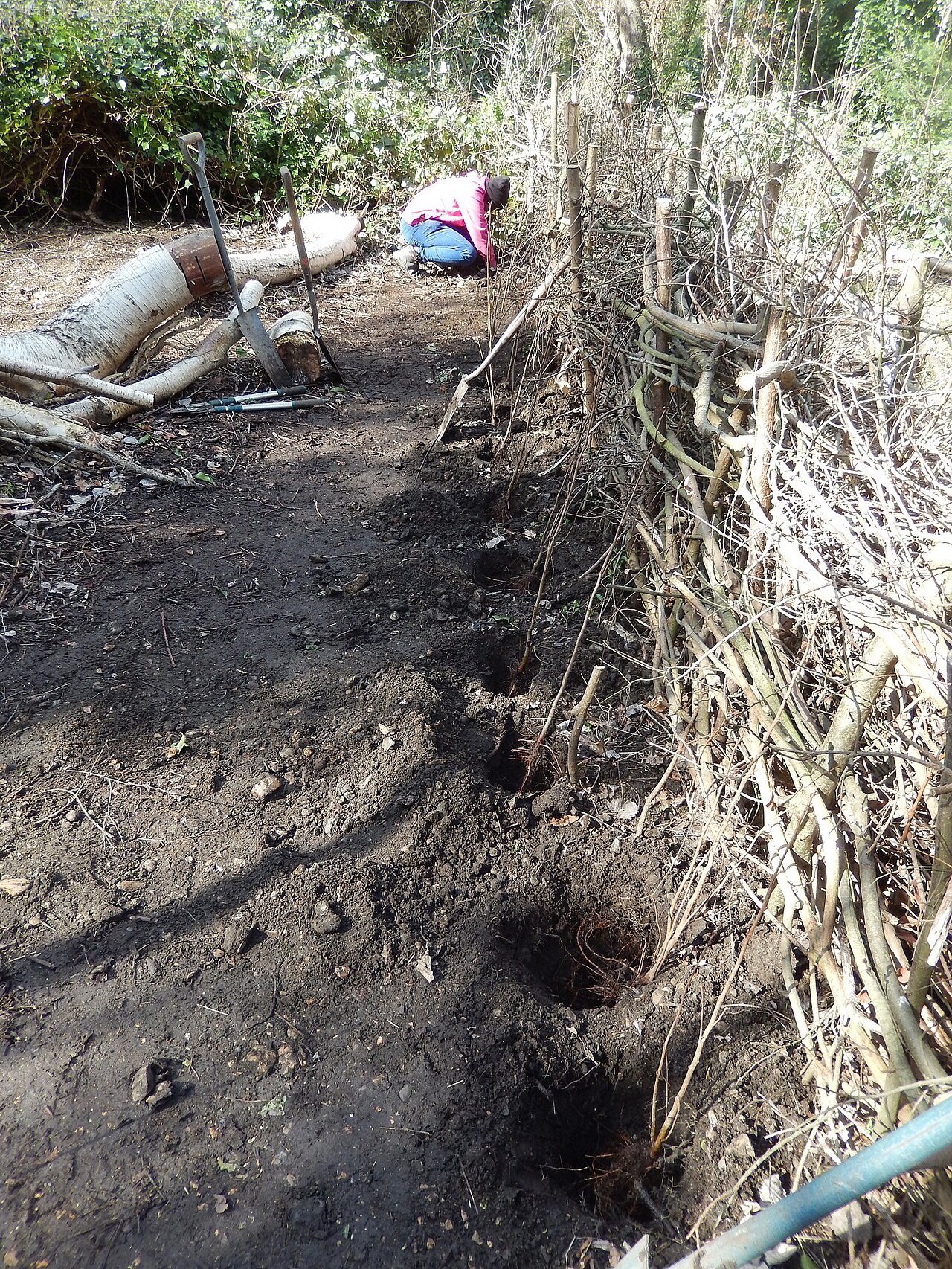
A freshly planted hazelnut has a limited, shallow root system that has not yet expanded into the surrounding soil. Until a network of fine roots develops, the plant is very sensitive to drought, weed competition, and mechanical damage. The goal of the first season is not fruit production or vigorous vegetative growth, but rather:
- successful establishment (the sapling "takes hold" and pushes new shoots),
- root development in the top few tens of centimeters of soil,
- establishing the training form (bush/vase or standard tree),
- preventing damage from weeds, wildlife, rodents, and early pests.
A practical rule from the literature: after 2–3 thorough irrigations, soil capillaries "connect," the planting ball does not separate from the surrounding soil, and moisture is retained, ensuring conditions for the next 3–4 years of development. In other words, what you miss in the first season has repercussions for years.
Irrigation and Watering
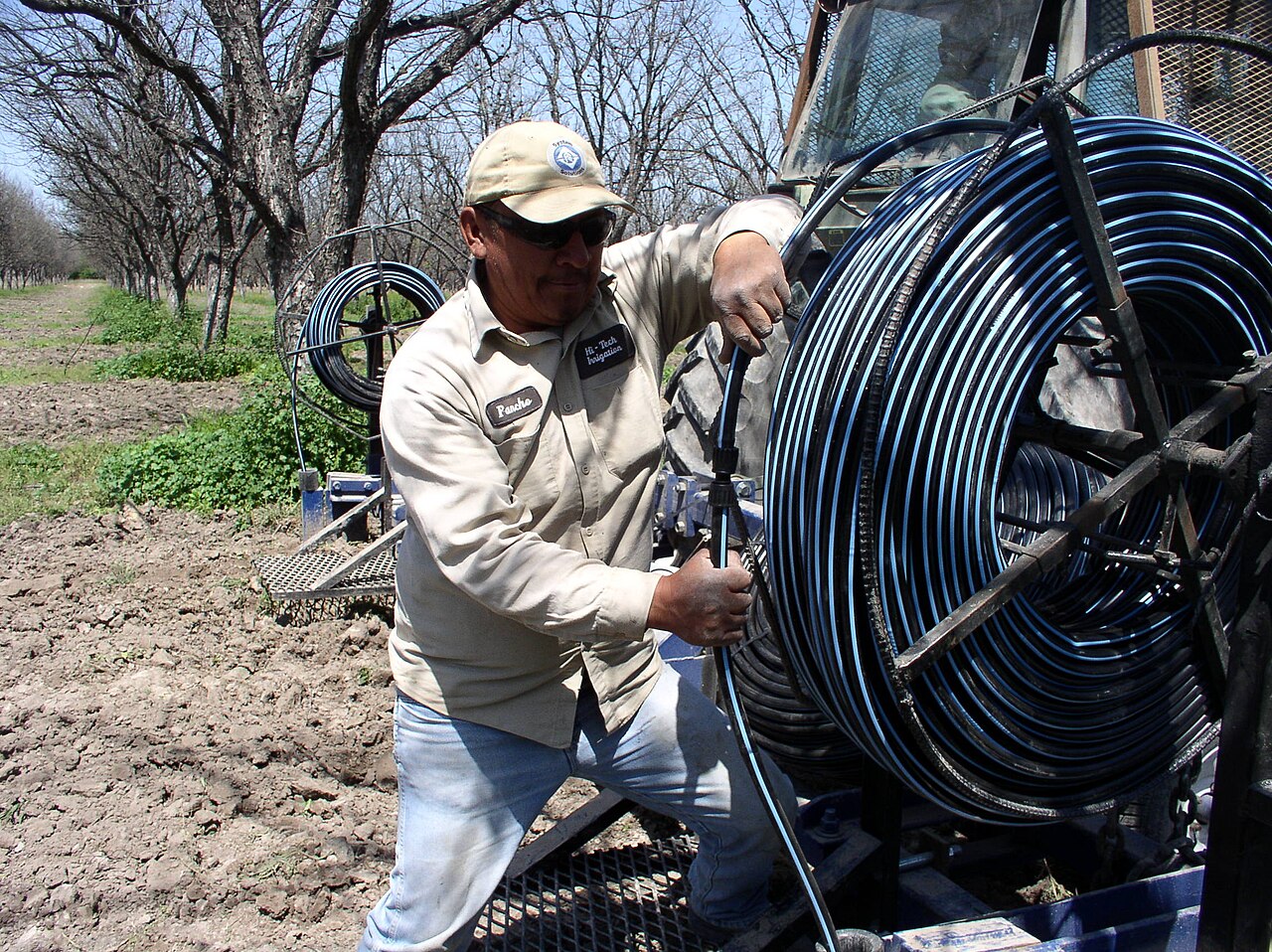
Irrigation is the most important individual task in the first year. Hazelnut generally requires a moist habitat — on average 800–1,200 mm of annual precipitation, with emphasis on the vegetative phase (highest in April and September, approximately 350–500 mm), while about 280 mm is needed in later vegetation until July. Newly planted saplings rely on water supplementation because they do not yet have a developed root system that can reach deeper reserves.
When and How Much to Water
The literature generally agrees on several benchmarks:
| Item | Informative Recommendation | Note |
|---|---|---|
| First watering | approximately 7 days after planting | unless rainfall has already saturated the planting ball |
| Number of waterings per season | 5–6 (approximate) | more frequently in drought, almost never in rainy years |
| Interval between waterings | approximately once a month / every 4 weeks | adjust to weather and soil |
| Volume per (mature) bush | 60–80 l of water | young saplings need less, but more frequently and targeted to the root ball zone |
Dosages are informative
The quantities listed serve as a starting point. Actual needs depend on soil type (sandy soils dry out faster), rainfall, irrigation system, and cultivar. During dry periods, young plants should be irrigated almost continuously; during wet periods, watering should be omitted to avoid root suffocation.
Practical Tips for Watering
- Add water in doses, in a circle around the sapling, allowing it to soak in rather than sitting in a puddle for hours. Standing water and saturated soil favor root rot.
- Deeper, less frequent watering is better than shallow and frequent — it encourages roots to grow downward.
- The day after watering or rain, it is useful to lightly loosen the soil in a circle around the trunk to break evaporation through capillaries and break up the crust.
- If the orchard is located in an area with insufficient rainfall or on water-poor soil, an irrigation system (most commonly drip) is almost a necessity — more and more intensive orchards are being established with irrigation, even in places where this was not previously practiced.
Mulching and Soil Maintenance in the Row
In the first year, the goal of soil cultivation is not grassing over (which comes only after the third year), but rather clean, loose, and moist soil immediately around the sapling. Literature for the first 3 years recommends maintaining soil through cultivation (chiseling in a "cross" pattern, manual hoeing near saplings), with caution regarding herbicides, and mulching the inter-row space.
Purpose of Mulching
A layer of mulch (organic material such as straw, shredded bark, wood chips, or mowed biomass, or foil) around the young sapling simultaneously:
- retains moisture in the soil and reduces the number of necessary waterings,
- suppresses weeds in the critical zone near the trunk,
- moderates temperature extremes in the root zone (overheating in summer, freezing in winter),
- over time enriches the soil with organic matter (with organic mulch).
How to Mulch
| Parameter | Informative Recommendation |
|---|---|
| Mulch layer thickness | 5–10 cm (approximately 2–4 inches from foreign literature) |
| Diameter of mulched circle | at least to the edge of the canopy, ideally wider (60–90 cm and more) |
| Zone near the trunk itself | leave bare (a few cm without mulch against the bark) |
Do not pile mulch against the trunk
Mulch leaning against the bark retains moisture against the trunk and favors bark rot, fungal appearance, and shelter for rodents. Always leave a small ring of bare soil around the sapling itself.
Mulching of the inter-row space and natural vegetation is usually carried out 3–4 times a year; more frequently in dry years (because grass consumes water needed by the hazelnut), and less frequently in wetter years. In the first year, the focus is on the strip in the row near the saplings, while the inter-row space is cultivated or mowed.
Weed Protection
Weeds are a direct competitor to young hazelnut for water and nutrients, and it is precisely water and nutrients that the young sapling has the least of. Therefore, suppressing weeds in the narrow strip along the row is one of the most important, yet often underestimated, tasks.
Approach in the First Year
- Mechanical control takes precedence. Literature recommends hoeing saplings in the first and second years of cultivation and inter-row soil cultivation.
- Mulch as a natural barrier further reduces weed germination without disturbing the roots.
- Herbicides are generally not recommended in the zone near saplings in the first few years, to avoid contact between the seedling and herbicide and damage to sensitive bark and leaves. Some sources mention the application of soil (residual) herbicides around bushes only from the second to the fourth year, with strict caution and according to the label — not in the first season.
Herbicides and young bark
Young, unwoody bark is very sensitive. Contact of total or contact herbicides with green parts and bark of the sapling can cause severe damage or plant death. Any application of plant protection products must comply with product registration, label, and current regulations — consult with the advisory service.
Protection from Wildlife and Rodents
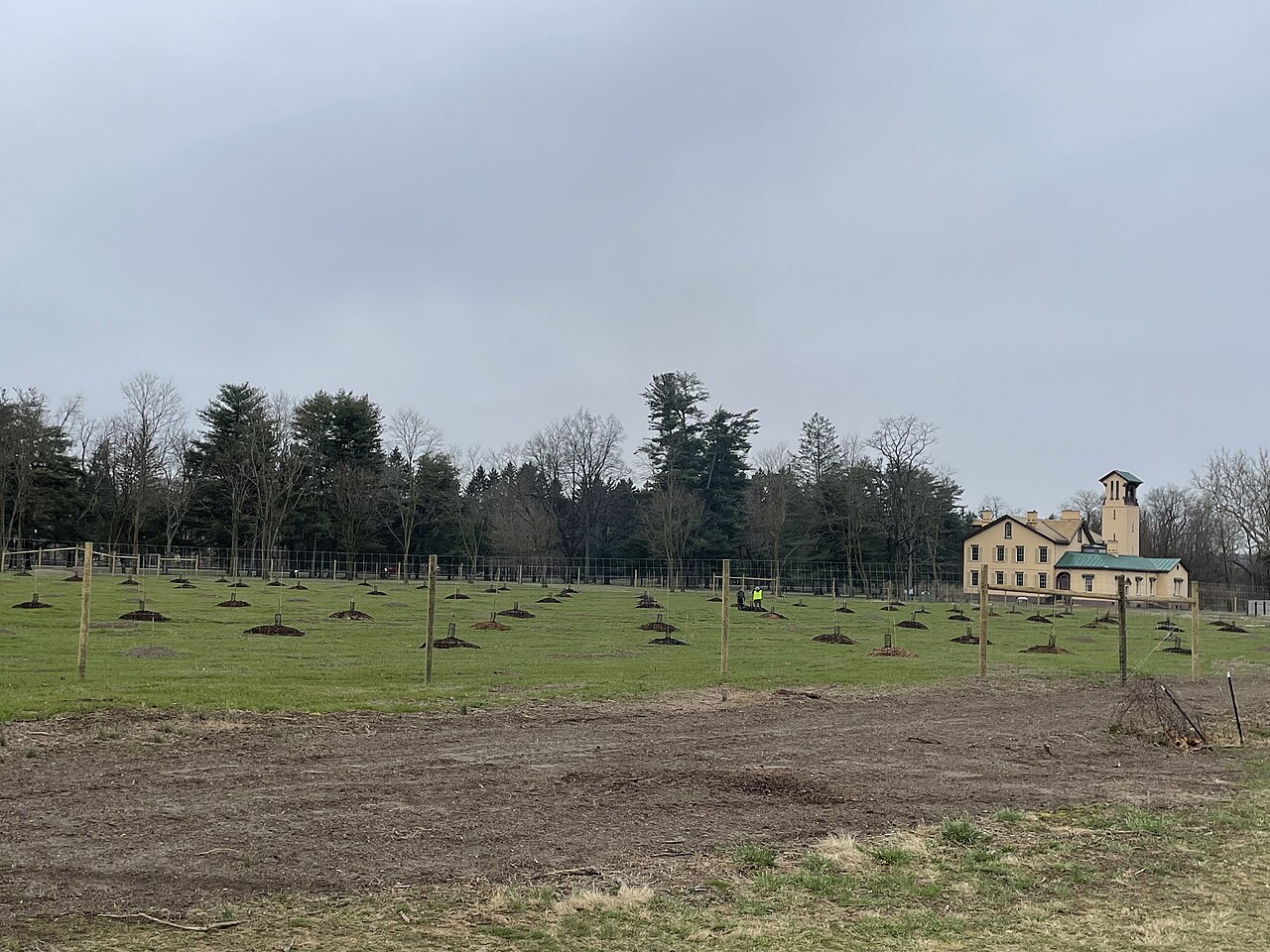
A young hazelnut orchard is particularly attractive to wildlife: deer and roe deer browse and eat tops and shoots, while rabbits and rodents gnaw the bark at the base of the trunk, which can completely destroy the sapling (girdling the bark). The risk is higher if the orchard is close to thickets or forests.
Protection Measures
| Measure | Purpose |
|---|---|
| Protective fence around the entire orchard | preventing entry of large wildlife (deer, roe deer, wild boar) |
| Individual guards / mesh around the sapling | protection of the trunk from rabbits and rodents and from browsing |
| Removal of mulch/high grass near the trunk | removes shelter and food for voles and mice |
| Repellents | additional, temporary protection of shoots from browsing |
Fencing is a significant item in orchard establishment calculations (in some analyses around one-fifth of the total investment cost), but it pays off because damage from wildlife in a young orchard can be financially devastating. In addition to wildlife protection, fencing contributes to safety.
Early Pests in Young Orchards
Among pests that are particularly dangerous in orchards aged 1–2 years, literature highlights the bronze birch borer (Agrilus). For young orchards, regular, almost daily inspection and manual collection of adult pests and their destruction are recommended. It is useful to set up yellow sticky traps for insect detection in early spring (with expert advice on the correct timing), and some farms also conduct preventive spraying with mineral ("red") oil. The best protection remains adherence to agrotechnics and timely care — a healthy, well-watered, and weed-free sapling is more resistant to attack.
Shoot Formation and Control
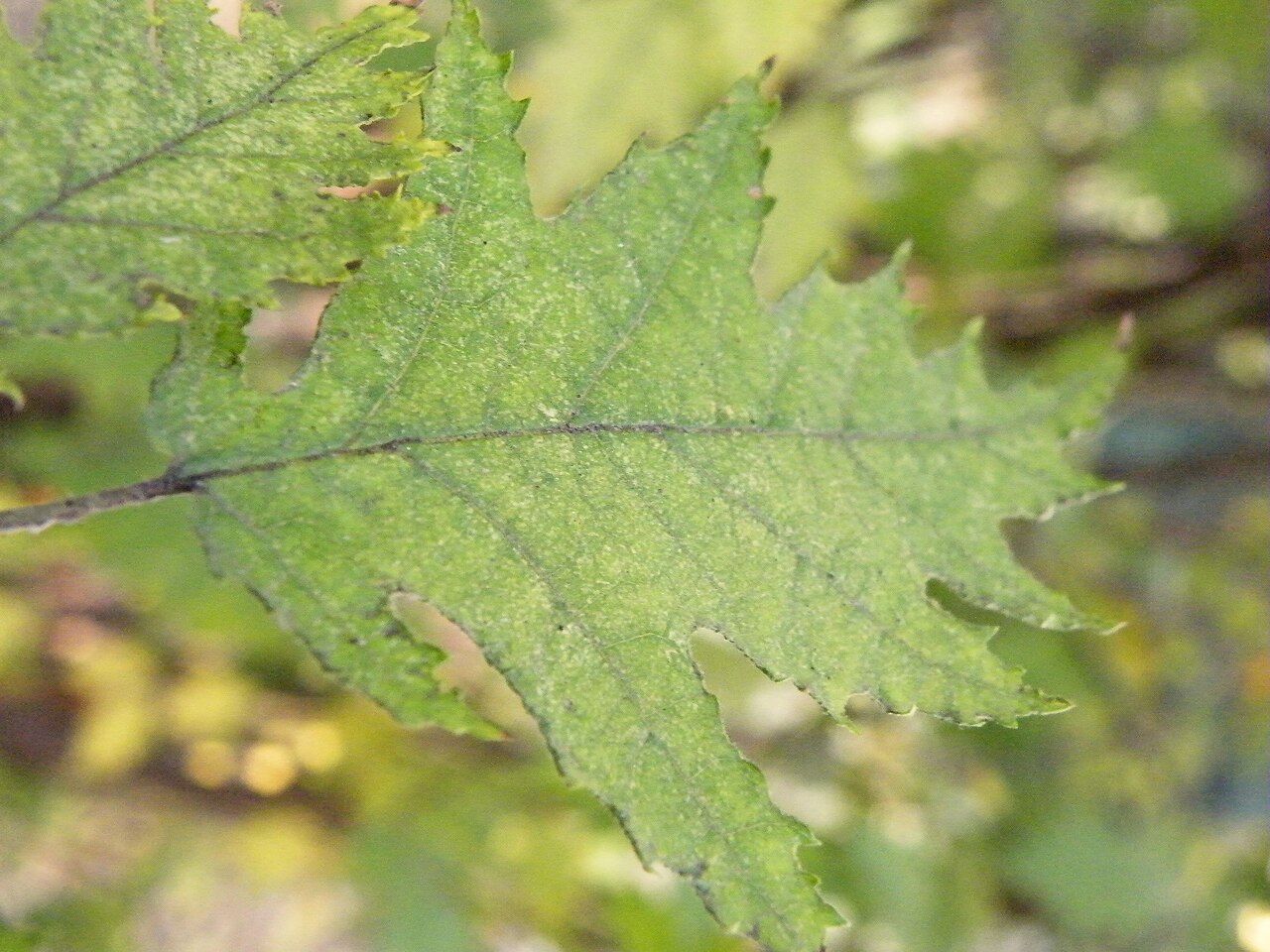
In the first year, the future training system begins to take shape. The decision to train the hazelnut as a bush/vase or as a standard (tree form) is made at planting, but the first branches are formed during the first few seasons.
Pruning and Shaping
- Pruning intensity is low. Typically, the first three years involve light pruning focused on thinning out excess shoots, especially those growing toward the center of the canopy (suckers/"water sprouts"), and shortening overly long extension shoots as needed.
- Pruning timing: Young orchards are pruned during dormancy, before bud break (late winter / early spring).
- Standard (Tree form): In the first two years, a canopy with 3–4 evenly distributed branches is formed, with a trunk height of 60–90 cm. The advantage is easier harvesting, but the disadvantage is sensitivity—if the trunk is damaged, the entire tree is lost.
- Bush/Vase form: This is formed over several years from multiple shoots; it offers greater resistance to damage because the plant can recover from new shoots.
Example sequence from practice: After shortening the sapling in April, terminal buds sprout, from which extension shoots and leafy shoots develop—these become the primary branches of the future canopy. Primary branches are shaped during the first 3–4 years, after which secondary skeletal branches develop on them at intervals of about 50 cm.
Control of Root and Stock Shoots
Hazelnut is prone to prolific root suckering, which consumes energy and can reduce productivity. We distinguish between two situations:
- Own-rooted saplings (Corylus avellana): Root suckers ("clumps") should be removed as early as possible—once they begin to emerge above the surface. The soil around the shoot is dug up, and the shoot is cut off at the base; usually done in early spring.
- Grafted saplings on Turkish hazel (Corylus colurna): The rootstock does not produce root suckers, but lateral shoots emerge from the stock trunk—"wildlings"—which must be removed regularly. Important: For grafted saplings in the nursery/first phase, wildling removal is not done immediately; wait until a shoot develops from the scion (the leafy mass of the wildling helps root development and establishment). The PVC tape securing the graft union is removed in late July / early August to prevent it from girdling the wood.
Check what rootstock your saplings are on
The strategy for shoot removal differs significantly between own-rooted saplings and those grafted on Turkish hazel. Before you start pruning, determine the type of planting material.
Top-dressing in the First Year
If soil analysis and ameliorative (corrective) fertilization were performed before planting—ensuring the soil is well-supplied with phosphorus and potassium—literature recommends that hazelnut be fertilized with nitrogen only for the first four years, applied in early spring before vegetation starts, around the bush (slightly wider than the canopy drip line). Nitrogen is not permanently bound in the soil, so no reserve is created, which is why it is added annually.
Guideline doses of nitrogen fertilizer (e.g., CAN 27%) per plant, according to literature:
| Year | Informative dose per bush |
|---|---|
| 1st year | 0.5 kg |
| 2nd year | 0.6 kg |
| 3rd year | 0.8 kg |
| 4th year | 1 kg |
In addition to basal fertilization (spring, and in some approaches also autumn), due to increasingly pronounced weather stresses, foliar feeding (foliar fertilizers, amino acids) is recommended to help young plants withstand stress. In organic orchards, environmentally acceptable fertilizers are used, usually 2–3 times per year.
Doses depend on soil analysis
The quantities listed are informative and assume prior soil analysis and ameliorative fertilization. Without soil analysis, there is a risk of over- or under-fertilization. Check actual needs based on analysis and agronomist advice. Excessive nitrogen fertilization in the first year promotes vigorous, immature growth that is sensitive to frost and diseases.
First Season Work Calendar (Approximate)
| Period | Main Tasks |
|---|---|
| Late winter / Early spring | Complete planting (if planted in spring); light pruning and shortening of sapling; install fence and protectors; install yellow sticky traps |
| Spring (Vegetation start) | First spring (nitrogen) top-dressing around bushes; install/check irrigation system |
| Spring–Summer | Regular watering (approx. every 4 weeks, more often during drought); hoeing and weed control in the row; renew mulch |
| Summer | Remove root suckers / wildlings; monitor pests (hazelnut weevil) and manual collection; foliar feeding as needed |
| Late Summer | Remove PVC tape from graft union on grafted saplings (end of July / early August) |
| Autumn | Reduce/stop watering; prepare for winter; check rodent protection |
Practical Recommendations and Common Mistakes
- Overly dry sapling: The most common cause of failure in the first year. Do not rely solely on rain—monitor soil moisture and water targeted at the root zone.
- Planting too deep: The sapling should be planted at the same depth as in the nursery. Hazelnut planted too deeply may "stand still" and show no growth for up to three years.
- Weedy strip in the row: Weeds in the narrow strip next to the sapling directly steal water and nutrients—this is the zone that should be prioritized.
- Mulch leaning against the trunk: Leave a free ring around the bark to prevent rot and hide rodents.
- Herbicide on young bark: Avoid contact of products with green parts and bark; in the first year, prioritize mechanical control.
- Neglected wildlife protection: Fences and protectors should be installed immediately, not after the first damage occurs.
- Excessive or poorly timed pruning: In the first year, pruning is light; aggressive pruning slows development.
- Missed shoot removal: Root suckers are removed early and regularly (with the exception of wildlings on grafted saplings in the first phase).
Gallery
Sources
This article is an AI-generated summary created from an internal collection of hazelnut literature (RAG corpus) and supplemented with public sources. Main sources used:
- Hazelnut Cultivation: A Guide for Growers — Ministry of Agriculture, advisory service (savjetodavna.mps.hr)
- From Planting to Hazelnut Harvest — Ministry of Agriculture, advisory service — https://savjetodavna.mps.hr/2017/10/24/od-sadnje-do-berbe-lijeske/
- Recommendation for Owners of Permanent Hazelnut Orchards — savjetodavna.mps.hr — https://savjetodavna.mps.hr/2022/05/31/preporuka-vlasnicima-trajnih-nasada-lijeske-4/
- Hazelnut — Specifics of Planting and Cultivation — Gospodarski list
- Hazelnut — Vrtlarica.hr — https://www.vrtlarica.hr/sadnja-uzgoj-lijeske/
- Business Plan for Hazelnut Sapling Production (2019.) — RAG corpus
- Environmental Protection Elaborate — Establishing a Permanent Hazelnut Orchard (Grubišno Polje / Vojnić) — RAG corpus
- Nursery Production Manual (removal of wildlings on grafted saplings) — RAG corpus
- Hazelnut Diseases (Corylus avellana L.) and Their Control — Plant Protection Bulletin 6/2020
- Hazelnut Protection — Chromos Agro d.o.o.
- Impact of Low Temperatures on Hazelnut Frost Damage (water needs, hydrothermal coefficient) — RAG corpus
- Hazelnut Orchard Establishment — Weed Management — Province of British Columbia — https://www2.gov.bc.ca/gov/content/industry/agriservice-bc/production-guides/hazelnuts
- Hazelnuts 101 — Establishment — Midwest Hazelnut Development Initiative — https://www.midwesthazelnuts.org/
- Planting Filbert / Hazelnut Trees — Stark Bro's — https://www.starkbros.com/growing-guide/how-to-grow/nut-trees/filbert-hazelnut-trees/planting