Istrian Round and Roman Round Hazelnuts
Content generated by artificial intelligence — verify before application
This article was automatically compiled from a collection of hazelnut literature using artificial intelligence and may contain errors or outdated data. It serves as a starting point for further research, not as professional advice. Dosages, products, and timing are informative and depend on the cultivar, location, and current regulations — always consult with an advisory service and official sources before application.
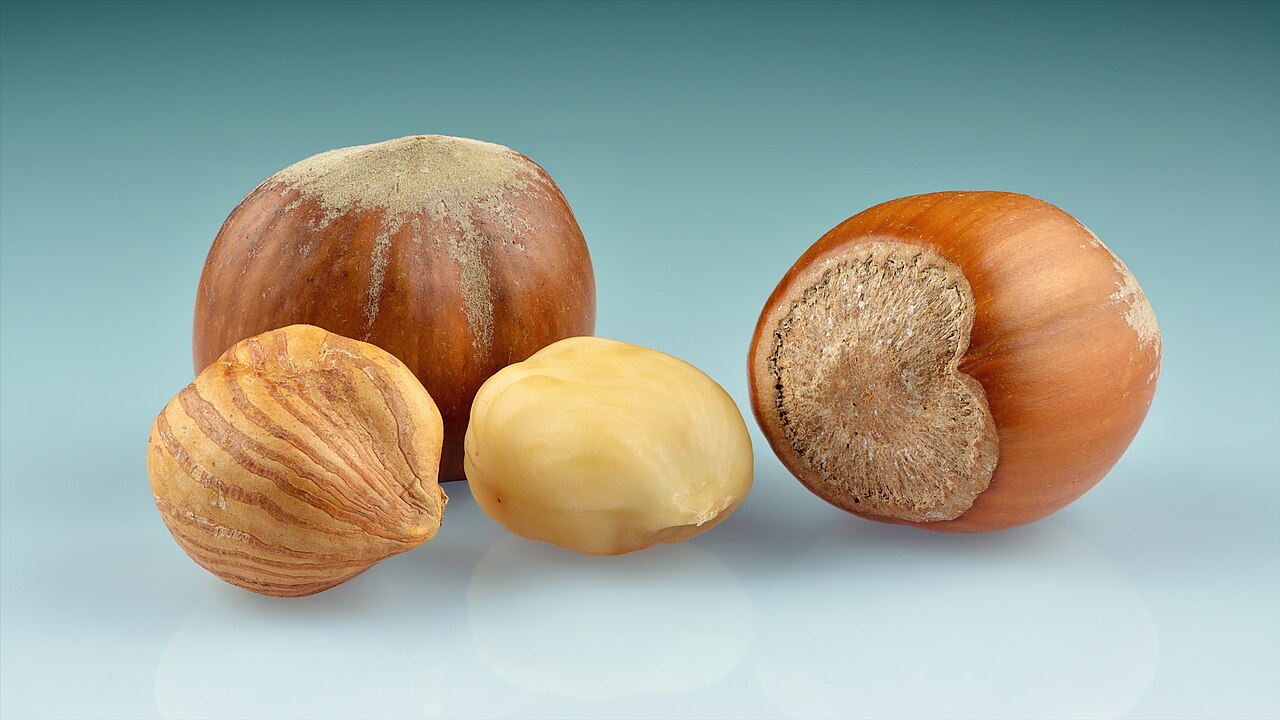
Among the hazelnut cultivars grown in Croatia, two "round" varieties hold a special place: the native Istrian Round and the Italian Roman (Tonda Romana, or Tonda Gentile Romana). Both produce large, roundish nuts suitable for the confectionery industry, and in Croatian orchards, their role intertwines with the far more widespread Istrian Elongated, for which the Roman variety regularly serves as the main pollinizer. This profile covers the pomological characteristics, kernel quality, and practical role of both "round" varieties in Croatian orchards, along with the necessary distinction from related varieties that are easily confused with them.
Where is the primary description of the Roman?
A detailed pomological and pollinizer profile of the Italian cultivar Tonda Gentile Romana (syn. "Roman", "Tonda Gentile di Viterbo", "Rimski ukusni") and its classic pollinizers Nocchione and Mortarella is covered in a separate, more extensive article Tonda Romana, Nocchione and Mortarella. There, you will find the native region (Lazio, PGI "Nocciola Romana"), S-allelic compatibility, and Italian pollinizer combinations. This article views the Roman from a Croatian perspective — as an established cultivar and pollinizer for the Istrian Elongated — so for the "Italian" context, follow the link to avoid duplicating data.
Naming Note: Easy to Confuse
First of all, it is important to clarify the terminology, as four very similar names are often mixed up in literature and in the field:
| Name | What it denotes | Origin |
|---|---|---|
| Istrian Round (Istarski okruglasti) | native Croatian round-fruited variety | Istria (area around Pazin) |
| Istrian Elongated (Istarski dugi, Istarski krupni) | most widespread HR variety, elongated fruit | Istria |
| Roman / Roman Round / Roman Tasty | Italian round variety established in HR orchards | Southern Europe / Italy |
| Tonda Gentile Romana (Tonda Romana) | original Italian variety from Viterbo (Lazio) | Italy |
In Croatian practice, the names "Roman," "Roman Round," and "Roman Tasty" refer to the Italian Tonda Romana type; some elaborates in the same assortment explicitly list both "Roman Round" and "Tonda Gentile Romana" as separate items, confirming that they belong to the same cultivar group. They should be distinguished from the Istrian Round: they share the round fruit shape, but they are two different varieties with different origins and, crucially, opposite husk behavior at harvest (see below). The corpus of literature shows that data on the Istrian Round are relatively scarce — some authors note that the variety "has not been fully studied and is unjustifiably neglected in cultivation" (Miljković, 2018.).
Istrian Round — Native Istrian Variety
Istria has two recognized native hazelnut varieties — Istrian Elongated and Istrian Round (Roundish) — both of which are considered in the world as native varieties of high quality for the Southeast European region. The Istrian Round is far less represented and less researched than its elongated "cousin."
Origin and Habit
The Istrian Round (Istarski okruglasti) is a Croatian native variety originating from the area around the city of Pazin in Istria. It develops very vigorous trees or shrubs with a roundish crown; it is generally described as having more upright growth than the elongated type, which spreads its branches more to the sides. The root system is somewhat deeper than in some other varieties, giving the variety a certain advantage during dry periods. Like most hazelnut varieties, it is monoecious, wind-pollinated, and self-incompatible, so it requires a pollinizer with matching flowering time for a crop.
Fruit and Kernel
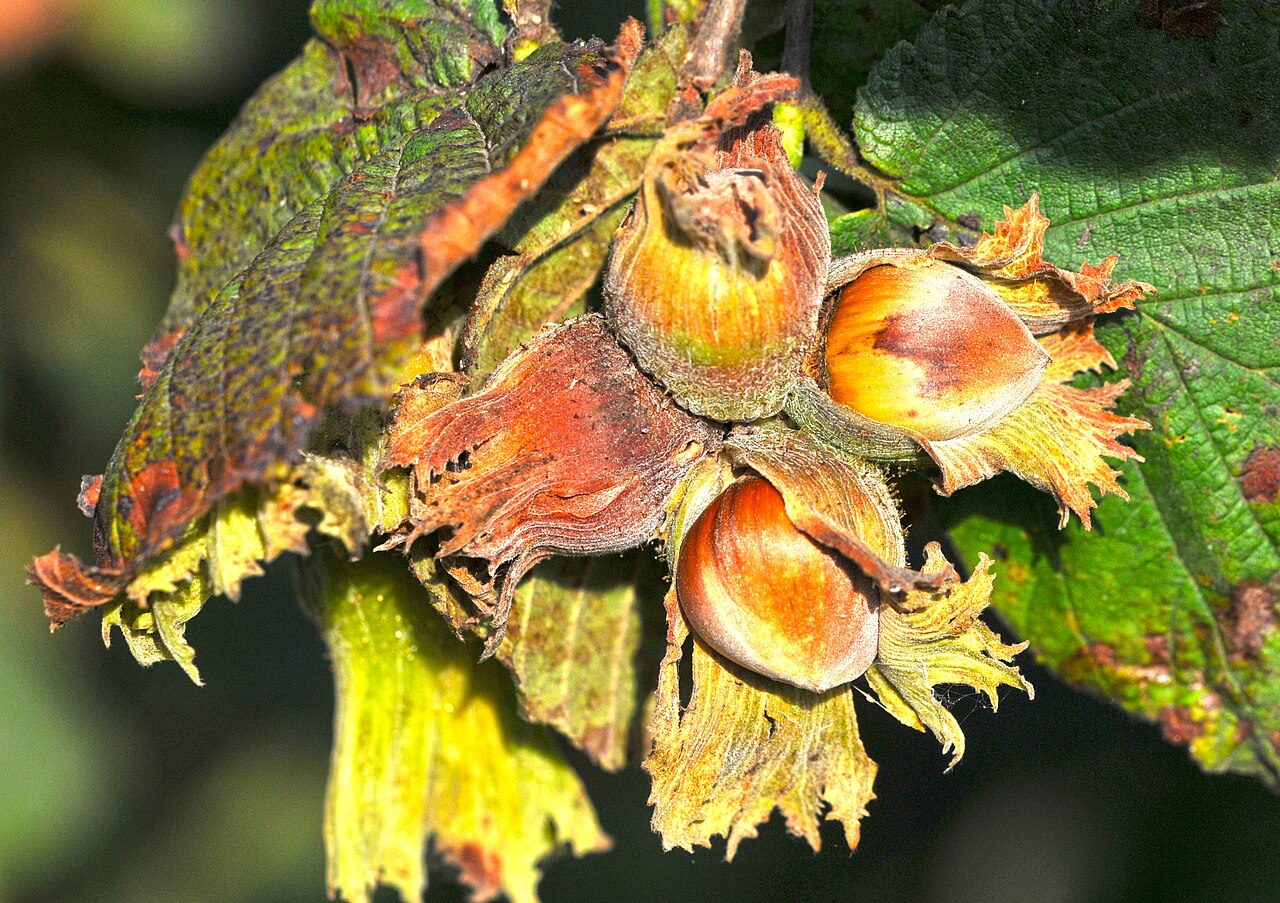
The fruit is large, roundish to roundish-oval in shape, slightly flattened at the apex; it is also described as "lower than wide," with the appearance of two-ribbed and three-ribbed types (the three-ribbed type is more common in larger fruits). Reports on fruit weight vary depending on the source, but they most often cluster around 3 g:
| Property | Value (informative) | Note |
|---|---|---|
| Fruit weight | approx. 2.7–3 g | corpus consistently cites "approx. 3 g" |
| Kernel weight | approx. 1.15 g | (Miljković, 2018.) |
| Kernel recovery | ~45 % (measured also ~43.5 %) | good; "approx. 45 %" prevails in sources |
| Shape | roundish, slightly flattened; two-ribbed/three-ribbed | suitable for industry and table use |
| Shell color | light chestnut brown, medium thickness, with darker longitudinal stripes | |
| Nuts per cluster | typically 3–5 |
Fruit quality is rated as excellent. The kernel is sweet, yellowish-white in color, and has good organoleptic properties (the aroma is noted as less pronounced in some descriptions), making the variety suitable for various purposes — both for table consumption and processing. Due to the round shape of the kernel, it is well accepted in the confectionery industry.
Chemical Composition of the Kernel (Informative)
The Istrian Round has been analyzed in several Croatian studies on the chemical composition of hazelnuts, so a relatively large amount of data is available for this native variety — with the usual caveat that values depend heavily on the year, location, and analysis method:
| Indicator | Value (sample/season; informative) | Source |
|---|---|---|
| Fats (crude) | ~66–68 % (e.g., 68.34 % and 66.37 % on two samples) | Chemical composition of hazelnuts (PBF) |
| Proteins | ~21 % (21.14 % / 21.25 %) | Chemical composition of hazelnuts (PBF) |
| Water | ~2.6–3.0 % | Chemical composition of hazelnuts (PBF) |
| Carbohydrates | ~5–7 % | Chemical composition of hazelnuts (PBF) |
| Monounsaturated fatty acids (MUFA) | highest in the series — 81.81 % | Chemical composition of hazelnuts from the 2020 season |
| Polyunsaturated fatty acids (PUFA) | lowest in the series — 8.37 % | Chemical composition of hazelnuts from the 2020 season |
| Omega-6 | ~9.01 % (lowest compared to other varieties) | Chemical composition of hazelnuts from the 2020 season |
Interestingly, in the 2020 season study, the Istrian Round had the highest proportion of monounsaturated fatty acids and the lowest proportion of polyunsaturated fatty acids among all analyzed varieties. A high MUFA content combined with low PUFA content is associated with better oxidative stability and longer shelf life of the kernel, which is a technological advantage during processing and storage.
Cropping and Harvest Behavior
Cropping is described as moderate (in contrast to the extremely abundant cropping of the Istrian Elongated), with noted drought resistance. Crucially — and this is a common source of errors in descriptions — is the behavior of the husk (involucre) at harvest:
Correction of a common misconception about the Istrian Round husk
Contrary to what is sometimes stated, Istrian Round fruits do not easily fall out of the involucre, which is explicitly noted in the literature as a disadvantage of the variety (Anonymous 3, 2012.; several Croatian sources). This complicates mechanical harvesting and is one of the reasons why the variety has not been widely accepted in intensive production. The ability to easily fall out of the husk is a characteristic of the Roman, not the Istrian Round.
For comparison:
- In the Istrian Elongated, the husk is longer than the fruit, notched at the apex, narrowed, and bent so that the fruit is not visible, so the fruits do not fall out on their own — mechanical harvesting requires an attachment on the machine that separates the fruit from the husk.
- In the Istrian Round, the fruits also do not easily fall out of the involucre, which is a disadvantage for mechanization.
- In the Roman, the husk is approximately the same length as the fruit, so ripe fruits fall out easily — this is the variety most suitable for mechanical collection among these three.
Health Status and Protection
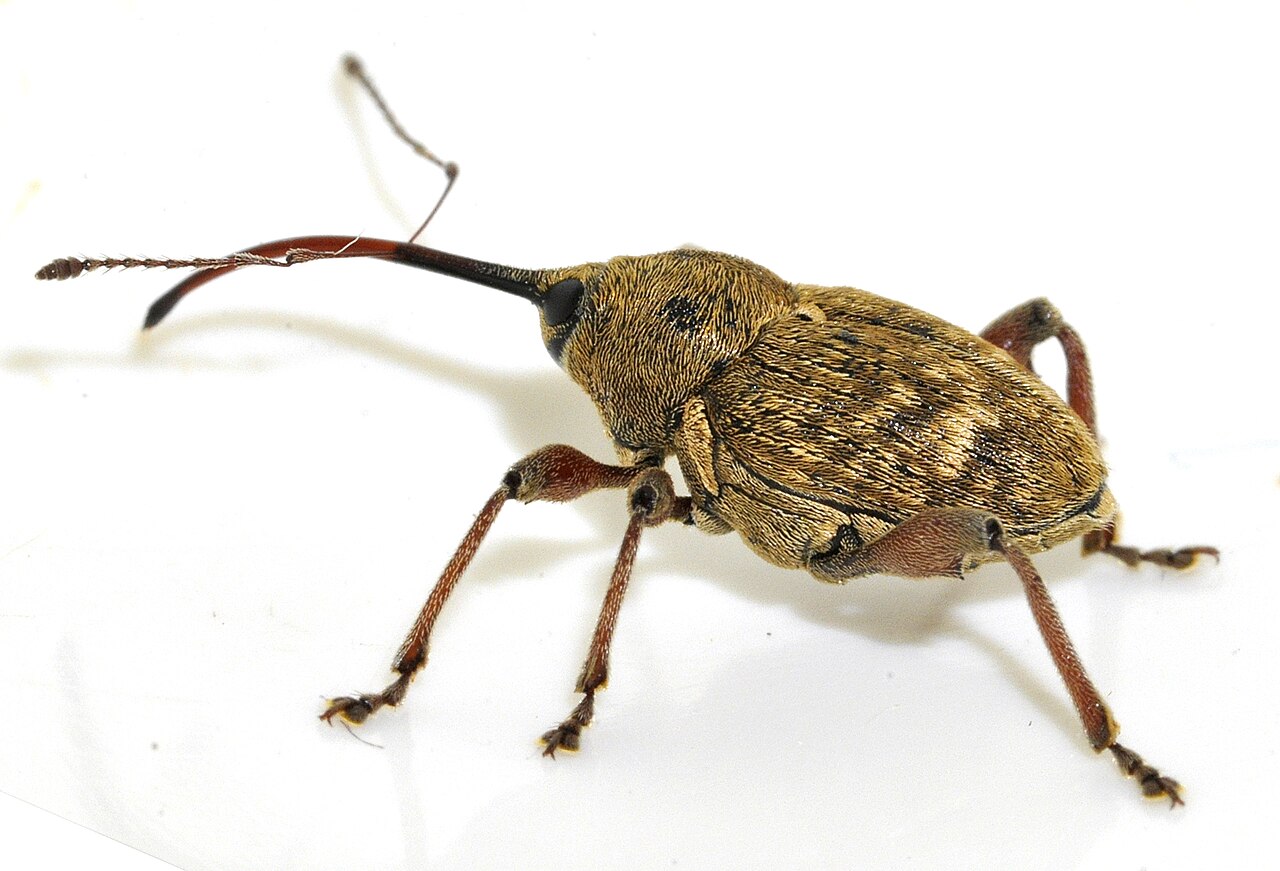
The variety is described as resistant to most diseases, but it requires regular protection against the hazelnut weevil (Curculio nucum); it is moderately sensitive to the hazelnut eriophyid mite. Specific programs, products, and timing for protection depend on location, year, and current approvals — follow recommendations from the advisory service and the product label.
Why Consider Reviving the Istrian Round
Despite the disadvantage of not falling out of the involucre, the variety has several real advantages: excellent fruit quality, a favorable fatty acid profile (high MUFA, low PUFA → better shelf life), drought resistance, and status as a native variety. Literature considers it insufficiently studied and "unjustifiably neglected," making it interesting for collection orchards, clonal selection, and market niches for native products — with the awareness that it is not ideal for intensive mechanical harvesting.
Roman (Tonda Romana) — from a Croatian perspective
A complete pomological profile, native area (Lazio/Viterbo), PDO "Nocciola Romana", S-allelic compatibility, and Italian pollinizer combinations are found in the article Tonda Romana, Nocchione and Mortarella. Below is a summary relevant to Croatian hazelnut orchards.
Status in Croatia
The Roman cultivar originates from Southern Europe, originally an Italian cultivar from the area around the city of Viterbo (Lazio). In Croatia, it has performed very well in plantation orchards in the continental part and is today, alongside Istrian Long, the second most widely planted cultivar. Its dual role is what makes it important: it serves simultaneously as the main pollinizer for Istrian Long and as a valuable kernel (confectionery) cultivar.
Habit and Flowering
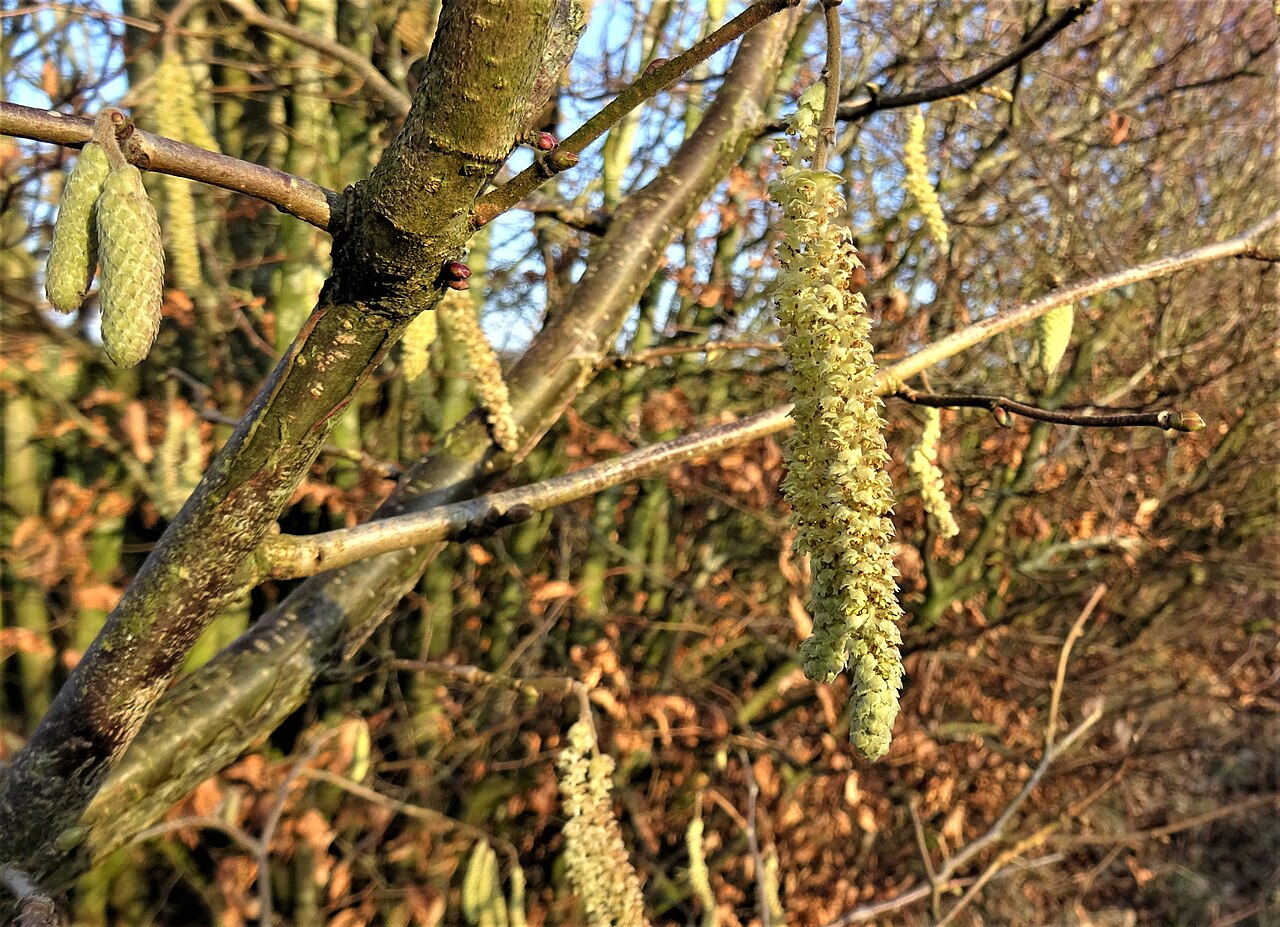
It belongs to the medium to very vigorous cultivars with an upright growth habit (branches grow more upwards than outwards); it can also be grown as a standard tree on its own roots. It produces many root suckers, requiring regular removal. It flowers mid-early and aligns well in flowering time with Istrian Long, Hale, Barcelona, and some other cultivars. It is self-incompatible (requires a pollinizer), and heavy cropping can lead to alternate bearing.
Early bud break and frost risk
Roman breaks bud earlier and ripens earlier than Istrian Long (a difference of 7–10 days at full maturity). Early bud break exposes the bloom to the risk of late spring frosts: if frost occurs during the pollination of Roman, fertilization fails, and the yield can be significantly reduced or almost negligible. In frost-exposed sites, this must be considered when selecting cultivars and locations.
Nut and Kernel (Summary)
| Property | Value (informative) | Note |
|---|---|---|
| Nut weight | ~3.7 g (range ~2.7–4 g per source) | Jakobović et al. (2020): ~3.7 g |
| Kernel weight | ~1.4 g (range 1.22–1.40 g) | |
| Kernel extraction rate | ~46 % (range ~39–46 %) | Jakobović et al. (2020): ~46 % |
| Nut shape | Round, flattened (shorter than wide); ribbed and two-ribbed | |
| Shell | Light chestnut brown, ~1.1 mm, with dark streaks | |
| Nuts per cluster | Usually ~4 (range 1–10) | |
| Maturity | Mid-September | Early to mid-early |
The kernel is sweetish, yellowish-white in color, with a pleasant taste; the skin separates moderately to well during roasting. Due to its round shape and organoleptic properties, this cultivar is highly valued in the confectionery industry (roasting, pastes, and creams). The chemical composition of the kernel (informative): fats ~64 %, proteins ~17%; the oleic acid content in Croatian measurements ranged around ~83%, and monounsaturated fatty acids around ~84%. These figures vary significantly by year, location, and method.
Harvest, Health, and Protection
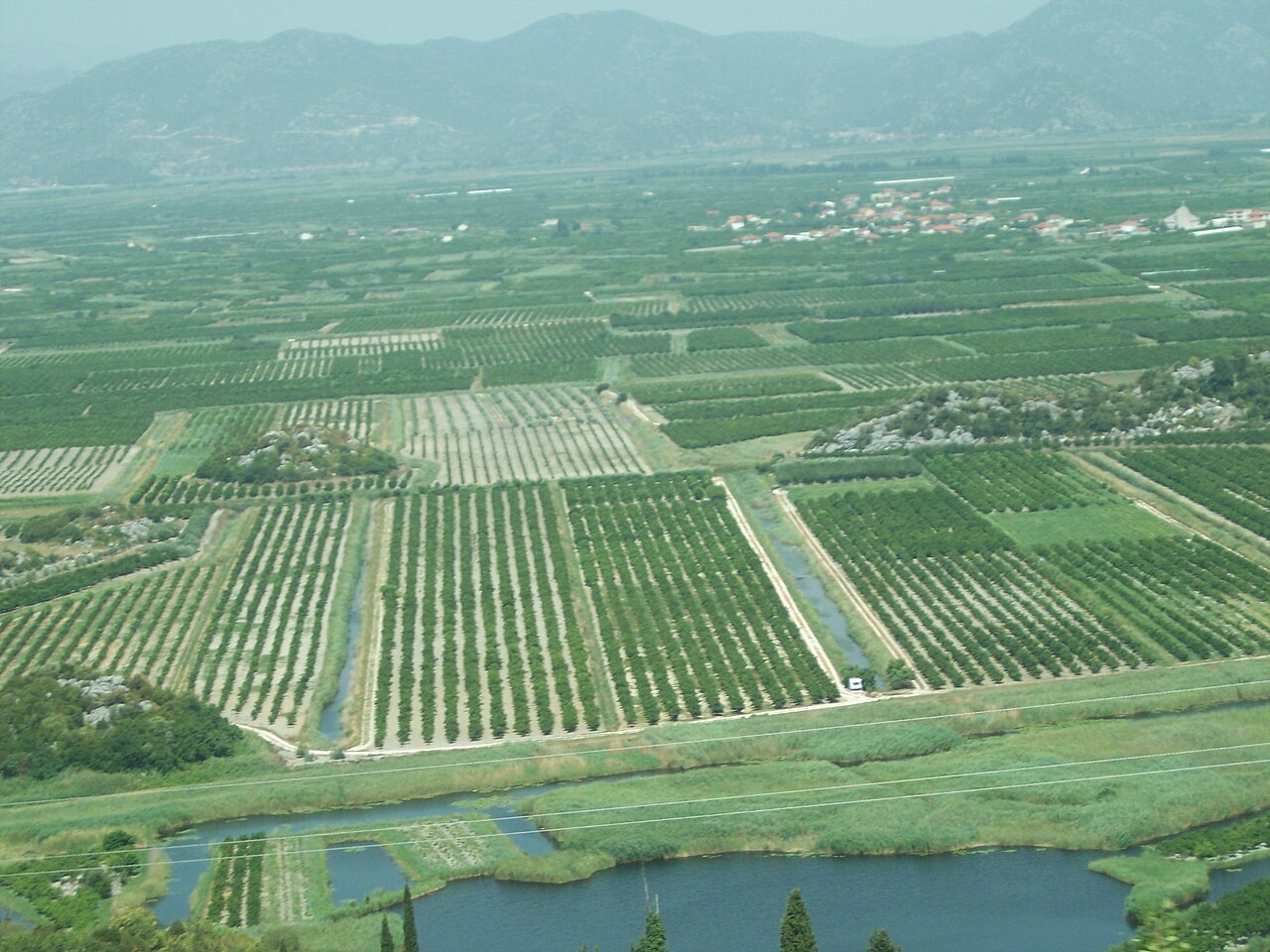
The main agronomic advantage of Roman is that the nut drops easily from the husk (the husk is approximately the same length as the nut), making the cultivar highly suitable for mechanical harvesting. It is relatively frost-resistant (in terms of tree hardiness), but due to early bud break, it is vulnerable to frost during flowering (see above). It is generally considered more susceptible to diseases than Istrian cultivars — specifically, hazelnut erineum mite and moniliosis are mentioned — so under conditions favorable for diseases, timely protection is required (note that some sources consider mites a minor problem; assess the risk by location).
Cultivar Comparison — Summary
| Property | Istrian Round | Roman (Tonda Romana) |
|---|---|---|
| Origin | Autochthonous HR (Pazin, Istria) | Italy (Viterbo) / Southern Europe |
| Prevalence in HR | Rare, neglected | Second most prevalent cultivar |
| Vigor | Very vigorous | Medium to very vigorous |
| Root suckers | Moderate | Many |
| Nut weight | ~3 g | ~3.7 g (range ~2.7–4 g) |
| Kernel extraction rate | ~45 % | ~46 % (39–46 %) |
| Shelling ease | Difficult (disadvantage) | Easy (suitable for mechanical harvest) |
| Yield | Moderate, drought-resistant | Heavy, prone to alternate bearing |
| Bud break / Maturity | — / — | Earlier (frost risk in bloom); ripens 7–10 days before Istrian Long |
| Disease susceptibility | More resistant; watch for hazelnut blight | More susceptible (mites, moniliosis) |
| Main role in HR | Neglected autochthonous cultivar, table + processing | Pollinizer for Istrian Long + confectionery processing |
Role in Croatian Orchards and Pollination
In Croatian practice, the backbone of orchards is almost invariably Istrian Long (estimated at about 80% of all orchards in the country), and Roman is added as a pollinizer and as a commercial kernel cultivar. The combination Istrian Long + Roman (+ Hale if necessary) is considered proven for continental Croatia because the cultivars align in flowering time and provide consistent yields.
Planting Ratios from Practice (with Sources)
It is important to distinguish between the proportion of cultivars in the orchard (how many trees of each are planted) and the question of "which is the main and which is the pollinizer cultivar." In several documented Croatian orchards, Roman is even the main kernel cultivar by number of trees, while Istrian Long makes up a minority share:
| Project / Source | Roman (Round) | Istrian Long | Source |
|---|---|---|---|
| Intensive orchards ≥ 10 ha (recommendation) | 80 % | 20 % | PP Orahovica |
| Small family orchards (recommendation) | 50 % | 50 % | PP Orahovica |
| PP Orahovica orchard (Grabovac), dense layout | 80 % | 20 % | Technological and economic characteristics of hazelnut cultivation (doi:10.46584/lm.v36i2.1141) |
| Orchard, Vojnić municipality (~40 ha) | 90 % | 10 % | Environmental Protection Study (AGRO UTINJA) |
| PPO Lješnjak Study | 84.5 % | 15.5 % | Environmental Protection Study (EcoMission) |
The range of Roman's share (≈ 50–90%) shows that the distribution of roles is not fixed but depends on the market goal (table nuts vs. confectionery processing), orchard size (intensive vs. family), and harvest mechanization. In intensive orchards, Roman prevails because it drops easily from the husk (easier mechanical harvest), while Istrian Long often serves there as a higher-quality nut and a partner in flowering.
What about the 20–30% pollinizer ratio from Italian practice?
European/Italian recommendations for self-incompatible cultivars often cite 20–30% pollinizers (see article on Tonda Romana). Croatian ratios (e.g., 80:20 or 90:10) may look different at first glance, but here the abundantly represented cultivar itself acts as a pollinizer for the minority: when both cultivars are kernel-bearing and cross-pollinate each other, the "pollinizer share" loses the meaning of a classic minority pollinizer strip. For purely pollinizer (non-market) cultivars, the 20–30% rule still applies.
Planting Distances and Stand Density (Informative)
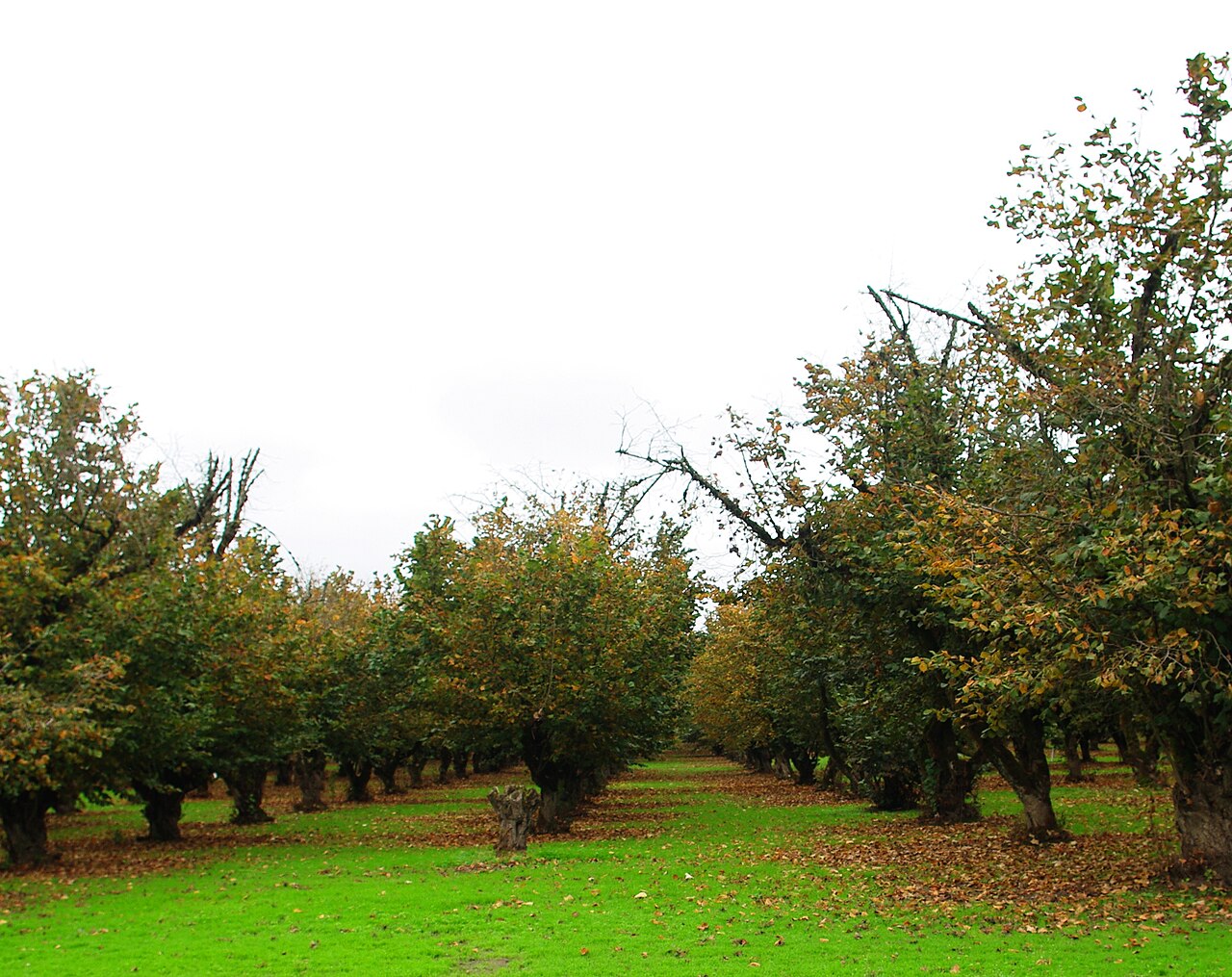
Spacing depends on soil fertility, cultivar vigor, and training system. Orientational values from Croatian literature:
| Approach / Cultivar | Spacing (row × in-row) | Density | Source |
|---|---|---|---|
| Intensive dense layout (Roman/Ist. Long) | 5 × 2.5 m | ~800 plants/ha | doi:10.46584/lm.v36i2.1141; Environmental Protection Study |
| Standard tree, medium vigor/yield | 5 × 6 m | — | Šoškić (2006.) |
| Standard tree, high vigor / fertile soil | 7 × 7 m | — | Šoškić (2006.) |
| Bush, high vigor | 8 × 8 to 10 × 10 m | — | Šoškić (2006.) |
| Space bush (densest–sparsest) | 5 × 3.5 to 6 × 5 m | — | Brzica (2002.) |
The dense layout (e.g., 5 × 2.5 m, ~800 plants/ha) has become the standard in intensive cultivation because it brings an earlier return on investment; at the same time, it is planned to remove every second plant after ~12 years, when the stand becomes too crowded. Since Roman grows more upwards and Istrian Long more outwards, when planning inter-row spacing, ensure machinery accessibility without damaging the trees.
Recommended Combinations for Pollination
- Istrian Long + Roman (+ Hale if necessary) — proven combination for continental Croatia.
- For Istrian Long, good pollinizers have also proven to be Halski div, Roman, Lambert, Gunsleben, Cosford, Apolda, Barcelona, and Tonda di Giffoni (note that Istrian Long is intersterile with Cosford and Sodlinger cultivars).
- For Roman (Tonda Romana) itself, as a self-incompatible cultivar, classic pollinizers are Nocchione, Mortarella, and Tonda di Giffoni (see separate article).
Since hazelnut blooms in winter/early spring (male and female flowers on the same plant, but often with mismatched flowering times within the same cultivar), a regular and abundant yield requires having at least two cultivars with matching flowering times in the orchard. For self-incompatible cultivars like Roman (and Istrian Round), this is mandatory, not optional.
Practical Recommendations and Common Mistakes
- Do not confuse husk behavior. Easy shelling is a characteristic of Roman; Istrian Round nuts drop with difficulty from the husk, which is a disadvantage for mechanical harvest. This is a common source of errors in cultivar descriptions.
- Do not plant Roman (or any self-incompatible cultivar) as a pure monoculture orchard. Without a pollinizer, yield will fail; ensure a layout that guarantees flowering overlap and evenly distribute partner cultivars throughout the orchard (hazelnut is wind-pollinated).
- Account for the frost risk for Roman. Early bud break exposes the bloom to late frosts; in exposed sites, consider more frost-resistant partners (e.g., Istrian Long breaks bud later).
- Watch for alternate bearing in Roman. A heavy crop one year may be followed by a lighter next season; aim to balance yield through pruning and balanced nutrition.
- Remove root suckers from Roman regularly — the cultivar produces many, which consume nutrients and complicate maintenance. Grafting on Turkish hazelnut (Corylus colurna) can mitigate this problem (see article on Tonda Romana).
- Align cultivar share with the goal and orchard size. Intensive orchards often go for ~80% Roman (easier mechanical harvest), small family orchards for 50:50 — with the awareness that these are not rigid rules.
- Tailor protection to the cultivar. Roman requires heightened vigilance against moniliosis and mites; Istrian Round primarily against hazelnut blight. Products, doses, and timing are informative and depend on current approvals — check the label and consult the advisory service.
- Do not confuse Istrian Round with Istrian Long when purchasing seedlings — these are two cultivars with different nut and harvest characteristics; request clear declaration from the nursery.
- Consider revitalizing Istrian Round in collection and niche orchards due to its excellent nut quality and favorable fatty acid profile, with the awareness of its poorer shelling ease.
Sources
This article is an AI-generated summary compiled from an internal hazelnut literature collection (RAG corpus) and public internet sources. Key sources used:
- "Chemical Composition of Hazelnuts" (multiple versions) — Faculty of Food Technology and Biotechnology, University of Zagreb (PBF repository) — description of Istarski Okrugli (mass ~3 g, shelling percentage ~45 %, fruits difficult to remove from the husk) and the chemical composition of the kernel.
- "Chemical Composition of Hazelnuts from the 2020 Season" — PBF, University of Zagreb — MUFA/PUFA and omega-6 contents (Istarski Okrugli: highest MUFA 81.81 %, lowest PUFA 8.37 %).
- Miljković et al. — pomological data on Istarski Okrugli (kernel mass ~1.15 g; assessment of the neglect of this cultivar).
- "Technological and Economic Characteristics of Hazelnut Cultivation" — https://doi.org/10.46584/lm.v36i2.1141 — ratio of 80 % Roman : 20 % Istarski Duguljasti, dense planting layout 5 × 2.5 m (~800 plants/ha).
- "State and Trends in Hazelnut Production and Consumption" — https://doi.org/10.31727/gzb.42.3.9 — early bud break and frost risk for Roman; difference in ripening of 7–10 days.
- "Economic Viability of Hazelnut Production" (Jakobović et al., 2020.) — fruit mass ~3.7 g, kernel ~1.4 g, shelling percentage ~46 %, shell thickness ~1.1 mm; Roman as the main pollinizer.
- "Business Plan for Hazelnut Seedling Production" — https://www.poljinos.hr/wp-content/uploads/2022/05/PP-za-proizvodnju-sadnica-lijeske1.pdf — descriptions of Istarski Duguljasti and Roman (husk, fruit shape).
- "Hazelnut Cultivation" (PDF, pdfcoffee) and Šoškić, Walnut and Hazelnut (2006.); Brzica (2002.) — planting distances, pollinizers for Istarski Duguljasti.
- Environmental Impact Assessments for establishing hazelnut orchards (EcoMission — PPO Hazelnut 84.5 % : 15.5 %; AGRO UTINJA, Vojnić municipality 90 % : 10 %; 75 ha orchard with cultivars Istarski Duguljasti, Roman, and Tonda Gentile Romana, spacing 5 × 2.5 m).
- PP Orahovica — "Hazelnut Cultivation and Hazelnut Seedling Production" — https://pporahovica.hr/djelatnosti/vocarstvo/uzgoj-ljesnjaka-i-sadnica-lijeske/ — recommendation of 80:20 (intensive) and 50:50 (family orchards).
- AgroIstra — "Istarski Duguljasti Hazelnut is Valued Worldwide" — https://www.agroistra.hr/poljoprivreda/lijeska-u-istra/ — two autochthonous Istrian cultivars, description of the round fruit (two-ribbed/three-ribbed).
- Agroportal — cultivar lists / "Interesting Facts about Hazelnuts" — https://www.agroportal.hr/vocarstvo/30493.
- Related Lijeskopedija article: Tonda Romana, Nocchione and Mortarella — primary profile of Roman/Tonda Gentile Romana and its Italian pollinizers.
Numeric data (fruit mass, shelling percentage, chemical composition, planting ratios, spacing) are informative and depend on the cultivar, location, year, and measurement method. Before application, verify with advisory services and official sources.