Crop insurance and yield risk management
Content generated by artificial intelligence — verify before application
This article was automatically compiled from a collection of hazelnut literature using artificial intelligence and may contain errors or outdated information. It serves as a starting point for further research, not as professional advice. Dosages, products, and timing are informative and depend on the cultivar, location, and applicable regulations — always consult with advisory services and official sources before application.
Hazelnut is a fruit species that breaks dormancy very early and flowers in the middle of winter, making it one of the most exposed to adverse weather conditions: late spring frosts during pollination and fruit set, hail and ice storms, stormy winds that strip immature clusters of nuts before harvest, drought, and extremely low winter temperatures. Since a hazelnut orchard does not produce its first significant crop until several years after planting and remains in production for decades, a single catastrophic event can wipe out an entire season's revenue, and severe canopy damage can result in losses extending into subsequent years. Therefore, yield risk management is not a secondary administrative burden, but an integral part of a serious business plan for every producer. This article explains hazelnut orchard insurance policies against adverse weather, premium co-financing mechanisms, and how to integrate insurance into a broader, integrated system of production risk management.
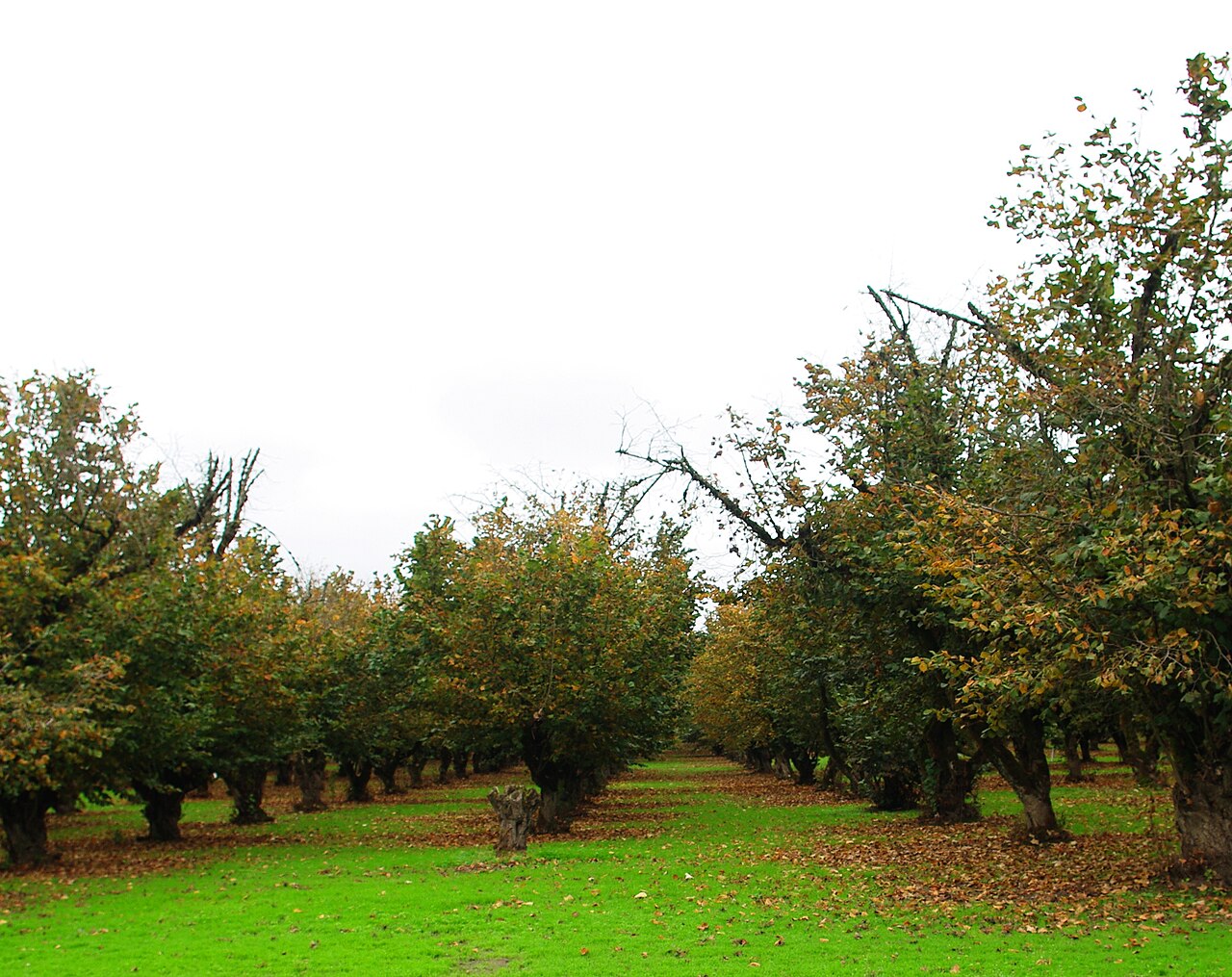
Why hazelnut is sensitive — the nature of yield risk
To effectively insure and manage risk, it must first be understood. The greatest losses in hazelnut orchards are caused by adverse weather conditions, not diseases and pests, which are usually under control with proper agrotechnics.
Key production risks for hazelnut:
- Late spring frost — the most dangerous as it affects the orchard during flowering and fruit set. The result is poor pollination and increased fruit drop. Frost pockets and low, enclosed locations where cold air settles are particularly exposed.
- Extremely low winter temperatures — can freeze reproductive organs and the entire orchard. Literature cites approximate lethal temperatures: trunk freezes at around –35 °C, female flowers at around –14 °C (already around –5 °C in full bloom), catkins at around –22 °C, and pollen tubes after pollination at –2 to –4 °C. In eastern Croatia, damage was recorded at –25 °C (February 2012) and –23 °C (March 2018).
- Hail and ice storms — cause direct damage to nuts and open wounds on branches, through which fungal and bacterial pathogens enter (canker — Cytospora, Botryosphaeria, Xanthomonas).
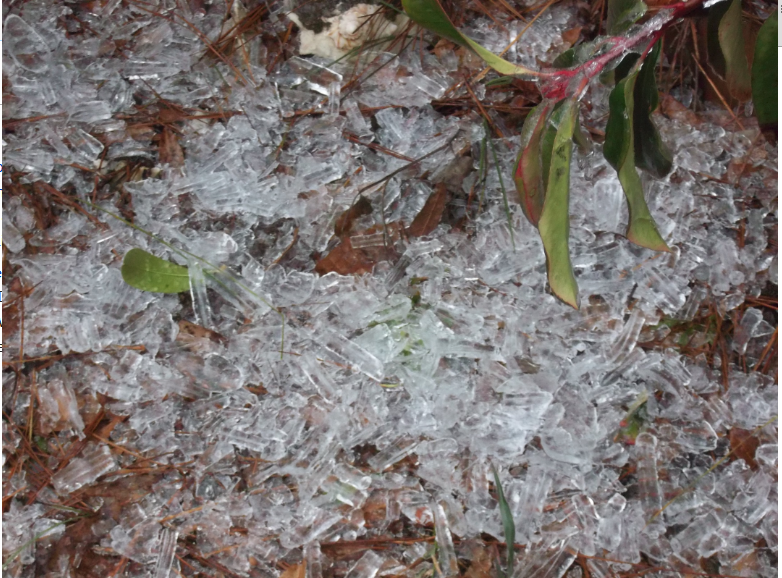
- Stormy winds — particularly dangerous before harvest, when they strip immature clusters of nuts.
- Drought and high temperatures — sunscald on nuts and yield reduction; mitigated by irrigation and misting/cooling systems.
- Fire, flood, earthquake — rarer, but catastrophic events covered by comprehensive policies.
EU-level estimates show the scale of the problem: in the period 1980–2022, average annual losses from climate hazards in EU agriculture amounted to approximately 28.3 billion EUR, which is about 6% of the total value of agricultural production. Droughts, frost, hail, and excessive rainfall together account for more than 80% of these losses. The average "protection gap" (share of uninsured losses) remains very high — 70 to 80%.
Expert sources often confirm this
Technological-economic guidelines for establishing orchards state directly: "Of all adverse weather conditions, the best way to protect is by insuring the orchard with insurance companies." Hail nets, irrigation, and cooling misting reduce, but do not eliminate, risk — insurance is the last line of defense for income.
Hazelnut orchard insurance policies against adverse weather
Crop and orchard insurance in Croatia is offered by all major insurance companies (e.g., Croatia osiguranje, Triglav, Sava, Adriatic) as well as specialized insurers like Vereinigte Hagel. Policies are typically built modularly: around a basic risk (most often hail), other risks are added.
Types of coverage
| Coverage Type | What it covers | Typical application for hazelnut |
|---|---|---|
| Single-peril | Only one risk, most often hail | Basic, cheapest protection |
| Combined / Package | Hail + fire + lightning + storm + heavy rain + late spring frost + flood | Recommended for orchards in frost pockets and exposed locations |
| All-risk / Multi-peril | All of the above + yield insurance (average production) | Large, professional orchards and investment projects |
For hazelnut, due to early flowering, the add-on risk of late frost is almost always justified, although it increases the premium. For exposed locations, protection against storm and heavy rain is also sensible.
What is included in the policy — insured amount and deductible
- Insured amount is tied to the expected value of the yield (average production, usually the average of the last few years), so for new orchards, insurance is only possible after production is established and necessary infrastructure is in place.
- Deductible — the share of loss that remains the responsibility of the producer. A higher deductible means a lower premium, but also lower payout for smaller losses.
- Timeframe for acceptance into insurance — critical for frost: frost policies for vineyards and orchards are contracted early in the season, before the start of the risky period, because an orchard in which a disaster is already likely cannot be insured.
Practical rule on timing
A frost policy must be concluded before the risky flowering period begins. Those who wait for the first cold forecast are too late. Plan the insurance season like any other agrotechnical operation — with deadlines in the calendar.
Insurance of seedlings and biological assets
In addition to yield insurance, insurance of biological assets (the trees/shrubs themselves) is also used when establishing an orchard. In investment practice, a guarantee for free replacement of seedlings that do not take root or perish in the first two years after planting is mentioned — this is a form of contractual risk transfer to the supplier/nursery, which complements the classic policy. Many producers also handle small losses on seedlings with their own planting material, keeping a reserve for replacement, which is sometimes the fastest and cheapest solution.
Premium co-financing
The premium for a comprehensive policy is not a negligible cost, so co-financing is key to making insurance profitable. In Croatia, this is implemented within the framework of the EU Common Agricultural Policy (CAP) and risk management measures, managed by the Agency for Payments in Agriculture, Fisheries and Rural Development (APPRRR).
Main parameters (informative)
| Parameter | Approximate value | Note |
|---|---|---|
| Share of premium co-financing | up to 70 % | From EU funds + national co-financing |
| Maximum support per entity | up to approx. 75,000 EUR | Per one registered agricultural entity |
| Threshold for coverage (loss) | at least 20 % | Loss above the threshold of average annual production/income |
| Moment of application submission | after payment of part of the premium (e.g., 30 %) | Application is submitted to APPRRR |
Previously, the intensity of EU support was up to 65%, and with changes to the CAP (the so-called Omnibus), it was increased to 70%, while simultaneously lowering the loss threshold that triggers coverage from higher values to 20%. These are two changes that have made insurance more accessible and attractive to small and medium-sized producers.
Figures are approximate and change
The exact percentage of co-financing, the upper limit of support, eligible risks, and deadlines are prescribed by regulation and call for each year separately. Before contracting a policy, check current conditions on apprrr.hr and with advisory services — the values in the table serve only for approximate orientation.
How co-financing looks in practice (process)
- The producer contracts crop/orchard insurance with the insurer and pays the required portion of the premium (e.g., 30%).
- Upon payment, the producer submits an application for support to APPRRR, within the framework of an open call/risk management measure.
- After approval, a portion of the premium (up to 70%) is co-financed from public funds.
- In the event of an adverse weather event and loss above the agreed threshold, the insurer pays compensation according to the policy terms and estimated damage.
Experiences from neighboring countries and the EU
Co-financing mechanisms exist throughout the EU and the region, with slightly different parameters:
- Italy uses so-called "preferential policies" (polizze agevolate) with a protection mechanism where the acceptable cost increases up to 90% of the premium for policies covering the largest part of adverse weather, or 85% for certain catastrophic risks. Mutual funds (Fondi di mutualità) with standardized production values have also been developed.
- Turkey applies discounts through state-supported plant production insurance (e.g., 5% for one-time premium payment, 5% for members of agricultural organizations), with a maximum discount limit of 50% of the premium.
- At the EU level, in addition to classic insurance, mutual funds and index schemes (e.g., Agri-CAT fund) are being developed to cover catastrophic risks that the market struggles to insure.
The Croatian Agriculture Strategy until 2030 explicitly announces the expansion of the scope of agricultural insurance for small and medium-sized producers, including the use of commercial reinsurance markets for managing disaster risks.
Integrated Production Risk Management
Insurance is indispensable but expensive if it is the only measure. The lowest cost and highest resilience are achieved through an integrated approach: reduce risk through agrotechnics and infrastructure, and transfer only the remaining risk to the insurer. Think in three layers.
Layer 1 — Risk Avoidance and Reduction (before planting and in the orchard)
The cheapest risk is the one that does not occur at all.
- Site Selection — avoid frost pockets, lowlands, and areas with stagnant cold air, as well as areas with high groundwater and flood risk. Relief and site location are decisive for hazelnut production security; a good site choice significantly reduces exposure to frost.
- Cultivar Selection — plant at least three cross-pollinating cultivars in the orchard for more reliable pollination; where possible, choose late-blooming cultivars for locations threatened by frost.
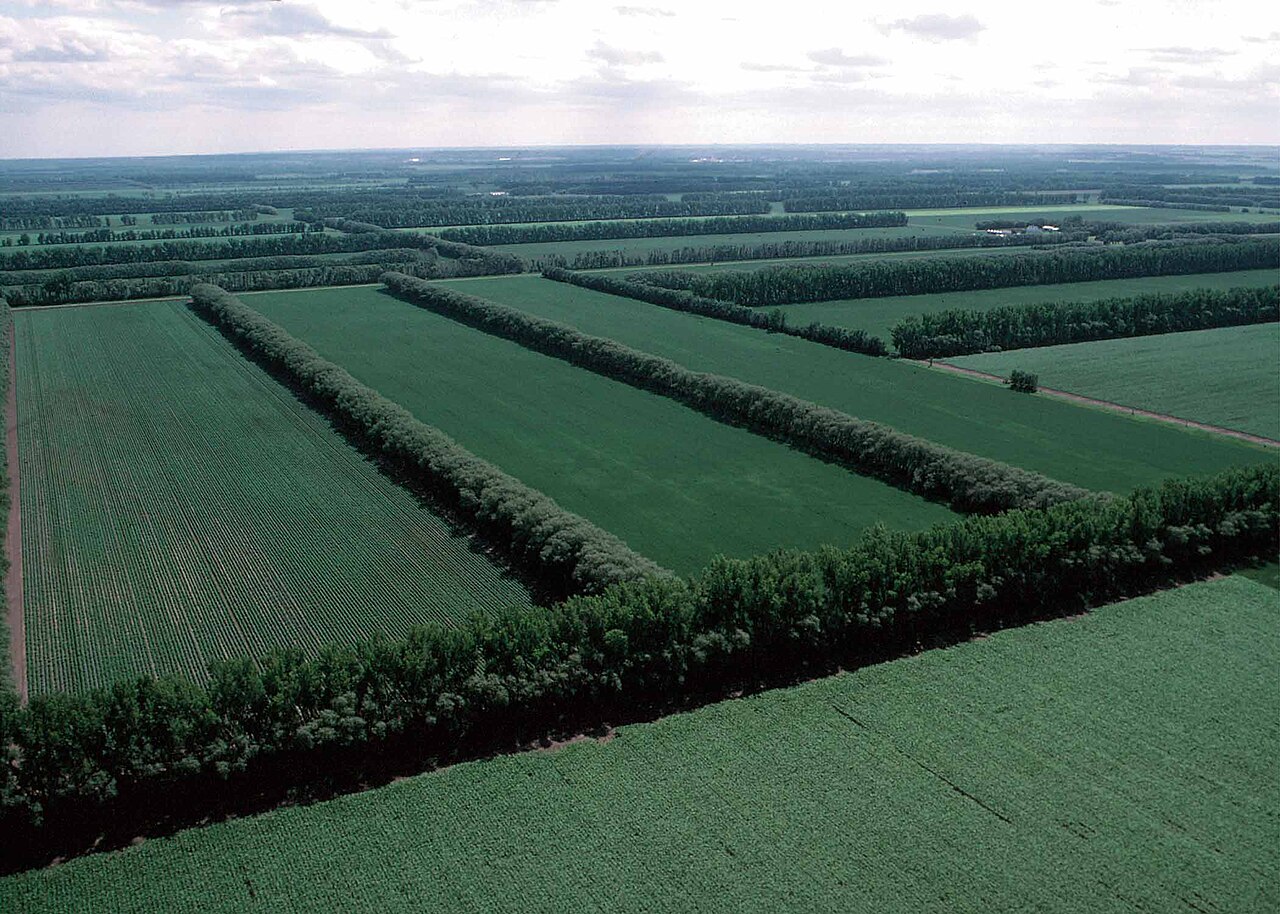
- Windbreaks — reduce damage from storm winds and can also serve as pollinizers.
- Ground Cover / Sodding — inter-row sodding or cover crops protect the soil from water and wind erosion, reduce compaction, and improve soil structure and water infiltration.
Layer 2 — Active Protection (technical infrastructure)
Investments that protect yield in the event of a disaster:
| Measure | Protects Against | Note |
|---|---|---|
| Hail nets | Hail, partially sunscald | Standard in modern last-generation orchards |
| Micro-sprinklers / Cooling irrigation | Late frost, high temperatures | The same equipment protects against frost and cools the orchard in heat |
| Undertree irrigation | Frost (with slight temperature gain), drought | More economical and without the risk of branch breakage associated with overtree sprinkling; estimated temperature increase of ~1.7 °C, higher with wind machines |
| Wind machines | Frost (by mixing air) | Often combined with irrigation |
| Drip irrigation | Drought | Saves water; orientation up to ~2,500 l/tree/year (depending on cultivar, soil, and climate) |
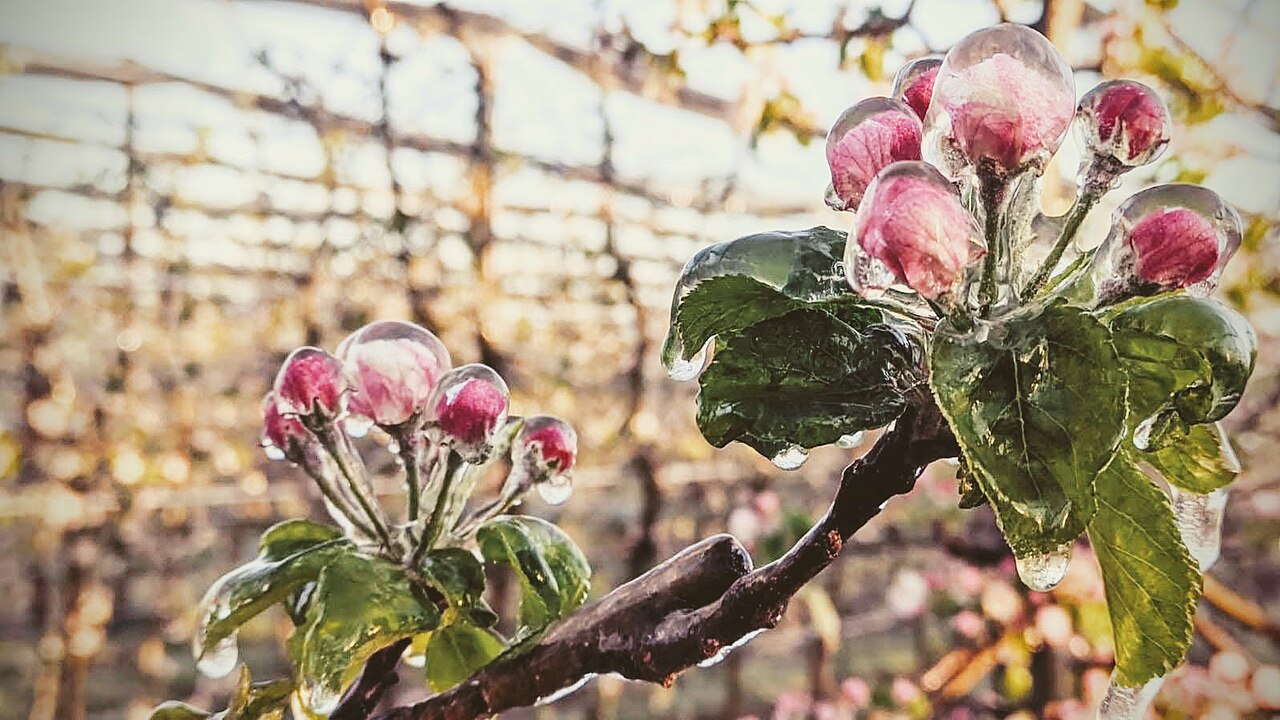
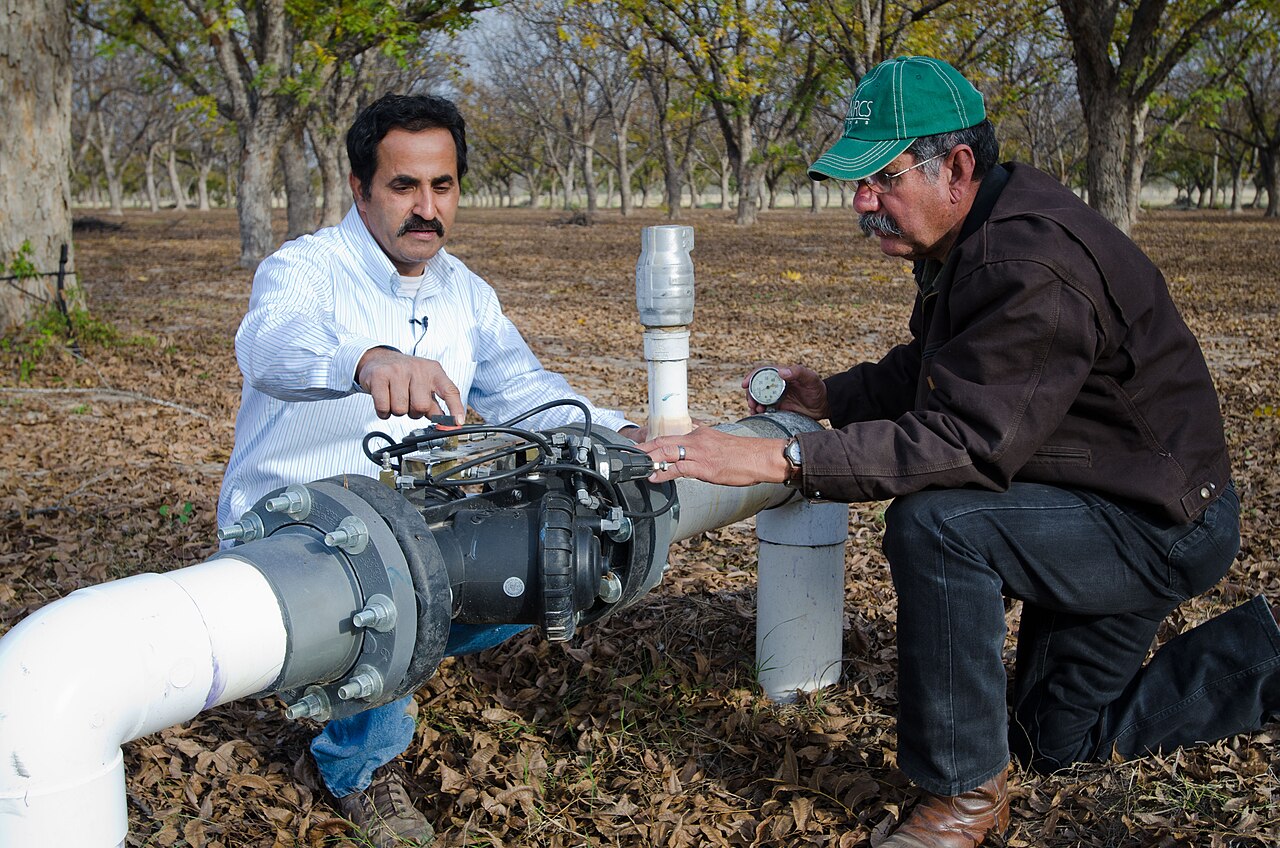
Active protection measures (irrigation, sprinkling, nets) are increasingly treated as regular investments in the orchard, rather than extraordinary costs — because they enable stable annual yields of quality crops despite climatic fluctuations.
Layer 3 — Transfer and Financing of Remaining Risk
What remains after the first two layers is transferred or financed:
- Insurance (with premium co-financing) — described above; the core of risk transfer.
- Contractual guarantees — e.g., free replacement of seedlings in the first two years from the supplier.
- Own financial reserve — reserve for deductibles and minor losses below the insurance threshold.
- Diversification and mixed financial instruments — combining loans with guarantees to reduce financial risk, facilitating access to financing for smaller producers.
- Monitoring and early detection — systematic monitoring (including remote monitoring and weather forecasts) enables rapid response to pest outbreaks, diseases, or weather stress and reduces final damage.
Practical Recommendations and Common Mistakes
Recommendations:
- Plan insurance in advance and contract the policy before the risky period, especially for frost.
- Always use premium co-financing via APPRRR — without it, a comprehensive policy is often uneconomical.
- Align the insured amount with the real value of the yield; underinsurance means lower compensation than the actual loss.
- Combine nets/irrigation + insurance — lower overall risk can mean more favorable policy terms.
- Keep accurate records of average production — this is the basis for calculating the insured amount and proving the loss threshold.
Common Mistakes:
- Relying only on a "good year" and buying a policy only after the first bad season — too late.
- Planting in a frost pocket due to cheaper land, then paying high frost premiums for the entire life of the orchard.
- Single-risk policy (only hail) in a location where the main risk is actually late frost.
- Missing the deadline for submitting co-financing applications after paying the premium.
- Neglecting the loss threshold: losses below the agreed threshold (e.g., 20%) do not trigger support, so a personal reserve is needed for these.
Gallery
Sources
This article is an AI summary compiled from an internal hazelnut literature collection (RAG corpus) and publicly available sources. Dosages, percentages, and timelines are informative and depend on the cultivar, location, and applicable regulations. Main sources used:
- Establishing new orchards — technological-economic guidelines (2006.) — RAG corpus
- D. Bošnjak: Hazelnut — lethal temperatures and risky micro-locations (agro-klaster.hr) — PDF
- Environmental Impact Assessment — multi-year hazelnut and plum orchards (bbz.hr, 2020.) — PDF
- Recommendation for permanent hazelnut orchard owners — consequences of hail and storm weather (2025.) — RAG corpus
- Agriculture Strategy to 2030 — risk management instruments and insurance (Republic of Croatia) — RAG corpus
- Piano di gestione dei rischi in agricoltura 2023 (Italy) — premium co-financing mechanisms — RAG corpus
- Devlet Destekli Bitkisel Ürün Sigortası, Tarife ve Talimatlar 2025 (Turkey) — premium discounts — RAG corpus
- Hazelnut diseases and pests — economics and loss coverage with own planting material — RAG corpus
- Frost Protection in Orchards and Vineyards (Evans, 1999) — undertree sprinklers and wind machines — RAG corpus
- Is hazelnut cultivation profitable? — Gospodarski list (2019.) — RAG corpus
- APPRRR — Risk management measure, premium co-financing — apprrr.hr
- Vereinigte Hagel — start of crop and orchard insurance season 2025 — vereinigte-hagel.net
- Croatia osiguranje — crop and orchard insurance — crosig.hr
- EU CAP Network — Insurance and mutual funds for farm resilience and adaptation in the EU — eu-cap-network.ec.europa.eu
- Agroklub — State co-finances livestock and crop insurance policies — agroklub.com