Traps, Attractants, and Pest Monitoring Techniques (Practical Guide)
Content generated by artificial intelligence — verify before application
This article was automatically compiled from a collection of hazelnut literature using artificial intelligence and may contain errors or outdated data. It serves as a starting point for further research, not as professional advice. Dosages, products, and timing are informative and depend on the cultivar, location, and current regulations — always consult with an advisory service and official sources before application.
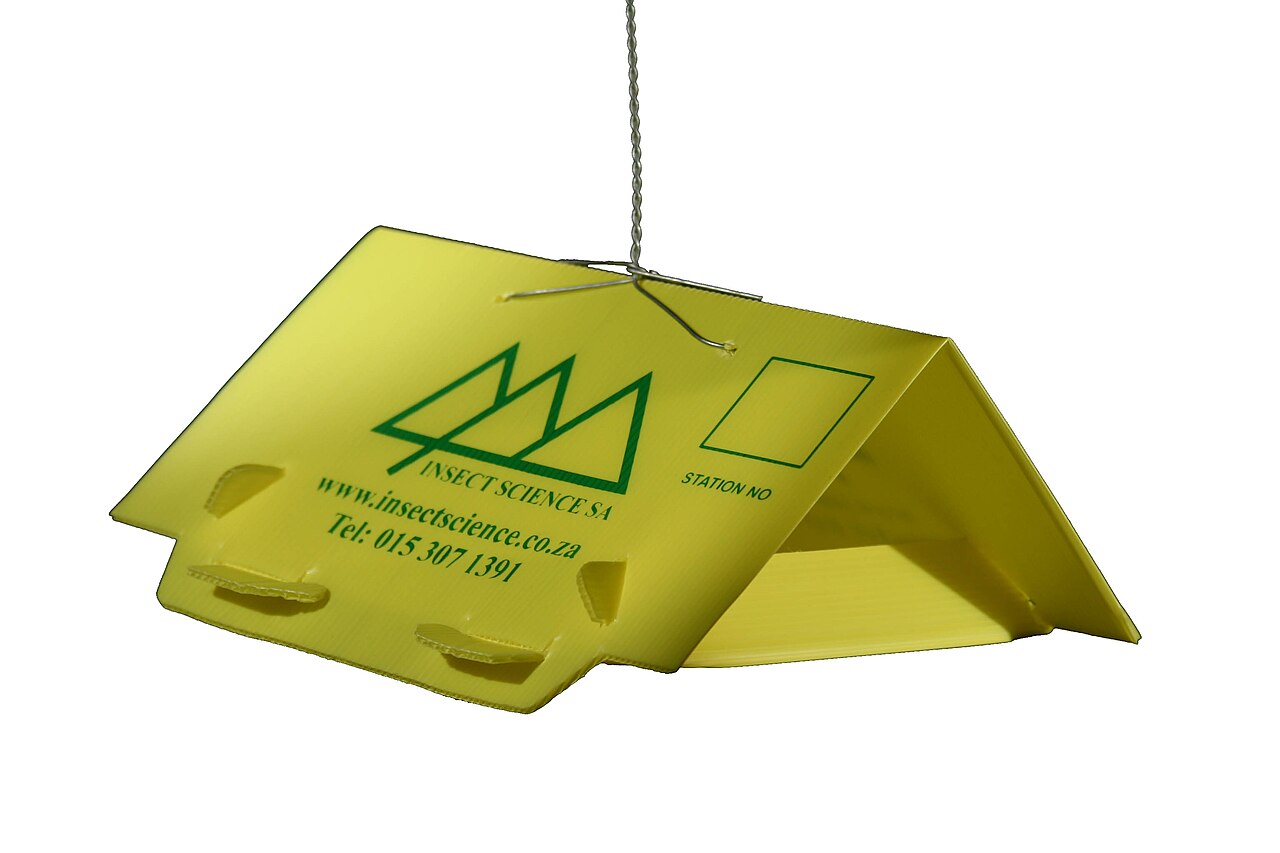
Pest monitoring is the foundation of any serious integrated pest management (IPM) program for hazelnut orchards. Without monitoring, we are essentially guessing: we spray "just in case," or worse, we discover the problem only after damage has already occurred. Traps, visual and feeding attractants, and simple field techniques such as branch shaking allow us to confidently determine whether a pest is present, how many individuals there are, and whether it has exceeded the critical threshold (action threshold) at which control becomes economically justified. This guide consolidates in one place which trap to use for which pest, where to place it, how to read it, and which thresholds and field tests (including the cut test) to apply — so you avoid searching for the same information scattered across multiple articles.
Why monitoring instead of calendar-based spraying
Pest monitoring should precede any application of insecticides and other control measures. Only by using various types of traps and inspections can we confidently determine:
- whether the pest is present in the orchard at all,
- whether its population has exceeded the critical level at which biological or chemical control is justified,
- the exact timing (flight, emergence of adult forms, migration) for targeted treatment.
This is particularly important for hazelnut, as the range of registered products in Croatia is very narrow, and for some key pests (e.g., brown marmorated stink bug, hazelnut weevil) there are currently no or almost no registered insecticides. In such situations, targeting the right moment and correctly assessing the action threshold determine success.
Types of traps and attractants — overview
Traps are broadly categorized by their mode of attraction:
| Trap Type | Attraction Method | Primary Use in Hazelnut |
|---|---|---|
| Pheromone (sex pheromone) | Scent signal — primarily attracts males | Monitoring flight of moths/insects, determining onset and peak of emergence |
| Pheromone (aggregation pheromone) | Aggregation pheromone — attracts both sexes and larvae | Brown marmorated stink bug (Halyomorpha halys), monitoring throughout the season |
| Visual sticky (yellow/blue/white board or tape) | Color (wavelength) + adhesive | Aphids, thrips, and other small insects |
| Pyramid trap (black) | Shape + aggregation pheromone | Brown marmorated stink bug, captures non-flying larvae as well |
| Feeding/combined attractant | Food + scent | Supplement to pheromone traps for specific species |
The color of visual traps is not arbitrary: different insects perceive different wavelengths of light, so yellow sticky boards and tapes are used for a broad spectrum of pests, blue primarily for thrips, and white for certain other groups. In trials on orchards, a representative number is often used — for example, 20 yellow and 20 blue sticky tapes — with inspections conducted several times throughout the season.
Important note on pheromone traps: they are a useful, but not standalone, tool. The number of captured individuals does not always sufficiently indicate the overall pest pressure to be used alone as an action threshold. Always combine traps with visual inspection of the orchard and other techniques.
Pest by pest: which trap and which technique
Brown marmorated stink bug (Halyomorpha halys)
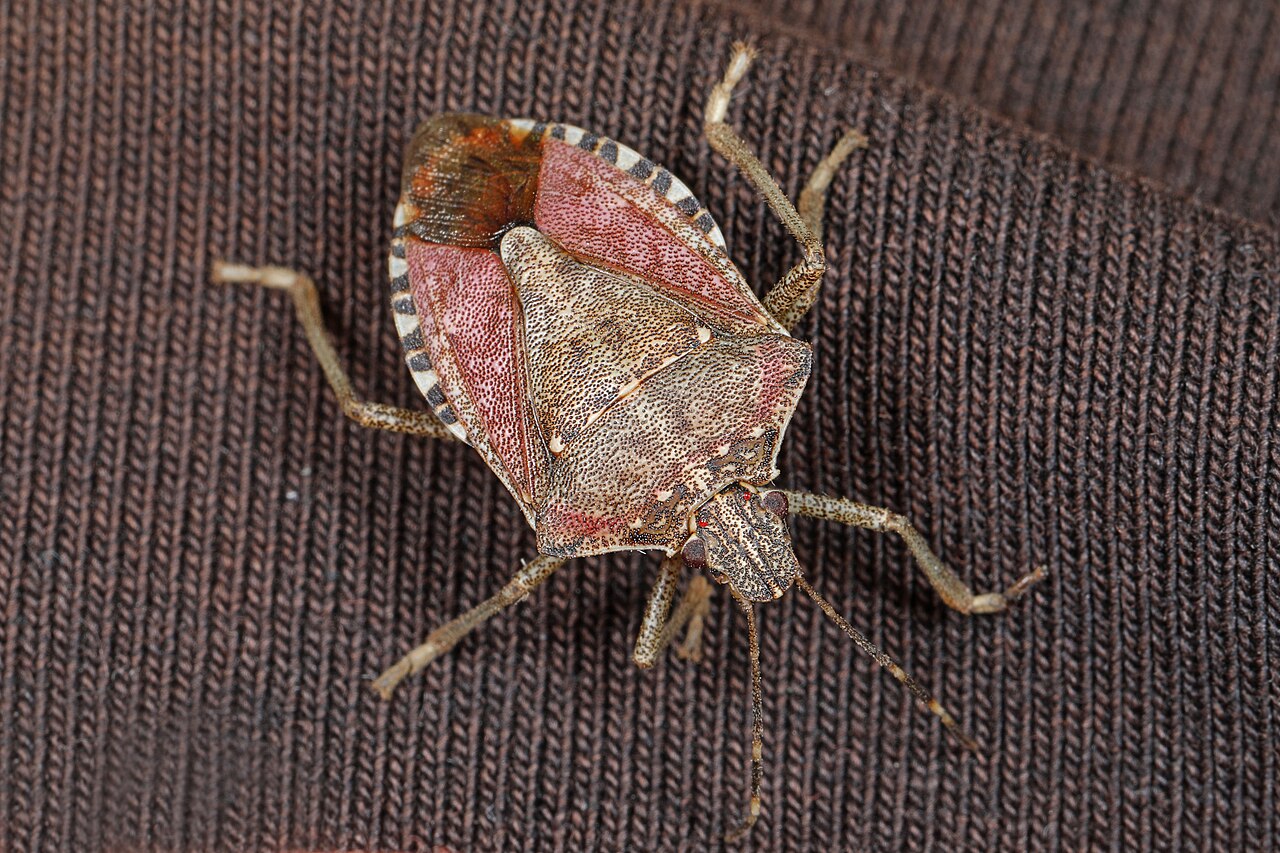
The brown marmorated stink bug has become an increasingly significant pest of hazelnuts. Several approaches are used for monitoring it, with the most effective being a combination of:
- Black pyramid trap with pheromone. Monitoring is conducted using black pyramid traps with the mandatory addition of a pheromone attractant. The attractant is an aggregation pheromone (a mixture of pheromones from male H. halys and the related species Plautia stali) that attracts both sexes and all mobile developmental stages, including larvae. The black pyramid trap has a higher catch capacity than green pyramid traps or transparent panels, so it is recommended in areas with high population density throughout the entire growing season.
- Transparent sticky card with the same pheromone. This is recommended for early detection of the species in areas with low density. Recent research shows that transparent sticky cards with the same lure are equally effective for detecting presence, abundance, and seasonal activity as the classic pyramid trap, with simpler handling.
- Shaking branches and using a sheet. Inspecting fruiting branches, placing a sheet (PVC or other material) under the tree, and shaking the branches while counting the captured individuals is an additional, low-cost method.
Placement (orientational, based on orchard experience):
| Parameter | Orientational Value |
|---|---|
| Height of pyramid trap | approx. 1.2 m; placement on the ground is more effective than in the canopy |
| Position | orchard edge, especially near forests, hedges, or other vegetation |
| Distance from edge | approx. 5 m from the edge |
| Distance between traps | approx. 20–25 m |
| Placement period | approx. May–October (entire activity season) |
| Inspection frequency | several times a month (e.g., 3–5 times), along with visual orchard inspection |
Action threshold. In Croatia (and the EU), there are currently no officially established action thresholds for the brown marmorated stink bug on hazelnuts. As a guideline, a provisional threshold from the USA (states of New York and Utah, respectively, and research from West Virginia and Maryland) is often cited: 10 adult stink bugs captured in a pheromone trap over a one-week period (or 10 individuals accumulated in one pheromone trap in the orchard or at its edge) as an indication to begin control. This is an informative figure that should be adapted to local conditions and verified with the advisory service.
Caution: trap spillover effect
Some studies warn that pheromone traps can have a negative consequence — "trap spillover." Individuals attracted by the pheromone may linger and feed on surrounding vegetation before entering the trap, potentially increasing the percentage of damaged fruit in the immediate vicinity of the trap. Therefore, positioning at the orchard edge (near hedges, not in the middle of the fruiting area) is very important.
In Croatia, there is currently no insecticide registered specifically for controlling stink bugs in hazelnuts; some preparations (e.g., based on deltamethrin or acetamiprid) are registered for stink bugs on other crops, which further emphasizes the importance of monitoring and timely, targeted action in accordance with approvals and labels.
Hazelnut weevil (Curculio nucum)
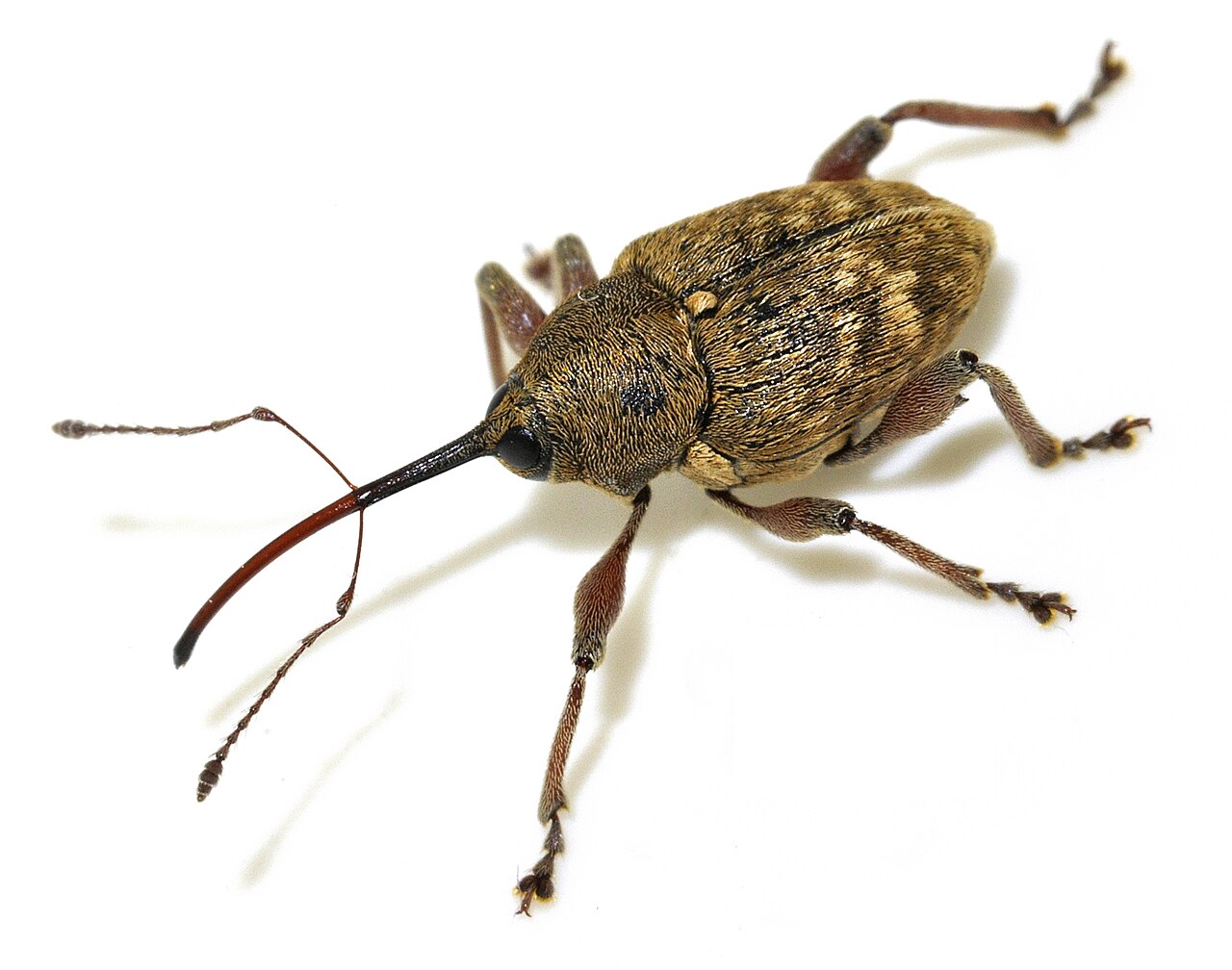
The hazelnut weevil ("snout beetle") is the most significant pest of hazelnuts in many orchards. Females bore into the fruit and lay eggs, and the larva develops in the kernel. The main field monitoring technique is not a classic pheromone trap, but branch shaking (branch beating method):
- Spread a light sheet (cloth, PVC film) under the branch.
- Suddenly strike or shake the branch.
- Count the fallen adult weevils.
Shaking branches during the growing season also collects other harmful and beneficial entomofauna; in addition to the hazelnut weevil, attention should be paid to "hidden" stink bugs.
Action threshold for hazelnut weevil: a critical abundance is considered to be a catch of more than 3–4 weevils per bush/tree. Exceeding this threshold justifies targeted action. Control is carried out from the beginning of adult weevil appearance, which is calendar-wise approximately the beginning of May, and since females are active and lay eggs over a period of 5–6 weeks, monitoring should be regular throughout this period.
| Parameter | Value / Note |
|---|---|
| Monitoring technique | branch shaking + sheet, counting weevils |
| Action threshold | > 3–4 weevils per bush/tree |
| Appearance of adults | approx. beginning of May |
| Duration of risky period | females active for 5–6 weeks |
| Prevention | winter soil treatment (destroys overwintering larvae), measures favoring flower bud development |
In Croatia, there is currently no (or almost no) registered means for direct control of the hazelnut weevil; immunostimulators and physical preparations (e.g., oil films) are mentioned as auxiliary measures. Check the current status in the Plant Protection Information System (FIS) of the Ministry of Agriculture.
Hazelnut erineum mite (bud gall mite, Phytoptus / Phytocoptella avellanae)
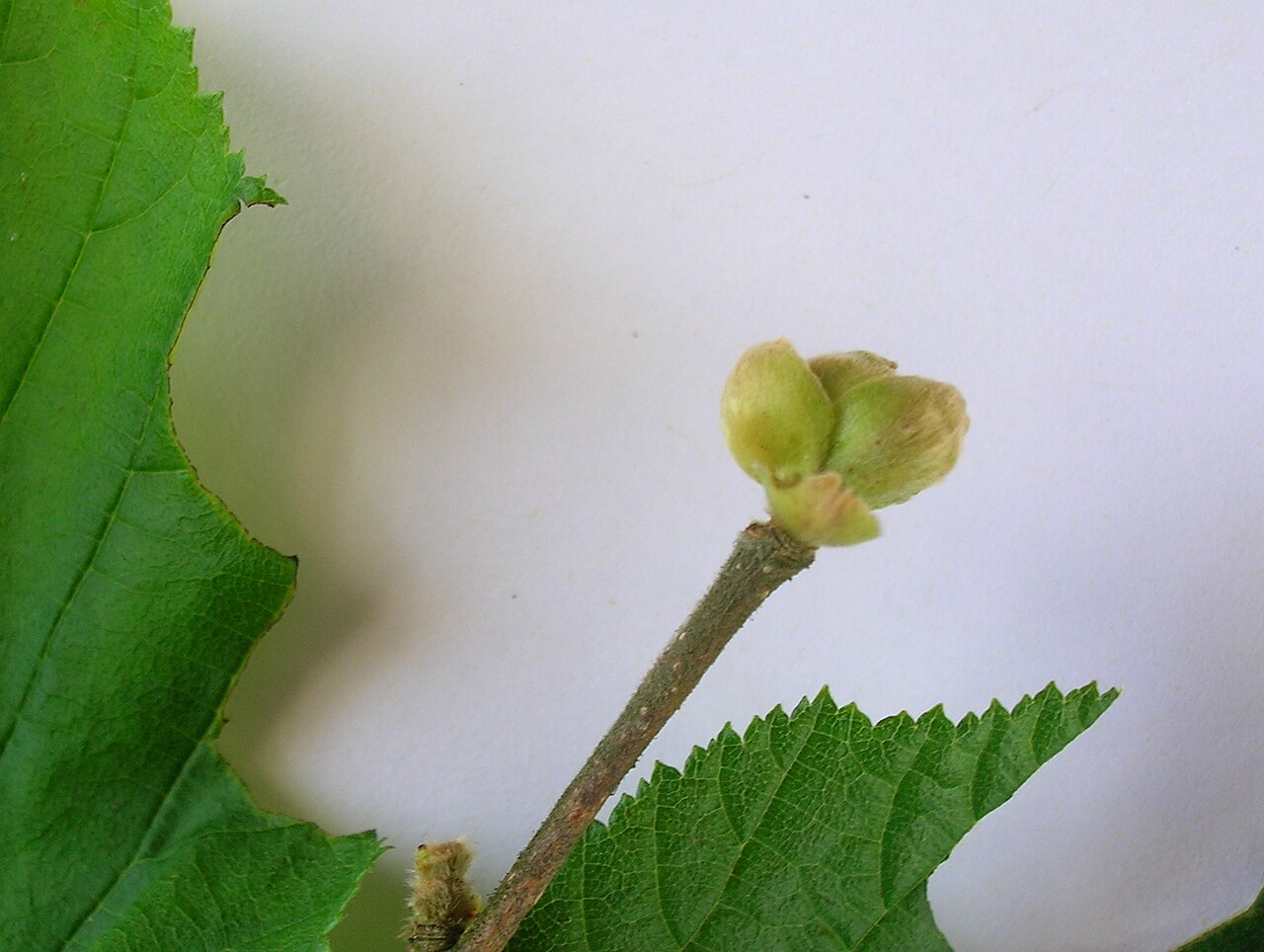
The hazelnut erineum mite overwinters in buds, which become swollen and significantly larger than healthy ones ("inflated" buds). This mite is about 0.2–0.3 mm in size and is not visible to the naked eye — magnification of about twenty times is required (magnifying glass, binocular).
Monitoring is not conducted with traps, but by inspecting buds and phenological monitoring of migration:
- Winter/early spring inspection: counting swollen (infested) buds; in many orchards, almost one-third of all buds are infested.
- Migration monitoring: mites move to new organs when the hazelnut develops 3–4 leaves, most intensively at the 5–10 leaf stage (usually in May), and migration ends around 12 leaves. This window determines the timing of action.
To reduce damage, sulfur is applied early in spring, during bud swelling and opening; the side (secondary) acaricidal effect of sulfur fungicides on bud gall mites is also known.
| Preparation (informative) | Concentration | Note |
|---|---|---|
| CHROMOSUL 80 (sulfur) | 0.5–0.6 % (500–600 g / 100 l water) | early spring, bud swelling/opening |
| Sulfur (general) | 0.5–0.6 % | side effect on bud gall mites |
| Sulfur (strong infestation) | up to 1 % (1000 g / 100 l) | in case of strong attack; acaricides as needed |
Doses are informative and depend on the cultivar, location, and valid approvals and labels.
Aphids, scale insects, and thrips
For small insects, visual sticky traps are used:
- Yellow sticky cards/tapes — broad spectrum (aphids and other insects).
- Blue sticky cards/tapes — primarily thrips.
- White — certain other groups.
Place traps at canopy level, check and replace them regularly (e.g., several times through the season). Along with them, visual inspection is mandatory: winter inspection involves taking branches about 20 cm long and counting the abundance of winter eggs of aphids (Myzocallis) and red fruit spider mite (Panonychus), as well as adult forms of scale insects (Diaspidiotus, Eulecanium) on branches. Aphids and scale insects can be controlled, for example, with a product based on spirotetramat (after checking registration).
Hazelnut longhorn beetle and other wood-borers
The appearance of the hazelnut longhorn beetle (Oberea linearis) and other wood-borers is monitored by visual inspection (wilted shoot tips, holes, sawdust) during the growing season. For some related bark beetles/wood-borers in forestry, commercial pheromone traps (dispensers/vials) are routinely used, but for hazelnuts, visual inspection remains the basic method.
Cut test — kernel quality and effectiveness control
Traps and branch shaking indicate the presence of adult forms, but actual damage to the fruit (especially from the hazelnut weevil) is confirmed by the cut test — sampling and slicing open fruits:
- Randomly take a representative sample of fruits (from several trees and sides of the canopy).
- Slice open the shell and kernel.
- Record the proportion of fruits with larvae/entry holes, empty/shriveled kernels, and damage from stink bug stings (indented, brown, "spongy" spots on the kernel).
The cut test is used before harvest (assessing pressure and deciding on harvest timing) and after harvest/drying (checking batch quality and retrospectively evaluating whether protection was sufficient). This closes the loop: monitoring with traps → decision on treatment → cut test as verification of the outcome.
Seasonal monitoring calendar (orientational)
| Period | What to monitor | Technique |
|---|---|---|
| Dormancy / winter | Winter eggs of aphids, red mite, scale insects, infested (swollen) buds | branch inspection (~20 cm), counting buds |
| Bud swelling/opening (early spring) | Hazelnut erineum mite (migration at 3–4 leaves) | bud/leaf inspection; sulfur as needed |
| May | Beginning of hazelnut weevil appearance; mite migration (5–10 leaves) | branch shaking, sheet |
| May–June | Hazelnut weevil (females active for 5–6 weeks), aphids | shaking, yellow/blue sticky traps |
| June–October | Brown marmorated stink bug (adults + larvae) | black pyramid traps / sticky cards with pheromone, shaking |
| Pre-harvest and post-harvest | Actual kernel damage | cut test |
Practical recommendations and common mistakes
- Do not rely on just one method. Combine pheromone traps with visual inspection, shaking, and cut tests.
- Position stink bug traps at the orchard edge, near hedges and forests, not in the middle of the fruiting area — this utilizes the edge arrival of pests and reduces the risk of "trap spillover."
- Regularly replace sticky cards and pheromone vials/dispensers. Depleted pheromone or dirty cards give falsely low catches. Pay attention to shelf life and recommended lure replacement intervals.
- Keep records. Date, location, number of catches per inspection and per trap. Only a series of measurements shows trends (start of flight, peak), not a single number.
- Record beneficial fauna too. Branch shaking catches natural enemies as well; unnecessary spraying destroys them and worsens the long-term problem.
- Check registration before every treatment. The status of registered products in Croatia changes; use the FIS and advisory service. For many key hazelnut pests, registered products are limited or non-existent, so monitoring and prevention have disproportionately high importance.
- Thresholds are orientational. Figures like "10 stink bugs/week" or "3–4 weevils per bush" help in decision-making, but they should be read in the context of cultivar, fruit stage, orchard history, and weather conditions.
Summary of key thresholds and techniques
| Pest | Main monitoring technique | Action threshold (informative) |
|---|---|---|
| Brown marmorated stink bug | black pyramid trap / sticky card with aggregation pheromone + shaking | ~10 adult individuals / trap / week (provisional, USA) |
| Hazelnut weevil | branch shaking + sheet | > 3–4 weevils per bush/tree |
| Hazelnut erineum mite | bud inspection; migration monitoring (3–10 leaves) | no numerical threshold; proportion of infested buds + phenophase |
| Aphids / thrips | yellow/blue sticky traps + inspection | according to visual assessment and catch, trend |
| ## Sources |
This article is an AI-generated summary derived from an internal hazelnut literature collection (RAG corpus) and public sources. Figures, dosages, and timelines are informative and require verification through official sources and advisory services. Main sources used:
- Phytophagous bugs — increasingly significant hazelnut pests — Gospodarski list (2021)
- Brown marmorated stink bug and bacterial canker of hazelnut in hazelnut orchards (2023)
- Hazelnut protection methods against phytophagous bugs (2026)
- Halyomorpha halys (Stål, 1855) — a new challenge and threat to Croatian agricultural production (2024)
- Hazelnut pests — Pinova
- What are the critical periods for hazelnut orchard protection? (RAG corpus)
- Notice to hazelnut producers — Directorate for Professional Support in Agricultural Development
- Notice to hazelnut growers — Ministry of Agriculture (FIS: https://fis.mps.hr/fis/javna-trazilica-szb)
- Spring hazelnut orchard protection / Hazelnut protection — Chromos Agro (CHROMOSUL 80, sulfur)
- HAZELNUT PROTECTION (collection, 2012)
- FitoEko catalog (2023/2024) — visual and pheromone attractants
- I. Ivanović et al., monitoring H. halys using pheromone/pyramidal traps, Scindeks (2020) — https://scindeks-clanci.ceon.rs/data/pdf/0354-6160/2020/0354-61602005488I.pdf
- Cooperativa Cerere — stink bug trap brochure (PHEROCON, RESCUE, Dead-Inn) — https://www.cooperativacerere.it/brochure_cimici_A5.pdf
- Management of Brown Marmorated Stink Bug in US Specialty Crops — 2017 Annual Report (pyramidal vs. sticky traps)
- How to Monitor for Brown Marmorated Stink Bug in Specialty Crops — Oregon State University Extension (EM 9138) — https://extension.oregonstate.edu/catalog/pub/em9138
- Monitoring and IPM of the invasive Brown Marmorated Stink Bug — University of Missouri IPM — https://ipm.missouri.edu/MEG/2017/3/Monitoring_BMSB/
- Pest monitoring: proper use of pheromone traps — Government of Ontario — https://www.ontario.ca/page/pest-monitoring-proper-use-pheromone-traps
Recommended equipment
🔎 backpack sprayer — Amazon →Affiliate links — we may earn a small commission at no extra cost to you.