Microirrigation: Maintenance and Cleaning of Drip Irrigation Systems
Content generated by artificial intelligence — verify before application
This article was automatically compiled from a collection of hazelnut literature with the assistance of artificial intelligence and may contain errors or outdated data. It serves as a starting point for further research, not as professional advice. Dosages, products, and timing are informative and depend on the cultivar, location, and applicable regulations — always consult an advisory service and official sources before application.
Drip irrigation (microirrigation) is the most efficient method for irrigating hazelnuts: it precisely doses water, saves energy, and achieves water use efficiency of 80–90%, with a proven yield increase of more than 30% compared to non-irrigated orchards. However, all this efficiency depends on one fragile detail — the tiny emitter orifice of only a few tenths of a millimeter. This orifice is easily clogged by mud particles, salt deposits, or biological slime, and a clogged emitter means a dry zone, uneven growth, and yield loss that producers often notice only after the damage has already occurred. This article explains how to maintain the system: filtration, regular flushing of laterals, chlorination, and acidification against clogging, as well as diagnosis and remediation of clogged emitters.
Why Emitters Clog
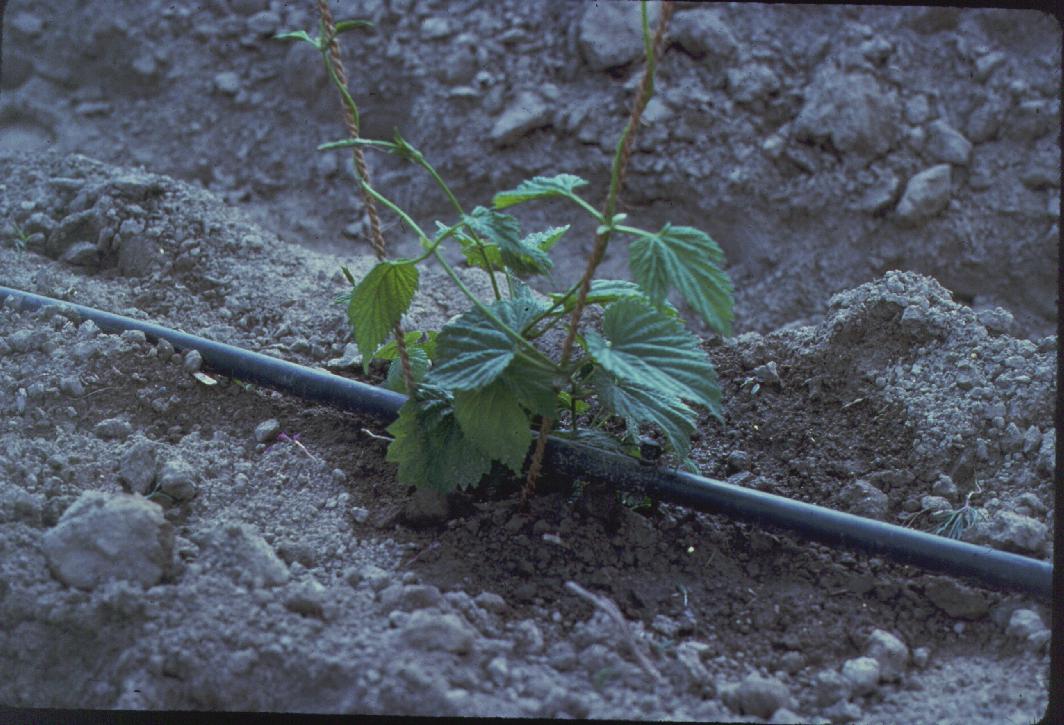
Clogging (English clogging, emitter plugging) is not one problem but three different problems that require different measures. Filtration, lateral flushing, acid injection, and chlorination are four recognized groups of measures, each targeting a different type of clogging.
| Type of Clogging | Main Causes | Basic Countermeasure |
|---|---|---|
| Physical (mechanical) | Sand, mud, dust, soil particles, plant residues | Filtration + lateral flushing |
| Chemical (precipitate) | Calcium (limestone) deposits, iron, manganese at high pH | Acidification (acid injection) |
| Biological | Algae, bacterial slimes (biofilm), iron bacteria, roots | Chlorination + flushing |
Hazelnut is particularly sensitive to uneven irrigation because it has a shallow root system and cannot use moisture from deeper soil layers; moisture is needed in all development phases (approximately from mid-April to mid-September). Therefore, a clogged segment of the lateral directly affects the root zone where the plant has no reserve.
The first defensive move is equipment, not chemistry
Elaborates for Croatian hazelnut orchards regularly specify self-compensating emitters with a continuous self-cleaning system and anti-siphon mechanism, and for buried (underground) laterals, a patent against root intrusion into the emitter. A good choice of equipment (see article Irrigation Systems) drastically reduces the subsequent maintenance burden.
Filtration — the System Head
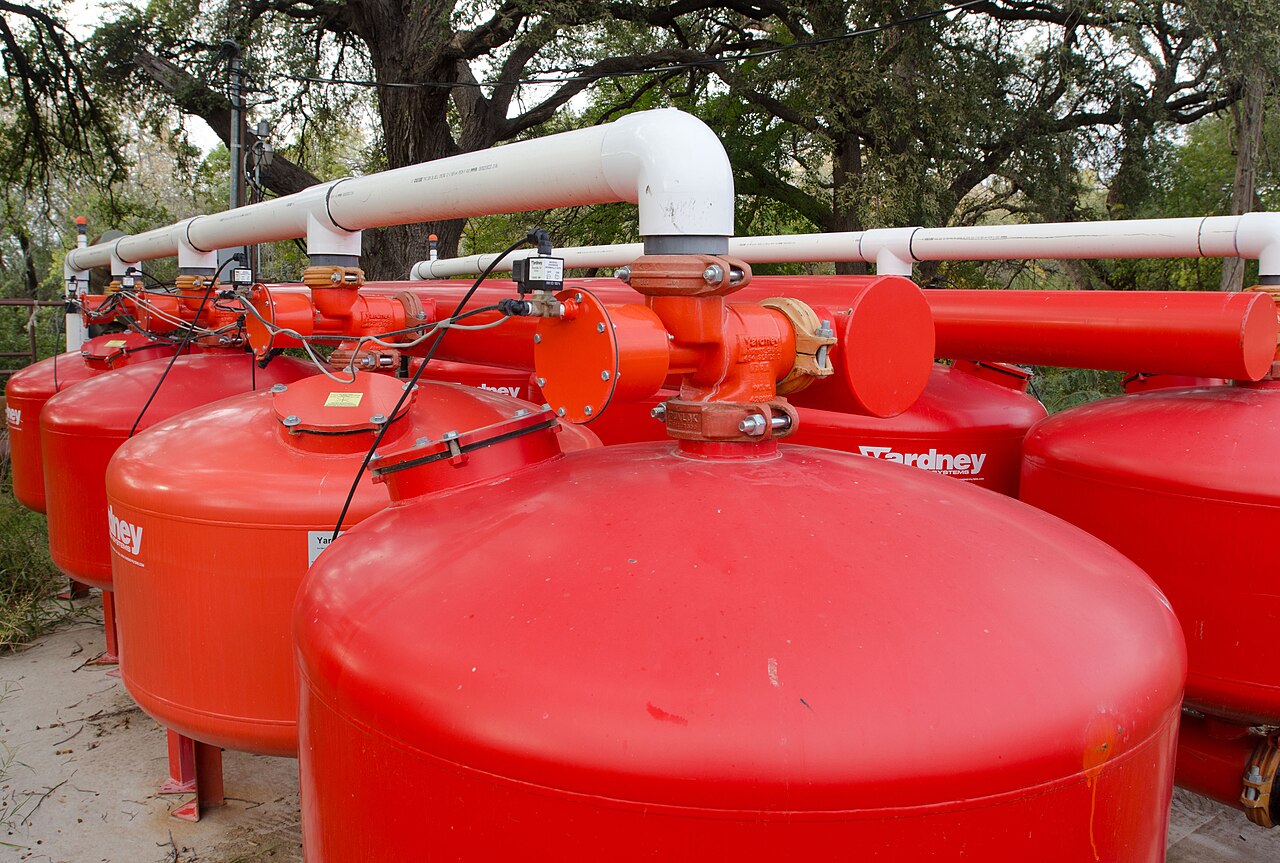
Filters are essential for drip irrigation because impurity particles (sand, dust, etc.) can close the very fine openings of emitters and prevent their operation. Filtration takes place at the "system head" (drive unit) which, along with the filter, maintains constant pressure with control and protects the system.
Filtration Degree and Flow Rate
The professional rule is that a filter must stop particles significantly smaller than the emitter orifice — filtration is typically required at approximately one-tenth of the emitter orifice diameter. In Croatian elaborates for hazelnut orchards, for example, a requirement is stated for a filter with a minimum flow rate of 12.8 m³/h and a minimum filtration degree of 130 microns, with primary filtration (removal of sand) at the inlet.
| Parameter | Typical Value (informative) | Note |
|---|---|---|
| Filtration Degree | 120–150 microns (≈ 100–130 mesh) | Finer for water rich in mud/algae |
| Pressure Drop on Clean Filter | Low, according to manufacturer specification | Starting reference for comparison |
| Pressure Drop for Cleaning | Increase of ≈ 0.3–0.5 bar above clean state | Signal to flush/clean the filter |
Manometers Before and After the Filter
To control pressure losses, at least two manometers are required — one before and one after filtration. The pressure difference (Δp) between them is the most reliable indicator of filter fouling: when the difference rises above the threshold recommended by the manufacturer (usually 0.3–0.5 bar higher than the clean filter state), the filter needs to be flushed or cleaned. A filter that fills too often indicates that the water is particularly dirty and that an additional stage (e.g., hydrocyclone for sand before a mesh/disc filter) may be needed.
Types of Filters
- Hydrocyclone (sand separator) — removes sand and heavier mineral particles from well water before other filters.
- Mesh (screen) filter — for water with little organic impurities; cheap, easy to clean.
- Disc filter — depth filtration, a good compromise for waters with mud and algae.
- Sand (media) filter — best for water rich in algae and organic matter (reservoirs, open waters).
Many modern system heads have automatic backflush of the filter triggered by pressure drop or timer.
Flushing of Lateral Pipes
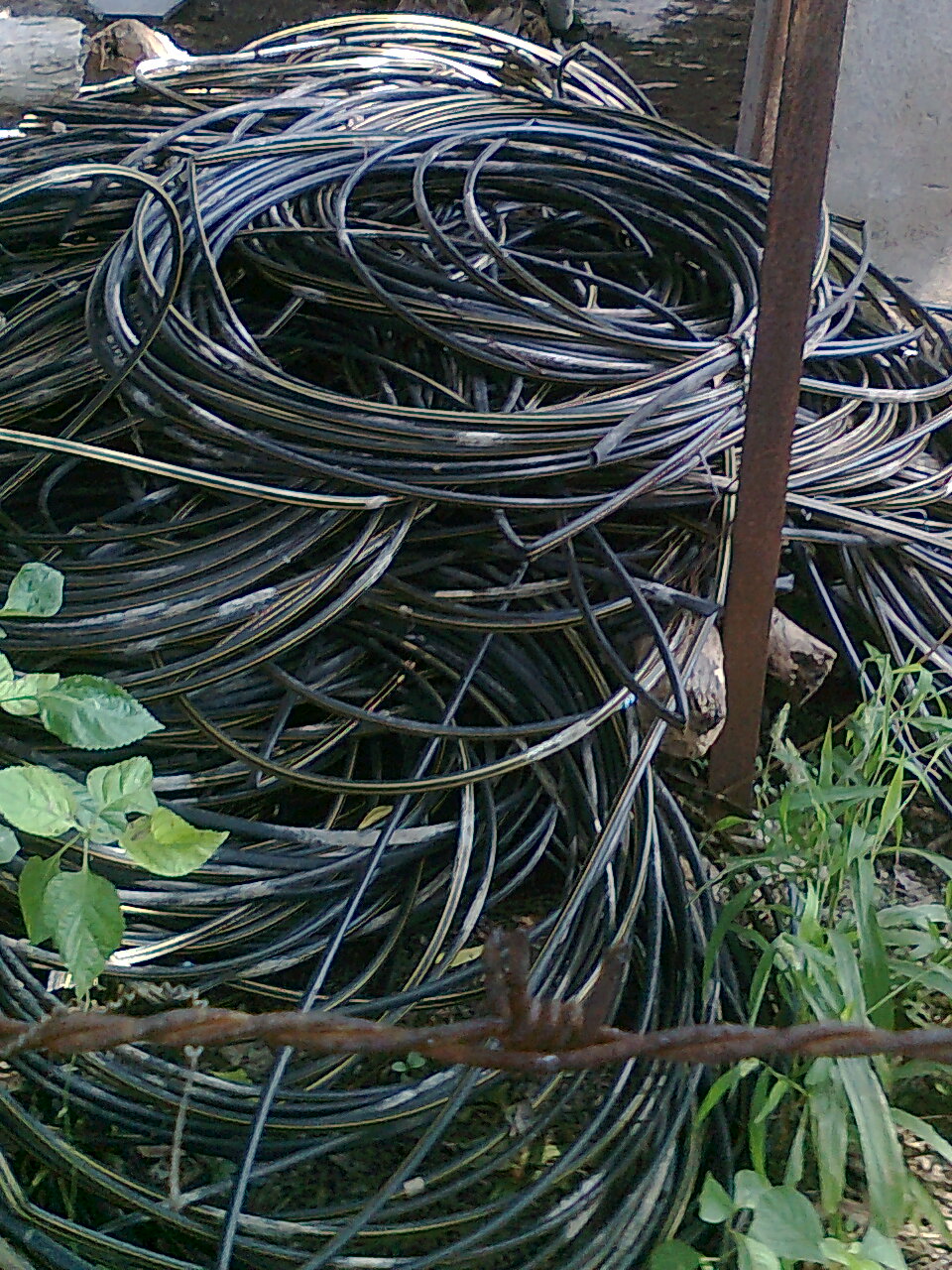
The filter stops most particles, but fine particles that pass through and biological sediment travel to the end of the lateral and accumulate there, because the water velocity is lowest at the closed end. Therefore, laterals and main pipes must be regularly flushed by opening the ends and letting water flow until it runs clear.
How and How Often
- Procedure: Open the end of the lateral and let water flow for 30–60 seconds, or until the emerging stream becomes clear. Flush several laterals simultaneously only if the system can maintain sufficient pressure and speed.
- Water velocity during flushing: Aim for at least ≈ 0.3–0.5 m/s at the end of the lateral so that the water carries away the sediment; if too many ends are opened at once, the velocity drops and flushing loses its purpose.
- Frequency during the season: During the irrigation season, flush laterals every 2–3 weeks. Flush main and secondary pipes at the beginning and end of each season.
- Seasonal: Thorough flushing of the entire system is mandatory at the beginning and end of the season and during periods of low irrigation activity.
Keep a maintenance log
Record the date of flushing, measure Δp on the filter, and note clogging by blocks. Hazelnut orchards in Croatia are regularly divided into tables/blocks (e.g., 4 blocks) — tracking by block quickly reveals the problematic part of the network before it becomes visible on the trees.
Acidification (Acid Injection) Against Chemical Precipitates
When water is hard (high calcium and magnesium content) or has elevated pH, limestone deposits form on the pipe walls and in emitters; similarly, iron and manganese compounds precipitate. These chemical deposits are removed and prevented by acid injection, which lowers the water pH and dissolves the sediment.
How It Works and Typical Values
- The goal is to lower the water pH to a range that dissolves the sediment without corroding the equipment — typically, maintenance targets pH ≈ 6.0–6.5, and for "shock" dissolution of deposits, briefly to pH ≈ 4 while retaining in the system and then flushing.
- Irrigation acids (e.g., nitric, phosphoric, or sulfuric) or ready-made acidifiers are used — always according to the label and product declaration.
- Acidification also has synergy with chlorination: acid lowers the pH at which chlorine is more effective in breaking down bacterial slimes.
Safety when working with acids
Acids are dangerous. Always add acid to water, never the reverse. Personal protective equipment (gloves, goggles) is mandatory. Do not mix concentrated acid and chlorine solution directly — toxic gases may be released. Coordinate dosage and injection sequence with manufacturer instructions and advisory service; dosages depend on the hardness and pH of your water and must be calculated for the specific source.
For orchards with water rich in salts and carbonates, chemical clogging is the main risk; water analysis (see article Water Quality and Salinity) is the basis for the decision on acidification.
Chlorination Against Biological Clogging
Algae, bacterial slimes, and biofilm develop especially in water from open reservoirs and in systems that operate at low pressure or often stand filled. Against them, chlorination is applied — injection of sodium hypochlorite (NaOCl) or other chlorine sources to destroy microbiological activity.
Dosing Regimes (Informative)
Literature cites several approaches, depending on the severity of the problem:
| Regime | Free Chlorine Dose | Duration / Frequency |
|---|---|---|
| Continuous (low level) | 1–2 ppm free chlorine at the end of the lateral | During each irrigation |
| Periodic (at end of cycle) | ≈ 20 ppm | Long enough for chlorine to reach the last emitter |
| Shock (shock) treatment | 10–20 ppm | 30–60 minutes; with strong algae up to ≈ 50 ppm with retention |
| Monthly maintenance | 10–20 ppm | ≈ 2 hours, where slimes are less pronounced |
In case of heavy contamination, a solution of ≈ 50 ppm is injected for about two hours, after which the chlorinated water is left in the pipes for about 24 hours for maximum effect, and the system is then thoroughly flushed.
Measure free chlorine at the end of the lateral
The effectiveness of chlorination is measured where the water is "oldest" — at the end of the most distant lateral. If there is no measurable free chlorine there, all of it has been consumed by organic matter en route and the dose is too small. Chlorine works better at lower pH, so acidification and chlorination are often combined (acid first, measured, with caution from the safety box).
In one study on the combination of acid and chlorine, the recommended cycle of acidification and chlorination was 14 and 10 days, respectively, at chlorine concentrations of 1–3 and 4–9 mg/L. This shows that there is no universal scheme — the regime is adjusted according to water quality.
Chlorine, hypochlorite, and regulations
Sodium hypochlorite (commercially often ≈ 26.67% solution with < 5% active chlorine) is a hazardous substance; handle it with protective equipment and according to the safety data sheet. Always flush the system with clean water at the end of injection. Discharge of chlorinated water into the environment and application of any product through the irrigation system are subject to water and plant protection regulations — check permissibility with the competent authorities and advisory service.
Diagnosis of Clogged Emitters
Clogging progresses gradually and insidiously. Targeted diagnostics allow for intervention before yield declines.
Signs and Checks
- Visual inspection — dry soil patches under individual trees, uneven growth, wilting in parts of the row while other sections remain moist.
- Pressure drop / Δp increase — an increase in pressure differential across the filter indicates filter fouling; a pressure drop at the end of the lateral with a clean filter indicates clogging within the network.
- Uniformity flow test — measure the flow rate of several emitters (e.g., using a measuring container and stopwatch) at the beginning, middle, and end of the lateral, as well as in different blocks. Significant deviations from the nominal flow rate (e.g., the stated 1.6–2 l/h for Croatian hazelnut orchards) indicate a problem.
Quick Uniformity Assessment (DU)
Select approximately 16–18 emitters distributed throughout the system, measure the flow of each for 1–2 minutes, and calculate what percentage the average of the lowest 25% represents relative to the overall average. A value above ≈ 90% indicates a well-maintained system; below ≈ 80% requires immediate intervention (cleaning, chlorination/acidification, or emitter replacement).
Repairing Individual Emitters
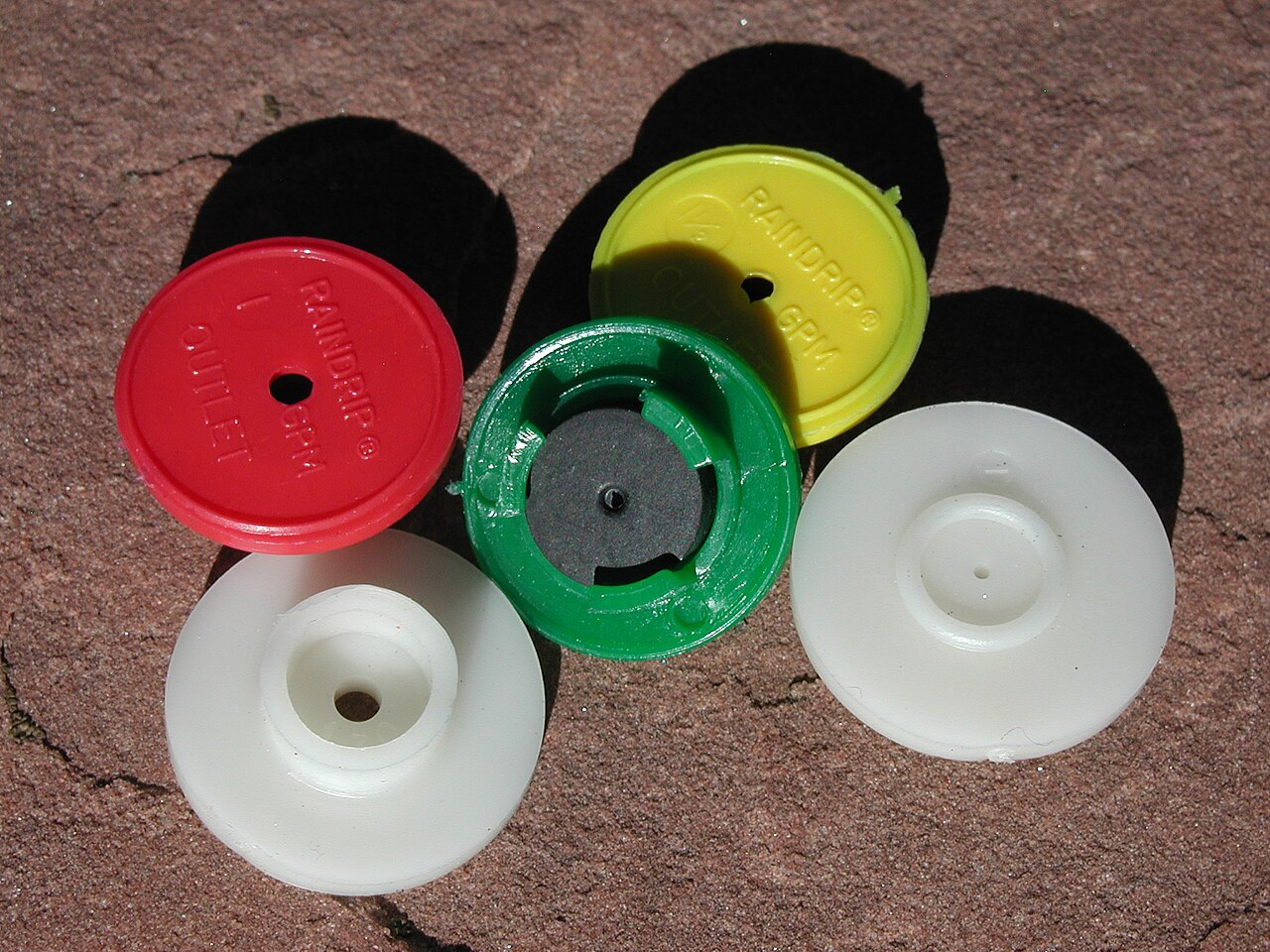
- Mechanical cleaning: A clogged emitter can be flushed or carefully cleared; never pierce the orifice with any tool, as damage alters flow and compromises compensation. Self-compensating emitters have membranes sensitive to rough handling.
- Chemical treatment of the entire block: If multiple emitters are clogged, the issue is systemic — apply acidification (for mineral deposits) or chlorination (for biofilms) at the block level, not individually.
- Replacement: Permanently clogged or damaged emitters and cracked fittings should be replaced; maintenance also includes checking for leaks and verifying pressure regulators.
Annual Maintenance Calendar (Informational)
| Period | Task |
|---|---|
| Start of Season (Spring) | Thorough flushing of mains and all laterals; check filters, pressure gauges, and pressure regulators; shock chlorination/acidification as needed |
| During Season | Flush laterals every 2–3 weeks; regular monitoring of Δp across the filter; periodic chlorination/acidification based on water quality; measure flow from control emitters |
| End of Season (Autumn) | Final flushing of the entire system; shock cleaning (chlorine + acid, applied separately with flushing in between); drain system to protect against freezing |
| As Needed | Replace clogged/damaged emitters, repair leaks, clean sand/disk filters |
Practical Recommendations and Common Mistakes
- Do not wait for symptoms on the trees. By the time dry patches are visible on the soil, part of the root zone is already suffering. Rely on pressure gauges and flow measurements.
- Do not skip flushing "because the filter works." Filters and flushing address different problems; fine particles that pass through the filter settle precisely at the ends of the laterals.
- Do not open too many laterals at once during flushing — pressure and velocity drop, and the water no longer carries away sediment.
- Do not mix chlorine and acid randomly. Determine the sequence, doses, and safety measures in advance; incorrect mixing releases toxic gases.
- Do not pierce emitters with wire. This permanently alters the flow rate; it is better to replace the emitter.
- Adjust the regime to your water source. Well water with sand requires emphasis on filtration and flushing; reservoir water with algae requires chlorination; hard water requires acidification. Water analysis is the starting point for every decision.
- Pay attention to buried (subsurface) laterals. Hazelnuts are often irrigated with buried systems at 10–20 cm depth with emitters resistant to root penetration; such systems require heightened attention because clogging is not directly visible — rely on pressure, flow, and, if necessary, root growth inhibitors according to instructions.
Gallery
Sources
This article is an AI-generated summary compiled from an internal literature collection on hazelnut (RAG corpus) and public sources; doses and timing are informational and should be verified before application. Main sources used:
- Environmental Protection Study — Water Extraction for Hazelnut Orchard, Glina (2022) — filtration requirements (130 microns, 12.8 m³/h), pressure gauges before/after filter (RAG corpus).
- Environmental Protection Study — Donja Pištana, City of Orahovica (2023) — compensating emitters, self-cleaning system, anti-siphon (RAG corpus).
- Environmental Protection Study — Dragodinac / Nova Kapela (2021) — emitter flow rates 1.6–2 l/h, burial of laterals, anti-siphon against root penetration (RAG corpus).
- Environmental Protection Study — Donji Hrastovac, Sunja (2021) and Vojnić (2021) — irrigation frequency, distribution into blocks (RAG corpus).
- Master's Thesis on Organic Acids and Control of Hazelnut Suckers (2024) — sodium hypochlorite, active chlorine concentrations (RAG corpus).
- DripWorks — How to Prevent Clogging in Drip Irrigation Systems — https://www.dripworks.com/blog/drip-irrigation-how-to-prevent-clogging-in-drip-irrigation-systems
- UF/IFAS EDIS BUL258/AE032 — Causes and Prevention of Emitter Plugging in Microirrigation Systems — https://edis.ifas.ufl.edu/publication/AE032
- Clemson Land-Grant Press — Micro-Irrigation System Maintenance to Prevent Clogging — https://lgpress.clemson.edu/publication/micro-irrigation-system-maintenance-to-prevent-clogging/
- Penn State (B. Lamont) — Maintaining Drip Irrigation Systems — https://s3.wp.wsu.edu/uploads/sites/2056/2014/01/Maintaining-Drip-Irrigation-Systems-Bill-Lamont-Penn-State.pdf
- Rutgers NJAES FS795 — Treating Drip Irrigation Systems with Chlorine — https://njaes.rutgers.edu/FS795/
- UC ANR — Chlorination for Biological Clogging Problems — https://ucanr.edu/site/maintenance-microirrigation-systems/chlorination-biological-clogging-problems
- UGA Extension B1130 — Drip Chemigation: Injecting Fertilizer, Acid and Chlorine — https://extension.uga.edu/publications/detail.html?number=B1130
- IWA Publishing, Water Practice & Technology — Prevention and treatment of drip emitter clogging: a review — https://iwaponline.com/wpt/article/17/10/2059/91275/
Recommended equipment
🔎 drip irrigation kit — Amazon →Affiliate links — we may earn a small commission at no extra cost to you.
Drip Irrigation Kit
Suitable for small to medium orchards or gardens.
| Use Case | Option Type | What to Check Before Purchase |
|---|---|---|
| Small plots | Basic drip lines | Emitter spacing and flow rate |
| Medium orchards | Complete kit with filters | Pressure regulation and filtration quality |
| Large scale systems | Professional installation | Hydraulic calculation and zoning |