Breeding for Resistance to Eastern Filbert Blight (EFB)
Content generated by artificial intelligence — verify before application
This article was automatically compiled from a collection of hazelnut literature using artificial intelligence and may contain errors or outdated data. It serves as a starting point for further research, not as professional advice. Dosages, products, and timing are informative and depend on the cultivar, location, and current regulations — always consult with an advisory service and official sources before application.
Eastern Filbert Blight (EFB), caused by the fungus Anisogramma anomala, is the most devastating disease of European hazelnut (Corylus avellana) in North America and poses a persistent threat to European orchards as well. Because it is an obligate biotroph with a long latent phase (16–18 months from infection to the appearance of visible cankers), chemical control is expensive and only partially effective, making genetic resistance by far the most sustainable and cost-effective control method. This article provides an overview of resistance genes, resistance sources, screening methods, and gene pyramiding strategies in modern hazelnut breeding programs.
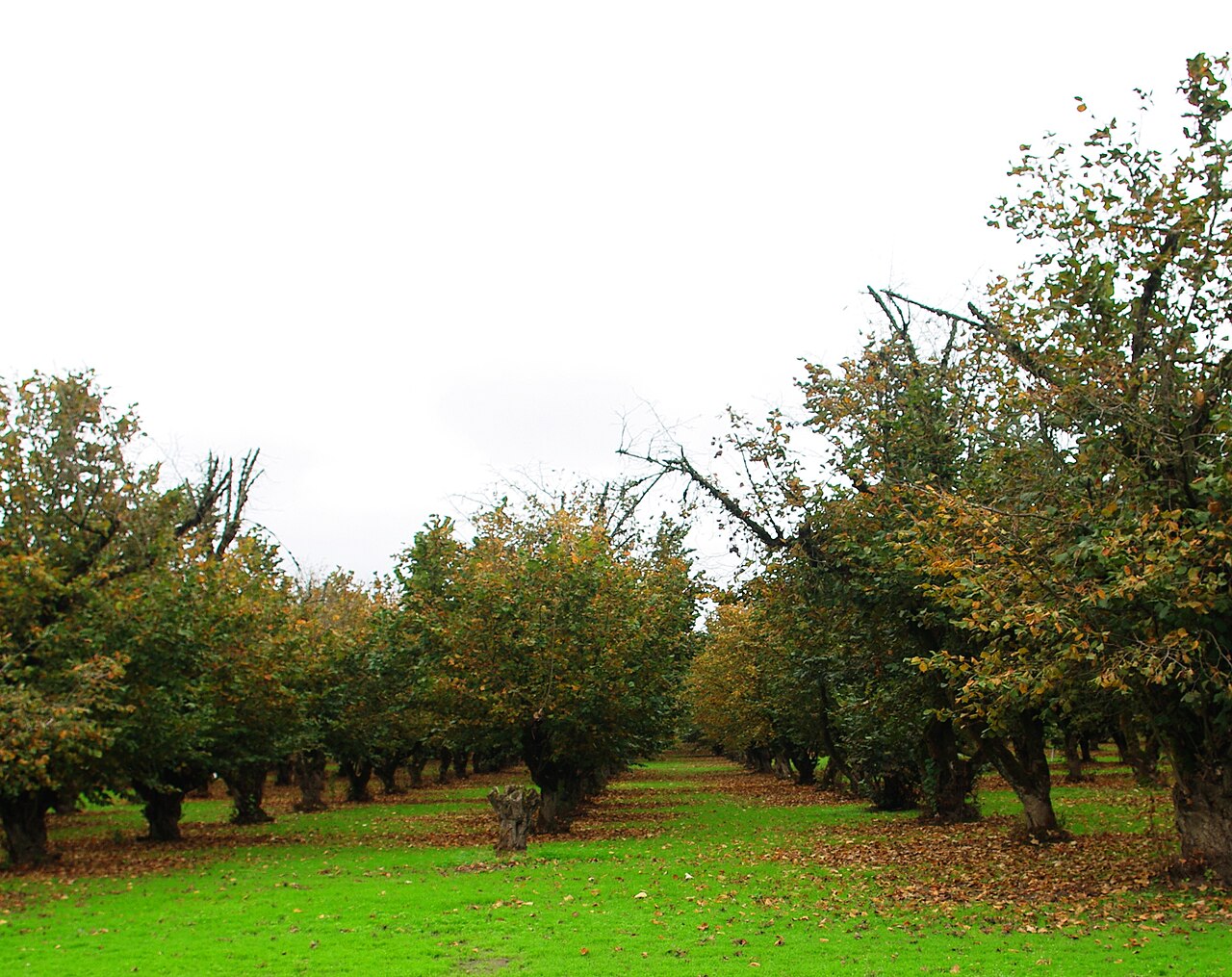
Why Resistance is a Key Strategy
Classical chemical control against EFB relies on repeated fungicide treatments in the spring, during the period of ascospore release. The long latent phase means that symptoms (longitudinal cankers with stromata in rows) are only noticed two seasons after infection, by which time the disease has already progressed. In contrast, planting resistant cultivars eliminates or drastically reduces the need for spraying, thereby lowering production costs and reducing environmental pressure.
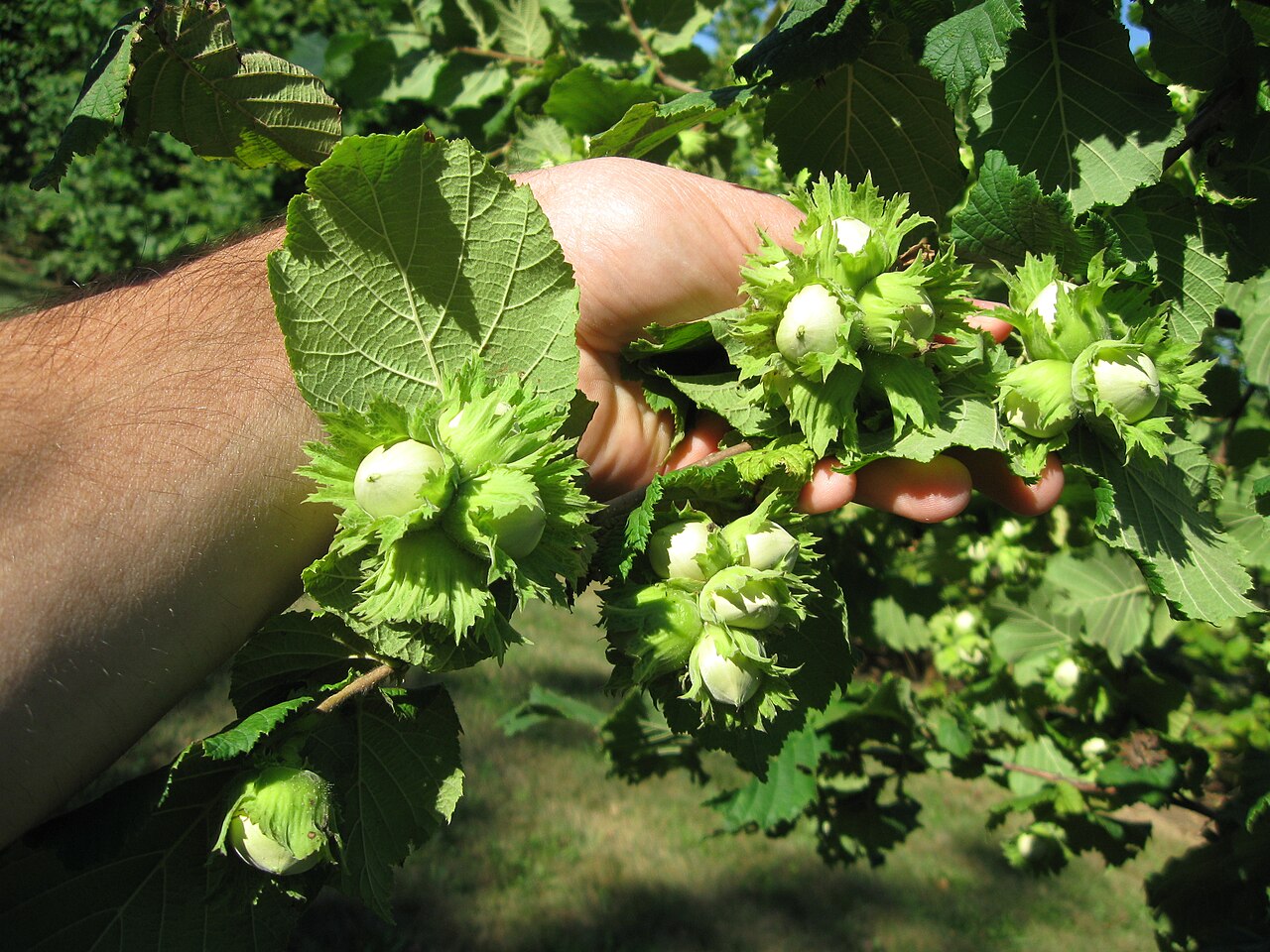
For this reason, breeding programs at Oregon State University (OSU) and Rutgers University (New Jersey) have been focused for decades on finding, mapping, and combining resistance genes. The result is a series of commercial cultivars that have transformed the hazelnut industry on the Pacific Northwest coast of the USA.
Types of EFB Resistance
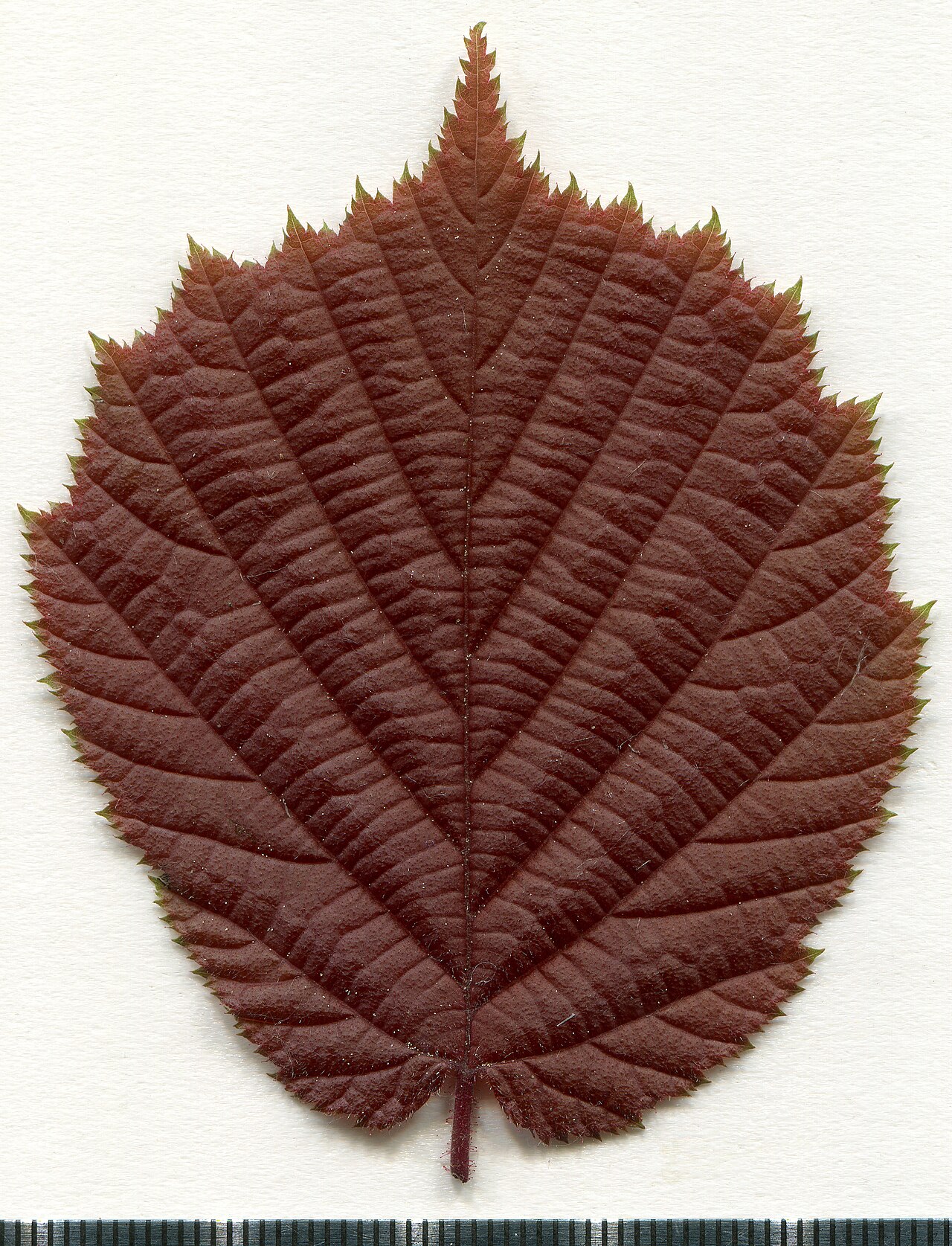
In hazelnuts, we distinguish two fundamental mechanisms of resistance:
| Resistance Type | Genetic Basis | Effect | Durability |
|---|---|---|---|
| Qualitative (vertical) resistance | One dominant resistance gene (R-gene) | Complete or nearly complete resistance — trees without cankers or with rare, small cankers | Less durable — the pathogen can "break" it via mutation |
| Quantitative (horizontal) resistance (QR) | Multiple genes with small effects (polygenic) | Reduced frequency, number, and size of cankers; disease present but less harmful | Likely more durable — harder to break |
The most well-known source of qualitative resistance is the 'Gasaway' gene, first observed in the eponymous cultivar on the Pacific Northwest. It was originally estimated to provide resistance in about 75 % of offspring trees and has become the foundation of almost all modern Oregon cultivars.
Quantitative resistance, expressed through lower infection rates and fewer/smaller cankers, is heritable and useful, and is considered important for building long-term durable resistance, especially in combination with R-genes.
Resistance Genes and Their Linkage Groups
European hazelnut has 11 linkage groups (LG). Genetic mapping has placed resistance from ten sources on three linkage groups: LG2, LG6, and LG7. This is crucial for breeding, as genes on different LGs represent independent "defense lines" that can be combined.
| Linkage Group | Resistance Sources | Origin |
|---|---|---|
| LG6 | 'Gasaway', OSU 408.040, 'Culplà', 'Crvenje', 'Uebov', OSU 495.072 | USA (WA, MN), Spain, Serbia, Russia |
| LG7 | 'Ratoli', 'Yoder #5', C. americana 'Rush' | Spain, Ohio (USA), C. americana |
| LG2 | OSU 759.010 (Georgian selection) | Republic of Georgia |
Most described sources of qualitative resistance so far cluster on LG6, in the region near the 'Gasaway' locus. It remains an open question whether this is the same gene or several different, tightly linked genes — a subject for further fine mapping. Resistance on LG7 and LG2 is genetically independent and therefore particularly valuable for pyramiding.
Markers Linked to Resistance
Molecular markers have been developed for each mapped source — most often microsatellite (SSR) markers — which are tightly linked to the resistance allele. For example, for the LG6 region around the 'Gasaway' locus, new SSR markers (e.g., KG6.63, GK6.61, GK6.81, GK6.92) with high informativeness and easy reading have been developed, suitable for marker-assisted selection (MAS) and cultivar identification.
Resistance Sources: A Broad Genetic Base
Over more than 20 years of collecting and evaluating germplasm, OSU and Rutgers programs have identified more than 100 new accessions resistant or highly tolerant to EFB. Sources come from extremely diverse regions:
- European hazelnut (C. avellana): Spain ('Ratoli', 'Culplà'), Serbia ('Crvenje', 'Uebov'), Russia and Crimea (e.g., OSU 495.072, selections from Simferopol and Holmsk), Georgia (OSU 759.010), Finland (COR 187), Azerbaijan ('Yağlı Fındık'), Ukraine, Poland, Moldova, Turkey, Estonia, Latvia, Lithuania.
- American hazelnut (C. americana): 'Rush', 'Winkler', OSU 366.060 — valuable for both resistance and better adaptation to harsher summer and winter conditions.
- Other species and interspecific hybrids: C. heterophylla 'Ogyoo', hybrids 'Estrella #1', 'Yoder #5', 'Bauman' (OSU 401.014).
This diversity is important because different resistance sources reduce selective pressure on the pathogen and give breeders more independent genes to combine. It should be noted that some originally resistant trees have succumbed to EFB over time, attributed to changes in the pathogen population — an additional argument for the continuous search for new sources.
Screening (Testing) for Resistance
Because A. anomala is an obligate biotroph with a long latent phase, early and reliable testing of offspring is crucial but demanding. Main methods include:
1. Field and Structured Inoculation
The most common method is exposing seedlings to infection. Diseased branches with stromata from the previous year are placed on a mesh above young seedlings; when ascospores mature and are released during wet weather, they infect the plants below. The reaction is evaluated two seasons later: the number and size of cankers are counted, and the proportion of infected wood is calculated.
2. Greenhouse Inoculation
Controlled inoculation with ascospores in a greenhouse allows for faster and more uniform testing compared to field exposure.
3. Molecular Detection and MAS
A real-time PCR test for early detection of A. anomala has been developed, allowing detection of infection in tissue before symptoms appear (in some settings within ~30 days). Combined with SSR markers linked to R-genes, this enables marker-assisted selection — testing seedlings for the presence of resistance alleles without waiting for disease expression, significantly accelerating and reducing the cost of breeding.
Example of Segregation
In a cross between a resistant parent and a susceptible one, offspring with one dominant R-gene typically show a segregation ratio of ~1 resistant : 1 susceptible. An example from literature: from 119 seedlings from a cross between the resistant Rutgers selection H3R07P25 and the susceptible OSU 1155.009, 55 resistant and 64 susceptible seedlings were obtained — which corresponds to the expected 1:1 ratio and confirms monogenic, dominant control. Segregation distortion (deviation from the expected 50 % resistant seedlings) is also often observed and should be taken into account when planning population sizes.
Commercial EFB-Resistant Cultivars
A series of cultivars has emerged from the Oregon program, divided according to the mechanism of resistance:
| Cultivar | Resistance Type | Note |
|---|---|---|
| 'Santiam', 'Yamhill', 'Dorris', 'Wepster', 'McDonald', 'PollyO', 'Jefferson' | One dominant gene from 'Gasaway' (LG6) | Main commercial cultivars for PNW |
| 'Lewis', 'Clark', 'Gem', 'Sacajawea' | Quantitative (QR) | Older selections |
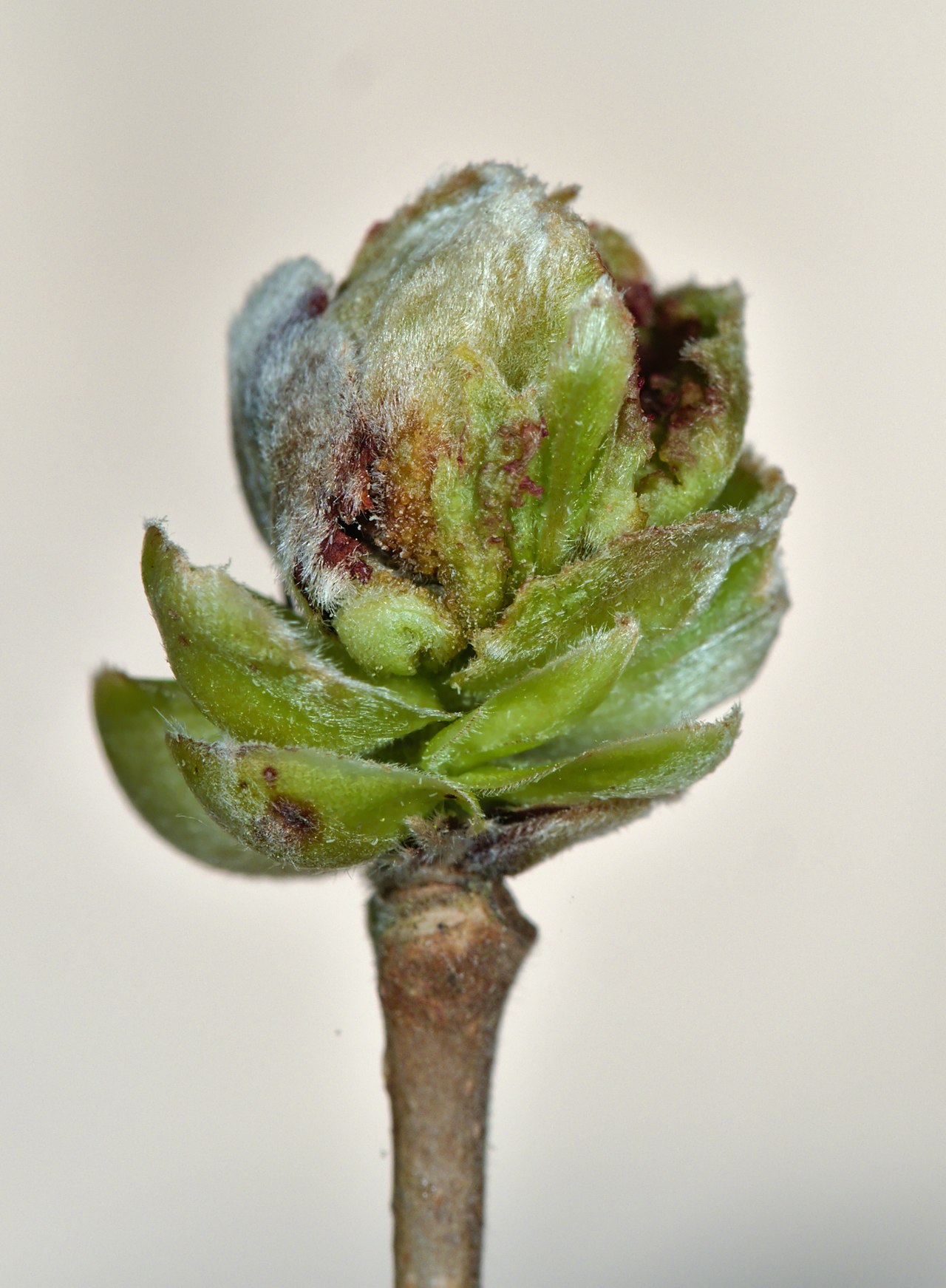
The 'McDonald' cultivar is a good example: it inherits the resistance gene from 'Gasaway', provides a high level of EFB resistance (trees mostly without cankers), and is also resistant to mites (primarily Phytoptus avellanae), has very few moldy kernels, ripens about two weeks earlier than 'Barcelona', and has a high kernel percentage (~52 %). For new cultivars, resistant pollinizers are also available, as hazelnut is self-incompatible and relies on cross-pollination.
Weakening of Resistance and Emergence of New Races
The greatest challenge is the durability of resistance based on a single gene. Several concerning findings have been documented:
- Leakiness of LG6 resistance: on cultivars such as 'McDonald' and 'Jefferson', small infections occasionally occur that rarely form stromata, causing "false alarms" about the breaking of resistance.
- Breaking of 'Gasaway' resistance in the eastern USA: in New Jersey, EFB was first recorded on 'Gasaway' and 'VR20-11', and in Rutgers field trials almost all selections with R-genes mapped to LG6 (including carriers of the 'Gasaway' allele) suffered severely — 232 out of 266 (87 %). For the first time, EFB was also recorded on some selections with LG7 resistance (offspring of 'Ratoli' from Spain), while selections with LG7 resistance of different origin remained healthy.
- New race in Oregon (2023): a pathogen mutation was discovered that allows it to multiply on cultivars with the 'Gasaway' gene — a direct threat to an industry that relies almost exclusively on LG6 resistance.
The main factors in resistance breakdown are: pathogen variability (new races), environmental conditions (high humidity and rain on the East Coast favor the fungus), and monoculture — planting large areas with a single resistant cultivar increases selective pressure on the pathogen to develop virulence.
The genetic diversity of the pathogen itself confirms the risk: while the A. anomala population on the Pacific Northwest is relatively homogeneous, in the eastern part of North America it is very diverse, facilitating the emergence of virulent strains.
Gene Pyramiding: The Path to Durable Resistance
Gene pyramiding refers to the accumulation of multiple resistance genes within a single genotype. The logic is simple yet powerful: for a pathogen to overcome a tree possessing two or three independent R-genes, it must simultaneously develop virulence against all of them, which is evolutionarily much less likely than overcoming a single gene.
Strategies for durable resistance currently considered by breeding programs include:
- Pyramiding R-genes from different linkage groups (LGs) — e.g., combining LG6 ('Gasaway') with LG7 ('Ratoli') and LG2 (OSU 759.010). Genes on different LGs are inherited independently and provide independent defense mechanisms.
- Pyramiding multiple R-genes within LG6 — e.g., 'Gasaway' + 'Crvenje' + 'Culplà' + OSU 408.040 + OSU 495.072, although their tight linkage makes combining them via conventional crossing difficult.
- Introgressing R-genes into a background of quantitative resistance (QR) — combining a "major" gene with polygenic, likely more durable resistance.
- Strengthening quantitative resistance itself through selection of genotypes with fewer, smaller, and less frequent cankers.
- Interspecific hybridization (e.g., with C. americana) — introducing new sources of resistance and improved climate adaptation.
In practice, pyramiding relies on molecular markers tightly linked to specific resistance alleles, because visual inspection cannot distinguish a tree with one gene from one with two (both appear healthy). Markers thus enable the "stacking" of genes that would otherwise be impossible to confirm until the emergence of a new virulent race.
Using a broad diversity of resistance sources in future orchards further reduces selection pressure on the fungus and contributes to the sustainability of resistance at the industry level.
Practical Recommendations for Growers
- Choose EFB-resistant cultivars adapted to your climate and market. In areas with high disease pressure and humid climates, prioritize cultivars with confirmed resistance, ideally derived from multiple sources.
- Do not rely exclusively on a single cultivar (monoculture). Diversity in cultivars and resistance sources reduces the risk of catastrophic failure if a new pathogen race emerges.
- Ensure adequate resistant pollinizers — the resistance of the main cultivar is of little value if the pollinizer introduces disease into the orchard.
- Monitor the orchard even after planting resistant cultivars. Resistance "breakdown" and new races mean that resistance is not absolute — monitor for canker appearance and remove infected branches (pruning 60–90 cm below the visible edge of the canker, with tool disinfection).
- Follow official recommendations and new cultivars. Breeding programs continuously publish new, more durable resistant selections — extension services and scientific institutions are the best sources for current data.
Common Mistakes
- Assuming that a "resistant cultivar" is permanently immune — resistance based on a single gene can be overcome.
- Planting large areas with a narrow genetic base — this increases risk and accelerates pathogen adaptation.
- Ignoring the origin region of the resistance — the same cultivar may behave differently in different climates (cf. differences between Oregon and New Jersey).
References
This article is an AI-generated summary derived from an internal hazelnut literature collection (RAG corpus) and publicly available scientific and technical sources. Main sources used:
- Koma et al. (2021). New Sources of Eastern Filbert Blight Resistance and Simple Sequence Repeat Markers on Linkage Group 6 in Hazelnut (Corylus avellana L.). Frontiers in Plant Science. — https://doi.org/10.3389/fpls.2021.684122
- Jacobs et al. (2024). Variable response of eastern filbert blight resistance sources in New Jersey. Frontiers in Plant Science 15:1419265. — https://pmc.ncbi.nlm.nih.gov/articles/PMC11303342/
- Mehlenbacher (2018). Breeding hazelnuts resistant to eastern filbert blight. Acta Horticulturae / ISHS. — https://ishs.org/ishs-article/1362_75/
- Identification and mapping of eastern filbert blight resistance (2019). J. Amer. Soc. Hort. Sci. — https://doi.org/10.21273/jashs04694-19
- Eastern filbert blight resistance in American and European hazelnut (2020). J. Amer. Soc. Hort. Sci. — https://doi.org/10.21273/jashs04732-19
- Cohen et al. (2024). The massive 340 megabase genome of Anisogramma anomala. BMC Genomics 25:347.
- EPPO. Datasheet / PM 7/90 (2) Anisogramma anomala (2023/2024). EPPO Bulletin. — https://onlinelibrary.wiley.com/doi/10.1111/epp.13001
- EFSA (2018). Scientific Opinion on the pest categorisation of Anisogramma anomala.
- Emergence of a New Race of the Eastern Filbert Blight Pathogen, Anisogramma anomala, in Western Oregon (thesis, 2025).
- Oregon State University / BPP. Managing Eastern Filbert Blight. — https://bpp.oregonstate.edu/efb/managing-eastern-filbert-blight
- PNW Pest Management Handbooks. Hazelnut–Eastern Filbert Blight. — https://pnwhandbooks.org/plantdisease/host-disease/hazelnut-corylus-avellana-eastern-filbert-blight
- Townsend (NATGA). EFB poster. — https://trufflegrowers.com/wp-content/uploads/2024/10/Townsend_NATGA-EFB-poster.pdf
- Hazelnut Cultivars from America — A Short Guide (internal Croatian source from RAG corpus).
Note: Dosages, cultivars, timing, and figures provided in the article are informative and depend on the cultivar, location, and applicable regulations and approvals. Before any application, consult with extension services and official sources.