NPK fertilization of hazelnut: nitrogen, phosphorus, and potassium through the season
Content generated by artificial intelligence — verify before application
This article was automatically compiled from a collection of hazelnut literature using artificial intelligence and may contain errors or outdated information. It serves as a starting point for further research, not as professional advice. Dosages, products, and timing are informative and depend on the cultivar, location, and current regulations — always consult with an advisory service and official sources before application.
Nitrogen (N), phosphorus (P), and potassium (K) are the three main macronutrients that directly influence the growth, productivity, and fruit quality of hazelnut (Corylus avellana). Each plays a distinct role, has a different uptake dynamics throughout the year, and requires a different application schedule — nitrogen is applied in spring when the orchard breaks dormancy, while phosphorus and potassium are typically incorporated in autumn and based on soil test results. Furthermore, orchard nutrient requirements increase with age and entry into full production, so a dosage suitable for a young shrub is certainly not appropriate for an orchard bearing a full crop. This article explains the roles and approximate quantities of N-P-K, how uptake moves through the season, when to apply which fertilizer, and how to adjust fertilization based on orchard age and crop load.
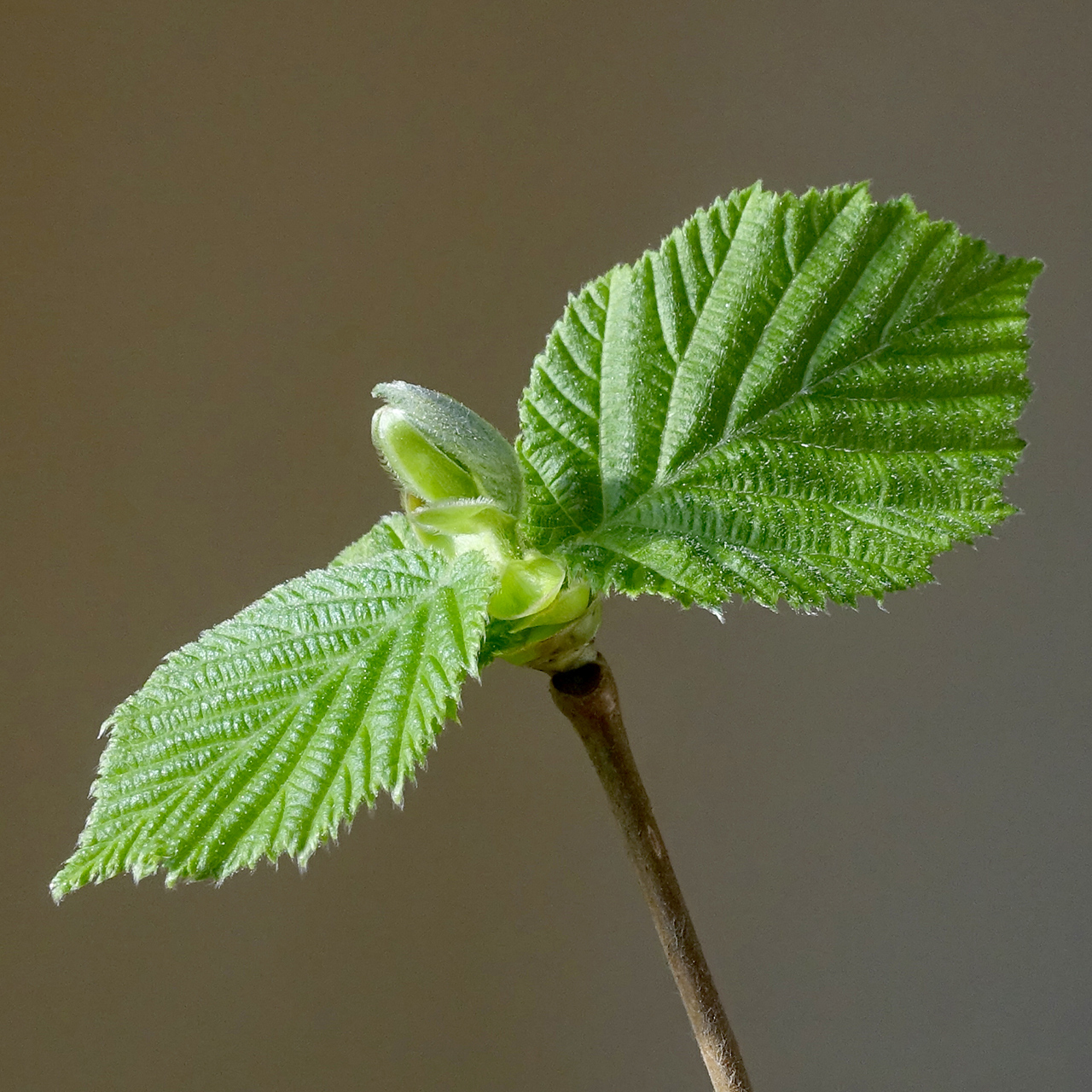
The role of nitrogen, phosphorus, and potassium in hazelnut nutrition
Hazelnut nutrition is more complex than that of annual crops. Hazelnut is a perennial, woody plant that stores nutrients in permanent organs (trunk, roots) and uses them in the following season; thus, annual fertilization actually manages both current growth and reserves for the next year. This must be added to the pronounced alternate bearing: an orchard that bore heavily last year begins the season with depleted reserves, while one that did not bear enters spring with abundant nutrient stores. This makes precise prediction of needs difficult and requires monitoring orchard condition from year to year.
Nitrogen (N)
Nitrogen is the "engine" of vegetative growth. It positively affects photosynthesis, leaf, shoot, and fruit growth, and promotes flower bud set. Nitrogen deficiency is recognized by slower shoot growth, smaller leaves, and smaller, lower-quality nuts.
At the same time, nitrogen is the element most easily over-applied. Excess nitrogen causes a series of unfavorable phenomena: excessive vegetative growth, where the plant expends energy maintaining leaf mass instead of producing fruit, resulting in small, low-quality nuts. Over-application also increases production costs and can increase susceptibility to diseases. Therefore, the rule applies: enough nitrogen is needed, but never too much.
Phosphorus (P)
Phosphorus is linked to energy metabolism, root development, flowering, and budding. In phosphorus deficiency, shoots grow poorly, and flowering, budding, and leafing are delayed. Phosphorus is poorly mobile in soil and prone to "fixation" (binding into unavailable forms), especially in acidic soils; therefore, it is most effectively incorporated deeper into the root zone and as part of pre-planting (ameliorative) fertilization. On acidic soils, fixation often negates the effect of phosphorus fertilization, which is why pH correction (liming) is recommended alongside phosphorus application.
Potassium (K)
Potassium is key for fruit development and quality, water regulation in the plant, stress resistance, and ripening. While young hazelnut requires primarily nitrogen, once it enters production, potassium gains importance alongside nitrogen, as it is responsible for nut filling and quality. Potassium deficiency manifests as disorders in nuts, shoots, and leaves, and in severe cases, drying of summer shoots. Interestingly, disorders can also occur at excessively high potassium levels, so moderation applies here as well. Potassium deficiency in hazelnut orchards is more common than phosphorus deficiency but less common than nitrogen deficiency. The optimal potassium content in hazelnut leaves is approximately 0.9–1.0 %.
Uptake dynamics through the season
Understanding uptake dynamics is the foundation of a good application schedule. Three key factors are important: when the plant needs which nutrient, how mobile the nutrients are in the soil, and how pH affects their availability.
- Spring (vegetation break, leafing, shoot growth): highest nitrogen requirement. Part of the nitrogen is remobilized from the plant's own reserves, and part is taken up fresh from the soil. Trees with depleted reserves (after a bearing year) begin taking up nitrogen from the soil earlier.
- Summer (nut filling and development): alongside nitrogen, potassium becomes more important, along with calcium, boron, and zinc for fruit quality. During periods of high temperatures and drought stress, foliar feeding and biostimulators gain significance.
- Autumn (end of vegetation, withdrawal of nutrients into trunk and roots, male catkin development): time for phosphorus and potassium application and for filling reserves. The classic rule in fruit growing: phosphate and potash fertilizers, and approximately one-third of the nitrogen, are applied in autumn and incorporated, with the remainder of the nitrogen applied in spring.
Mobility is important: nitrogen is highly mobile in soil (easily leached), so it should be applied "on time" and preferably split, while phosphorus and potassium are poorly mobile and make sense to incorporate into the root zone.
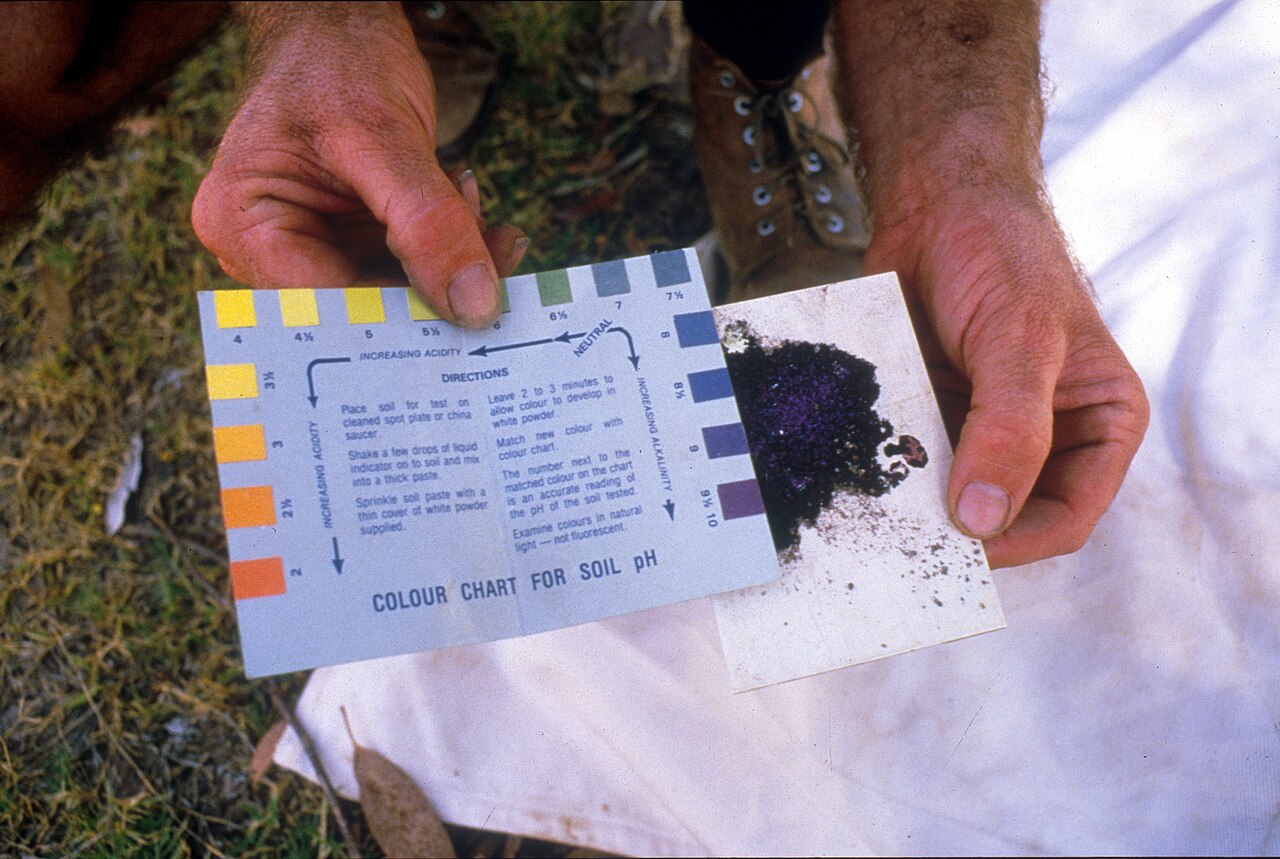
pH critically affects availability
Low soil pH drastically reduces nitrogen and potassium uptake, regardless of how much is present in the soil. From literature on hazelnut foliar nutrition:
| Soil pH | Nitrogen (N) Uptake | Potassium (K₂O) Uptake |
|---|---|---|
| 4.5 | 30 % | 33 % |
| 5.0 | 43 % | 52 % |
| 5.5 | 77 % | 77 % |
| 6.0 | 89 % | 100 % |
| 6.5 | 100 % | 100 % |
At pH 5.5, N and K uptake drops by nearly a quarter. The optimal soil pH for hazelnut is around 5.5–6.5 (a narrower optimum according to some guides is 6.0–6.5). Therefore, fertilization without pH control often means wasted money — before increasing dosages, it makes sense to check and correct soil acidity. (Values in the table are informative and illustrate the trend; they do not replace local analysis.)
Approximate N-P-K quantities
Quantities should always be derived from a soil chemical analysis (pH, humus, N, P₂O₅, K₂O, CaCO₃) and, in a bearing orchard, from a foliar leaf analysis. The figures below are orientational, gathered from Croatian and international literature, and serve as a starting point — not as a recipe.
Ameliorative (pre-planting) supply of phosphorus and potassium
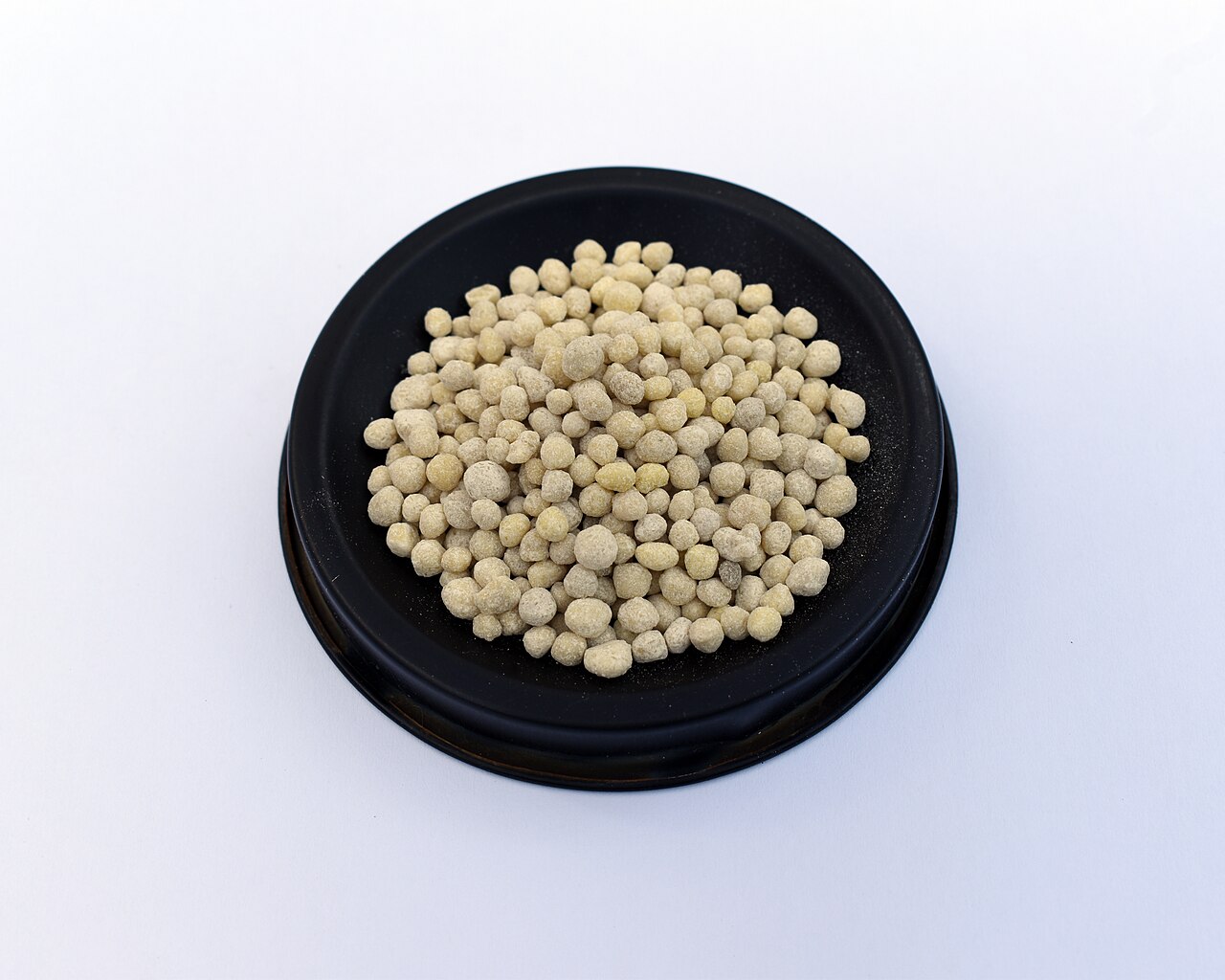
If ameliorative fertilization was performed before planting and the soil is well-supplied with phosphorus and potassium, the young orchard is fertilized practically only with nitrogen in the first four years. Therefore, pre-planting P and K reservoir filling is an important step. Orientational values for phosphorus from literature:
| Soil Phosphorus Status | Recommended P₂O₅ Input |
|---|---|
| 0–7 ppm (poor) | 40–50 kg/ha |
| 7–14 ppm (medium) | 30–40 kg/ha |
| > 14 ppm (good) | input not required |
International practice also cites higher pre-planting phosphorus doses (e.g., around 200 kg/ha P₂O₅ at planting, with annual top-ups later), depending on soil and growing system.
Annual "pure" nutrients by orchard stage
One Croatian table (by K. Brzica) lists approximate quantities of pure nutrients for hazelnut top-dressing:
| Stage / Period | N | P₂O₅ | K₂O |
|---|---|---|---|
| 1st year (per tree) | 0.10 kg | 0.02 kg | 0.05 kg |
| 2nd year (per tree) | 0.20 kg | 0.05 kg | 0.10 kg |
| Subsequent years (per ha) | 100–150 kg | 30–80 kg | 100–150 kg |
| During full production (per ha) | 150–200 kg | 35–80 kg | 100–200 kg |
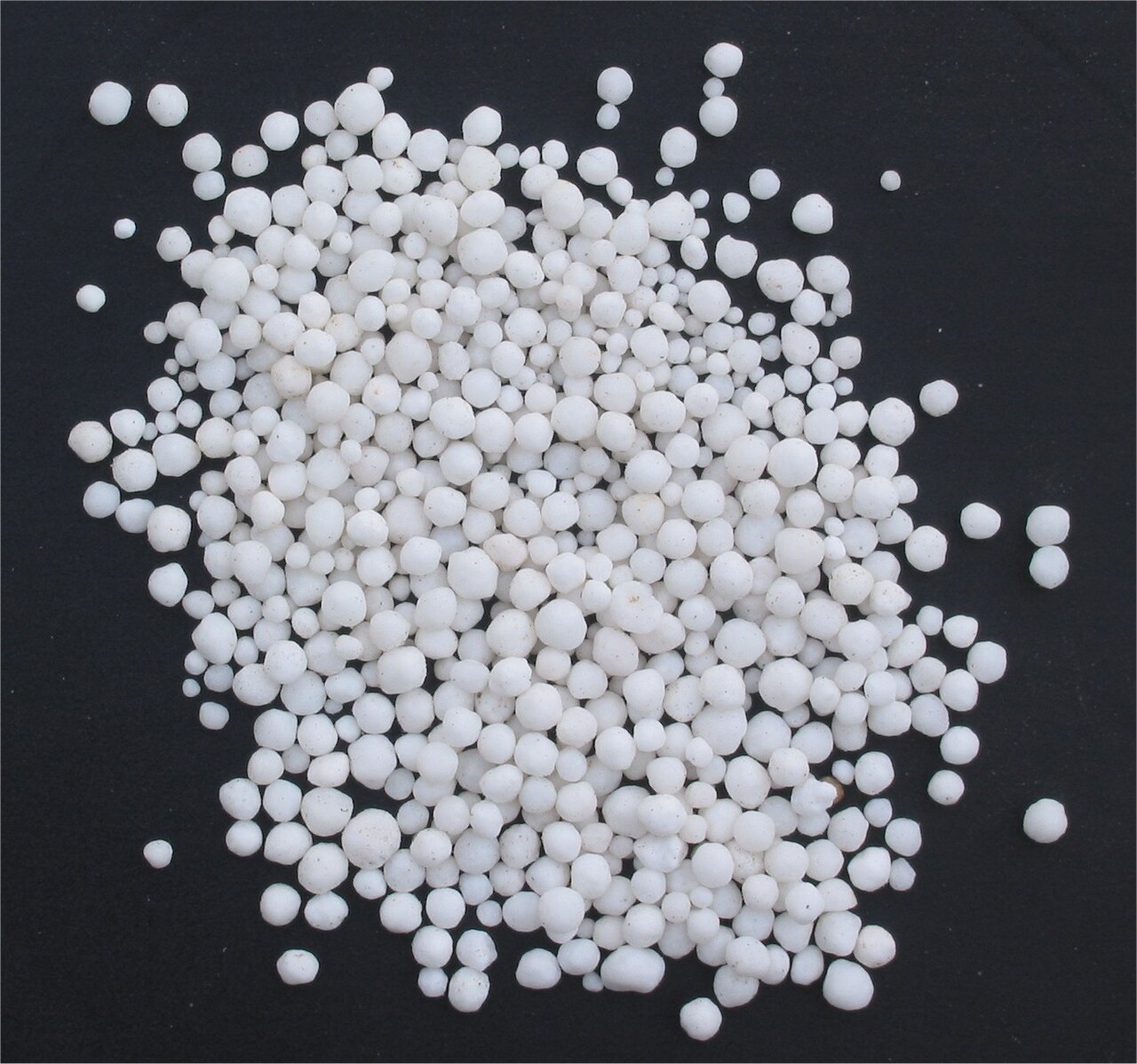
Another very common Croatian "classic" (Krpina, Manušev) for a bearing orchard cites a specific annual range: in autumn, complex NPK with an additional 20 kg/ha phosphorus and 150 kg/ha potassium, and in spring, about 100 kg/ha nitrogen (approximately 350 kg/ha CAN 27 %) over the entire orchard area.
International guides (e.g., Italian and North American) for a bearing orchard cite a balanced level of the order of magnitude N ≈ 150, P ≈ 75, K ≈ 150 units/ha, with typical annual nitrogen of about 60–80 kg/ha and phosphorus 30–60 kg/ha depending on soil test results. Differences among sources are significant, which confirms that without soil analysis, there is no precise figure.
Units: nutrient vs. fertilizer
Figures refer to pure nutrients (N, P₂O₅, K₂O), not fertilizer mass. Example: 100 kg/ha nitrogen from CAN (27 % N) means approximately 100 ÷ 0.27 ≈ 370 kg/ha CAN. Always calculate according to the specific fertilizer label.
Timing of application through the year
The schedule follows uptake dynamics and nutrient mobility:
| Period | What is applied | Why |
|---|---|---|
| Pre-planting (deep ripping) | NPK / organic + lime as needed | Filling P and K reserves deep in the root zone, pH correction |
| Autumn | Complex NPK (phosphorus + potassium + part of nitrogen), incorporation | P and K are poorly mobile; autumn is the phase of filling reserves |
| Early spring (before vegetation break) | Nitrogen (CAN/UREA) around shrubs, wider than canopy edge | Covers the highest spring nitrogen requirement |
| Late spring / early summer | Possible second dose of nitrogen (split application) | Maintains growth throughout the season, reduces leaching losses |
| Summer (vegetation, nut filling) | Foliar feeding (N, Ca, K, B, Zn), biostimulators | Quick top-up and support during stress/high temperatures |
Notes on the schedule:
- Nitrogen is best split (split application) because it leaches easily; one large dose risks losses and excessive growth.
- Potassium and chlorides: for potassium fertilizers with chloride (e.g., potassium chloride / muriate of potash), application should be done in autumn or early spring, as later application can cause chloride toxicity; for later terms, potassium sulfate is more suitable.
- Young orchard — fertilizer placement: nitrogen is spread in a ring around the shrub, slightly wider than the canopy edge, and must not come into direct contact with the roots of the young seedling (risk of drying out).
- Foliar feeding is a supplement, not a replacement for soil fertilization; it is useful for micronutrients and for bridging stressful periods.
Adjusting Fertilization by Orchard Age and Productivity
Orchard needs change throughout its lifecycle. The most common scheme found in Croatian literature (Krpina, Manušev, Brzica) is as follows:
Phase 1: First four years (young orchard)
If the soil is well-supplied with P and K from amelioration, only nitrogen is applied, early in spring before vegetation, around the bushes. A typical increasing sequence per bush/tree:
| Year | Nitrogen fertilizer dose (per bush) |
|---|---|
| 1st year | 0.5 kg (e.g., CAN 27 %) |
| 2nd year | 0.6 kg |
| 3rd year | 0.8 kg |
| 4th year | 1.0 kg (CAN 27 %) |
A practical rule of thumb: start with ~0.5 kg of CAN per bush and increase by "one or two dekagrams" each year. Young orchards need nitrogen to build green mass and the bush framework, but without overdoing it, which would harm future productivity.
Phase 2: From 4th to 8th year (entry into production)
Transition to complex NPK fertilizers + CAN applied over the entire orchard area. The typical annual framework:
- Autumn: complex NPK, with approximately 20 kg/ha of phosphorus and 150 kg/ha of potassium, incorporated into the soil.
- Spring: approximately 100 kg/ha of nitrogen, which is roughly 350 kg/ha of CAN (27 %).
In this phase, the focus gradually shifts from "pure growth" to supporting productivity, so potassium gains importance.
Phase 3: From 8th year onwards (full production)
Fertilization follows the same principle as after the fourth year, but quantities of individual nutrients are increased by approximately 35 % to track higher yields and greater nutrient removal by the fruit. In full production, it is particularly important to monitor leaf tissue analysis, as it best shows the actual nutritional status and helps avoid both deficiency and excess.
Rejuvenation
After approximately ten years, the bush is usually rejuvenated (pruning almost to the ground, gradually row by row). In the year of rejuvenation, the bush may remain without a crop, so fertilization (especially nitrogen) should be adjusted to reduced productivity and the need to restore vegetative mass.
Practical Recommendations and Common Mistakes
- No soil analysis means no accurate dose. All figures above are guidelines; actual quantities derive from soil analysis (every 2 years) and leaf tissue analysis in productive orchards.
- pH first, then fertilizers. On acidic soils, nitrogen and potassium are poorly absorbed, and phosphorus becomes fixed; liming often "unlocks" nutrients already present in the soil.
- Do not overdo nitrogen. Excess produces vigorous green growth, small nuts, and higher costs — a classic and expensive mistake.
- Respect mobility. Apply phosphorus and potassium in autumn and deep; apply nitrogen in spring and split.
- Watch out for potassium chloride. In productive orchards, prefer potassium sulfate or apply chloride early in autumn to avoid chloride toxicity.
- Adjust dose to the phase. Young orchard — predominantly nitrogen; productive orchard — balanced NPK; full production — increased quantities (~ +35 %).
- Calculate nutrient, not fertilizer. Convert the declared percentage (e.g., CAN 27 % N) into kilograms of pure nutrient.
- Monitor alternate bearing. After a heavy crop year, reserves are depleted — anticipate this when planning spring top-dressing.
Sources
This article is an AI summary compiled from an internal collection of hazelnut literature (RAG corpus) and publicly available sources. Main sources used:
- INVESTMENT STUDY FOR THE PRODUCTION OF INNOVATIVE PRODUCTS BASED ON HAZELNUT (Corylus avellana L.), 2019. (RAG corpus)
- Krpina et al., Horticulture / chapters on hazelnut cultivation and fertilization, 2004. (RAG corpus)
- Manušev, 1988. — dynamics of hazelnut fertilization by orchard age (RAG corpus)
- K. Brzica, Horticulture for Everyone, 1991. — table of pure nutrients during hazelnut top-dressing (RAG corpus)
- Hazelnut Cultivation: A GUIDE FOR…, Ministry of Agriculture, 2024. (RAG corpus)
- HAZELNUT CULTIVATION (pdfcoffee), 2009. — dynamics of nitrogen, phosphorus, and pH (RAG corpus)
- Guide to Foliar Fertilization of Hazelnut, 2021. — gnojidba.info
- Achieving Higher Yields in Hazelnuts Through Foliar Fertilization — impact of pH on N and K uptake (RAG corpus)
- Technology and Economic Efficiency of Organic Hazelnut Production, Hobolić Family Farm, 2021. (RAG corpus)
- From Planting to Hazelnut Harvest, Ministry of Agriculture / advisory service — savjetodavna.mps.hr
- Fertilizing Hazelnuts: What Nutrients Do They Need? — Hazelnut Hub
- Hazelnut: 4 steps to improve production — Biolchim
- Growing Hazelnuts in the Pacific Northwest: Orchard Nutrition — OSU Extension
- Fertilization: Important Points When Fertilizing Hazelnuts — West Coast Nut
All doses, products, and timing are indicative and depend on cultivar, location, soil type, and applicable regulations and approvals/labels. Before application, always consult the advisory service and official sources.
Recommended equipment
🔎 fruit tree fertilizer — Amazon →Affiliate links — we may earn a small commission at no extra cost to you.