How to Choose a Hazelnut Cultivar Based on Region and Purpose
Content generated by artificial intelligence — verify before application
This article was automatically compiled from a collection of hazelnut literature with the aid of artificial intelligence and may contain errors or outdated data. It serves as a starting point for further research, not as professional advice. Dosages, products, and timelines are informative and depend on the cultivar, location, and applicable regulations — always verify with advisory services and official sources before application.
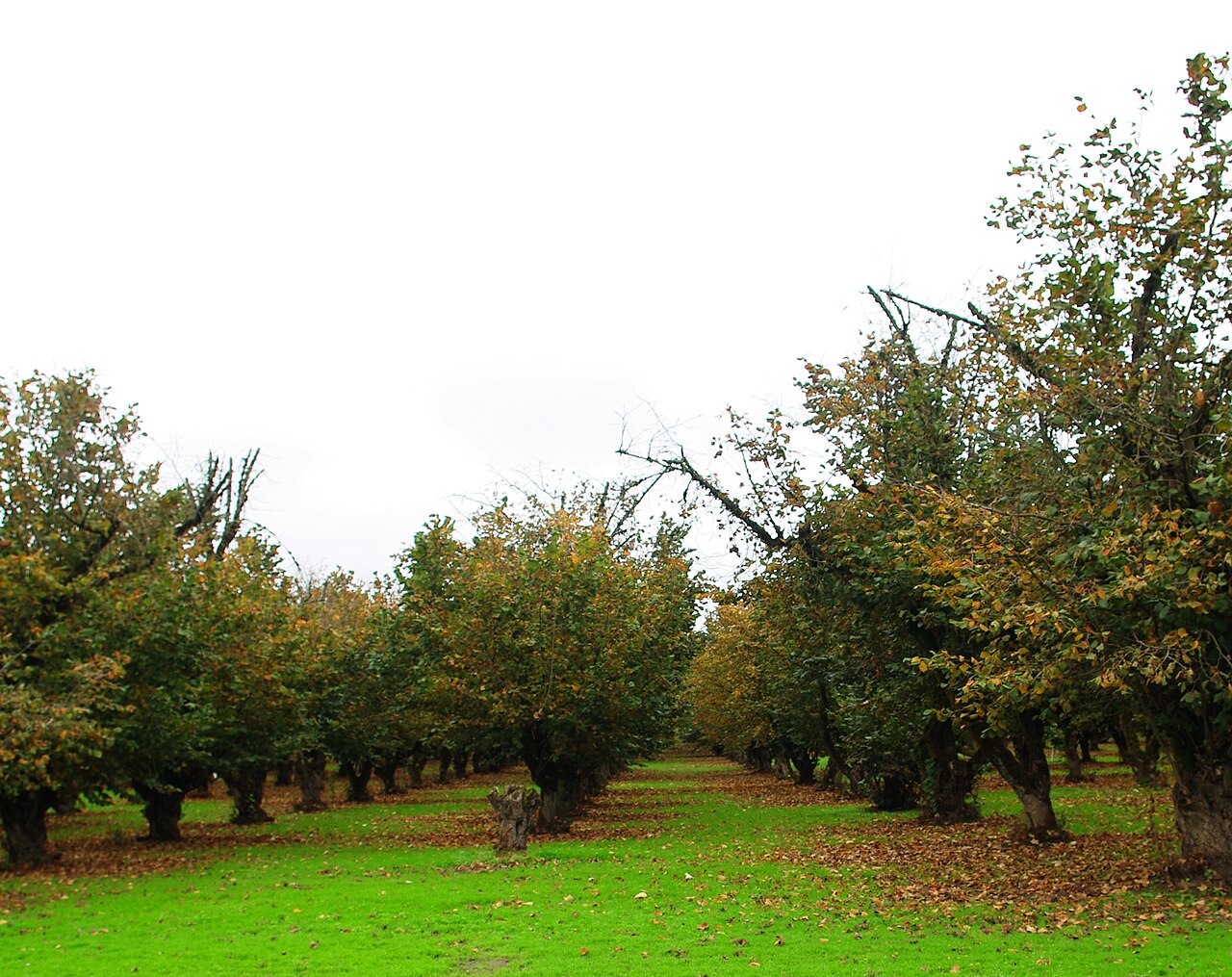
Selecting a cultivar is the first and one of the most critical steps in establishing a hazelnut orchard. A hazelnut orchard is a permanent crop that, with proper care, produces for several decades — orchards in the PP Orahovica region are still in full production after thirty years — so a mistake in cultivar selection is not easily corrected. Planting an unsuitable cultivar in the wrong location means investing in an orchard that yields weak or unreliable harvests for years. Therefore, the decision should be based on four interrelated questions: what you are producing (purpose and market), where you are producing (region, climate, and soil), how resistant and adaptable the cultivar is, and how to organize pollination. This article connects these criteria into a practical framework, with a focus on Croatian conditions and proven domestic cultivars.
Why cultivar selection is crucial
Hazelnut is considered the most important nut crop after walnuts. Among hazelnut cultivars, due to the nature of cross-pollination and allogamy, there is great genetic diversity — each cultivar has its own biological and economic characteristics and its own "reaction norm" to the ecological conditions of the production area. This means that the same cultivar can yield significantly different results in two different locations; yield depends largely on the interaction between the cultivar and the year.
When selecting a cultivar, professional literature always emphasizes understanding the following traits:
- vigour (affects planting spacing and training system);
- interpollination capability (cross-pollination with other quality cultivars);
- onset of bearing and level of productivity (how early it comes into bearing and how abundantly it produces);
- nut quality (size, shape, shell thickness, kernel percentage, aroma);
- sensitivity or resistance to diseases and pests;
- resistance to low temperatures and drought;
- easy nut shedding from the husk — a trait that facilitates mechanical harvesting.
In addition to biological traits, the market, or end-use, has an equally significant influence on the choice. Only when "what the market demands" and "what the location allows" are aligned do we arrive at a good cultivar selection.
Criterion 1 — Purpose: Table, Combined, and Industrial Nuts
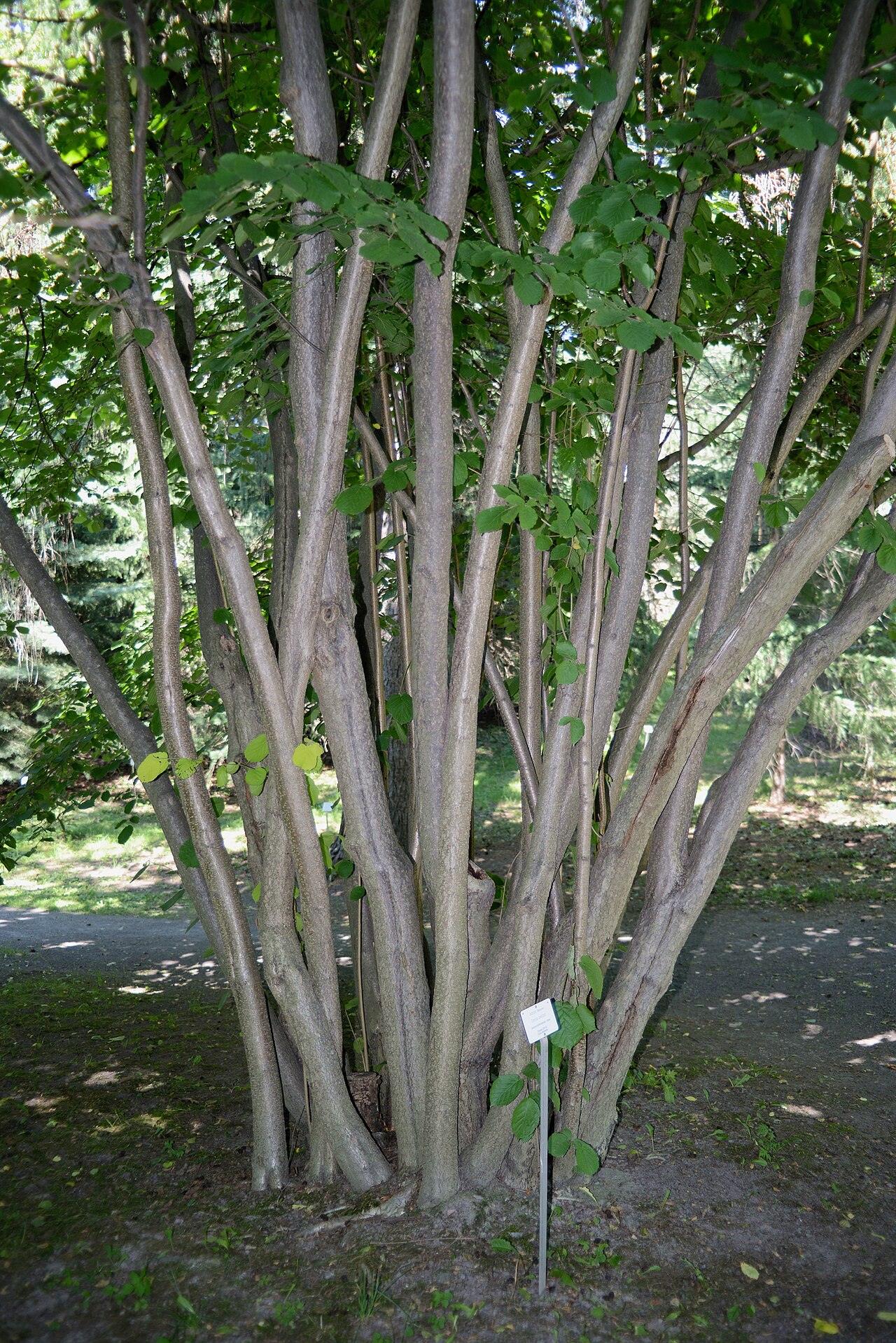
Hazelnut cultivars are classically divided into three groups based on nut quality and purpose:
| Group | Purpose | What is required from the nut |
|---|---|---|
| Table cultivars | Fresh consumption, roasted hazelnuts, fruit salads | Larger nuts, attractive shell shape and color, good aroma |
| Combined trait cultivars | Simultaneously for table and industrial use | Balanced quality — decent size and good kernel percentage |
| Industrial cultivars (confectionery / chocolate) | Processing, confectionery, and food industry | Small to medium-sized nuts, round shape, thin shell, high kernel percentage, easy skin (pellicle) removal after roasting |
Since the food (confectionery) industry is the largest consumer of hazelnuts, when selecting cultivars for sale to the industry, choose those that meet its requirements. The industry demands:
- nuts of small to medium size, round to oval shape;
- thin to medium-thin shell with a high kernel percentage;
- the skin (husk) separates easily from the kernel after roasting;
- regular kernel shape and good organoleptic properties (aroma and taste).
For fresh consumption, preference is given to cultivars with large nuts and more attractive shape and shell color.
Kernel Percentage — The Key Figure
Kernel percentage (the proportion of kernel to total nut weight) directly determines the value of the harvest, as the industry pays for the kernel, while the shell is a by-product. For domestic cultivars, more than half of the nut's mass is shell, so a difference of just a few percentage points in kernel percentage is economically significant.
It is important to distinguish between two sources of data. Measurements from the same orchard and in the same year (PP Orahovica, report for Grubišno Polje) give very close values for three domestic cultivars, as kernel percentage depends heavily on the year and agrotechnics. Individual cultivar studies, however, cite wider ranges across multiple years and locations.
| Cultivar | Kernel Percentage (range from literature) | Typical Nut Weight | Purpose / Note |
|---|---|---|---|
| Istarski duguljasti (Istrian elongated) | ≈ 43.5 % (up to ≈ 43 %; in measurements 42.4–43.6 % per year) | — | Autochthonous table cultivar; husk longer than nut makes mechanical harvesting difficult |
| Rimski (Round) | ≈ 42.4 % in joint measurement; according to Vujević 39–46 %, other sources up to 45 % | 3–4 g | Valued for confectionery industry; nuts shed themselves from the husk |
| Haleški (Halski div) | ≈ 43.4 % in joint measurement; cultivar studies 36–44.9 %, some sources 45 % | 3.5–4.2 g | Vigorous, very upright growth; large nut, ideal pollinizer |
| Tonda Gentile delle Langhe | 49–54 % | 2–2.5 g | Italian industrial cultivar; small nut, very high kernel percentage, flowers and ripens very early |
| Kuban (Eastern European) | 47–49 % | thin shell 1.2–1.3 mm | High kernel percentage, self-fertile; ripens by mid-August |
Correction of previously published figures: The kernel percentage values for Istarski duguljasti of "≈ 37.5 %" and Rimski of "≈ 32.2 %" do not correspond to the domestic corpus and were incorrect. According to measurements on Croatian orchards, Istarski duguljasti has the highest kernel percentage among the three leading domestic cultivars (≈ 43.5 %), just ahead of Haleški (≈ 43.4 %), while Rimski in the same measurement has slightly lower (≈ 42.4 %), but across multiple years and locations reaches 45–46 %. The highest quality cultivars generally have a kernel percentage of 43–50 %.
Note: The percentages listed are informative and vary depending on the study, year, location, and agrotechnics.
Criterion 2 — Market
Purpose and market are inseparable. Before planting, it is useful to answer:
- Who are you selling to? Industrial purchase rewards kernel percentage, uniformity, and thin shell; direct sales and table nuts reward size, appearance, and aroma.
- Do you sell nuts in the shell, kernels, or processed products? Own processing (roasted kernels, spreads, oil) shifts priorities toward cultivars that are easy to shell and have good taste.
- What is the volume and mechanization level? Larger orchards relying on mechanical harvesting need cultivars whose nuts shed easily from the husk and ripen uniformly. Here, it should be noted that for Istarski duguljasti, the husk does not shed easily (it is longer than the nut and narrowed at the tip), while for Rimski and Haleški, the nuts shed themselves from the husk.
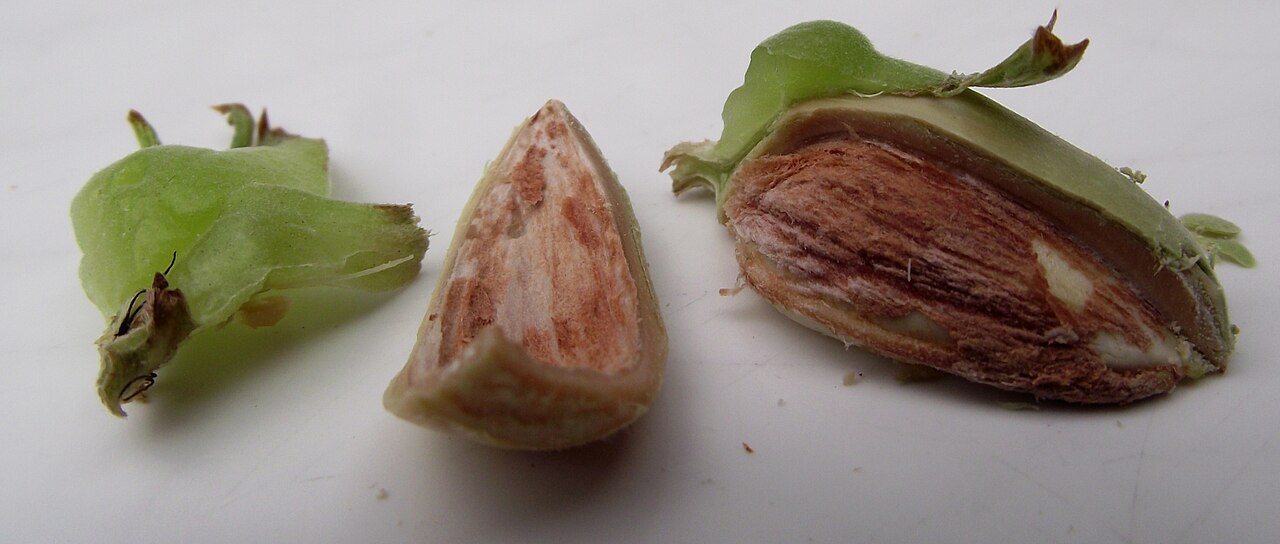
Market logic in practice also dictates the ratio of cultivars in the orchard. Specific ratios and pollinizer placement are detailed in the pollination chapter; here it is sufficient to say that an industry-oriented orchard yields a higher proportion of industrial cultivars (e.g., Rimski), while a family orchard with direct sales more evenly covers both table and industrial segments.
Criterion 3 — Resistance (Frost, Diseases, Drought)
Resistance is often the decisive filter that "crosses out" otherwise quality cultivars in unfavorable locations. Cultivars that thrive in warmer conditions are usually not adapted to colder climates and vice versa.
Resistance to Low Temperatures and Late Frosts
Hazelnut flowers very early (often in winter / early spring), so flowers are exposed to frost. From the literature, based on the sensitivity of male flowers to low temperatures:
| Sensitivity Level | Cultivar Examples |
|---|---|
| Very sensitive | Okrugli, Piemontese |
| Sensitive | Barcelona, Negret, Grosal |
| Moderately sensitive | Morel, Španjolski dugi, Daviana |
| Resistant | Halski (Haleški) div, Trebizontski, Eugenija |
Orientational limits (informative, according to literature):
- closed male flowers (catkins) withstand up to −16 to −18 °C;
- open catkins only −8 to −10 °C, and at the moment of pollen release only −5 to −7 °C;
- female flowers before flowering −13 to −16 °C, and during flowering −7 to −8 °C;
- frost of −4 to −6 °C can damage young summer shoots by up to 50 %.
Special attention is required for Rimski, which starts vegetation earlier and ripens earlier: if frost occurs when Rimski should be pollinated, pollination will not be of good quality, which can reduce yield to almost negligible amounts. Therefore, more resistant cultivars (Istarski duguljasti, Haleški) are recommended for continental Croatia, while Rimski should be planted cautiously in frost-prone positions; Haleški particularly suits the northern continental climatic region.
Chilling Requirements
Hazelnut buds require a certain number of hours of low temperatures to start normally. From the literature: male flowers need 350–600 hours below 7 °C, female flowers about 600–800 hours, and vegetative buds 1000–1300 hours. In overly warm locations, cultivars with high chilling requirements may flower poorly and unevenly.
Resistance to Diseases and Drought
Bacterial blight (hazelnut blight and other diseases) and pests such as the hazelnut weevil (hazelnut borer) and mites are an important criterion, especially for organic production, where the range of permitted products is narrower, so cultivar resistance takes on part of the protection role. From cultivar descriptions: Haleški is quite resistant to hazelnut blight and resistant to powdery mildew, but is sensitive to bacterioses and mites. The hazelnut root system is shallow, so in dry areas, irrigation should be considered or more adaptable cultivars chosen; Istarski duguljasti is more resistant in this regard than Rimski, with a clear requirement for sufficient soil moisture during the vegetation period. Hazelnut yields poorly when there is insufficient sunlight or in dry conditions.
Criterion 4 — Ripening and Flowering Time
Ripening time and flowering phenology are important for two reasons: harvest organization and pollination synchronization.
- Leading domestic cultivars ripen in the first half of September, roughly at the same time (Istarski dugi, Rimski, and Haleški ripen in sync), but there are large differences among cultivars worldwide (e.g., Tonda Gentile delle Langhe and Kuban ripen as early as August). Nuts must ripen well to be harvested at the optimal time.
- Pollination and fertilization require that pollen from the pollinizer cultivar is released when the female flowers of the main cultivar are receptive. Since hazelnut is diogamous (protandrous/protogynous) and mostly self-sterile (allogamous), cultivars that can cross-pollinate each other are selected. In practice, it is recommended that the flowering of the pollinizer and the main cultivar differ by up to about two weeks, so that by combining early, mid-season, and late pollinizers, the entire receptivity period is covered.
Pollination — an essential part of cultivar selection
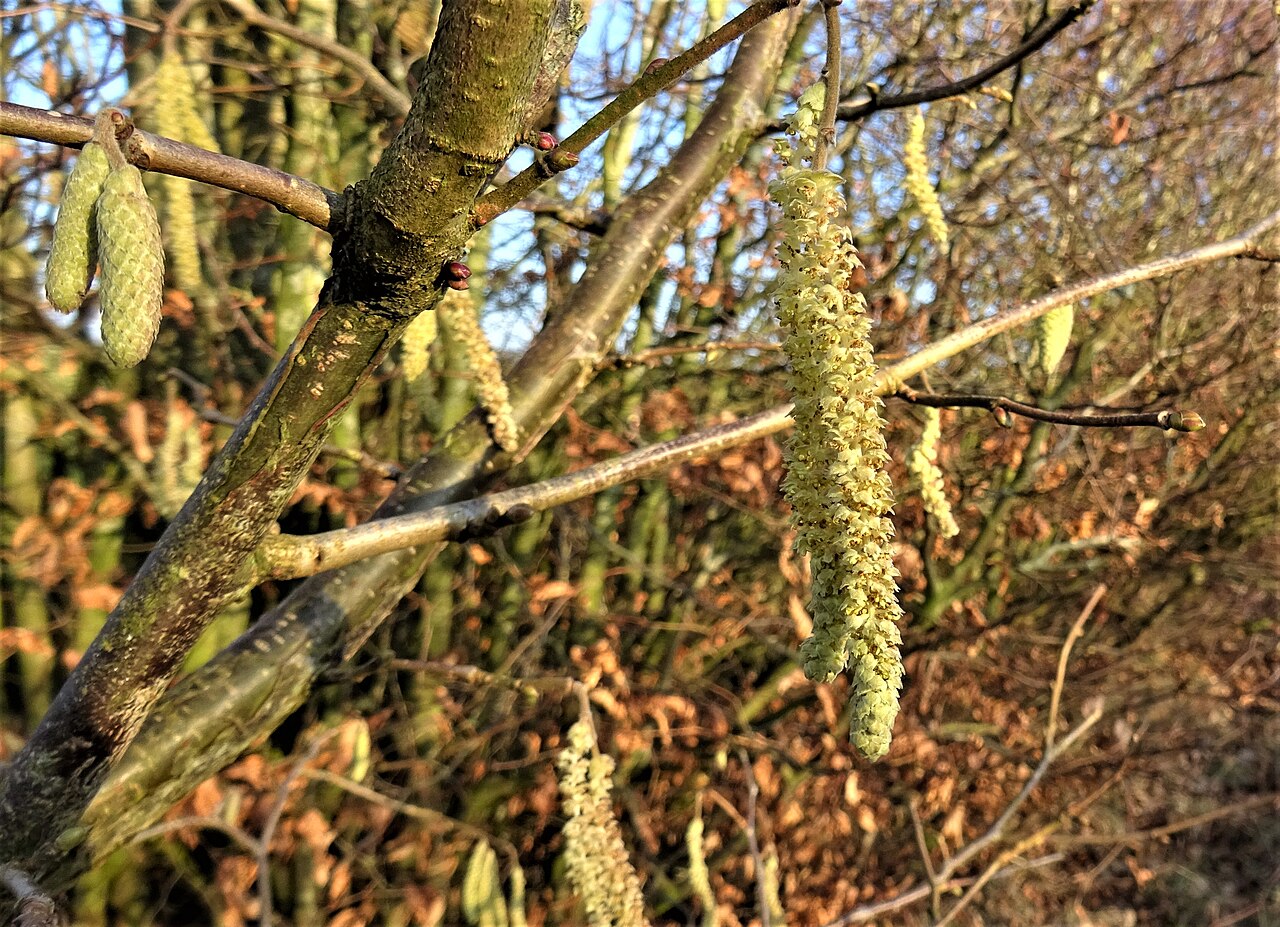
Hazelnut is monoecious (both male and female flowers on the same shrub), but it generally cannot self-pollinate: due to dichogamy and genetic incompatibility (the S-allele system), pollen from the same cultivar rarely fertilizes its own female flowers. Pollination is carried out by wind (anemophily), without the involvement of insects. Therefore, the arrangement and selection of pollinizers are just as important as the selection of the main cultivar.
How many pollinizers and in what ratio — one clear recommendation
Literature cites various figures, which we here condense into one clear working recommendation: plan for approximately 10–20 % of trees as pollinizers, and never more than 25 %. This aligns with Spanish practice (pollinizers not exceeding 25 % of the area) and the North American scheme of "every third tree in every third row," where pollinizers make up about 11 % of the orchard. Additionally, the rule holds that no single cultivar should exceed approximately 43 % of the orchard to ensure sufficient cross-pollination.
Practical rules:
- plant 1–2 main cultivars and 2–3 pollinizer cultivars (it is possible to have only 1 main + 1 pollinizer, but this is riskier);
- choose pollinizers whose pollen shedding period overlaps with the receptivity of the female flowers of the main cultivar — therefore, early, mid-season, and late pollinizers are combined (the recommendation is at least three with different pollen release times);
- pollinizers must produce abundant and viable pollen — this is precisely why Tonda di Giffoni (Haleški) is valued, as it produces many catkins with highly viable pollen;
- pay attention to genetic compatibility (S-alleles): two cultivars of the same S-genotype are incompatible, so the combination should be verified, not assumed.
Pollinizer arrangement scheme in the orchard
The most common mistake is grouping pollinizers in one corner or edge of the plot — pollen then does not reach the entire orchard evenly. Pollinizers should be distributed throughout the orchard. Three proven schemes:
| Scheme | Planting method | Proportion of pollinizers | When to use |
|---|---|---|---|
| Every 3rd tree in every 3rd row (3 × 3) | Pollinizer on every third position in every third row, arranged diagonally | ≈ 11 % | Standard medium-density orchards; even pollen coverage |
| Entire row of pollinizers every 3rd–4th row | One row of pollinizers inserted between rows of the main cultivar | ≈ 20–25 % | Facilitates mechanical harvesting as cultivars are separated by rows |
| Diagonal / alternating arrangement | Pollinizers arranged diagonally so that each cultivar "covers" neighbors | ≈ 10–20 % | Small and family orchards where all cultivars are to be maintained |
Orientative distances (for information): although wind can carry pollen up to 1 km, far better results are achieved when pollinizers are within a distance of ≈ 30 m from the main cultivar; North American practice cites an effective pollen range of 25–30 m (approx. 80–100 feet). In other words, every main tree should have a pollinizer within twenty meters.
Concrete examples of ratios from local practice
| Orchard Type | Example cultivar ratio | Comment |
|---|---|---|
| Large plantation (PP Orahovica) | Istarski duguljasti 75 % : Rimski 20 % : Haleški 5 % | Proven combination; Rimski and Haleški pollinate Istarski, Haleški is a "pure" pollinizer |
| New orchard plan (Grubišno Polje / Vojnić) | Rimski okrugli and Istarski duguljasti with Haleški as pollinizer | Rimski also serves as a pollinizer for Istarski |
| Family orchard, direct sales | More balanced, e.g., ≈ 50 : 50 table : industrial, with 1–2 pollinizers distributed throughout the orchard | Covers both table and industrial segments |
Note: In PP Orahovica, cultivars were mixed at planting without separation by rows, which now significantly complicates mechanical harvesting. Therefore, if mechanized harvesting is planned, it is recommended to separate cultivars by rows while maintaining an even distribution of pollinizers.
Adaptation to location and recommended Croatian cultivars
Cultivar selection is the first step in establishing an orchard, as the adaptation of the entire cultivation and processing technology depends on the ecological conditions at the site and market needs. Before planting, a soil analysis and climate assessment (precipitation, insolation, risk of late frosts) are mandatory, after which the cultivar selection is made and soil structure is improved if necessary.
Orientative agroecological frameworks (for information):
- optimal annual precipitation around 700 mm;
- good soils are moderately moist, of medium depth, humus-rich, pH (KCl) ≈ 5.5 (broader range ≈ 5.5–7.5, and pH 5.0–8.0 is tolerated); tolerates calcareous loams and stony soils;
- in continental Croatia, favorable positions are above ≈ 140 m a.s.l. with appropriate relief (similar to positions for grapevines), avoiding frost pockets.
Regional cultivar recommendations
| Region | Recommended cultivars | Selection logic |
|---|---|---|
| Continental Croatia | Istarski duguljasti, Rimski, Haleški | More resistant to low temperatures than sensitive industrial cultivars; proven, safe combination. Haleški is particularly suited to the northern continental belt; Rimski should be used cautiously on frost-prone positions due to early bud break |
| Coastal / warmer areas | Tonda gentile delle Langhe, Tonda gentile Romana, Tonda di Giffoni | "Objectively higher quality" industrial cultivars that require a milder climate and have a very high kernel percentage |
Note on taxonomy: C. maxima vs C. avellana
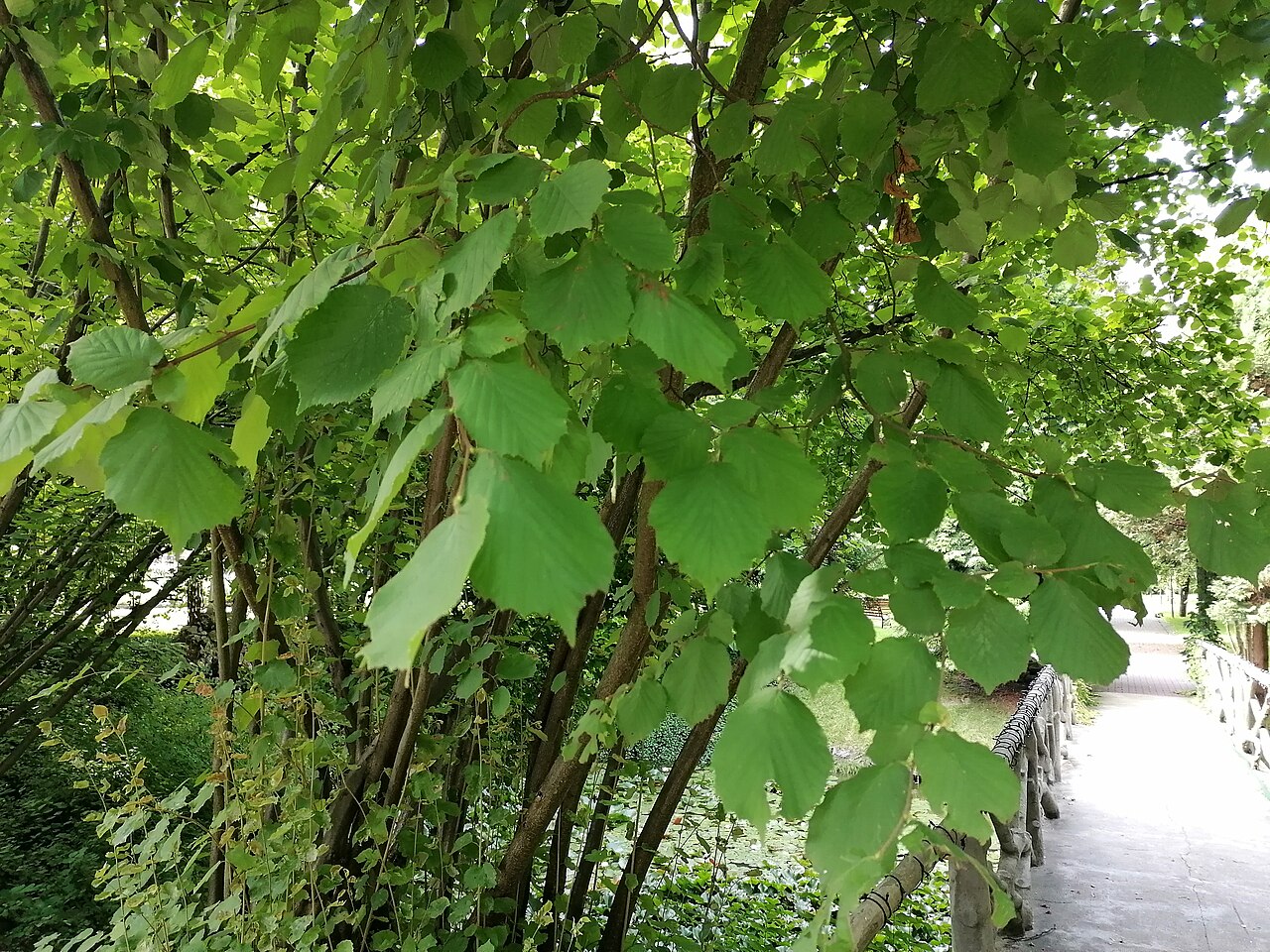
In sales and literature, Istarski duguljasti is most often listed as Corylus avellana (common hazel). Botanically, the picture is slightly more complex: the genus Corylus includes the species C. maxima (Lombardy / Lambert hazel), in which the husk (cupule) is longer than the nut and narrowed at the tip, so the nut does not fall out easily. This is precisely the characteristic of Istarski duguljasti — an elongated, cylindrical nut with a husk longer than the nut — so some sources classify it closer to C. maxima or consider it of hybrid origin (C. avellana × C. maxima). Large-fronded cultivated "lambert/filbert" cultivars indeed come from this group. For the practical grower, the difference is not decisive (all are grown similarly), but it explains why Istarski duguljasti has a longer husk and poorer nut shedding compared to Rimski and Haleški, which directly affects suitability for mechanical harvesting. Commercial nurseries in Croatia regularly label Istarski duguljasti saplings as Corylus avellana, so when purchasing, look at the cultivar name, not just the species.
Leading cultivars in Croatia are Istarski duguljasti (autochthonous, our original cultivar from Istria), Rimski, and Haleški; Italian Tonda cultivars are less represented. According to prevalence data, Istarski duguljasti occupies about 60 % of the area (according to some sources up to 80 % of plantations), and Rimski about 26 % — together approximately 86 % of Croatian orchards.
Short profiles:
- Istarski duguljasti — autochthonous Croatian cultivar of moderate vigor (grows wider, spherical shrub), regularly and abundantly productive, enters bearing early; large, elongated nut with pronounced aroma, spheroid to cylindrical kernel that peels easily. Kernel percentage up to ≈ 43 %. 3–5 nuts per cluster. Most desirable table cultivar; drawback is the husk longer than the nut, which complicates mechanical harvesting.
- Rimski (round) — originating from southern Europe, medium to vigorous, produces many root suckers; large, flattened-round nut (3–4 g), sweet kernel, kernel percentage 39–46 %. Blooms mid-early and overlaps well in flowering with Istarski, Haleški, and Barcelona; nuts fall out of the husk on their own (suitable for mechanical harvesting). Very suitable for confectionery industry and a good pollinizer for Istarski, but starts vegetation early, making it more sensitive to frost during pollination.
- Haleški (Halski div / Hallesche Riesennuss) — of German origin (also: Hallski, Hallesche Zellernuss, Wunder aus Bollwiller), very vigorous and distinctly upright growth. Large nut (3.5–4.2 g), kernel percentage ≈ 36–45 %, nuts fall out of the husk on their own. Enters bearing early, yields best in the northern continental belt. Resistant to low temperatures and powdery mildew, fairly resistant to filbert weevil, but sensitive to bacterial diseases and mites. Produces many catkins with abundant, highly viable pollen, making it an ideal pollinizer for Istarski duguljasti and Rimski; it is less productive on its own, which is why it is planted in smaller proportions.
Market context: Croatian production is in the order of ~1,200–1,960 t annually on approximately 5,000–5,300 ha (≈ 5,264 ha according to newer data, with a significant share of organic orchards), while world production is in the hundreds of thousands of tons (≈ 743,000 t) — Croatia is a net importer, leaving room for domestic production with proper cultivar selection. Average annual yields of well-managed orchards are around 2,500 kg/ha.
Practical recommendations and common mistakes
Recommendations:
- Start with the market and purpose, then filter cultivars according to resistance and location — not the other way around.
- Perform a soil analysis and assess frost-prone positions before ordering saplings.
- Plan pollinizers from the start: 10–20 % of trees (max 25 %), at least 2–3 pollinizers with different flowering times, evenly distributed (e.g., every 3rd tree in every 3rd row).
- For continental, colder locations, prioritize resistance over "paper" quality of the cultivar; pay attention to the early bud break of Rimski.
- If planning mechanical harvesting, prioritize cultivars whose nuts fall out of the husk on their own (Rimski, Haleški) and separate cultivars by rows.
- Consider two-year-old saplings — literature indicates they yield better results.
- Match the cultivar with the training system and spacing (from practice ≈ 500 shrubs/ha at 5 × 4 m to ≈ 800 shrubs/ha at 5 × 2.5 m); more vigorous cultivars (Haleški) require more space.
Common mistakes:
- Planting a single cultivar or a pollinizer whose flowering does not overlap with the main cultivar → poor fertilization and yield.
- Planting sensitive industrial cultivars in frost pockets of continental Croatia, or too much Rimski on locations with late frosts.
- Neglecting kernel percentage and buyer requirements → nut that is difficult to monetize.
- Selecting a cultivar without soil analysis and without assessing precipitation/irrigation.
- Grouping pollinizers instead of distributing them evenly throughout the orchard.
- Exceeding 25 % proportion of pollinizers or the proportion of a single cultivar above ≈ 43 % to the detriment of cross-pollination.
- Mixing cultivars within a row when planning mechanical harvesting.
Sources
This article is an AI-generated summary from an internal hazelnut literature collection (RAG corpus), supplemented with public sources. Figures (kernel percentage, resistance, precipitation, pH, area, yields, shares, and pollinizer spacing) are indicative and depend on cultivar, location, year, and agrotechnics — consult advisory services and official sources before application.
Main sources used:
- Hazelnut Cultivation: A Guide — Ministry of Agriculture / Advisory Service — https://savjetodavna.mps.hr/2017/10/24/od-sadnje-do-berbe-lijeske/
- Environmental Protection Study — multi-year hazelnut and plum orchards (Grubišno Polje); kernel percentage Istrian 43.5 %, Hale 43.4 %, Roman 42.4 % — https://bbz.hr/doc/uprava/elaborat_zastite_okolisa_visegodisnji_nasadi_lijeske_i_sljive.pdf
- Technological and Economic Characteristics of Hazelnut Cultivation (PP Orahovica; ratio 75:20:5, spacing 5×4 m, yield ~2,500 kg/ha) — https://doi.org/10.46584/lm.v36i2.1141
- State and Trends in Hazelnut Production and Consumption (Roman kernel percentage ~45 %, early vegetative development) — https://doi.org/10.31727/gzb.42.3.9
- Chemical Composition of Hazelnuts from the 2020 Season — Master’s Thesis, PBF (description of Hale: kernel percentage 36–44.9 %, resistance/sensitivity) (RAG corpus)
- Chemical Composition of Hazelnuts (description of Hale and Tonda Gentile delle Langhe, kernel percentage) (RAG corpus)
- Organic Production and Organic Hazelnut Products in Croatia (Hale as pollinizer) (RAG corpus)
- HAZELNUT CULTIVATION — book (pollinizers no more than 25 %, pollinizers up to 30 m, one cultivar maximum 43 %; flower sensitivity to low temperatures; chilling requirements) (RAG corpus)
- Cultivar Selection and Training Systems for Hazelnut, P. Vujević, Agroklub — https://cdn.agroklub.com/upload/documents/sorte-i-uzgojni-oblici-lijeske.pdf
- Business Plan for Hazelnut Seedling Production, Poljinos (Istrian elongated kernel percentage up to 43 %, 3–5 nuts per cluster) — https://www.poljinos.hr/wp-content/uploads/2022/05/PP-za-proizvodnju-sadnica-lijeske1.pdf
- Best Hazelnut Cultivars for Eastern Europe (Kuban cultivar) (RAG corpus)
- Milić Nursery — Istrian elongated and Roman (Corylus avellana) — https://www.rasadnik-milic.hr/proizvodi/sadnice-voca/lijeska/lijeska-istarski-duguljasti-corylus-avellana/
- Plantea — Hazelnut (Corylus avellana) and Lombardy Hazelnut (Corylus maxima) — https://www.plantea.com.hr/lombardijska-lijeska/
- Province of British Columbia — Hazelnut pollinizers (every 3rd tree / 3rd row, diagonal arrangement, ≥3 pollinizers early/mid/late) — https://www2.gov.bc.ca/gov/content/industry/agriculture-seafood/agriservice-bc/production-guides/hazelnuts/hazelnut-orchard-design/pollinizers
- OSU Extension — Growing Hazelnuts in the Pacific Northwest: Orchard Design (pollinizer arrangement ~11 %, pollen range) — https://extension.oregonstate.edu/sites/extd8/files/documents/em9077.pdf
- West Coast Nut — Choosing, Planting and Pruning Hazelnut Pollinizers — https://www.wcngg.com/2020/02/03/choosing-planting-and-pruning-hazelnut-pollinizers/
- PP Orahovica — Hazelnut Cultivation and Hazelnut Seedling Production — https://pporahovica.hr/djelatnosti/vocarstvo/uzgoj-ljesnjaka-i-sadnica-lijeske/