Bearing pruning of hazelnut in full production
Content generated by artificial intelligence — verify before application
This article was automatically compiled from a collection of hazelnut literature using artificial intelligence and may contain errors or outdated information. It serves as a starting point for further research, not as professional advice. Dosages, products, and timing are informative and depend on the cultivar, location, and current regulations — always consult with an advisory service and official sources before application.
When a hazelnut orchard enters the period of full production — typically after the 6th year for tree forms, and from the 5th to 7th year for shrub forms — the focus of canopy management shifts from building the training form to maintaining it. Bearing pruning of a mature orchard is no longer about shaping the skeleton, but rather annual care for the balance between vegetative and generative growth: the goal is to keep the canopy open and well-lit, to constantly renew bearing wood, and to mitigate yield fluctuations from year to year. This article explains how to perform annual pruning in bearing trees: thinning, opening the canopy, renewing bearing wood, and mitigating alternate bearing.
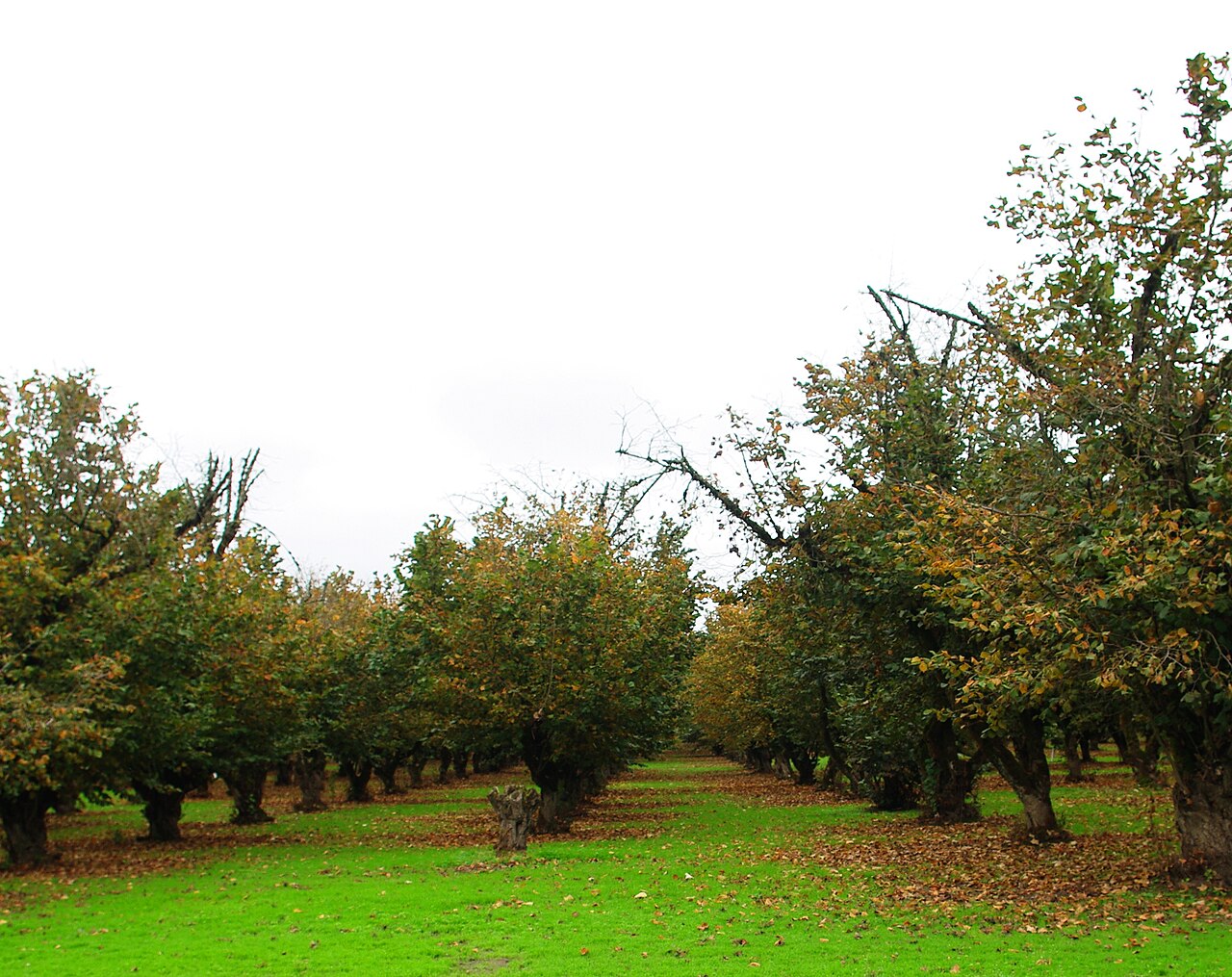
Why hazelnut in full production needs pruning
There is still a widespread belief among producers that hazelnut does not need pruning once it starts bearing, or that pruning "does not pay off" because the difference between input and output is small. This is only partially true. In the first years of production, when annual shoots are long and the canopy is open, annual pruning indeed provides little benefit relative to the high cost of manual labor. However, the problem is that hazelnut bearing gradually dies out on its own if no intervention occurs.
Hazelnut bears almost exclusively on one-year-old shoots, and bearing is directly correlated with the length of the annual terminal growth. Literature cites the following approximate values for good bearing branches:
| Indicator | Approximate Value | Note |
|---|---|---|
| Desired length of bearing one-year-old branch | 15–25 cm (depending on cultivar) | Bearing drops sharply below ~15–20 cm |
| Optimal range for best bearing | 20–40 cm | Branches longer than ~45 cm are usually not shortened |
| Average growth length in pruned shrubs | over 30 cm | Measured on cultivars Istarski dugi, Rimski, Tonda Gentile delle Langhe |
| Average growth length in UNpruned shrubs | around 8 cm | Result of shading and aging |
The numbers speak for themselves: the difference between a pruned and an unpruned shrub can be 30 cm versus 8 cm in average bearing branch length. Without annual growth, there are no bearing buds for the following year — so pruning essentially "buys" future yield.
Another reason is light. Hazelnut is an obligate heliophile (full-sun plant). In shade, it forms few flower buds of poor quality, leaves remain smaller, thinner, and lighter green, and nuts are smaller. In dense, unlit canopies, shaded leaf mass consumes more accumulated organic matter for basic life processes than it can produce — the canopy "operates at a loss." Flower buds are primarily aborted in the interior and tops of the canopy, so the interior must be systematically opened.
Types of cuts and basic terminology
Before specific interventions, it is useful to distinguish between two basic types of cuts, as they behave very differently in bearing pruning:
- Thinning cut (cut to the ring / thinning cut) — removes the entire branch or shoot to the point of origin. It opens the canopy, allows light and air through, and does not stimulate vigorous growth of new shoots. This is the primary cut in bearing pruning.
- Heading cut (cut to a bud / heading cut) — shortens a branch, stimulating branching and stronger vegetative growth below the cut. In full production, this is avoided on bearing branches because it removes bearing buds and stimulates undesirable vigor and water sprouts.
The rule is to make the cut to an outward-facing bud, so that the new shoot grows outward, away from the center of the canopy. For heavier cuts, it is recommended to leave some smaller, weaker branches to prevent vigorous eruption of water sprouts (strong upright shoots from old wood).
Annual pruning of a mature orchard: what is done every year
In full production, pruning of an already formed tree or shrub mainly consists of mild, annual correction, rather than drastic interventions (drastic pruning is applied only exceptionally, e.g., after hail damage). The goal of each annual pruning is to maintain the balance between above-ground and below-ground parts, preserve the training form, and constantly illuminate the interior.
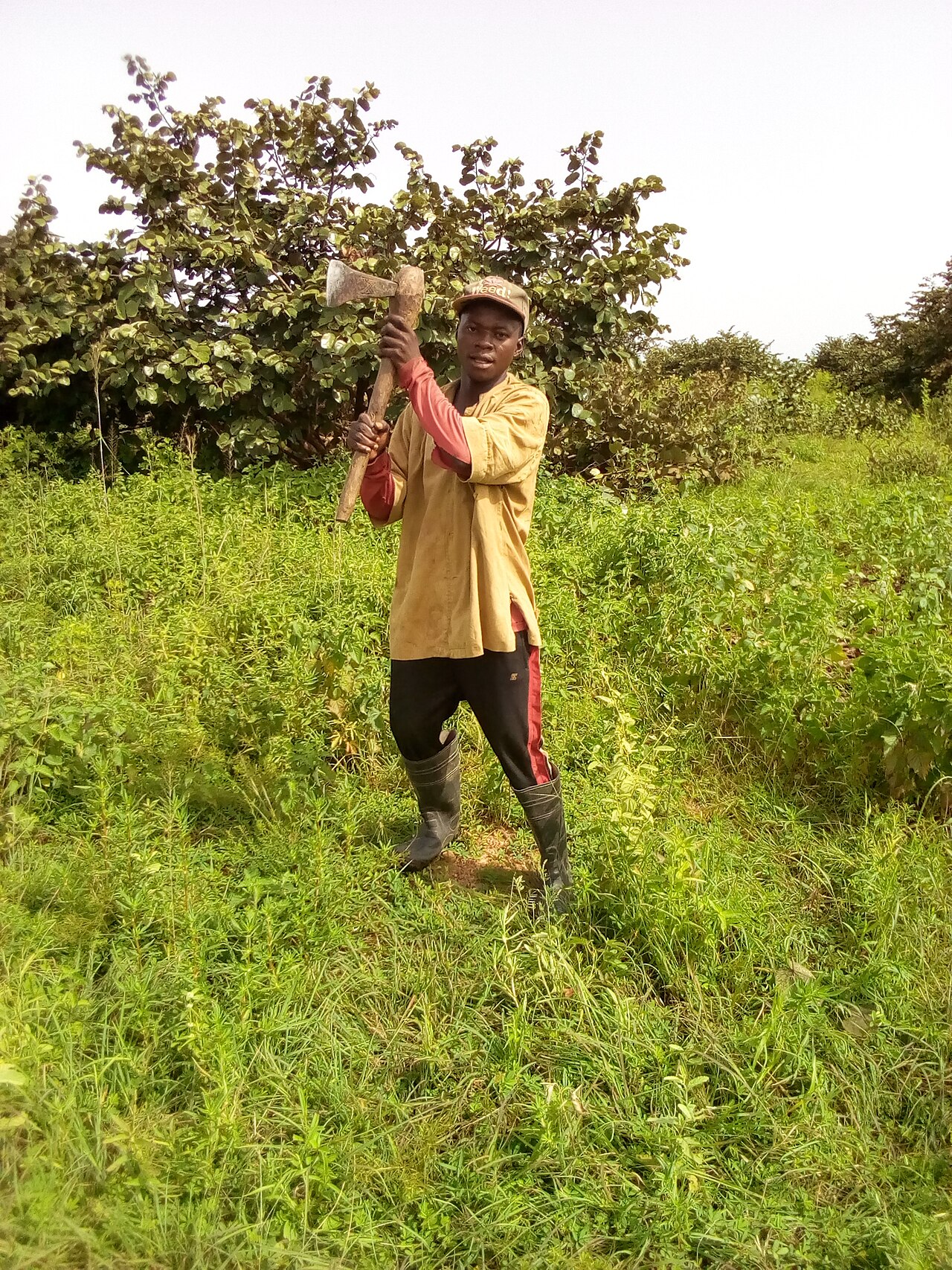
Standard annual list of interventions:
- Removal of dry, damaged, and diseased branches — first and unconditionally, at any time.
- Thinning of overly dense parts — remove branches growing toward the interior of the canopy, those that cross each other or are too close and shade each other.
- Removal of water sprouts growing through the center of the canopy from the lower part — unless they can be used to fill empty space at the top or for rejuvenation; in that case, they should be bent (trained) in the desired direction.
- Removal of root suckers — especially for hazelnut on its own roots, as they deplete the plant and clog the base. For seedlings grafted on Turkish hazelnut (Corylus colurna), this problem is significantly reduced.
- Removal of low-hanging branches that interfere with soil cultivation, protection, and harvest.
- Leaving enough number and length of one-year-old shoots as carriers of future bearing.
Timing: winter and summer pruning
Pruning of bearing trees is carried out both during dormancy and during vegetation, as the two prunings have different roles:
| Type | Timing (approximate, continental HR) | Main Purpose |
|---|---|---|
| Winter (primary) | December – February, when temperatures are above 0 °C | Maintaining training form, thinning, renewing bearing wood, balancing vegetative and generative growth |
| Pruning during flowering | March – April, upon appearance of female flowers | Easier identification of female buds → more precise yield regulation; recommended for heavier pruning every few years |
| Summer (green) | June – July | Removal of excess shoots and inward-growing branches, better differentiation of flower buds, better illumination and spray quality |
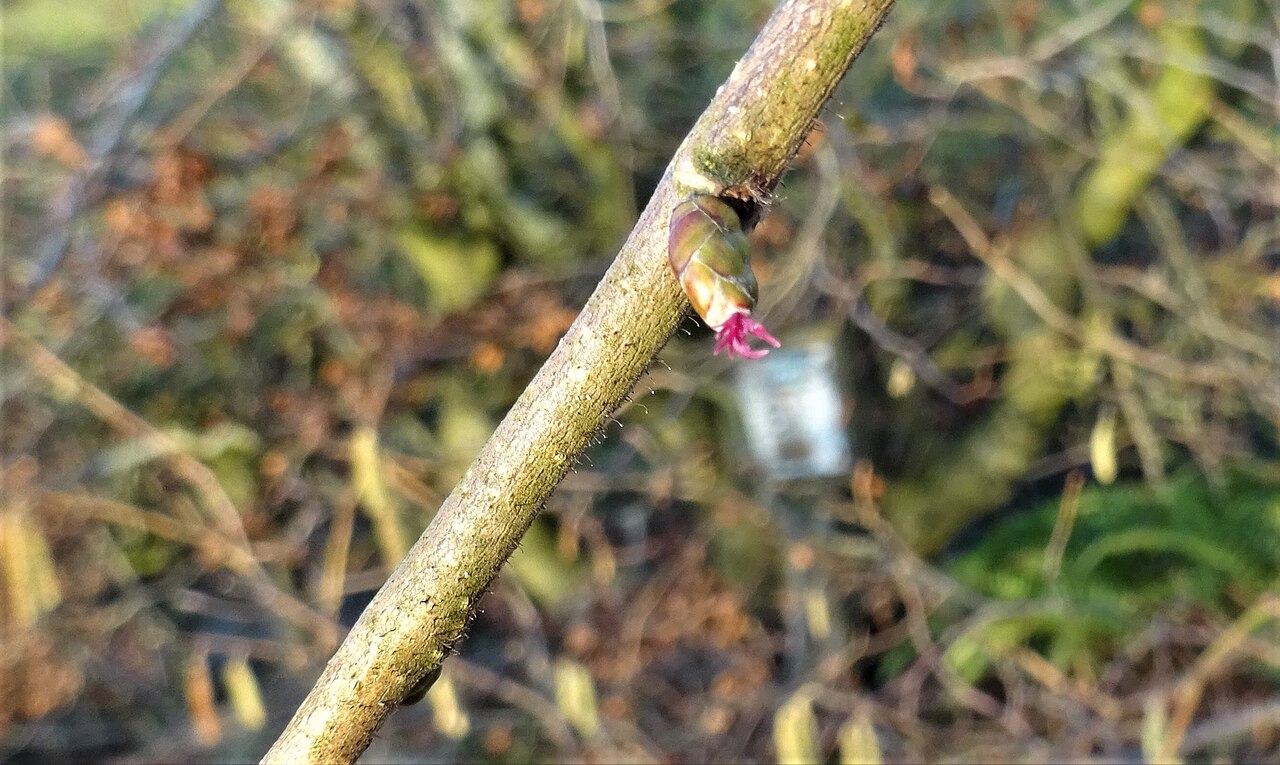
An interesting reason for pruning during the flowering of female flowers is that female buds (small red stigmas) are easily visible, allowing the producer to directly see how much bearing potential is removed or left — enabling fine yield regulation. Summer pruning in June and July redirects nutrients from unnecessary shoots to skeleton growth, nuts, and bearing buds, and improves illumination and aeration.
Opening the canopy
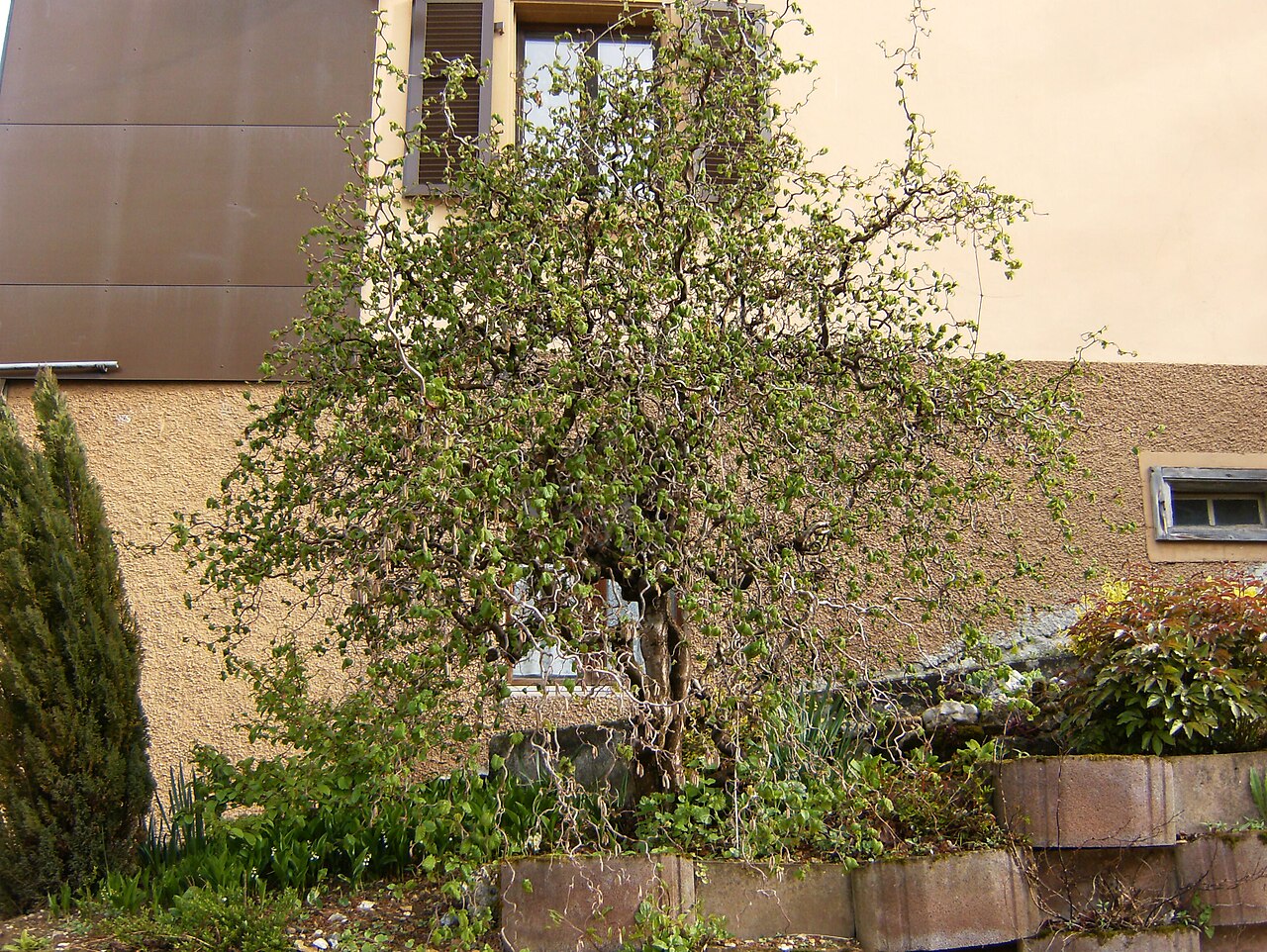
Opening the canopy (allowing light into the canopy) is the most important individual goal of bearing pruning for hazelnut, as it directly determines the number and quality of flower buds for the following year.
Principles:
- The most bearing buds are formed at the tops and periphery of the canopy, so it is crucial to thin the inner part which bears poorly anyway due to shading.
- Opening is achieved by thinning (cutting the whole branch), not heading — this avoids the eruption of new water sprouts that would close the canopy again.
- For very dense canopies that have not been opened before, removing a few (1–3) upright branches in the center allows significantly more light. For such heavier cuts, leave some weaker branches to calm the plant's reaction.
- Cultivars with wide branch angles naturally allow more light through and require less pruning than cultivars with narrow, upright angles.
- The training form of a modified shrub with 4–5 main branches in the shape of a hollow (open) vase facilitates light penetration into the interior and increases the bearing volume.
Limit of annual intervention
Professional guidelines (e.g., Oregon State Extension) recommend that no more than 25–30 % of the live canopy be removed in any single year. A larger intervention causes excessive growth of water sprouts and a temporary loss of bearing. Renovating (opening) neglected canopies is better distributed over 1–2 years.
Renewing bearing wood
Since hazelnut bears on one-year-old shoots and branch bearing declines as the branch ages, bearing wood must be constantly renewed: discarding old and exhausted wood, and promoting the growth of young wood. This is the core of bearing pruning in full production — without new annual growth, there is no bearing.
Practical methods of renewal:
- Gradual cyclic replacement of branches. Older, exhausted parts (branches with short, "tired" growth) are removed or shortened to a young lateral shoot that replaces them. Innovative approaches suggest cyclic replacement of primary branches every 4–6 years, keeping 3 primary branches on the trunk with wider branch angles while initiating at least 2 new ones each year.
- "1/3 rule" for shrubs. For shrub forms that have started to lose bearing, it is recommended to remove about 1/3 of the oldest branches annually, so that the entire shrub is renewed over 3 years, and light permanently enters the canopy.
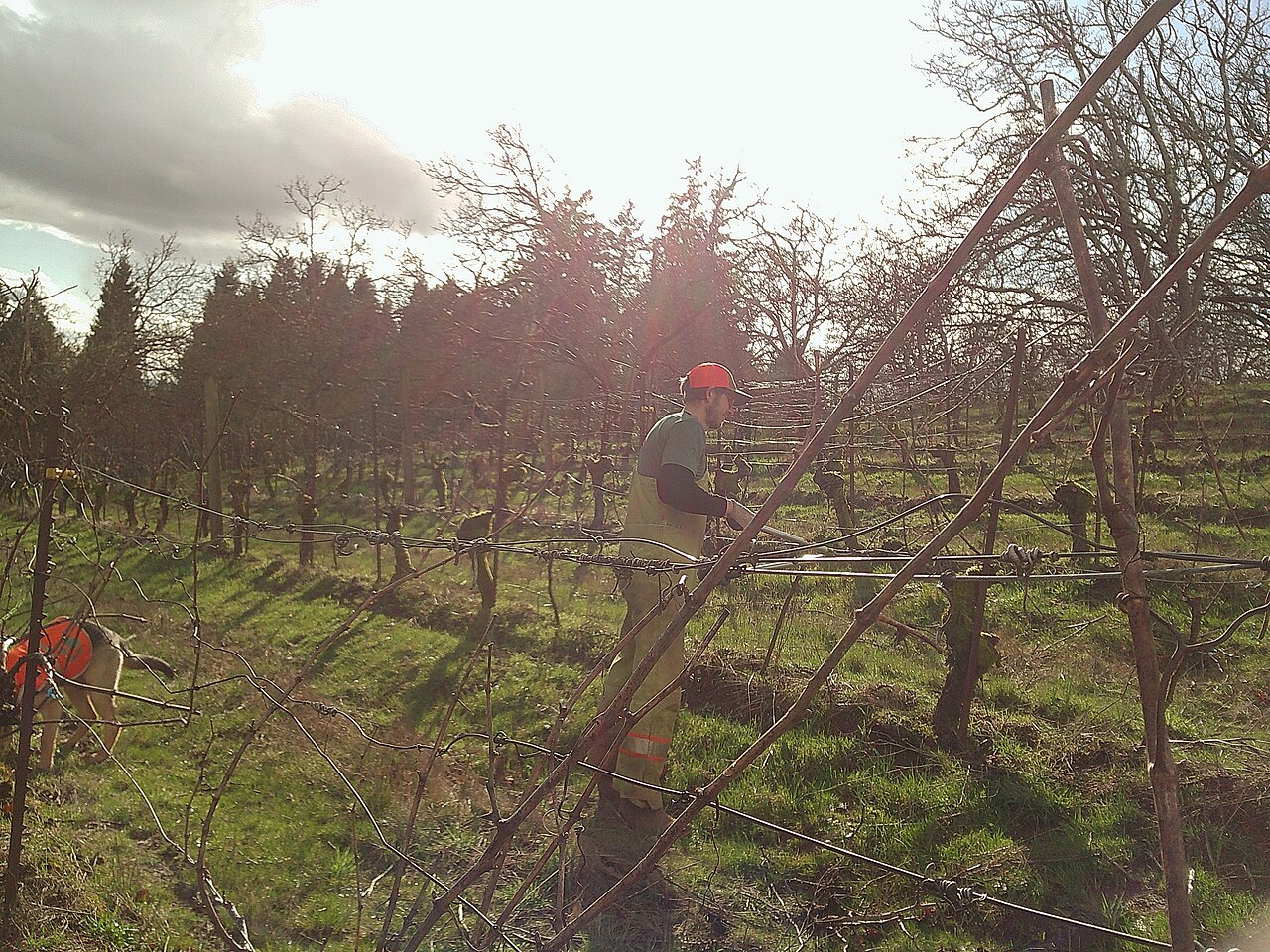
- Mechanized / cyclic pruning in commercial orchards. In the USA, machine pruning is recommended every 5 years, or 1/5 of the orchard each year (five-year cycle). For heavier cuts, one source suggests removing about half of the bearing area, another suggests 25 % or less. Yield may drop in the first year after the intervention, but recovers and stabilizes in subsequent years.
| Renewal Method | Cycle | How much removed annually | Orchard Type |
|---|---|---|---|
| 1/3 Rule (shrub) | 3 years | ~1/3 of oldest branches | Shrub, extensive / semi-intensive |
| Cyclic replacement of primary branches | 4–6 years | gradually, several branches | Tree forms, intensive |
| Mechanized pruning (USA) | 5 years | 1/5 of orchard (25–50 % bearing area on pruned rows) | Intensive, mechanized |
Decision criterion — length of one-year-old shoot
The simplest practical signal that it is time for heavier renewal is the length of one-year-old shoots: if it is less than ~20 cm, pruning intensity should be increased. This is an objective, measurable indicator that bearing wood is exhausted and the canopy is becoming too dense.
For severely neglected and aged shrubs, radical rejuvenation is applied: shortening the shrub to a height of 1.2–1.5 m from the ground, after which the shrub is gradually renewed by light thinning of excess new branches. Such renewed shrubs return to full production in about 5 years, which is faster (and cheaper) than clearing and replanting — so renewal usually pays off.
Mitigating Alternate Bearing
Hazelnut, like other nut species, is characterized by alternate bearing — the alternation of heavy and light crop years. A heavy crop year depletes the plant's reserves and inhibits the formation of flower buds for the following season, resulting in a "blank" year. This variability makes it difficult to predict nitrogen requirements, as nutrient demand fluctuates significantly from year to year.
Pruning is one of the primary tools for yield stabilization, as it directly regulates the balance between "sinks" (leaves, shoots, nuts) and the root system's capacity to supply them with water and nutrients. Measures that help include:
- Regular, light annual pruning rather than infrequent, severe cuts — maintains consistent annual growth and more uniform bud set from year to year.
- Regulating crop load during bloom. Pruning when female flower buds are visible allows for the removal of a portion of the bearing surface in years with excessive bud density, thereby "spreading" the potential crop over two years.
- Cyclical/regular renewal of bearing wood (see above) — prevents the entire orchard from entering the same stage of depletion simultaneously; for bushes, gradual renewal of specific parts (suckers/branches) is recommended rather than renewing the entire bush at once.
- Balanced nutrition and irrigation. Pruning does not act in isolation: in a heavy crop year, the plant consumes its reserves, so timely fertilization and water supply help prepare buds for the next season. Foliar nitrogen application can supplement nutrition, but planning doses is complicated precisely by alternate bearing — adjust doses based on soil/leaf analysis and advice from extension services.
Doses and timings are indicative
All values listed (branch lengths, canopy removal percentages, cycles, timings) are approximate and depend on cultivar, training system, location, orchard age, and applicable regulations and product labels. Before application, consult with extension services and official sources.
Practical Recommendations and Common Mistakes
Recommendations:
- Perform thinning, not heading back, on bearing branches — opens up light penetration without stimulating excessive vegetative growth (water sprouts).
- Remove dead, diseased, and inward-facing branches every year; perform major renewal cyclically (1/3 of the bush over 3 years or 1/5 of the orchard annually).
- Monitor one-year shoot growth length as the primary indicator: a drop below ~20 cm signals the need for stronger intervention.
- Conduct winter pruning at temperatures above 0 °C; summer (green) pruning in June–July to aid bud differentiation.
- Systematically remove root suckers, especially on hazelnuts grown on their own roots.
- Keep tools sharp and disinfected; protect large wounds on neglected bushes.
Common Mistakes:
- No pruning "because hazelnuts bear without it" — leads to canopy congestion, short growth (~8 cm), and a decline in productivity after 10–12 years.
- Excessive pruning in a single year (more than 25–30% of the canopy) — causes vigorous water sprout growth, loss of productivity, and disrupted balance.
- Heading back bearing one-year-old branches — removing the very buds that carry the crop.
- Neglecting the interior of the canopy — pruning only the periphery leaves a shaded, unproductive center.
- Leaving root suckers and water sprouts — deplete the plant and close up the canopy.
- Ignoring alternate bearing — without load regulation and wood renewal, yields will oscillate permanently.
Sources
This text is an AI summary compiled from an internal literature collection on hazelnut (RAG corpus) and publicly available sources. The content is multilingual and synthesized; numerical data and timings are approximate. Main sources used:
- Ministry of Agriculture of the Republic of Croatia — Hazelnut Cultivation: Cultivation Guide (savjetodavna.mps.hr), 2024.
- Environmental Impact Assessment — Establishment of a Permanent Hazelnut and Plum Orchard (bbz.hr), 2020.
- Hazelnut Protection (pdfcoffee) — impact of pruning on bearing branch length in cultivars Istarski dugi, Rimski, Tonda Gentile delle Langhe, 2012.
- Diana Marjanović, Pruning Hazelnut (Lješnjak) — agronomija.info, 2017. — https://www.agronomija.info/vocarstvo/rezidba-ljesnjaka-lijeske
- Hazelnut Pruning — AgroPortal.hr — https://www.agroportal.hr/vocarstvo/19327
- Hazelnut Pruning — Here is how and when it is done — AgroSavjet, 2022. — https://agrosavjet.com/rezidba-lijeske-evo-kako-i-kada-se-obavlja
- How to Renew a Neglected Hazelnut Orchard (rule of 1/3, renewal over 3 years, shoot ≥ 20 cm) — Gospodarski list / gospodarski.hr — https://gospodarski.hr/rubrike/pitanja-i-odgovori/ostalo-pitanje-br-70/
- Pruning and Thinning of Hazelnut and Almond — Grama — https://grama.com.hr/rezidba-i-prorjedivanje-ljeske-badema/
- A Basic Guide to Pruning Hazelnut Trees — Oregon State University Extension — https://extension.oregonstate.edu/catalog/pub/pruning-hazelnut-trees-basic-guide
- Hazelnut tree canopy management — Province of British Columbia — https://www2.gov.bc.ca/gov/content/industry/agriculture-seafood/agriservice-bc/production-guides/hazelnuts/hazelnut-orchard-establishment/managing-established-nut-bearing-trees/canopy-management
- Hazelnut Pruning Strategies / Training and Pruning Basics for Hazelnut Trees — West Coast Nut — https://wcngg.com/2019/12/31/hazelnut-pruning-strategies/
- Additional sources from RAG corpus: Hazelnut — Cultivation, Fertilization, Cultivars, Planting (2004); Investment Study for Hazelnut Production (2019); studies on hazelnut training systems and bush bearing decline.
Recommended equipment
🔎 bypass pruning shears — Amazon →Affiliate links — we may earn a small commission at no extra cost to you.
Bypass Pruning Shears
Designed for manual pruning of young shoots and thin branches.
| Use Case | Option Type | What to Check Before Purchase |
|---|---|---|
| Precision cutting | Standard bypass design | Blade sharpness and spring tension |
| Ergonomic handling | Adjustable grip size | Handle comfort and leverage ratio |
| Heavy duty tasks | Loppers or saws | Professional tool selection for thick wood |