Work Calendar for a Hazelnut Orchard Throughout the Year
Content generated by artificial intelligence — verify before application
This article was automatically compiled from a collection of hazelnut literature with the aid of artificial intelligence and may contain errors or outdated data. It serves as a starting point for further research, not as professional advice. Dosages, products, and timing are informative and depend on the cultivar, location, and current regulations — always consult an advisory service and official sources before application.
Hazelnut (Corylus avellana) is a fruit species with a completely unique annual rhythm: it blooms in the middle of winter, forms floral organs almost a year before fertilization, and allows the nuts to ripen and drop naturally to the ground, from which they are harvested. For this reason, the work calendar for a hazelnut orchard does not align with that of apples, plums, or olives. This article provides a practical month-by-month overview of operations — pruning, fertilization, protection, irrigation, as well as harvest and drying — linked to the plant's phenophases (developmental stages) and the BBCH scale, so that producers know "what to do when" and why. All figures (dosages, timing, products) are informative and must be adjusted to the cultivar, location, soil and leaf analysis results, and current plant protection product approvals.
Last verification date of sources and regulations: June 2026. Status of plant protection products, dosages, and pre-harvest intervals change — before each application, check the FIS database (Phytosanitary Information System of the Ministry of Agriculture, fis.mps.hr) and current notices from the advisory service.
Why hazelnut is a special case
To understand the calendar, it is necessary to know several key facts about hazelnut phenology:
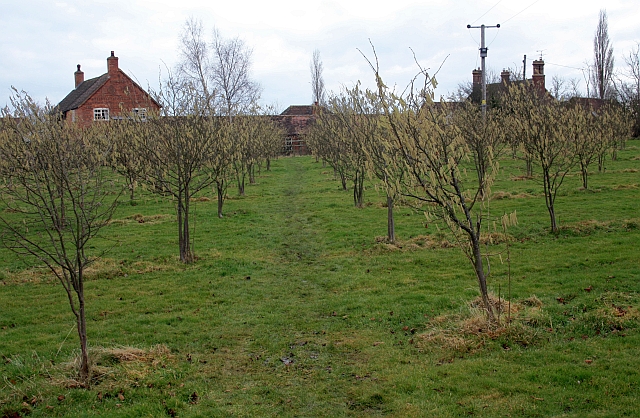
- Hazelnut blooms earlier than any other fruit crop in our region. In continental Croatia, blooming begins in February and March, when average daily temperatures reach approximately 12–14 °C. In warmer winters (e.g., Međimurje), blooming may start as early as late January.
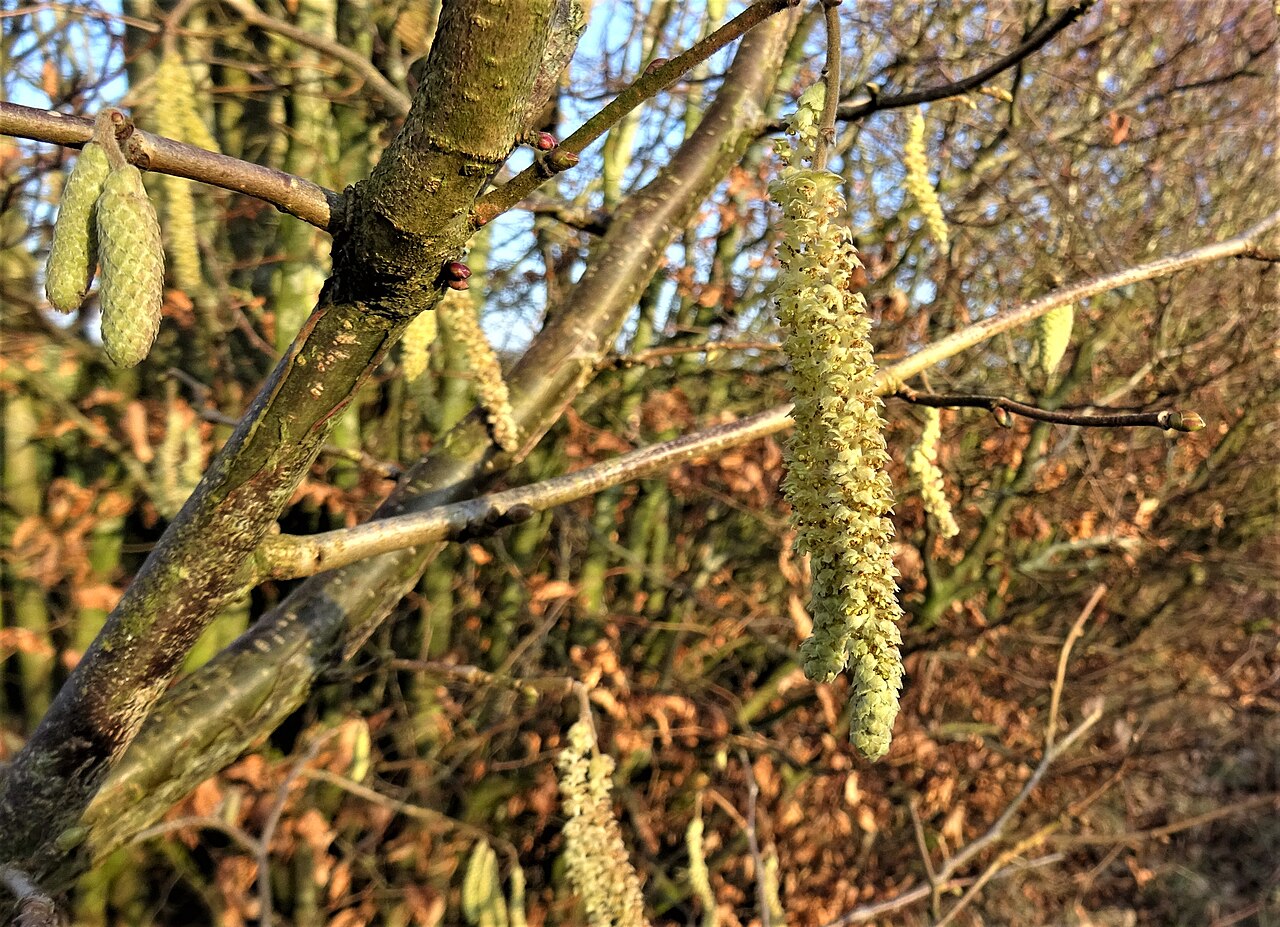
- Floral organs are formed almost a year in advance. Catkins (male flowers) begin to form in late June and July, entering winter fully developed. The pistil of the female flower forms only the following year during fertilization.
- Harvest is conducted from the ground after natural fruit drop. Hazelnuts ripen and fall to the ground naturally, usually in September and October, from where they are collected (manually or with self-propelled vacuum harvesters).
- Winter is not a period of complete dormancy. Since hazelnut blooms in winter, key protection measures (e.g., copper preparations after leaf fall and after blooming) fall precisely during the "cold" part of the year.
All agrotechnical interventions should be adapted to the harvest technology: if mechanical harvesting is used, the inter-row space must be clear and mowed low, which dictates the schedule for mowing and mulching.
Phenophases according to the BBCH scale
To precisely link work schedules to orchard conditions (rather than just dates), it is useful to use the BBCH scale — an internationally recognized scale of developmental stages that has been detailed for cultivar 'Barcelona' and other hazelnut cultivars in scientific literature (Paradinas et al., 2022; Taghavi et al., 2022). The advisory service routinely indicates BBCH stages in its notices to producers (e.g., "BBCH 71–72", "BBCH 72–75"), so familiarity with the scale facilitates tracking recommendations.
| BBCH | Phase | Approximate Period (Cont. HR) |
|---|---|---|
| 00–09 | Bud dormancy → swelling | November–January |
| 51–69 | Blooming (catkins release pollen, female flowers receptive) | (January) February–March |
| 10–19 | Leafing: first leaf (10), third leaf (13), nine or more leaves (19) | March–April |
| 71–79 | Fruit development: fruit set (71), intensive growth and kernel filling (72–75) | May–July |
| 81–89 | Ripening: start of ripening (81) → physiologically mature fruits (89) | August–September |
| 92–97 | Aging, leaf fall, start of dormancy | October–November |
Blooming and leafing occur simultaneously with fruit development
In hazelnut, BBCH stages for blooming (5x) and leafing (1x) partially overlap, with female flowers blooming before leafing. Fruit (7x) and ripening (8x) stages are most important for planning protection and harvest.
Overview of phenophases and operations throughout the year
The following table provides a quick orientation. Exact dates shift depending on the year, altitude, and cultivar — monitor the condition in your own orchard, not just the calendar.
| Period | Phenophase (BBCH) | Main Operations |
|---|---|---|
| January | Dormancy / start of blooming (00–51) | Completion of winter pruning, gathering pruned wood |
| February | Blooming (51–69) | End of pruning, late-winter protection (mineral oil, sulfur), fertilization preparation |
| March | End of blooming, vegetation start (10) | Early spring nitrogen fertilization, control of hazelnut eriophyid mite |
| April | Leafing, shoot growth (10–19) | Leaf protection (copper, fungicides), start of irrigation, mulching |
| May | Fruit set (71) | Start of control of hazelnut weevil (mid/late May), leaf and fruit protection, irrigation |
| June | Fruit development, formation of catkins for next year (72–75) | Protection against hazelnut weevil and bugs, irrigation, mowing |
| July | Kernel filling, highest water needs (75–79) | Protection (end of critical period), intensive irrigation, summer pruning |
| August | Fruit ripening (81–87) | Leaf sampling, harvest preparation, final mulching |
| September | Fruit drop and harvest (89) | Harvest, drying, reduce/stop irrigation |
| October | End of harvest, leaf fall (92–95) | Completion of harvest, autumn NPK fertilization, copper application |
| November | Dormancy (97–00) | Copper application after leaf fall, liming, planting |
| December | Dormancy (00) | Winter pruning, planting, season planning |
| ## Month by Month |
January — End of Dormancy, Sometimes Already Flowering
January is traditionally the month for winter pruning while the plant is dormant and leafless. Pruning should be carried out in dry and not excessively cold weather; cuts larger than a few centimeters should be coated with horticultural wax. Pruned branches should be collected (manually or mechanically "raked") and removed from the orchard as they can be a source of infection (especially bacterial canker and blight).
Important note: in warm winters in recent years, flowering in warmer areas (e.g., central Međimurje) may begin during warmer days in January. Therefore, pruning should be completed before the flower clusters spread and before sap flow begins.
February — Flowering (BBCH 51–69)
February is the main month for flowering in most of continental Croatia. At this time, hazel releases pollen from the catkins, and small red female flowers receive the pollen. During the flowering phase, treatments that could damage the flower are generally not performed — this is also a general rule from Serbian and Croatian hazelnut protection manuals.
- Pruning must be completed before the start of sap flow (latest by early spring).
- Late-winter protection: one treatment at the end of winter is directed against overwintering pest forms — mineral (paraffin) oil against scale insects (e.g., Eulecanium coryli), informally at 0.5 % according to the label. Against the hazelnut bud mite (Phytoptus avellanae), sulfur is used during the swelling and bud opening phase.
- Fertilization preparation: if soil analysis has been performed, spring nitrogen top-dressing is planned.
March — End of Flowering and Start of Vegetation (BBCH 10)
As temperatures rise, flowering ends and vegetation begins. This is the key month for spring (nitrogen) fertilization and for early-spring control of the hazelnut bud mite.
- Nitrogen fertilization: before vegetation starts (see the Fertilization section below).
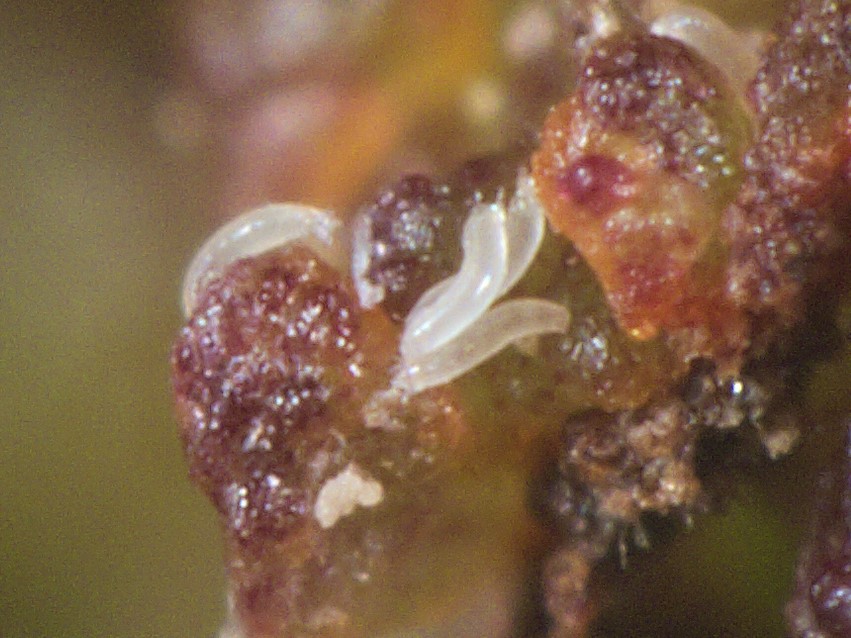
- Hazelnut bud mite (cone gall mite): egg laying begins in early March and continues until April; optimal treatment occurs during the mass migration of mites from old to new buds, at air temperatures above 15 °C. It is controlled with preparations based on sulfur (in Croatia, sulfur-based products are registered for this purpose), at concentrations around 0.5–0.6 % (informative, according to the label). In smaller orchards, manual removal and destruction of deformed (thickened) buds is recommended.
Towards the end of flowering, a copper preparation is planned (see also autumn) — these are the two recommended timing for copper in the season (after flowering and after leaf fall).
April — Leafing and Shoot Growth (BBCH 10–19)
With leafing, active protection of leaves against fungal and bacterial diseases begins:
- Leaf and young organ protection: in the phase of first leaf development, copper preparations are applied (preventively against bacterial blight and canker) and, as needed, sulfur (powdery mildew, leafhoppers, and mites). Treatment is repeated as needed during humid periods.
- Irrigation can begin in dry springs; the planned irrigation period in Croatian orchards is typically April–August.
- Inter-row space: mowing/mulching begins; the goal is a low, compact grass cover suitable for mechanical harvesting.
May — Fruit Set and Start of Critical Protection (BBCH 71)
The second half of May is a turning point in protection: the critical period for controlling the filbert weevil (Curculio nucum) begins — the most dangerous hazelnut pest in Croatia. Larvae bore into the fruits (exit holes with a diameter of 2–3 mm), and in Europe, this pest can cause up to 40 % yield loss.
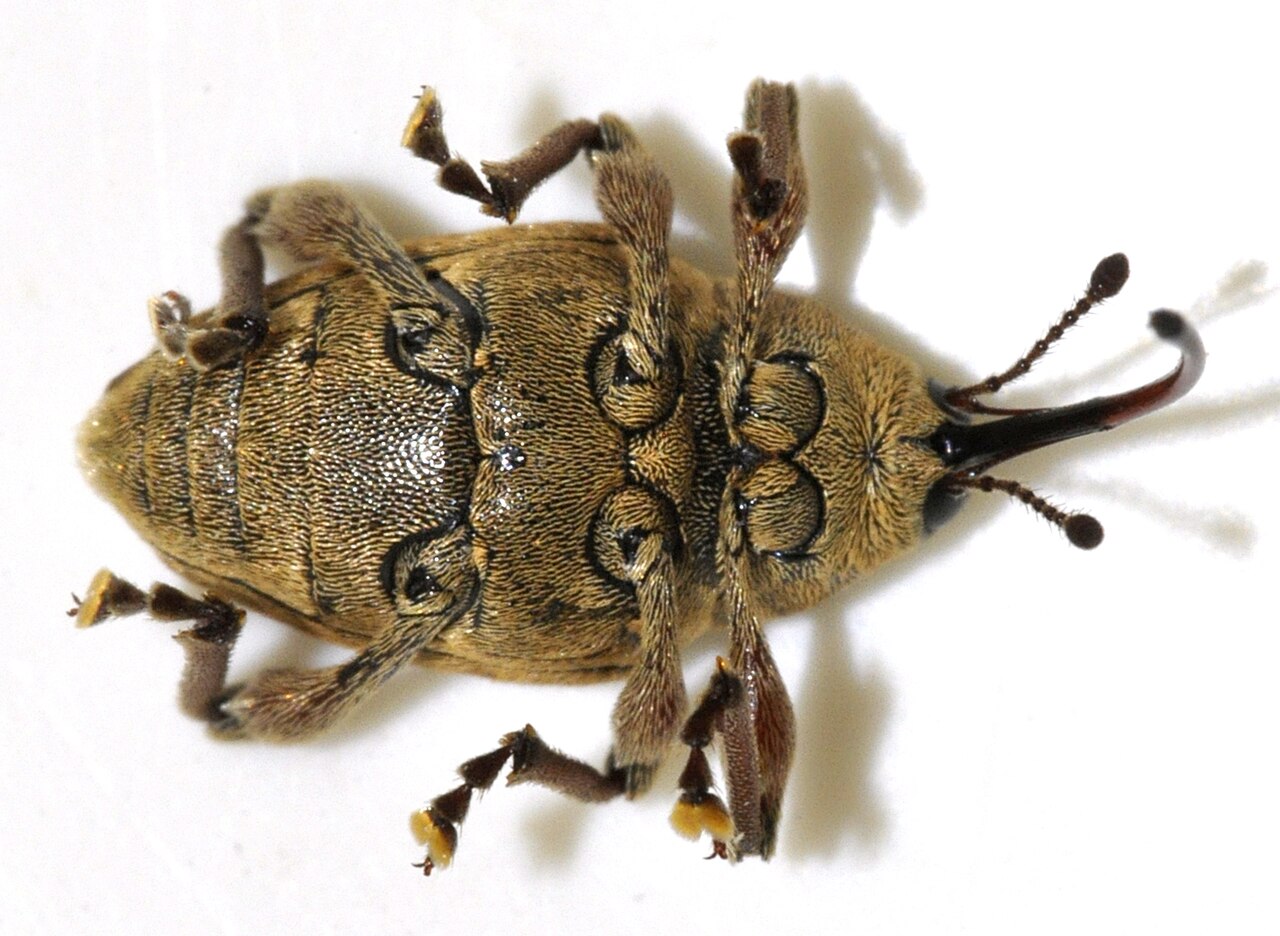
- Critical control period for filbert weevil: from late May to mid-July (the advisory service 2026 cites "late May to mid-July"; control begins with the appearance of adult weevils).
- Decision threshold from literature: around 3 adult weevils per tree (by shaking onto a tray) or more than ~10 % damaged fruits as the economic injury level (informative).
- Active substances: control is carried out with permitted insecticides according to the advisory service's recommendation and monitoring of adult flight. Caution: the list of registered insecticides for hazelnut is very narrow and changes; what literature previously cited (e.g., thiacloprid-based preparations) is no longer permitted — always check the FIS (Register of Plant Protection Products).
- Simultaneously, protection of leaves and fruits against fungal diseases and bacterial blight continues (copper, registered fungicides for leaf spot and fruit rot).
June — Fruit Development and Formation of Catkins for Next Year (BBCH 72–75)
Fruits grow and the kernel fills, while at the same time the plant begins forming catkins for the next year (by late June). Protection remains the focus:
- Targeted protection against the most economically important pests (filbert weevil, phytophagous bugs) and causes of fruit rot/drying is planned during May, June, and July.
- Phytophagous bugs (Gonocerus, Palomena, Dolycoris, increasingly also the Asian Halyomorpha halys) can migrate from surrounding crops to the fruits and cause brown/black spots and kernel deformations.
- Irrigation becomes increasingly important with rising temperatures.
- Mowing of inter-row space: grass is mowed when it grows to ~12–15 cm; approximately 3–4 mowings are needed during the season.
July — Kernel Filling and Highest Water Needs (BBCH 75–79)
July is the month of highest water needs as the kernel fills. Drought during this period directly reduces nut size and quality.
- End of the critical period for filbert weevil (until mid-July); planned protections are completed respecting the pre-harvest intervals (PHI) of the products.
- Irrigation: intensive, using a drip system (see the Irrigation section).
- Summer pruning (thinning): carried out gradually by thinning (not shortening) branches so as not to remove too much foliage at once. The goal is to bring light to the fruiting branches — well-lit branches can produce two to three times more than those in the shade.
August — Ripening and Preparation for Harvest (BBCH 81–87)
- Fruit ripening and reduction of irrigation as harvest approaches.
- Leaf sampling for nutrient analysis (commonly in August) to plan autumn/next year's fertilization.
- Final mulching a few weeks before harvest: the goal is a clean, low surface where fruits have lower moisture content, increasing the efficiency of mechanical harvesting.
September — Harvest and Drying (BBCH 89)
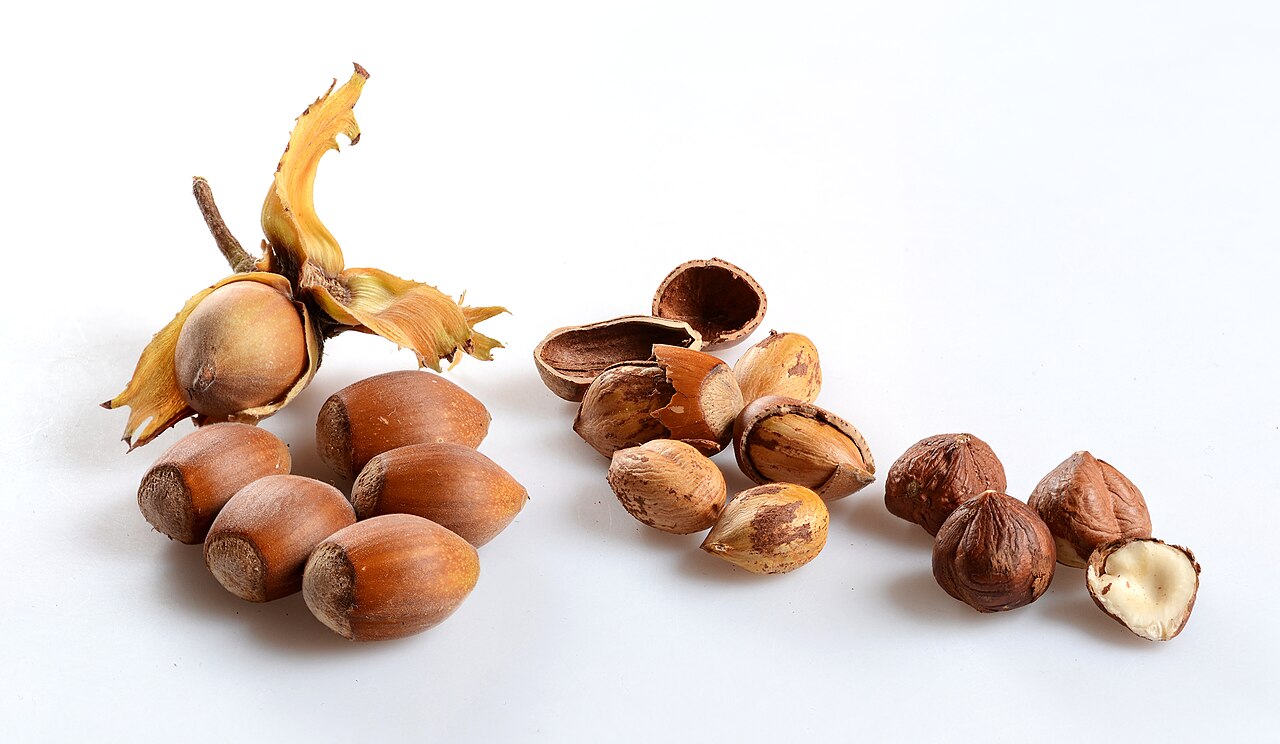
The main harvest in Croatia takes place in September and October, after the fruit drops naturally from the tree.
- Harvest: manual collection or mechanical, using a self-propelled harvester that sucks up fruits from the ground and separates them from debris (twigs, leaves, soil).
- Drying: harvested hazelnuts (still in the shell) should be dried as soon as possible to a safe kernel moisture content to avoid mold appearance and ensure storage stability. Drying is carried out by aeration/active ventilation with warm air; the target kernel moisture is usually around 6 % (informative — check buyer requirements and quality standards). After leaf fall, irrigation is stopped.
October — End of Harvest and Autumn Fertilization (BBCH 92–95)
- Completion of harvest of remaining, later-dropping fruits.
- Autumn fertilization: complex NPK fertilizers are spread in autumn over the entire orchard area (details in the Fertilization section).
- If spring nitrogen fertilization was not performed, part of it can be postponed, but late-summer/autumn excess nitrogen is avoided as it delays wood ripening.
November — Copper Protection and Autumn Work (BBCH 97–00)
- Copper preparation after most leaves have fallen is one of the two key timing for copper (the other is after flowering). This is the main preventive measure against bacterial blights (Xanthomonas arboricola pv. corylina, Pseudomonas syringae pv. avellanae) and canker, especially where premature branch or fruiting wood dieback occurs. Note: in some orchards, copper-resistant strains of Xac have already been identified, so the focus is on prevention (healthy planting material, resistant cultivars, pruning, and removal of infected parts).
- Liming and ameliorative interventions as needed (based on soil analysis).
- Planting new seedlings: autumn (from around St. Martin's Day onwards) is the recommended period; deep plowing at the end of summer precedes autumn planting.
December — Dormancy, Pruning, and Planning (BBCH 00)
- Winter pruning of young and bearing orchards during dormancy, before vegetation starts. Young orchards are shaped (training form), and in bearing orchards, branches are thinned and dead/diseased wood is removed.
- Planting can continue if weather permits; if autumn is missed, the alternative is late February / early March.
- Planning for the next season: list of tasks and costs, procurement of products, soil and leaf analyses, protection plan.
Pruning Throughout the Year — Summary
| Pruning Type | Timing | Goal |
|---|---|---|
| Formative (training) | Dormancy (winter), first years | Shaping the training form (bush or tree) |
| Winter pruning on bearing trees | December–February, before sap flow | Thinning, removal of dead/diseased wood, light penetration |
| Summer pruning | June–July | Gradual thinning for light penetration, without shortening |
| Rejuvenation | After ~10 years, gradually | Restoring productivity; bush cut almost to ground, crown 3–4 buds above trunk |
Rejuvenation is not done on the entire orchard at once (the rejuvenation year is often without yield), but gradually — every second or third row over 2–3 years. Suckers (shoots from the root, "wolf branches") should be removed regularly.
Fertilization Throughout the Year — Summary
Fertilization should always be based on soil and leaf analysis; the figures below are indicative, from studies and investment reports (Krpina, 2004.; Manušev, 1988.; hazelnut production investment study, 2019.) and depend on cultivar, soil, and location. For more details, see the article on hazelnut fertilization.
| Period / Orchard Age | Fertilization | Indicative Figures from Studies |
|---|---|---|
| Before planting | Ameliorative (organic + mineral, liming) | Based on soil analysis |
| 1st–4th years, early spring | Nitrogen only (e.g., CAN 27 %), around the bush | ~0.5 / 0.6 / 0.8 / 1.0 kg per plant (1st–4th year) |
| 4th–8th years | NPK in autumn + CAN in spring, over the area | autumn: approx. 20 kg/ha P and 150 kg/ha K; spring: approx. 100 kg/ha N (≈350 kg/ha CAN) |
| From 8th year | Same principle as 4th–8th years | Nutrient quantities higher by approx. 35 % |
| During the season | Foliar top-dressing (N, P-K, amino acids) | e.g., PK preparations ~2 L/ha, according to label |
Indicative figures, not a recipe
The figures provided come from Croatian studies, investment reports, and older literature (Krpina, 2004.; Manušev, 1988.) and serve only as an order of magnitude. Demonstration trials in Međimurje showed that the most favorable yield ratio is achieved with balanced NPK fertilization (e.g., 500 kg/ha NPK 7-20-30 + CAN), not just nitrogen. Excessive nitrogen fertilization in late summer is undesirable as it delays wood ripening and reduces winter hardiness.
Year-round protection — summary
It is generally recommended to perform 5–7 treatments per year, depending on pest and disease pressure as well as weather conditions. A rough schedule by phenological phases:
| Treatment | Time / Phenophase (BBCH) | Target | Active Substance / Group |
|---|---|---|---|
| Late Winter | Bud Swelling (00–09) | Scale insects, hazelnut mite | Mineral (paraffinic) oil; sulfur |
| Early Spring | Leafing (10–19) | Bacterial diseases, canker, powdery mildew | Copper compounds; sulfur |
| Post-flowering / Leafing | 10–19 | Fungal leaf spots | Registered fungicides (e.g., pyraclostrobin + boscalid) |
| May–July | Fruit Development (71–79) | Hazelnut weevil, phytophagous bugs, fruit rot/drying | Registered insecticides; copper compounds |
| Autumn / November | Leaf Fall (92–97) | Bacterial diseases, canker | Copper compounds |
During every treatment, the waiting period (interval from the last application to harvest) must be strictly observed, and only approved products according to the current list and label should be used.
Active substances by purpose (instead of trade names)
We deliberately avoid trade names because registrations change rapidly (many formerly common preparations no longer have approval — e.g., thiacloprid, endosulfan). It is better to think in terms of active substances and check which preparations containing that substance are currently registered for hazelnut in the FIS (Register of Plant Protection Products).
| Group / Purpose | Active Substances (approximate) | Note |
|---|---|---|
| Bacterial diseases, canker, fruit rot | Copper compounds (copper hydroxide, copper oxychloride, Bordeaux mixture) | Partly permitted in organic production; emergence of copper-resistant Xac strains |
| Powdery mildew, bud mites | Sulfur | The only widely available measure against hazelnut mite; apply at T > 15 °C |
| Fungal leaf spots (gray spot, Gnomonia) | Pyraclostrobin + boscalid and other registered fungicides | Check registration for hazelnut |
| Hazelnut weevil (Curculio nuculum) | Approved insecticides — check FIS | Number of registered products is very limited; biological measures (entomopathogenic nematodes, Beauveria bassiana) are under development |
| Bugs | Azadirachtin, pyrethrins, etc. (registered) | Some suitable for organic production |
| Aphids, scale insects | Mineral oil and registered insecticides | Oil used during dormancy against overwintering forms |
Approvals change — check FIS before application
The list of approved products and their dosages changes regularly. For example, thiacloprid (previously a common insecticide for hazelnut weevil) lost its approval, and at one point there was a period in Croatia with no registered insecticides specifically for this pest. Before every application, check the current status in the FIS database (fis.mps.hr) and monitor notices from the advisory service. Plant protection products may only be applied by persons who have passed the exam on safe handling of pesticides.
Biological and integrated measures
- Entomopathogenic nematodes (e.g., Steinernema, Heterorhabditis) against hazelnut weevil in soil — experimental efficacy ranging from ~32–88 %, with limited short-term persistence.
- Entomopathogenic fungus Beauveria bassiana showed high efficacy (up to ~99 %) in research against C. nuculum.
- Shaking adult weevils onto a substrate (mechanical monitoring and control), removal of infested buds in hazelnut mite management, and selection of cultivars with shells that harden faster (making oviposition by hazelnut weevil more difficult).
Irrigation throughout the year
- Period: typically April–August; peak demand in July (kernel filling).
- System: most commonly "drip irrigation".
- Approximate quantities (from Croatian studies): from ~2,500 L per tree annually to ~4,000 m³/ha annually (depending on soil, climate, planting density — for informational purposes only).
- In dry summers, irrigation is more frequent and abundant; during rainy periods, it is suspended. Irrigation is reduced or stopped before harvest to ensure surface dryness and easier harvesting.
Practical recommendations and common mistakes
- Do not wait for the calendar — monitor phenophases (BBCH). Flowering, leafing, and harvest shift by several weeks depending on the year and location.
- Do not delay pruning. Winter pruning should be completed before sap flow begins; in warm winters, this means an earlier deadline than before.
- Do not miss the window for hazelnut weevil control (late May – mid-July). This is the most financially critical period for protection — but first check what is registered.
- Think in active substances, not trade names, and check the FIS before every application.
- Plan copper applications in several rounds, mandatory after leaf fall and after flowering, especially at sites with branch dieback.
- Treat hazelnut mite in time (migration from buds, T > 15 °C), using sulfur; in small orchards, destroy deformed buds.
- Fertilize based on analysis, not "guessing"; avoid late-summer nitrogen.
- Dry immediately after harvest to target kernel moisture (~6 %) to prevent mold.
- Keep the inter-row clean and mowed low if harvesting mechanically; perform final mulching a few weeks before harvest.
- Rejuvenate gradually, row by row, so you do not lose the entire harvest.
Sources
This article is an AI summary compiled from an internal collection of hazelnut literature (RAG corpus) and public sources. Main sources used:
- Most significant hazelnut pests (Economic/Proceedings, 2011.) — RAG corpus; hazelnut weevil, hazelnut mite, thresholds, biological measures
- FRUIT ADVISORY: Hazelnut Weevil — Curculio nuculum L. (2016.) — RAG corpus; start of control, threshold ~3 weevils/tree
- FRUIT ADVISORY: Hazelnut Bacterial Diseases — Xanthomonas / Pseudomonas (2015.) — RAG corpus
- Plavec et al. (2024.): Xanthomonas arboricola pv. corylina, causal agent of hazelnut bacterial blight in Croatia — RAG corpus; copper, resistant strains, prevention
- Now is the time for the first spring hazelnut protection (2025.) / Hazelnut Mite — AgroPortal (2026.) — RAG corpus; sulfur, mite migration, T > 15 °C
- Registered preparations in hazelnut production / Approximate EKO protection and fertilization program for hazelnut 2023. — RAG corpus
- Notices to hazelnut producers — Ministry of Agriculture (2017., 2022., 2025., 2026.) — RAG corpus and savjetodavna.mps.hr; critical period, BBCH stages, FIS
- ECONOMICS AND ESTABLISHMENT OF HAZELNUT ORCHARDS (2021.) / Investment study on hazelnut production (2019.) — RAG corpus; approximate fertilization figures (Krpina 2004., Manušev 1988.)
- Proceedings of the 13th Scientific-Professional Conference of Croatian Fruit Growers (2018.) — RAG corpus; fertilization trial Međimurje
- fitoeko-catalog 2025 (Agroklub) — RAG corpus; BBCH stages of hazelnut
- Notice to hazelnut orchard owners on protection measures (May 2026.) — savjetodavna.mps.hr
- FIS — Phytosanitary Information System (search tool for plant protection products)
- Annual hazelnut treatment plan — Gospodarski list
- Paradinas et al. (2022.), Scientia Horticulturae 296: 110902 — extended BBCH scale for hazelnut ('Barcelona'); Taghavi et al. (2022.), 296: 110837
- Hazelnut — Agroklub
- Hazelnut Reference Guide (IAF/BC, 2023)
- Pruning and training a hazelnut orchard — Province of British Columbia
- Growing Hazelnuts in the Pacific Northwest — OSU Extension