Hazelnut Flour, Paste, and Spreads
Content generated by artificial intelligence — verify before application
This article was automatically compiled from a collection of hazelnut literature using artificial intelligence and may contain errors or outdated information. It serves as a starting point for further research, not as professional advice. Dosages, products, and timelines are informative and depend on the cultivar, location, and applicable regulations — always consult with advisory services and official sources before application.
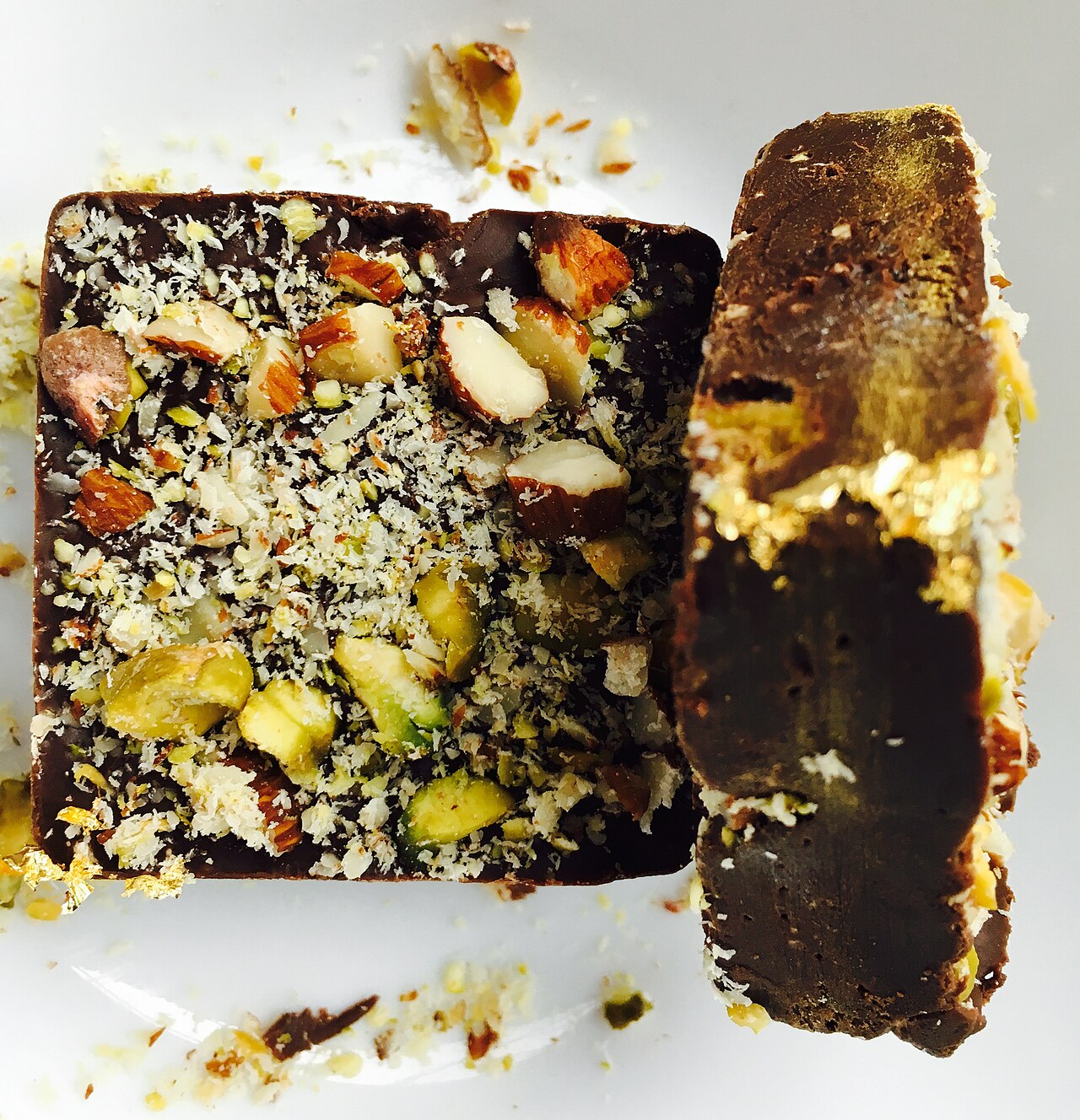
Why Processing: Economics of Added Value
Field experience shows that processing is often what separates survival from profitability. In the example of one Croatian farm (a family farm in the surrounding area that processes and sells everything "at the doorstep"), it is emphasized that processing "requires conditions for space preparation, investment in machinery, marketing, sales," and a lot of administration — but it allows all produced goods to be sold without being tied by a contract. It was on this farm that recognizable spreads were developed (combining finely made paste from roasted hazelnuts with cocoa, chocolate, and agave syrup) and hazelnut butter based on a recipe adopted from vegan cuisine.
The confectionery industry is the main consumer of kernels: it uses them for producing mass and nougat, various spreads for bread, for coating kernels, and most importantly as filling in chocolate production. The food industry seeks smaller, round-shaped fruits, thin shells, and good kernel recovery rates (yield). This means that fruits that are not first-grade for sale in the shell often find their best value precisely in processing.
| Product | Main Raw Material | Typical Market | Value Note |
|---|---|---|---|
| Hazelnut flour | Cake after oil pressing or ground kernel | Gluten-free baking, confectionery | Often a by-product of oil production |
| Paste (100% hazelnut) | Roasted and finely ground kernel | Confectioners, ice cream makers, industry | High-value semi-finished product |
| Spread (with cocoa/chocolate) | Paste + sugar + cocoa/chocolate + oil | Retail, direct-to-consumer | Highest margin, strong brand |
| Hazelnut butter | Ground kernel (or sediment from oil production) | Niche: vegan, healthy food | High price due to limited quantity |
Figures from literature show that processing is not reserved only for large systems: even small family farms (e.g., orchards of 1–8 ha size) develop their own product lines, and the European market for nut-based spreads is estimated at around 2.5 billion USD in 2026 with an annual growth of approximately 6%.
Production of Hazelnut Paste
Hazelnut paste (pure, 100% ground kernel) is the fundamental semi-finished product from which spreads, fillings, creams, and ice cream bases are made. The technological process has several key steps.
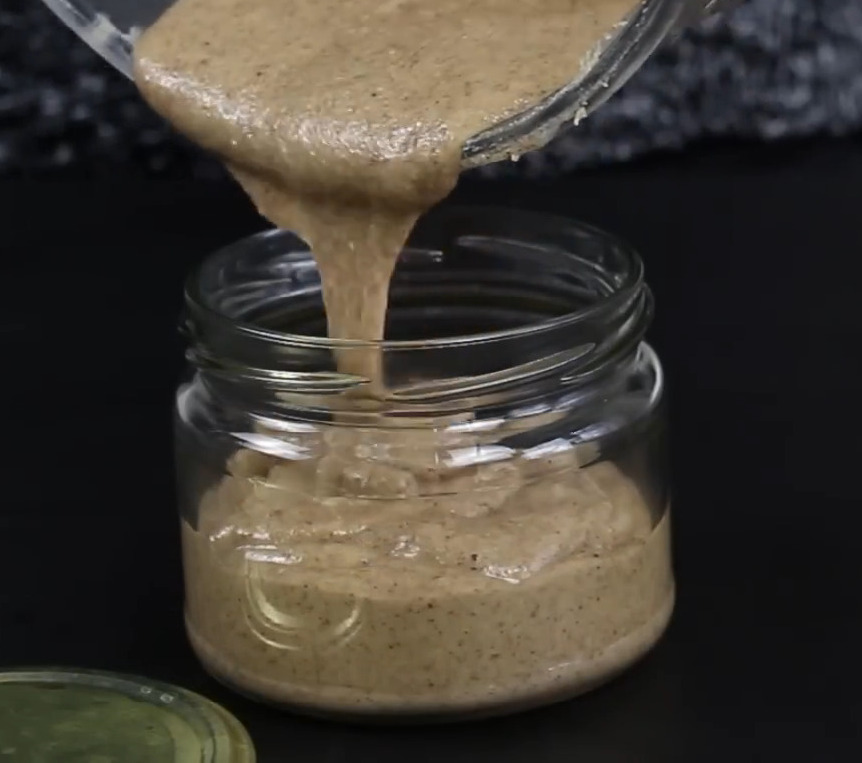
1. Roasting (Toasting)
Roasting develops aroma and color (Maillard reactions) and facilitates the separation of the brown skin (pellicle), which carries bitterness and tannins. In quality assortments, the skin separates well during roasting, which is an important criterion when selecting a cultivar for processing.
- Typical range: 120–160 °C, 15–30 minutes, depending on the equipment, kernel size, and target color (values are informative — adapt to equipment and cultivar).
- Temperature that is too low does not develop aroma; temperature that is too high creates bitterness and dark, "burnt" notes.
- After roasting, the kernel should be cooled quickly to stop the thermal reaction and prevent over-roasting due to residual heat.
2. Skin Removal (Blanching/Peeling)
The brown pellicle is removed by rubbing (abrasive drums) after roasting or by blanching. For light, "noble" pastes, skin removal is necessary; for rustic, more intense pastes, part of the skin may remain.
3. Grinding into Paste
The roasted kernel is ground until it releases its own oil and transitions into a smooth, viscous paste. Grinding is the most critical step for texture and fineness.
- Pre-grinding (roller/hammer mill) → fine grinding (ball mill, three-roll mill, or colloid mill).
- Goal for fine confectionery paste: particle size usually below 25–30 µm (informative), so that the paste is not "sandy" on the palate.
- Heat develops during grinding; excessive temperature accelerates oxidation and ruins the aroma, so quality mills are cooled.
4. Stabilization and Storage
Due to the high content of unsaturated fats, paste is prone to oxidation (rancidity). Protection measures:
- Storage at lower temperatures, in closed packaging, protected from light and air.
- If necessary, packaging with inert gas (nitrogen) for industrial batches.
- Monitoring the peroxide value as an indicator of the freshness of the fat phase.
Production of Spreads (Creams)
A spread is created when other ingredients are added to the base paste. A classic "Nutella-type" formulation contains hazelnut paste, sugar, cocoa or chocolate, vegetable fat/oil, and an emulsifier (usually lecithin) and flavor. The emulsifier and thorough mixing prevent separation (oil bleeding) during storage.
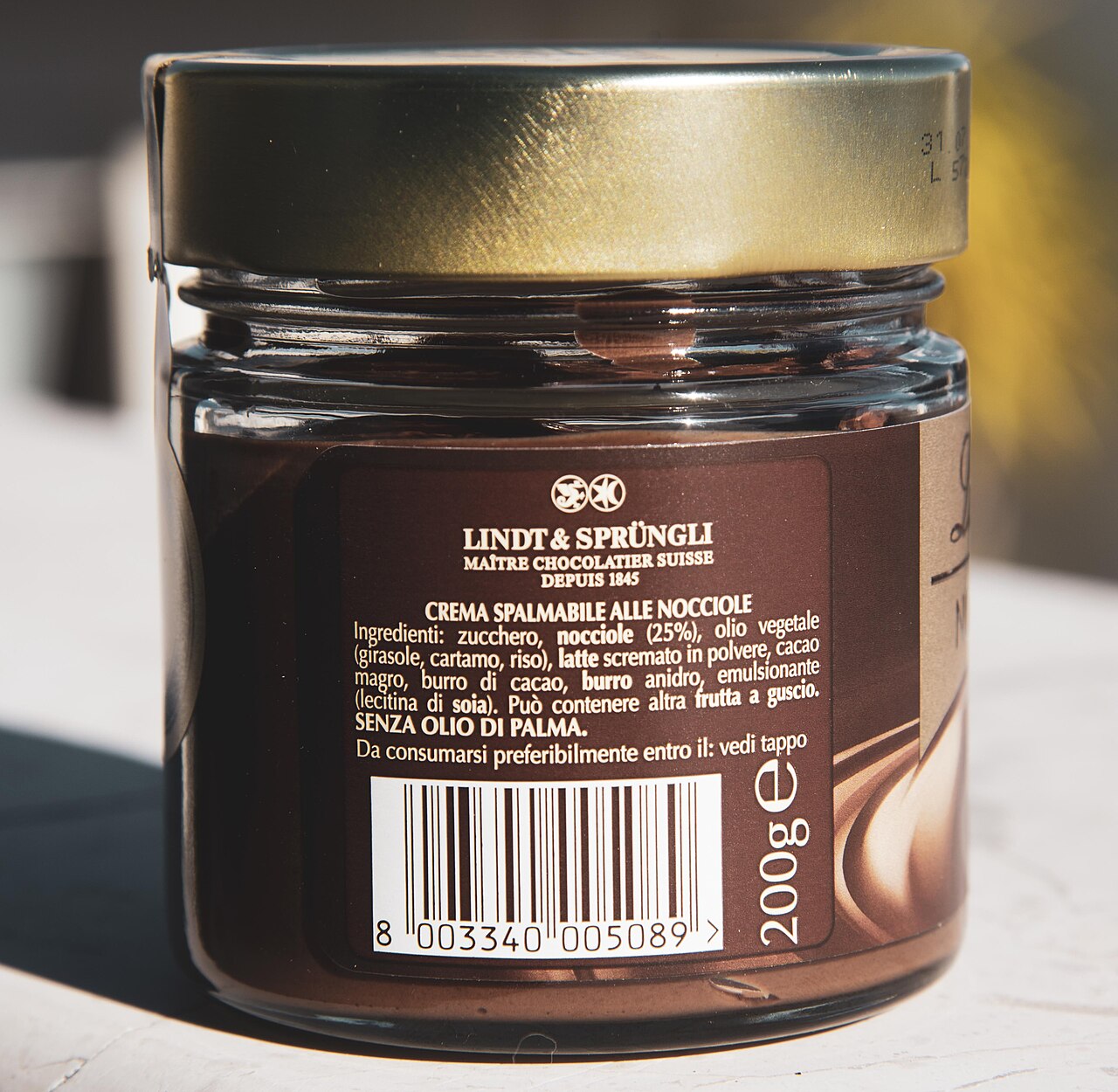
Approximate (informative) structure of a chocolate-hazelnut spread recipe:
| Ingredient | Approximate Share | Role |
|---|---|---|
| Sugar | 40–55 % | Sweetness, body, structure |
| Hazelnut paste | 13–30 % | Character, aroma (higher share = premium) |
| Vegetable fat / oil | 10–25 % | Lubricity, prevents hardening |
| Cocoa powder / chocolate | 7–15 % | Color and chocolate flavor |
| Skim milk powder | 0–10 % | Milky note, body |
| Emulsifier (lecithin) | 0.3–0.5 % | Stable emulsion, viscosity |
| Vanilla / flavor, salt | in traces | Rounding out the flavor |
Premium positioning is based on a high hazelnut content and a "clean label" (no palm oil, no artificial flavors). Technological sequence: paste preparation → mixing with dry ingredients → fine grinding of the entire mass (conching/rollers for smoothness) → tempering/cooling → filling into jars and quality control.
Practical recommendations for spreads:
- Hazelnut content sells the product. "Healthy food" market niches value spreads with ≥30% hazelnut and no palm oil.
- Watch for oil separation. Sufficient emulsifier, good homogenization, and controlled filling temperature reduce oil bleeding on top of the jar.
- Control sugar. The market increasingly demands reduced sugar or sweeteners (agave syrup, erythritol), but this changes texture and shelf life.
Hazelnut Butter
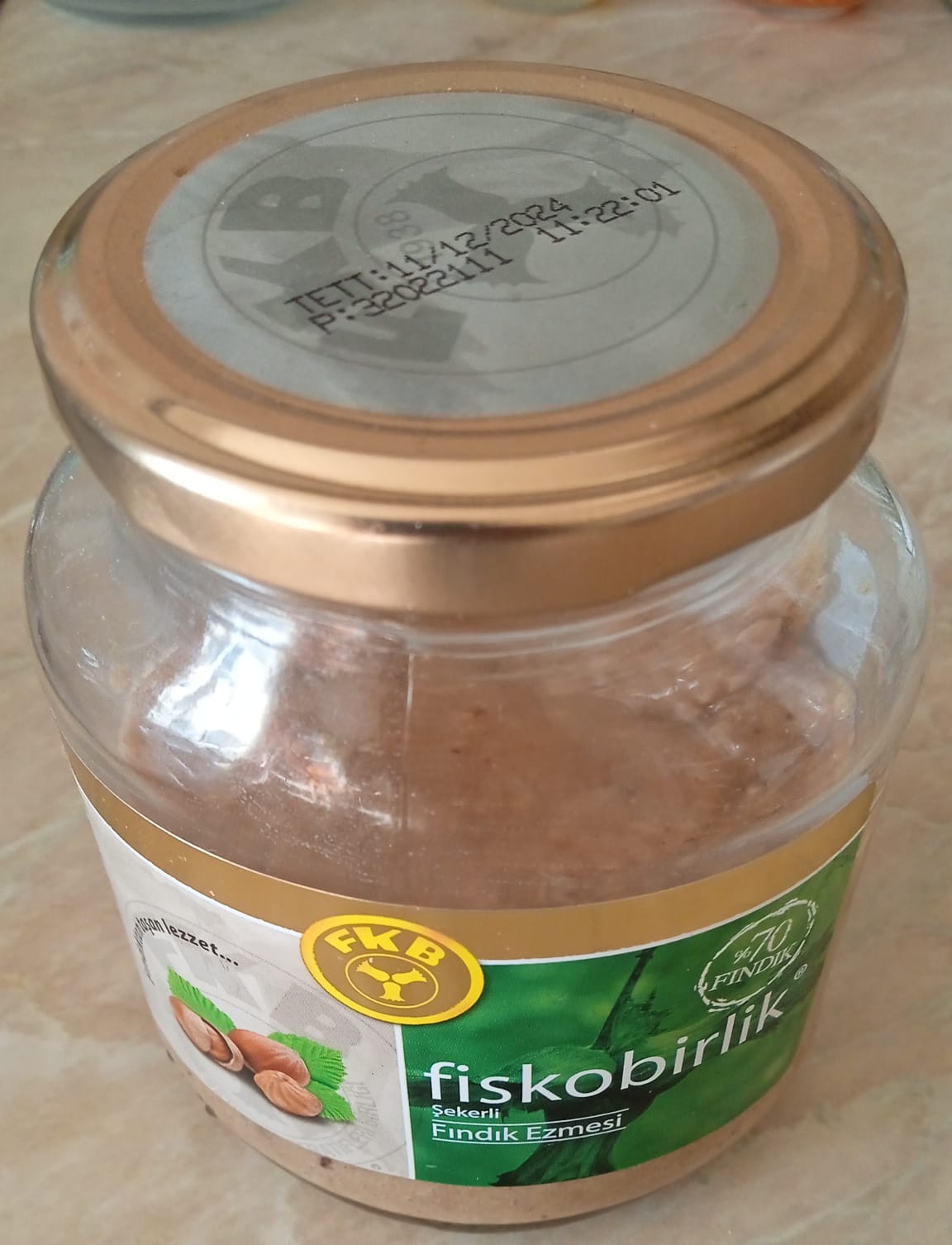
Hazelnut butter in the strict sense is a smooth, viscous mass obtained by grinding (roasted) kernels — similar in principle to peanut butter. Literature also describes it as fine sediment (sediment) remaining after the settling of oil in cold-pressed oil production: since it is obtained in very limited quantities as a by-product, its price is high. Such butter is added to premium products like pralines with hazelnut butter.
- The recipe is simple (kernel ± a little salt/oil), but requires a good mill and temperature control.
- Without emulsifier, oil will separate; mixing before use or adding a stabilizer is necessary.
- As a niche (vegan, "no added sugar"), it achieves a high price but small batches.
Hazelnut Flour and Gluten-Free Baking
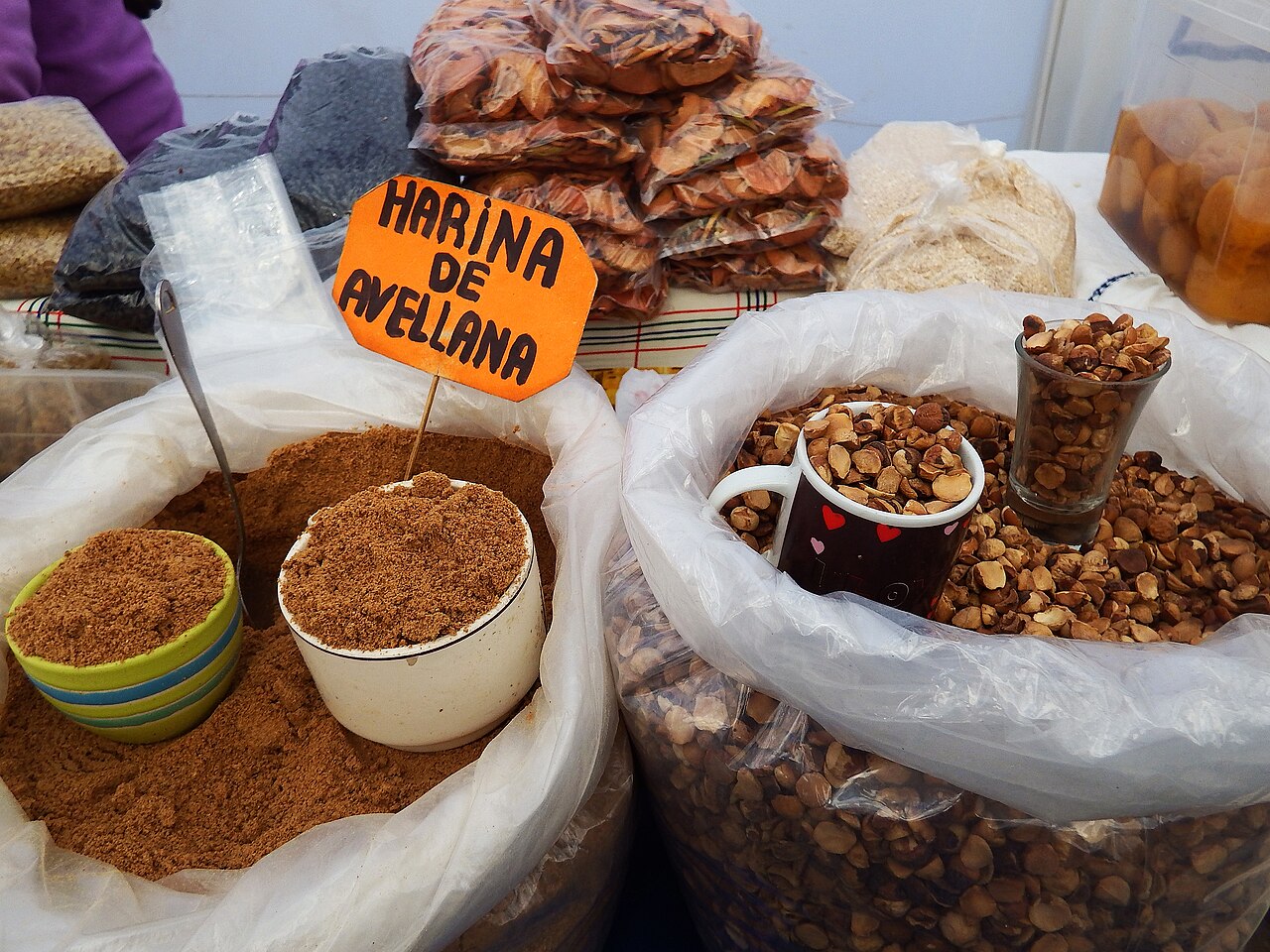
Hazelnut flour is most often brown in color and is obtained by grinding the kernel after oil pressing — i.e., from the cake (remaining solids), thereby simultaneously reducing the fat content and obtaining a more durable, "dry" product. Alternatively, the whole kernel is ground (then it is a matter of fattier, richer flour/ground kernel).
Key properties and application:
- Naturally gluten-free — suitable for people who avoid wheat and other cereal flours.
- Rich in fiber and minerals (especially magnesium, iron, and calcium) and vitamins.
- Used for cakes, cookies, pancakes, biscuits, and as an addition to savory dishes; traditionally, catkins (flowers) and ground kernels are mixed with wheat flour for bread.
Practical notes for baking:
- Hazelnut flour has no gluten, so it does not create structure on its own — in leavened doughs, it is combined with other (gluten-free) flours and binders.
- High fat content (in flour from whole kernels) shortens shelf life and accelerates rancidity — store cold and closed.
- Flour from cake (after oil pressing) has less fat, longer shelf life, and better absorbency.
On the Croatian market, there are already several organic hazelnut flours (packaging of typical sizes 200 g, 250 g, 500 g), which confirms that this is an established market niche with room for small producers with their own brand (e.g., "ORGANIC hazelnut flour").
Formulation and Application in Confectionery
Hazelnut is one of the most sought-after nuts in confectionery. Typical applications of semi-finished products:
| Semi-finished Product | Application in Confectionery |
|---|---|
| Paste (100%) | Ice cream bases (gianduja), creams, fillings, praline masses, macarons |
| Spread | Filling for napoleons, balls, croissants, spreadable product |
| Flour (defatted) | Gluten-free biscuits, dacquoise, frangipane, cookies |
| Ground Kernel (whole) | Cakes, cookies, toppings, marzipan-type masses |
| Hazelnut Butter | Premium pralines, fine spreads |
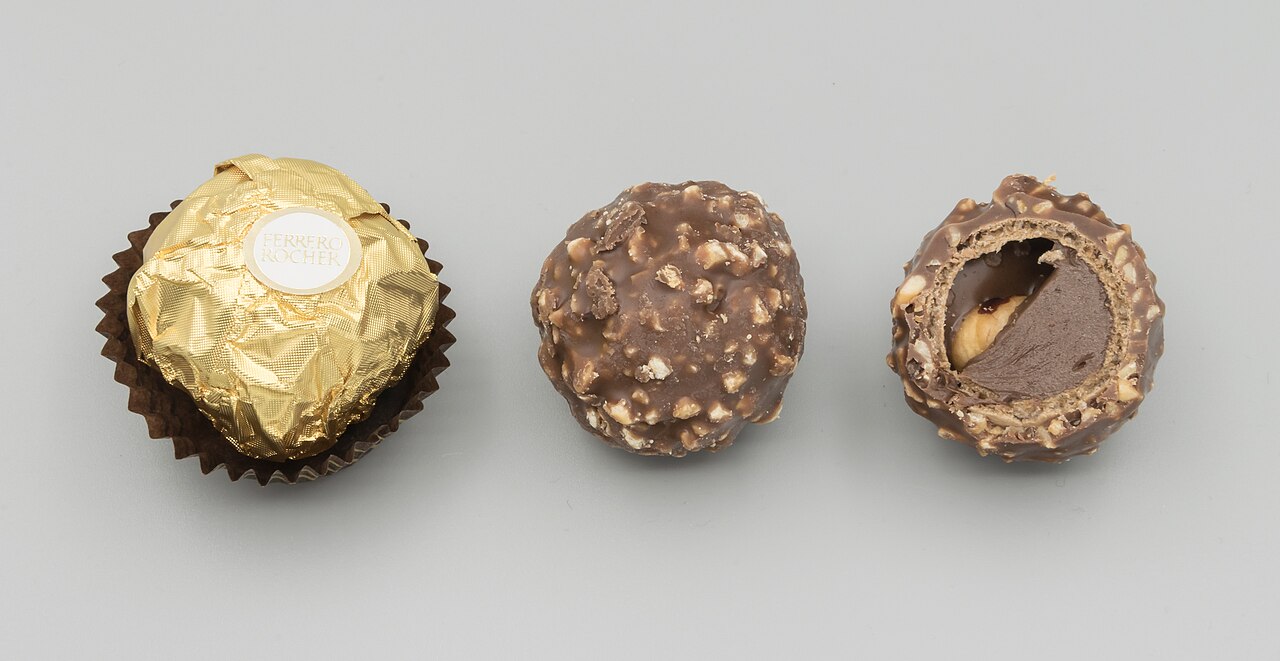
Gianduja (combination of finely ground hazelnuts and chocolate) is a classic premium product; nougat and nougat masses are also based on paste. When formulating confectionery, it is important to consider that paste introduces a lot of fat, which affects the ratio of other fats in the recipe, and that color and aroma intensity depend on the degree of roasting.
Common Mistakes
- Over-roasting → bitterness that cannot be "fixed" by later ingredients.
- Overly coarse grinding → "sandy" paste and spread with unpleasant texture.
- Neglecting oxidation → rancidity; always pay attention to shelf life, temperature, and packaging.
- Insufficient emulsification in spread → oil separation and unappealing appearance on the shelf.
- Treating whole kernel flour as "dry" flour → short shelf life and spoilage.
Regulatory and Technological Requirements
Transitioning from primary production to processing means the product becomes subject to food safety regulations. Key obligations (informational — check current regulations and consult advisory services):
- Registration/approval of the facility for food processing with the competent authority; processing must not be carried out in unregistered premises.
- HACCP system — hazard analysis and critical control points (e.g., roasting, cooling, hygiene, traceability).
- Labeling (EU Regulation 1169/2011): name, list of ingredients, net quantity, shelf life, storage conditions, entity details, nutritional declaration, and prescribed font size.
- Allergens: hazelnut (tree nuts) is one of the 14 major allergens that must be emphasized on all packaged and unpackaged products; mandatory warning about possible traces if other allergens are processed in the facility.
- Organic label: claims such as “BIO/organic” require certification and control; both the raw material and the process must meet organic standards.
- Fat phase safety: monitoring rancidity (peroxide value), and for nuts, the risk of aflatoxins/mold — control of raw material moisture and storage conditions.
- Spreadable fats / spreads: for products declared as spreadable fats, additional EU rules on definition and labeling apply; a hazelnut-based spread must be correctly labeled (it must not mislead the consumer).
- Traceability and sustainability: the “clean label” trend, Farm to Fork, and the EU Deforestation Regulation promote traceable and documented origin of the raw material.
Technological minimum equipment for a small line: roaster, skin removal device, mill (ball mill/rollers/colloid), mixer with heating, jar filling and sealing machine, and space and equipment for hygiene and storage. Raw material moisture and storage temperature are crucial for safety and shelf life.
Practical Recommendations (Summary)
- Start with paste as a base semi-finished product — from it, derive spreads, creams, and fillings.
- Choose cultivars whose skins separate well during roasting and which are in demand in the confectionery industry (good yield, small round kernels).
- For flour, use the cake after oil pressing (longer shelf life, lower fat content) or clearly label fat-rich flour made from whole kernels.
- In spreads, aim for a high hazelnut content and clean label for premium positioning.
- Resolve registration, HACCP, and labeling (especially allergens) before entering the market.
- Actively manage oxidation and aflatoxins — store cold, dry, sealed, with quality indicator monitoring.
Gallery

Sources
This article is an AI-generated summary compiled from a collection of hazelnut literature (internal RAG corpus) and public internet sources. Main sources used:
- INVESTMENT STUDY FOR THE PRODUCTION OF INNOVATIVE HAZELNUT-BASED PRODUCTS (Corylus avellana L.) — “Avellana BIO” flour, properties and packaging (RAG corpus)
- CHEMICAL COMPOSITION OF HAZELNUTS / Chemical composition of hazelnut — fat, protein, fiber content and kernel application (RAG corpus)
- “Does hazelnut cultivation have a future and how to…” — field example of processing, spreads and hazelnut butter (RAG corpus)
- Elaborate / feasibility study for hazelnut orchards — kernel application in the confectionery industry (masses, nougat, spreads, fillings) (RAG corpus)
- Economic/economic viability of hazelnut production — spreads, oil, market context (RAG corpus)
- Final thesis on organic hazelnut products in Croatia — organic flours, oils, pralines and spreads on the market (RAG corpus)
- Business plan / study for seedling production and food industry requirements (yield, fruit shape) (RAG corpus)
- Nut Geeks — How are Hazelnuts Processed Commercially — https://nutgeeks.com/commercial-hazelnut-processing/
- Kadzama — Raw vs Roasted Nuts for Chocolate and Nut Pastes — https://kadzama.com/blog/raw-vs-roasted-nuts-which-is-better-for-chocolate-and-nut-pastes/
- Mordor Intelligence — Europe Nut-Based Spreads Market — https://www.mordorintelligence.com/industry-reports/europe-nut-based-spread-market
- CBI — Buyer requirements: processed fruit, vegetables and edible nuts — https://www.cbi.eu/market-information/processed-fruit-vegetables-edible-nuts/buyer-requirements
- EUR-Lex — Spreadable fats: definition, labelling and sale — https://eur-lex.europa.eu/EN/legal-content/summary/spreadable-fats-dairy-and-non-dairy-definition-labelling-and-sale.html
- EU Regulation (EU) No 1169/2011 on the provision of food information to consumers (allergens, labeling)
Recommended equipment
🔎 nut roaster — Amazon →Affiliate links — we may earn a small commission at no extra cost to you.
Handheld Nut Cracker
For processing small batches of nut kernels.
| Use Case | Option Type | What to Check Before Purchase |
|---|---|---|
| Small quantity processing | Manual lever cracker | Crushing mechanism and shell separation |
| Kernel preservation | Adjustable pressure tool | Ease of cleaning and durability |
| High volume needs | Electric cracking machine | Professional equipment for speed |