Hazelnut Quality Standards and Grading
Content generated by artificial intelligence — verify before application
This article was automatically compiled from a collection of hazelnut literature using artificial intelligence and may contain errors or outdated data. It serves as a starting point for further research, not as professional advice. Dosages, products, and timing are informative and depend on the cultivar, location, and current regulations — always consult with advisory services and official sources before application.
Hazelnut quality is not an abstract concept — it is measured, graded, and directly translated into the purchase price. For the producer, the difference between first and third grade, or between a kernel recovery rate of 40% and 45%, represents a difference measured in thousands of euros annually. This article explains the basis of international grading standards (UNECE and Codex Alimentarius), how caliber (size), kernel recovery (yield), and permitted defects are determined, what quality grades exist, what the legal food safety limits are (aflatoxins), and how all this affects the price you will achieve upon sale. The goal is for you to understand the language used by buyers and to know what to pay attention to already in the orchard, during harvest, and drying.
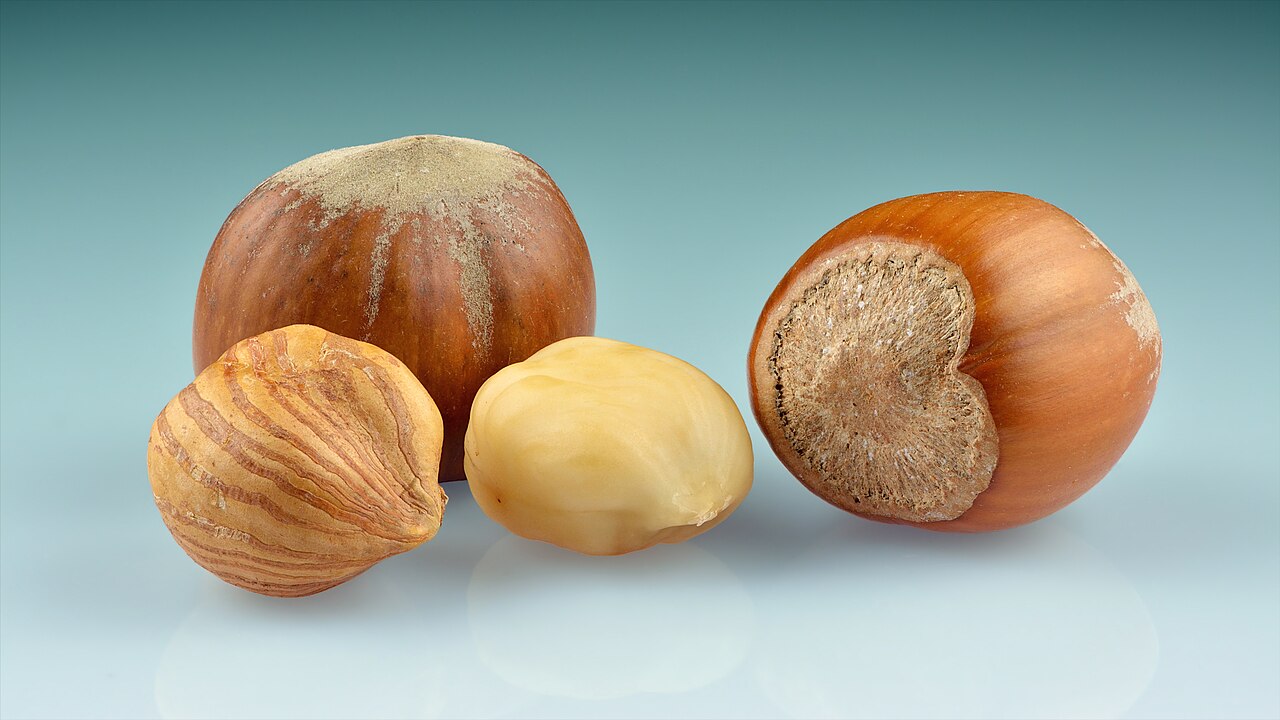
Why standards exist at all
Hazelnut is a globally traded commodity. For a seller in Croatia, a buyer in Italy, and a processor in Germany to agree on quality without physically inspecting every sack, a common language is needed. This language is provided by international standards. They define minimum requirements (what the commodity must meet at all to be allowed for sale), quality grades (Extra, Grade I, and Grade II), and permitted deviations (tolerances) for each grade.
In practice, three levels intertwine:
- UNECE standards (United Nations Economic Commission for Europe) — the most detailed trade standards; DDP-03 for hazelnuts in shell and DDP-04 for hazelnut kernels.
- Codex Alimentarius (FAO/WHO) — global standards, particularly for food safety (aflatoxins, contaminants).
- EU regulations and purchase conditions — food safety regulations (the most important being Regulation (EU) 2023/915 on maximum levels for contaminants), general rules on placing products on the market, and specific purchase price lists (e.g., PP Orahovica purchase conditions), which translate standards into actual monetary coefficients.
Our literature confirms this: a review article on harvest, drying, and storage technology (Vrtodušić et al., 2022) explicitly states that "some minimum requirements in international trade are defined by the United Nations Economic Commission for Europe (UNECE, 2007, 2010)."
Three standards — three purposes
It is easy to confuse the levels. UNECE states how to grade and declare the commodity in trade (Extra/Grade I/Grade II, caliber, defects). Codex and EU 2023/915 state what is safe for health (aflatoxins) — this is an absolute limit independent of the trade grade. Purchase price lists convert both into money through coefficients and buyer grades.
Key quality parameters
Before grades, one must understand the parameters themselves. The three most important for purchase in shell are moisture, impurities, and kernel recovery, while defects (cut test, kernel cross-section) are evaluated for kernels.
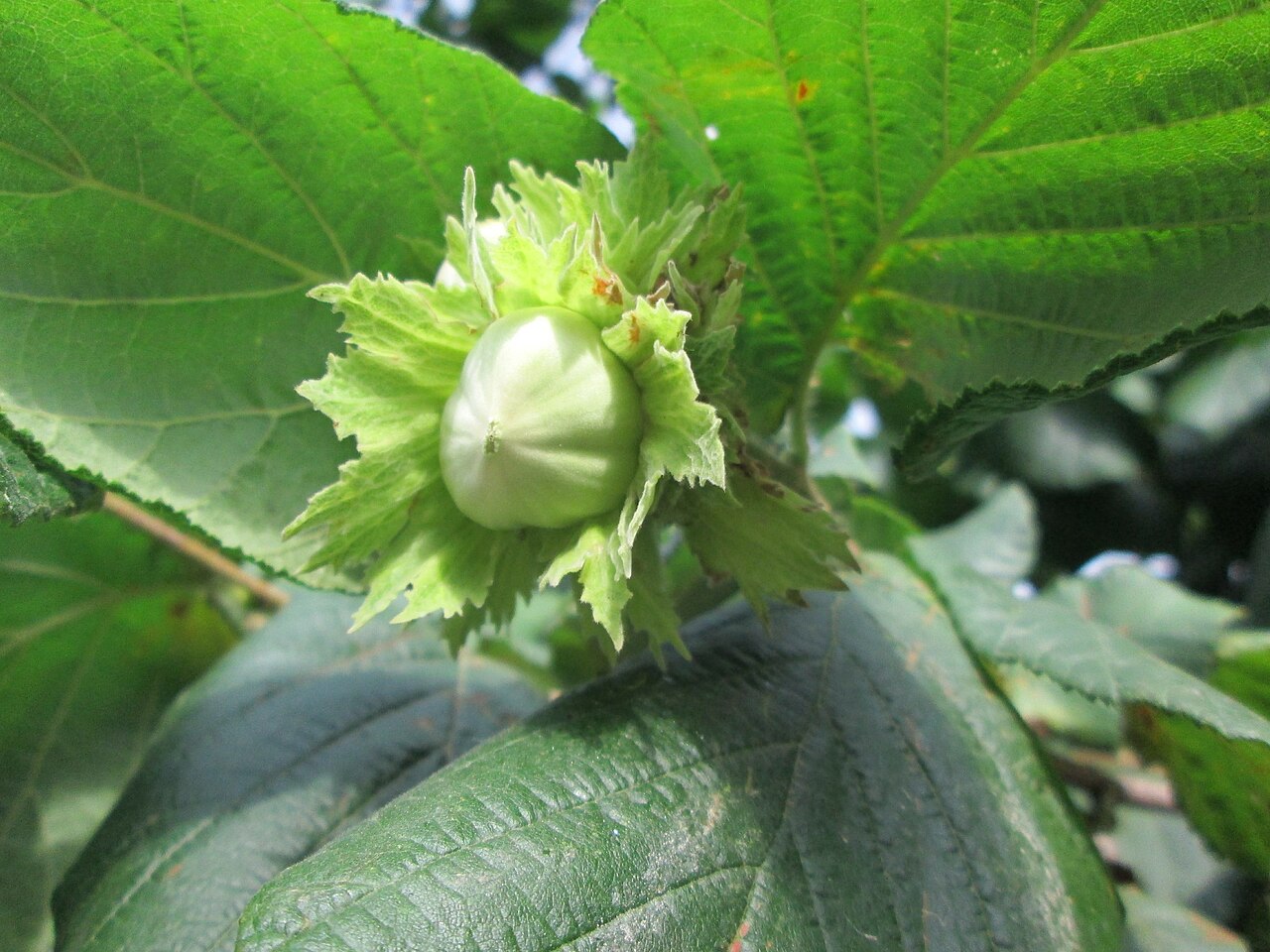
Moisture
Moisture is crucial for storage stability and preventing mold and aflatoxins. According to the parameters cited in our literature and UNECE:
| Fruit Part | Target Moisture | Note |
|---|---|---|
| Hazelnut in shell | 7% (up to max ~10%) | Purchase standard often requires ≤ 6% |
| Hazelnut kernel | 4–6% | UNECE DDP-04: max 6.0% |
Purchase conditions for PP Orahovica (crop 2022) prescribe a moisture content of 6% as a quality standard. Hazelnuts with moisture higher than the standard are calculated at a reduced rate (see the price chapter). Low and uniform kernel moisture is simultaneously the first and cheapest line of defense against aflatoxins — mold of the genus Aspergillus practically does not grow on well-dried kernels (≤ 6%).
Impurities (Contaminants)
Impurities are all foreign components: soil, stones, leaves, parts of the husk (cupules), empty shells, insects. UNECE requires shell purity — foreign material, mold, and residues of attached husk may occupy no more than 5% of the total shell surface, and foreign odor is not permitted. Purchase standards often require 0% impurities (any percentage above reduces the calculated quantity).
Kernel Recovery (Yield)
Kernel recovery is the percentage of kernel mass relative to the fruit mass in shell. This is the most important economic parameter for purchase because the buyer is actually paying for the kernel, not the shell.
- Typical purchase standard: minimum kernel recovery of 40%.
- Good cultivars and well-managed orchards achieve 45–50%.
Higher kernel recovery means more kernel per kilogram of fruit, thus directly increasing the value of the commodity. The difference between 40% and 48% kernel recovery is a difference of one-fifth of the value at the same shell mass.
Kernel recovery is partly a cultivar trait. From domestic literature, Croatian cultivars achieve the following approximate values (informative, dependent on location and year):
| Cultivar | Type | Approx. Kernel Recovery | Note |
|---|---|---|---|
| Istarski okrugli | Round | ~45% | Large fruit (~3 g), excellent quality, fruits do not drop easily from husk |
| Istarski duguljasti | Oblong | ~43% (up to 43.5%) | Most widespread cultivar in Croatia, hard shell, less damaged by hazelnut weevil |
| Romano (Tonda Romana) | Round | High, more sought after in market | Italian type, achieves higher purchase price |
| Haleški (Hallesche) | Round | 36–44.9% | Early cultivar, pollinizer for Istarski duguljasti |
Grading Standards: UNECE and Codex
UNECE DDP-03 — Hazelnuts in Shell
Standard DDP-03 (based on the 2007 document) is aligned with the revised appearance of UNECE standards for dried and dried fruits adopted in November 2022; the currently published text bears the August 2023 designation. Content-wise, requirements have not changed significantly, but it is important to refer to the current version.
| Item | Value |
|---|---|
| Grades | Extra, Grade I, Grade II |
| Size determination | Maximum diameter of the equatorial cross-section of the shell |
| Minimum size | 12 mm |
| Uniformity expression | Size range (min–max, difference ≤ 3 mm) or sieve (minimum diameter) |
| Calibrating | Mandatory for Extra and Grade I, optional for Grade II |
Tolerances for shells that do not meet minimum requirements (by number or mass) are up to 5% (Extra), 10% (Grade I), and 15% (Grade II). Within these total tolerances, the share of the most severe defects is limited — e.g., moldy, rancid, pest-damaged, or rotten; live insects and mites are not permitted in any grade (0%). For deviation from declared size, up to 10% is permitted in all grades.
Tolerances differ across editions
Older UNECE/ECE-ONU working documents cited a table of "total tolerances" 5/12/16% (Extra/Grade I/Grade II) with specific settings for rancid, undeveloped, and mechanically damaged. The current DDP-03 structure uses tolerances for fruits that do not meet minimum requirements (5/10/15%) with sub-limits within them. Use figures from the current version of the standard, not from old drafts.
UNECE DDP-04 — Hazelnut Kernels
| Item | Value |
|---|---|
| Grades | Extra, Grade I, Grade II |
| Maximum moisture | 6.0% |
| Size determination | Maximum diameter of the equatorial cross-section of the kernel |
| Minimum size | 9 mm (except for type "piccolo") |
| Size tolerance | Deviation ± 0.2 mm is not considered a defect |
| Calibrating | Mandatory for Extra and Grade I |
Grades differ by the permitted share of defects — the higher the grade, the fewer defects are permitted. All grades must meet minimum requirements: the kernel must be whole, sound (without rot and spoilage), clean, without live pests and their damage, without mold, rancidity, and foreign odor/taste.
Codex Alimentarius and Food Safety
Codex sets global limits for aflatoxins, which are a key safety risk for hazelnuts. Maximum levels of total aflatoxins according to Codex are:

- 10 µg/kg for hazelnut "ready-to-eat" (RTE),
- 15 µg/kg for hazelnut intended for further processing (sorting/physical treatment).
The limit applies after shell removal (it is assumed that all aflatoxin is in the edible part). For sampling, a composite sample of 20 kg is recommended, and batches larger than 25 t should be divided into sub-batches. This is not just a trade issue — exceeding aflatoxin limits means the commodity cannot be placed on the market at all.
Food Safety in the EU: Aflatoxins according to Regulation (EU) 2023/915
For sale in the EU, Commission Regulation (EU) 2023/915 on maximum levels for certain contaminants in food is authoritative. It replaced and repealed the old Regulation (EC) No 1881/2006 on April 25, 2023, which is cited in part of older literature. Content-wise, aflatoxin limits remained at levels known from 1881/2006, but now 2023/915 is cited as the valid regulation.
Crucial for hazelnut: hazelnut has its own, more lenient row in the annex, separate from other nuts (almonds, pistachios have their own rows, and "other nuts" have their own). Two purposes are also distinguished — goods that are sorted or physically treated before being placed on the market (have a higher permitted threshold because bad fruits will be separated) and goods ready for final consumption (stricter threshold).
| Hazelnut Category | Aflatoxin B1 (sub-limit) | Sum B1+B2+G1+G2 |
|---|---|---|
| Hazelnut for sorting / physical treatment before market | 8.0 µg/kg | 15.0 µg/kg |
| Hazelnut for end consumer / food ingredient (RTE) | 5.0 µg/kg | 10.0 µg/kg |
| (For comparison) "Other nuts" for treatment | 5.0 µg/kg | 10.0 µg/kg |
| (For comparison) "Other nuts" RTE | 2.0 µg/kg | 4.0 µg/kg |
(Values are informative; always check the current consolidated text of Regulation (EU) 2023/915 and its amendments as annexes are updated periodically.)
Two things the producer must remember:
- TWO thresholds are looked at simultaneously — a separate sub-limit for aflatoxin B1 itself (the most toxic) and a limit for the sum of four aflatoxins. The commodity must pass both thresholds; it is enough for one to be exceeded for the batch to be prohibited from the market.
- The limit is calculated on the edible part (kernel). If hazelnut "in shell" is analyzed, it is assumed that all contamination is in the kernel.
Sampling and analysis methods for mycotoxins from late 2023 are regulated by Implementing Regulation (EU) 2023/2782 (replacing the older Regulation (EC) No 401/2006). Due to historical findings of exceedances, the EU applies enhanced official controls on import of hazelnuts from Turkey, Georgia, and Azerbaijan (Implementing Regulation (EU) 2019/1793).
Aflatoxin is an absolute limit, not just a grade issue
Dropping from 1st to 3rd grade with the buyer reduces the price, but the commodity is still sold. Exceeding aflatoxin limits is different: such a batch cannot be placed on the market regardless of all other parameters. Therefore, proper drying, quick collection from the ground, and separate storage are safety, not just commercial, issues.
Size (Caliber) and Commercial Grades
Although UNECE defines classes, trade additionally deals with calibers — diameter ranges expressed in millimeters. Caliber determines the intended use and price.
Historical size classifications (round vs. elongated types) from our literature, with corrected boundaries so that the grades do not overlap (each grade covers "from inclusive lower, to exclusive upper boundary"):
| Grade | Round Cultivars | Elongated Cultivars |
|---|---|---|
| Giant | ≥ 23.0 mm | ≥ 22.2 mm |
| Jumbo | 22.2 – 23.0 mm | 18.6 – 22.2 mm |
| Large | 19.4 – 22.2 mm | 17.5 – 18.6 mm |
| Medium | 17.9 – 19.4 mm | 13.9 – 17.5 mm |
| Small | < 17.9 mm | < 13.9 mm |
What was wrong in the old table
In an earlier version of the article, the Medium grade for round cultivars ended at 19.4 mm, and Small started at "< 17.9 mm" — meaning values between 17.9 and 19.4 fell into both grades (overlap), while for elongated cultivars, the range 13.5–13.9 was not clearly assigned. The boundaries are now set as half-open intervals: the upper boundary of one grade is the lower boundary of the next, with no gaps and no overlaps.
In modern trade, the most common kernel caliber grades are:
| Kernel Caliber | Typical Use |
|---|---|
| 9–11 mm | Economy grade — chopping, grinding, flour |
| 11–13 mm | Most universal — general processing and roasting |
| 13–15 mm | Premium — whole kernels in chocolate, retail |
| 15+ mm | Special — top products with whole kernels |
Practical consequence: larger, uniform kernels achieve a higher price as "whole nuts" for the confectionery industry, while small kernels go for grinding at a lower price. Purchase conditions penalize this directly — for example, PP Orahovica includes hazelnuts in shell smaller than 15 mm in the impurity coefficient as a loss.
Permitted Defects and Quality Classes
Defects on kernels are determined by the cut test on a representative sample. The main categories of defects assessed are:
- Rotten / Moldy — the most severe defect, linked to moisture and poor drying; directly associated with the risk of aflatoxins.
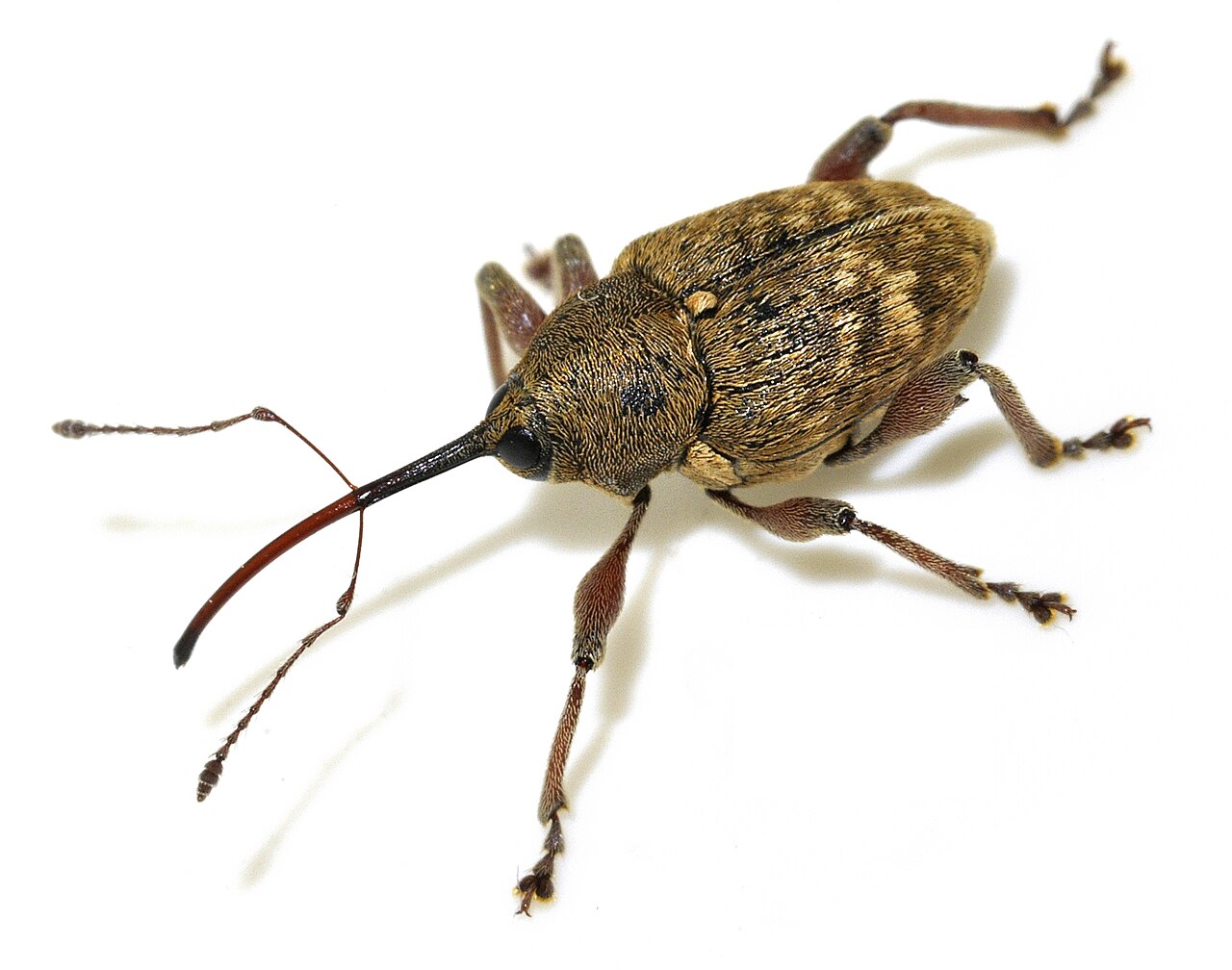
- Bites (insect damage) — e.g., filbert weevil (Curculio nucum), true bugs.
- Rancidity — fat oxidation, gives a bitter taste; excludes higher grades.
- Immature / Shriveled nuts — poorly developed kernels, empty nuts (blind nuts).
- Deformed nuts and mechanical damage.
- Stains and discoloration of shell or kernel.
- Double kernels / fusion — undesirable for some uses.
Specific purchase price lists translate defects into classes. Example from PP Orahovica purchase conditions (crop year 2022), with a fixed standard impurity of 0 %, moisture of 6 %, and minimum kernel recovery of 40 %:
| Class | Rotten / Moldy | Bites | Price (Roman Assortment) | Price (Istrian / Mixed) |
|---|---|---|---|---|
| 1st Class | ≤ 1.00 % | ≤ 6.00 % | 1.99 €/kg | 1.86 €/kg |
| 2nd Class | ≤ 2.00 % | ≤ 9.00 % | 1.92 €/kg | 1.79 €/kg |
| 3rd Class | ≤ 3.00 % | ≤ 15.00 % | 1.79 €/kg | 1.66 €/kg |
(Prices are indicative, valid for crop year 2022 and FCA Duga Međa, +5 % VAT; they serve only to illustrate the mechanism — check current prices with buyers. Hazelnuts that do not meet the conditions of the 3rd class are not purchased.)
It is evident that a drop from 1st to 3rd class, caused solely by a higher share of rot and bites, means a loss of about 0.20 €/kg — and this before any reduction due to moisture or kernel recovery.
How Quality Affects Price — Calculation Coefficients
Buyers rarely simply reject non-standard goods; instead, they convert the delivered quantity to "standard quality" by multiplying by coefficients. This is the most important math for the producer.
According to PP Orahovica conditions (crop year 2022), the delivered mass is multiplied by three coefficients:
- Impurity Coefficient (Kp) = (100 − (determined impurity + hazelnuts < 15 mm)) / 100
- Moisture Coefficient (Kv) = (100 − determined moisture) / (100 − 6)
- Kernel Recovery Coefficient (Kr) = determined kernel recovery / standard kernel recovery (40 %)
Calculated quantity = delivered mass × Kp × Kv × Kr.
Calculation Example
Deliver 1,000 kg of hazelnuts in shell with: impurity 3 %, hazelnuts < 15 mm 2 %, moisture 9 %, kernel recovery 38 %.
- Kp = (100 − (3 + 2)) / 100 = 0.95
- Kv = (100 − 9) / (100 − 6) = 91 / 94 = 0.968
- Kr = 38 / 40 = 0.95
Calculated quantity = 1,000 × 0.95 × 0.968 × 0.95 ≈ 874 kg.
Although you delivered a ton, you are paid as for 874 kg of standard goods — a loss of about 13 % solely due to deviations in moisture, impurity, and kernel recovery.
In the older price list (crop year 2021), the moisture standard was 7 %, impurity 1 %, and kernel recovery 40 %, with a slightly different formula for kernel recovery — showing that even the reference standards change from year to year. Always ask for the current price list for the current season.
Additionally, price is influenced by assortment: in the example, "Roman" (Italian type, larger and more market-demanded kernel) was paid more than "Istrian/mixed". The cultivar thus enters the price even before quality measurement.
Purchase Prices and Market Trends
Prices change from year to year, depending on world production (especially Turkish and Italian) and on assortment and quality. The data below are indicative and serve to orient regarding levels, not as guaranteed prices.
| Season / Source | Goods | Approximate Price | Note |
|---|---|---|---|
| Crop 2021 (PP Orahovica, HR) | in shell, mixed/Istrian | ~2.45 €/kg (18.50 kn) | reduced to standard quality |
| Crop 2021 (PP Orahovica, HR) | in shell, Roman/Italian cultivars | ~2.65 €/kg (20.00 kn) | reduced to standard quality |
| Crop 2022 (PP Orahovica, HR) | in shell, 1st class | 1.86–1.99 €/kg | depending on assortment, FCA Duga Međa, +5 % VAT |
| 2024/2025 (EU market) | kernel 11–13 mm, DDP Central Europe | ~8 €/kg (raw), up to ~9.8 €/kg (roasted) | wholesale level, EU reference |
| 2024/2025 (Italy) | in shell (Tonda Gentile / raw) | multi-year price increase | drought and lower yields in 2024 raised premiums for premium calibers |
Note: Kuna values for crop years 2021/2022 were converted using a fixed exchange rate of 1 EUR = 7.53450 kn (HNB). Purchase prices in Croatia have historically lagged behind those in Italy for similar quality, which further motivates producer association for better negotiating power. For current domestic prices, use the Agricultural Market Price Information System (TISUP) and direct inquiry with buyers.
Status of Market Placement Regulations (Important: Obsolescence)
Older sources (including an earlier version of this article) cited Regulation (EC) No 1284/2002 as the standard for placing hazelnuts in shell on the EU market. This regulation was repealed by Regulation (EC) No 1221/2008 and has not been applicable since July 1, 2009. Today, there is no separate sectoral market standard for hazelnuts at the EU level; the general market standard for fruit and vegetables under the framework of the common organization of markets (Regulation (EU) No 1308/2013 and its implementing rules) applies, with voluntary application of UNECE standards DDP-03/DDP-04 as a trade reference.
Similarly, the quality labeling system (PDO/PGI/TSG) is regulated by Regulation (EU) No 1151/2012 — relevant if hazelnuts are sold under a protected designation of origin or geographical indication.
Practical Recommendations and Common Mistakes
What increases class and price:
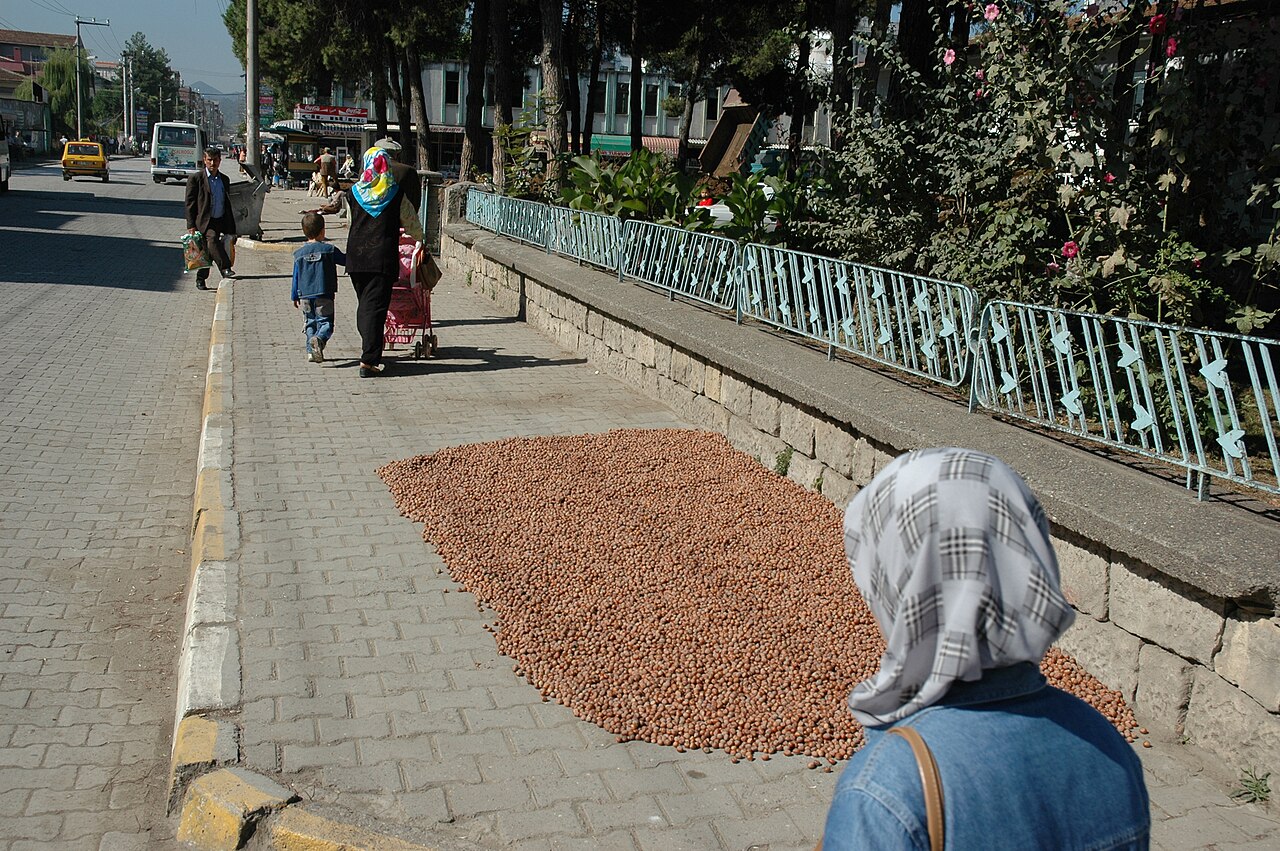
- Timely and proper drying to ≤ 6–7 % moisture — the cheapest way to avoid moisture reductions and to prevent mold/aflatoxins. Recommended drying temperature around 50 °C, so as not to damage the kernel.
- Cleaning and calibrating before delivery — removing impurities and small calibers (< 15 mm) directly improves Kp.
- Timely harvest and quick collection from the ground — reduces bites, rot, and mold attack, and thus the risk of aflatoxins.
- Separate storage — hazelnuts easily absorb foreign odors; do not store them with other scented products. Storage at ~10 °C and ≤ 70 % relative humidity extends shelf life.
- Cultivar selection — large, easily shelling cultivars with high kernel recovery (e.g., Italian types, Istrian round) achieve both larger caliber and better price.
Common mistakes:
- Selling wet goods "because it's faster" — the moisture coefficient relentlessly reduces the calculation.
- Neglecting small calibers and empty nuts (blind nuts) — they enter impurity and lower kernel recovery.
- Not knowing the current price list and formulas — without this, you cannot verify the correctness of the calculation or plan processing.
- Poorly managed protection against filbert weevil and true bugs — directly raises the percentage of bites and ruins the class.
- Underestimating aflatoxins — the safety threshold from Regulation (EU) 2023/915 (B1 sublimit + sum of four aflatoxins) is an absolute limit, independent of trade class; both thresholds are checked.
- Citing obsolete regulations (1881/2006, 1284/2002) instead of current ones (2023/915; general market standard) — customers and control bodies work according to current regulations.
Sources
This article is an AI-generated summary created from an internal hazelnut literature collection (RAG corpus) and publicly available sources. Numerical data regarding classes, yield (kernel-to-shell ratio), caliber, and calculation coefficients were primarily extracted from Croatian purchase conditions and review papers within the corpus, supplemented by international standards and current EU regulations. Main sources used:
- Commission Regulation (EU) 2023/915 on maximum levels for certain contaminants in food (current aflatoxin limits for hazelnuts; repeals Regulation 1881/2006) — https://eur-lex.europa.eu/eli/reg/2023/915/oj
- UNECE STANDARD DDP-03 — Inshell Hazelnuts, edition aligned with 2023. — https://unece.org/trade/wp7/DDP-Standards
- UNECE STANDARD DDP-04 — Hazelnut Kernels, United Nations Economic Commission for Europe — https://unece.org/trade/wp7/DDP-Standards
- Codex Alimentarius, General Standard for Contaminants and Toxins in Food and Feed (CXS 193-1995), FAO/WHO — aflatoxin limits for hazelnuts — https://www.fao.org/fileadmin/user_upload/agns/pdf/CXS_193e.pdf
- Commission Implementing Regulation (EU) 2023/2782 — methods for sampling and analysis of mycotoxins (replaces 401/2006) — https://eur-lex.europa.eu/eli/reg_impl/2023/2782/oj
- Commission Implementing Regulation (EU) 2019/1793 — enhanced official controls at import (hazelnuts from Turkey, Georgia, Azerbaijan) — https://eur-lex.europa.eu/eli/reg_impl/2019/1793/oj
- Vrtodušić et al. (2022): Technology of hazelnut harvesting, drying, and storage: Literature review, JCEA, DOI: 10.5513/JCEA01/23.2.3493 (quality parameters, UNECE minimum requirements) — https://jcea.agr.hr/articles/772314_Tehnologija_berbe_su_enja_i_skladi_tenja_lje_njaka_Pregled_literature_hr.pdf
- PP Orahovica d.o.o.: Purchase conditions for conventional inshell hazelnuts, crop years 2021 and 2022 (classes, prices, moisture/impurities/yield, calculation coefficients) — internal document in corpus
- Regulation (EC) No 1284/2002 — standard for placing inshell hazelnuts on the market (REPEALED by Regulation (EC) No 1221/2008 as of July 1, 2009.) — https://eur-lex.europa.eu/legal-content/HR/TXT/?uri=CELEX:32002R1284
- Regulation (EU) No 1308/2013 establishing a common organisation of agricultural markets (general marketing standard for fruit and vegetables) — https://eur-lex.europa.eu/eli/reg/2013/1308/oj
- Regulation (EU) No 1151/2012 on quality schemes for agricultural products and foodstuffs — https://eur-lex.europa.eu/eli/reg/2012/1151/oj
- Economic analysis of hazelnut production (2023.) — prices and indicators in corpus — internal document
- Atlas Hazelnuts — Hazelnut Caliber & Sizing Guide (commercial caliber grades and applications) — https://atlashazelnuts.com/academy/hazelnut-caliber-sizing-guide.html
- TISUP — Agricultural Market Price Information System (current domestic prices) — https://tisup.mps.hr/
- Selina Wamucii / market reviews (indicative prices for kernels and inshell nuts 2024/2025) — https://www.selinawamucii.com/insights/prices/italy/hazelnut/