Hazelnut weevil (Curculio nucum)
Content generated by artificial intelligence — verify before application
This article was automatically compiled from a collection of hazelnut literature using artificial intelligence and may contain errors or outdated information. It serves as a starting point for further research, not as professional advice. Dosages, products, and timing are informative and depend on the cultivar, location, and applicable regulations — always consult with an advisory service and official sources before application.
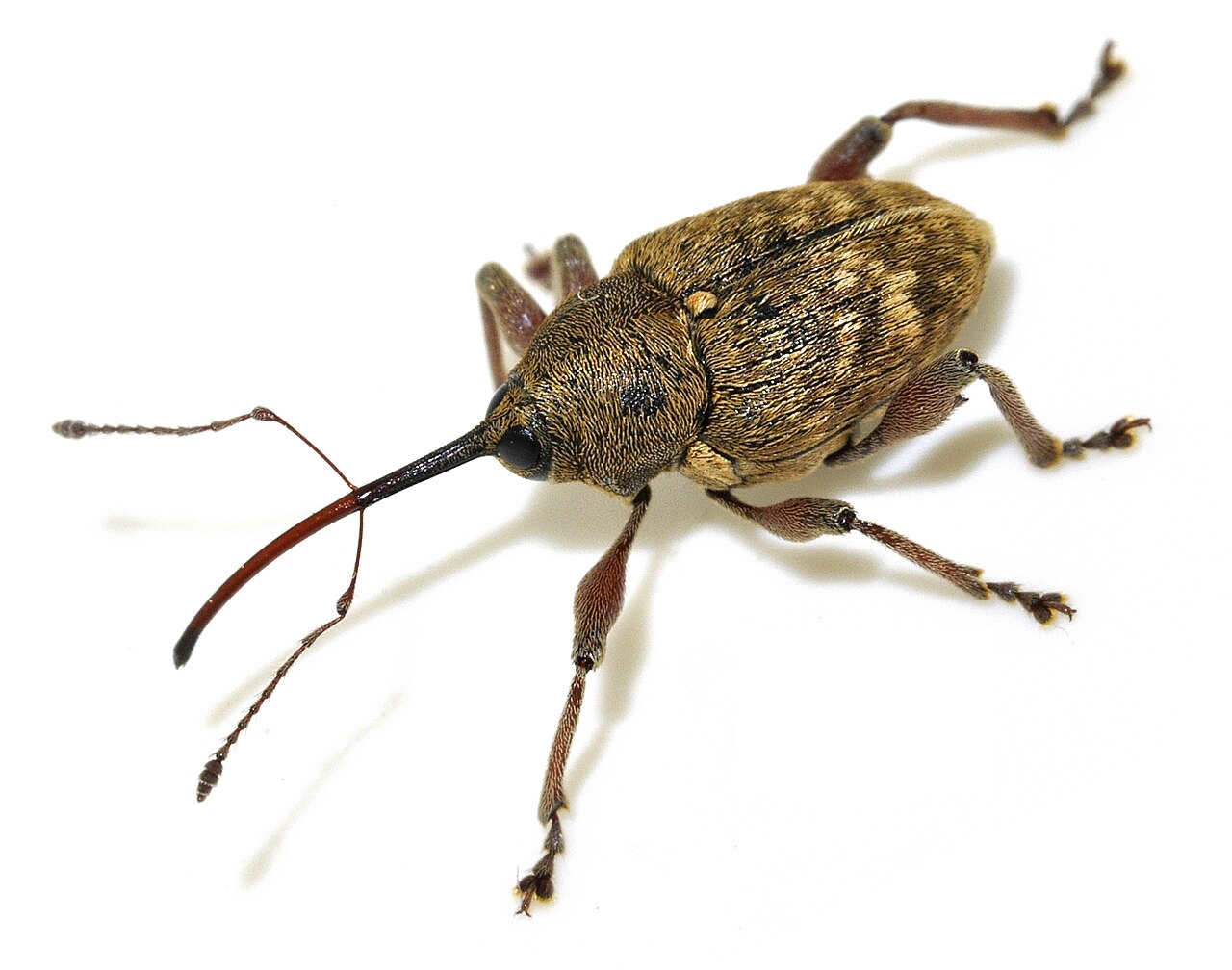
The hazelnut weevil (Curculio nucum L.), in Croatian practice most commonly known as ljeskotoč (hazelnut weevil), is the most important and economically damaging pest of hazelnut. It is a beetle from the family Curculionidae, whose larvae bore into the kernel from the inside, causing the well-known phenomenon of hazelnut "worminess." In bearing orchards, it can cause losses of 10 to 40 % in yield, and in unfavorable years, when rot develops subsequently on damaged nuts, losses exceeding 50 % of the crop are recorded. Therefore, understanding its biology, timely monitoring, and targeted control are fundamental to the protection of every hazelnut orchard.
Why the hazelnut weevil is the most important hazelnut pest
Unlike many pests that damage leaves or buds, the hazelnut weevil attacks the marketable product — the nut directly. The damage is twofold:
- Direct damage — the larva consumes the kernel, the nut becomes "wormy," worthless, and often drops prematurely.
- Indirect damage — the puncture site made by the female with her rostrum during egg-laying, as well as the larval exit hole, serve as entry points for fungal diseases (brown rot Monilinia fructigena, Botrytis, Fusarium, gray spot). Therefore, worminess is often accompanied by kernel rot and nut blackening.
The attacked kernel turns yellow to brown, loses its flavor (becomes sour), loses all nutritional attributes, and becomes unusable. This phenomenon is more pronounced in years with higher rainfall in May and June.
Biology and life cycle
Identification (morphology)
| Stage | Description | Size |
|---|---|---|
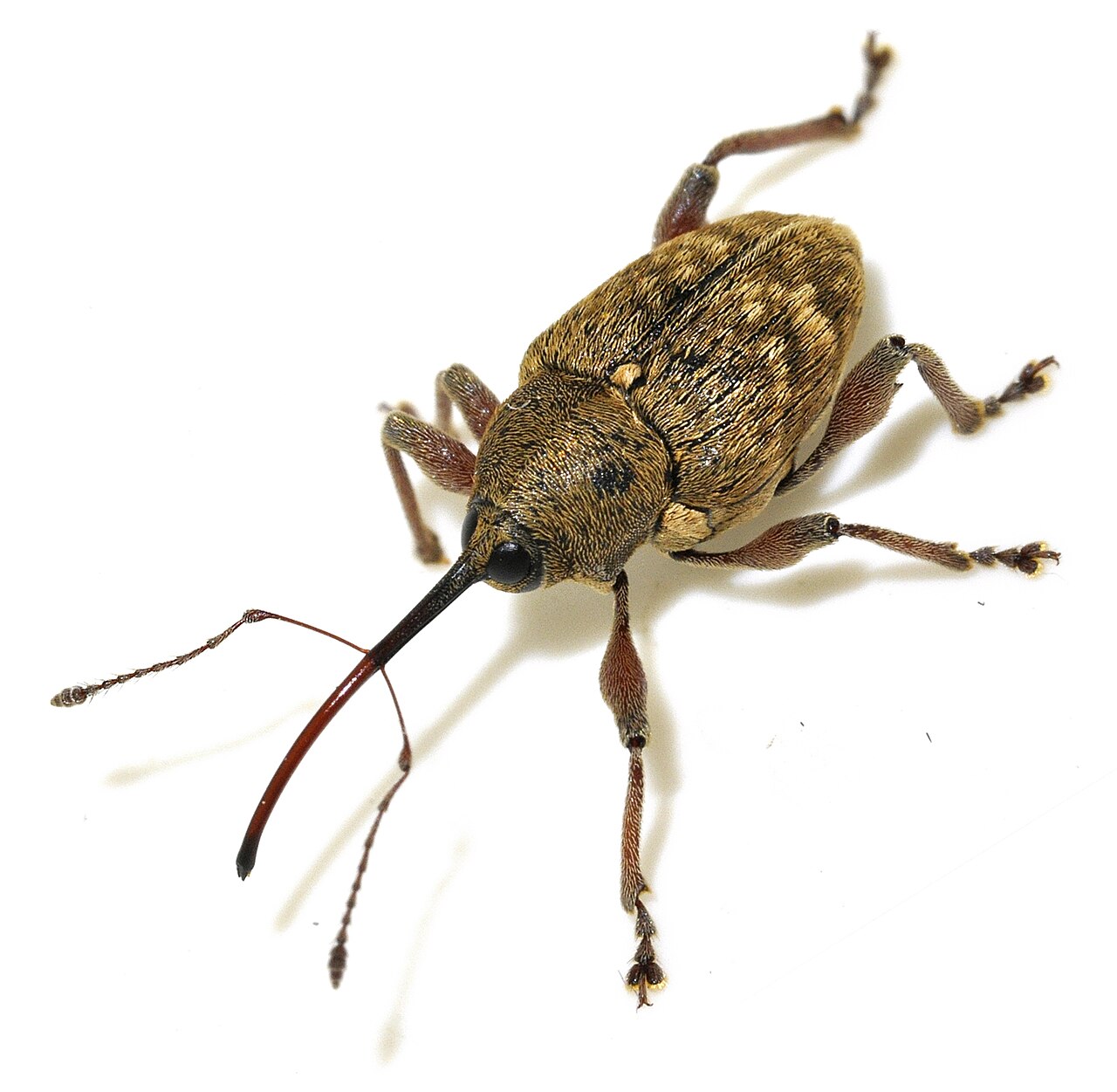
| Adult beetle | Reddish-brown, covered with fine yellow-gray hairs; head elongated into a long, narrow, and curved rostrum (snout) | 6–9 mm (female rostrum ≈ body length) |
| Egg | Laid singly deep inside the nut, usually not visible externally | Small |
| Larva | Legless (apoda), whitish/cream-colored, with a reddish-brown head, curved | Grows to ≈ 16 mm |
| Pupa | In an earthen chamber in the soil | — |
The key diagnostic sign is the long curved rostrum, which in females is almost as long as the entire body, while in males it is shorter (about one-third shorter). Using the rostrum, the female bores into the nut up to the kernel and lays an egg inside.
Life cycle
The hazelnut weevil typically has one generation per year, but part of the population has a biennial (extended) life cycle — some larvae remain in the soil (diapause) for more than one winter before pupating, which is a survival strategy and explains why the population cannot be eradicated in a single season.
Development throughout the season:
- Spring (April–May): Overwintering/newly emerged adult beetles emerge from the soil. They usually appear in early May (from May to August). This is followed by a period of supplementary feeding — beetles chew on leaves and, more importantly, bore into young, newly set nuts (which then drop).
- Late May – July: Mating and oviposition. The female pierces the nut shell with her rostrum while it is still soft, before it fully lignifies, and lays a single egg inside. The most sensitive stage of the nut for infestation is when it is 8–12 mm in diameter.
- Summer: Eggs hatch after about a week, and the larva feeds on the kernel for about a month, boring into it from the inside.
- Late summer / Autumn: The mature larva bores an exit hole 2–3 mm in diameter through the shell, falls to the ground, and burrows (to a depth of ≈ 40 cm) where it builds a chamber and overwinters. It pupates there (usually the following season), and a new beetle emerges from the pupa.
Fecundity: Estimates vary among sources — from 20–30 eggs to about 40 eggs per female; one female can damage over 40 nuts during her lifetime (mating and up to ≈ 200 nuts).
Connection with shell lignification (cultivar sensitivity)
Cultivar sensitivity is directly related to the timing of shell lignification. In cultivars whose shells lignify quickly, the female can no longer pierce the nut with her rostrum, making oviposition impossible. Cultivars that lignify later remain vulnerable for longer. This is why the timing of attacks (and thus treatments) differs by cultivar and location.
Damage on the nut ("worminess")
Practical signs of attack observed in the orchard:
- Premature dropping of young nuts in spring/early summer (result of supplementary feeding and early punctures).
- Small punctures on the nut (egg entry point) — often not visible.
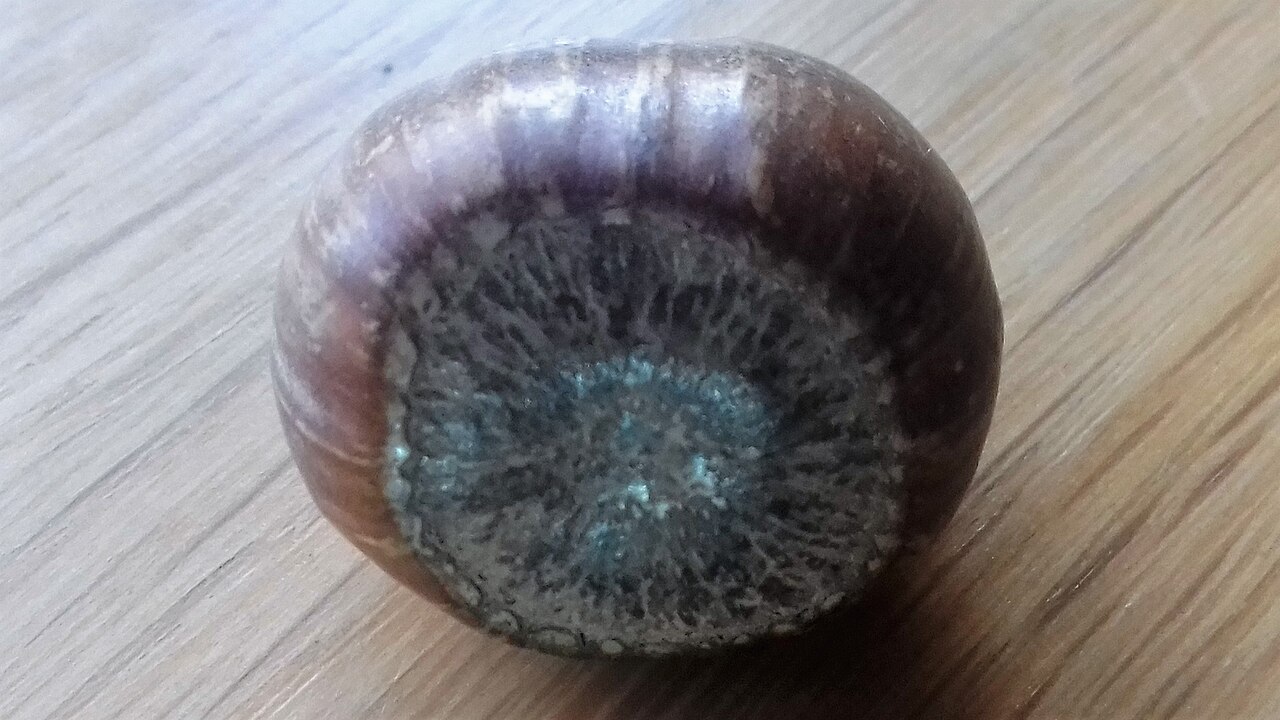
- Exit hole 2–3 mm in diameter on the shell later in the season — a sure sign that the larva has completed development and left the nut.
- Wormy kernel — consumed, with excrement, brown, sour-tasting.
- Secondary rots on nuts damaged by hazelnut weevil punctures.
The percentage of damaged nuts in infested bearing orchards typically ranges from 10–40 %, with regional average damage cited around 10 %; in combination with rot, losses can exceed 50 %.
Monitoring and action threshold
Control of the hazelnut weevil must be timely and, in principle, preventive — once worminess is visible, chemical treatment is too late because the larva is protected inside the nut. Therefore, monitoring adult beetle populations is crucial.
How to monitor — shaking method
The simplest and most reliable method in practice is shaking the trees:
- Walk through the orchard in the early morning or late evening hours, when beetles are less active and fall more easily.
- Place a light-colored sheet (sheet, tarpaulin — any light material) under the canopy of the controlled tree/shrub.
- Shake the tree/shrub vigorously several times and count the fallen beetles.
- Inspect several individual trees distributed throughout the orchard.
Literature also cites the standard of shaking onto a white 50 × 50 cm frame, or inspecting a sample of ≈ 10 trees.
Action threshold (critical number)
| Indicator | Value | Note |
|---|---|---|
| Action threshold (HR practice) | 3–4 adult weevils per tree/shrub | Most frequently cited figure in HR/region |
| Alternative threshold (TR source) | ≈ 2 adult individuals (on a sample of 10 trees) | Lower threshold, more cautious approach |
| Critical monitoring period | mid-May → mid-July | From the first half of May to the first half of July |
When shaking reveals 3–4 beetles per tree/shrub, this is considered the threshold for applying treatment.
Connection with phenophase (BBCH)
The pest stops feeding on flowers and leaves and in early June shifts to nuts (clusters) that are in intense growth — orientatively around BBCH 69–71. A practical rule from older literature: summer treatment is done when nuts develop to 3–4 mm, and the second treatment is in the period from mid-June to mid-July.
| Approximate timing | Phenophase / state | Target |
|---|---|---|
| Spring (start of vegetation) | vegetation movement | mites, aphids, scale insects (not directly hazelnut weevil) |
| Mid-May – early June | nuts 3–4 mm, BBCH ~69–71 | hazelnut weevil (1st summer treatment), bugs, aphids, mites |
| Mid-June – mid-July | nut growth and thickening | hazelnut weevil (2nd summer treatment), bugs |
| Early August | — | powdery mildew |
Chemical control
Chemical control targets adult beetles before mass oviposition — that is, during the supplementary feeding period and the shift to nuts. Once an egg is laid inside the nut, systemic or contact insecticides hardly reach the larva.
Product registrations change
The list of approved products and their dosages changes regularly. Before each application, always check the current registration in the Phytosanitary Information System (FIS) of the Ministry of Agriculture: http://fis.mps.hr/trazilicaszb/. Dosages listed below are informative and taken from literature/labels of various years, and depend on the cultivar, location, and current registration.
Orientative dosages from literature (informative)
| Product (active substance) | Orientative dosage | Pre-harvest interval (PHI) | Note |
|---|---|---|---|
| Calypso 480 SC (thiacloprid) | 0.2–0.3 l/ha, max 2 applications | ~70 days (PHI=70) | Explicitly mentioned in HR literature for hazelnut weevil control; can be combined with fungicide (e.g., Signum) and copper |
| Karate Zeon (lambda-cyhalothrin) | according to label | according to label | Listed in newer HR notices as registered for hazelnut weevil |
| Coragen SC (chlorantraniliprole) | 0.18–0.3 l/ha (2×) | 14 days | For harmful beetles and moth caterpillars |
| Decis 100 EC / Rotor / Scatto (deltamethrin) | 0.1–0.5 l/ha (2×) | 30 days | Pyrethroid, broad spectrum |
| Carbosulfan (foreign literature, EU ban) | ~20 l/da (formulation) | — | From older EU/TR trials — not for use in the EU |
| Endosulfan / methomyl (foreign literature) | — | — | Withdrawn/limited substances — historical context only |
Important: Substances such as endosulfan, carbosulfan, methiocarb, phosalone, and diazinon appear in older or foreign literature; many are withdrawn or banned in the EU and must not be used. Rely exclusively on currently registered products from the FIS.
Practical guidelines for treatment
- Timing is more critical than product choice. Treat when monitoring indicates crossing the threshold (3–4 weevils/tree), during the phenophase when beetles shift to nuts.
- Treat during the cooler part of the day (morning/evening) when beetles are on the plant.
- If necessary, hazelnut weevil can be controlled simultaneously with fungicidal protection against nut rot and bacteriosis (e.g., Signum/copper), reducing the number of passes.
- Pay attention to the pre-harvest interval (PHI) — hazelnut harvest is in late summer/autumn, and some pyrethroids have a 30-day PHI.
- Keep the interval between treatments and the number of applications within label limits (e.g., max 2 thiacloprid applications per season).
Non-chemical control
Given the increasing restrictions on the number of permitted insecticides and the growing share of organic production, non-chemical measures are becoming increasingly important.
Mechanical and agrotechnical measures
- Shaking and mechanical removal of weevils in the early morning (the same method used for monitoring can also serve as a population reduction measure in small orchards).
- Collecting and removing (burning) attacked and fallen nuts — removes larvae before they burrow into the soil, thereby reducing the population for the following year.
- Winter pruning and removal of attacked parts.
- Shallow tillage/cultivation of the soil under the canopy can mechanically disrupt overwintering stages in the soil (with caution due to roots).
Cultivar selection
Plant cultivars with shells that harden faster, as this shortens the period during which the female can pierce the nut and lay eggs. This is a long-term, highly cost-effective preventive measure when establishing new orchards.
Biological control
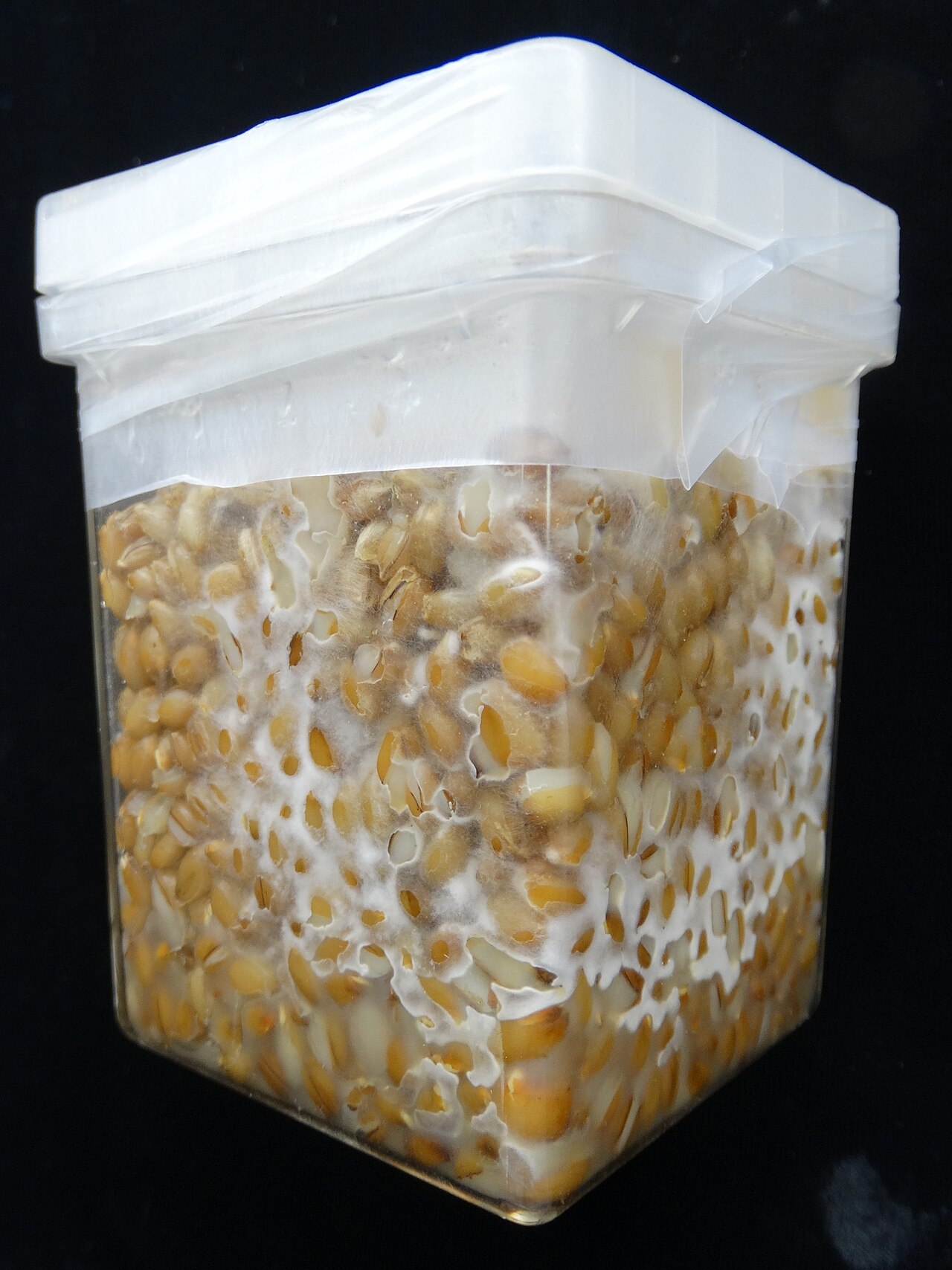
Biological measures against C. nucum are increasingly being researched and applied, particularly entomopathogenic fungi and nematodes targeting soil stages:
| Biological agent | Efficacy (from trials) | Note |
|---|---|---|
| Beauveria bassiana (entomopathogenic fungus) | up to 99.5 % mortality of weevils (vs ~63.5 % in control) | Multiple sources confirm high efficacy on adults |
| Metarhizium anisopliae | up to 100 % mortality of adults within 10 days (laboratory) | Promising agent |
| Entomopathogenic nematodes (e.g., Heterorhabditis, Steinernema) | 32–88 % efficacy in field; persistence up to ~9 weeks | Dose of approx. ~500,000 IJs/m²; targets larvae/pupae in soil |
Biological preparations work best when applied targeted to the specific stage and micro-location (e.g., nematodes in moist soil targeting larvae burrowing into the ground). Efficacy in the field varies depending on humidity, temperature, and timing.
Practical recommendations and common mistakes
Recommendations:
- Implement regular shaking from mid-May to mid-July; keep records of the number of weevils per tree.
- Treat at the threshold (3–4 weevils/tree), preventively, not only when worm damage is visible.
- Collect and destroy fallen/wormy nuts — a cheap measure that breaks the cycle.
- For new orchards, choose cultivars with rapid shell hardening.
- Always check the current registration in FIS and respect withdrawal periods.
Common mistakes:
- Late treatment — once the larva is inside the nut, chemicals are ineffective.
- Calendar-based treatment without monitoring — missed timing leads to unnecessary costs and residues.
- Ignoring fallen nuts — larvae left behind replenish the population for the following year.
- Using withdrawn active substances from old instructions/literature.
- A single application for the entire season during the extended emergence period of weevils — monitoring and potential second treatment are often necessary.
Sources
This article is an AI summary compiled from an internal hazelnut literature collection (RAG corpus) and public internet sources. Figures (sizes, thresholds, doses, efficacy percentages) are taken from the cited sources and may vary by region and year. Main sources used:
- Gospodarski list — Annual hazelnut treatment plan (table of permitted products, withdrawal periods, critical control period)
- Ministry of Agriculture, Forestry and Fisheries — Notice to hazelnut producers (shaking method, threshold 3–4 weevils) — https://savjetodavna.mps.hr/
- Ministry of Agriculture — Notice to hazelnut producers, 2026. (Karate Zeon, rot prevention) — https://savjetodavna.mps.hr/2026/06/02/obavijest-proizvodacima-lijeske-59/
- Most significant hazelnut pests (HR), Plant Protection Gazette — https://doi.org/10.31727/gzb
- Hazelnut cultivation (HR) — tiacloprid (Calypso 480 SC) for hazelnut weevil
- Agroklub — How to get rid of hazelnut weevil naturally? — https://www.agroklub.com/vocarstvo/
- Chromos Agro — Hazelnut protection — https://www.chromos-agro.hr/aktualna-preporuka/zastita-ljesnjaka/
- Pinova — Hazelnut pests — https://pinova.hr/stetnici-lijeske/
- VOĆARSKI SAVJETI — Hazelnut weevil – Curculio nucum L. — http://vocarskisavjeti.blogspot.com/2015/10/ljeskotoc-curculio-nucum-l.html
- Salerno G. (2019) — La difesa dagli stress abiotici e biotici (IT): biology, morphology, cycle, thresholds for buds
- Akça I., Tuncer C. (2005) — Biological and morphological studies on nut weevil (Curculio nucum L.), Acta Hortic. 668
- Paparatti & Speranza (2005) — Biological control of hazelnut weevil using Beauveria bassiana (efficacy 99.5 %) — https://dspace.unitus.it/
- Field efficacy against the hazelnut weevil... entomopathogenic nematodes (2013): efficacy 32–88 %
- Biology, Ecology, and Management of the Hazelnut-Feeding Weevils (Curculio spp.), J. Integrated Pest Management (2022) — https://academic.oup.com/jipm/article/13/1/16/6590885
- Curculio nucum — Wikipedia — https://en.wikipedia.org/wiki/Curculio_nucum
- Phytosanitary Information System (FIS), Ministry of Agriculture — http://fis.mps.hr/trazilicaszb/
Recommended equipment
🔎 pheromone insect trap orchard — Amazon →Affiliate links — we may earn a small commission at no extra cost to you.