Meliorative fertilization and enhancing fertility before planting
Content generated by artificial intelligence — verify before application
This article was automatically compiled from a collection of hazelnut literature with the help of artificial intelligence and may contain errors or outdated data. It serves as a starting point for further research, not as professional advice. Dosages, products, and timing are informative and depend on the cultivar, location, and current regulations — always consult with an advisory service and official sources before application.
Meliorative (or agromeliorative) fertilization is a one-time, capital investment undertaken before establishing an orchard, where larger amounts of nutrients and organic matter are incorporated into the soil to compensate for deficiencies and enhance long-term fertility. This is a "stockpiling" fertilization performed only once in the life of the orchard — before planting, while the soil is still open and accessible for deep tillage. For hazelnut, this is particularly important because, although the root system can develop deeper, the majority of active feeder roots develop shallowly, spread out at a depth of around 40 cm. Consequently, subsequent interventions in deeper soil layers after planting are practically impossible: what you do not incorporate now will be very difficult to correct during the subsequent twenty-plus years of production. This article explains how to prepare the soil for a successful, long-lived, and productive hazelnut orchard through foundational fertilization with phosphorus and potassium, as well as the incorporation of organic matter and humus.
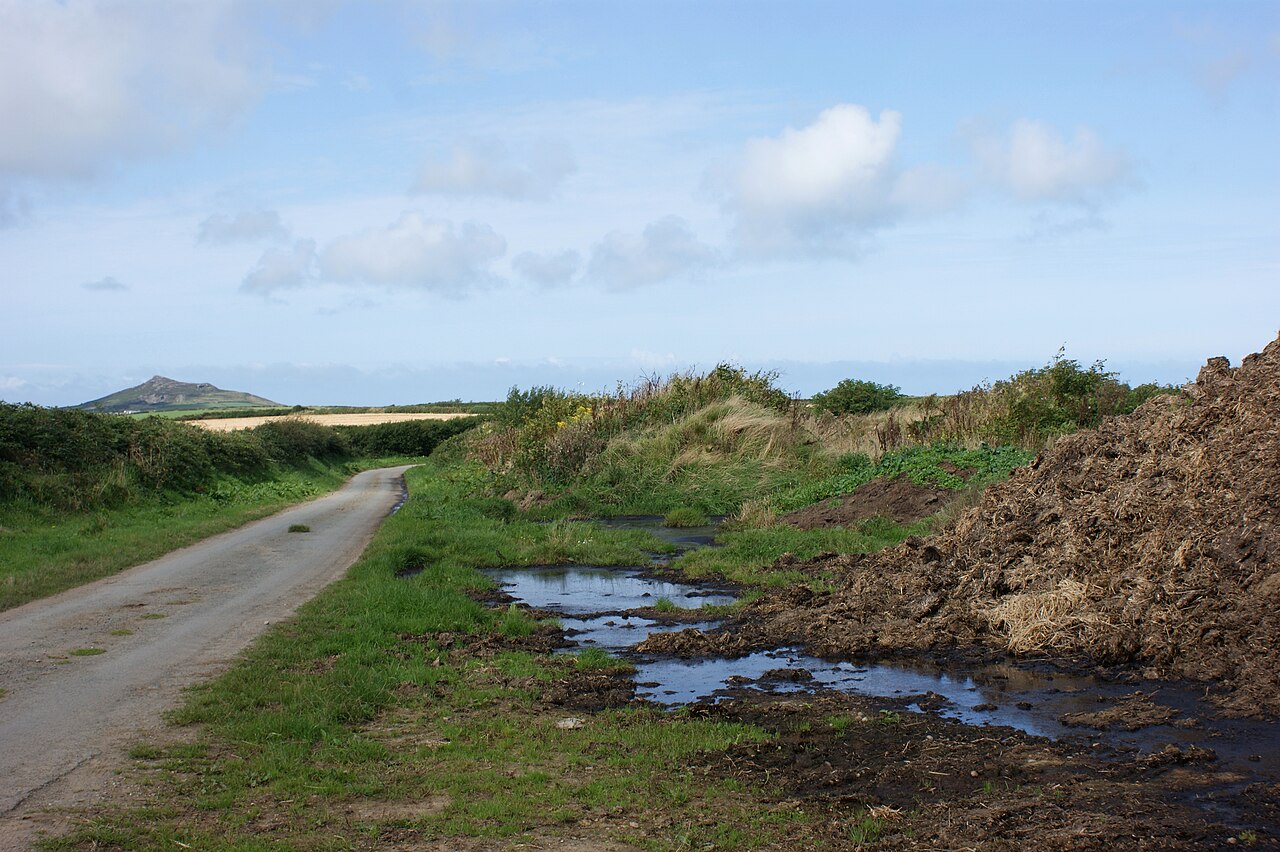
What is meliorative fertilization and why is it mandatory for hazelnut
Meliorative fertilization increases the nutrient reserve in the soil and improves its chemical, biological, and physical properties. Unlike basic (regular) annual fertilization and foliar topdressings that follow throughout the life of the orchard, meliorative fertilization does not merely replace what the plant consumed in the previous season, but fills the soil's "tank" for years in advance.
Meliorative fertilization in a broader sense encompasses several measures that are often carried out together:
- humification — incorporation of organic matter (manure, compost, pelleted organic fertilizers, green manure);
- calcification — correction of overly acidic soils using lime materials (discussed in detail in a separate article on pH and calcification);
- mineral fertilization — primarily the incorporation of phosphorus (P) and potassium (K), nutrients that move poorly in the soil.
The key agronomic reason why this practice is almost mandatory for hazelnut lies in root biology and soil chemistry. Phosphorus and potassium are poorly mobile (immobilized) elements: once incorporated, they remain roughly where they were plowed in and move very slowly toward deeper soil layers. If we scatter them on the surface of an already planted orchard, they will remain in the top few centimeters, far from the main root mass. Therefore, they must be incorporated and deeply plowed before planting so that they reach the future root zone (up to about 40–50 cm). Thus, meliorative fertilization is almost always followed by deep plowing or ripping.
Rule of thumb
All poorly mobile substances in the soil (P, K, organic matter, lime) are incorporated before planting and deeply plowed. Mobile nitrogen (N) will be applied only later, annually, as there is no point in stockpiling it — it leaches away.
First step: soil analysis — without it, no fertilization
No serious meliorative fertilization should be done "by guesswork." Fertilization criteria are based on a chemical soil analysis, which must necessarily include:
- pH (soil reaction) — nutrient availability is most favorable at pH 6.5–7.2;
- humus content (organic matter);
- phosphorus (P₂O₅) and potassium (K₂O) in the soil;
- as needed, CaCO₃ (physiologically active lime), magnesium (Mg), and micronutrients.
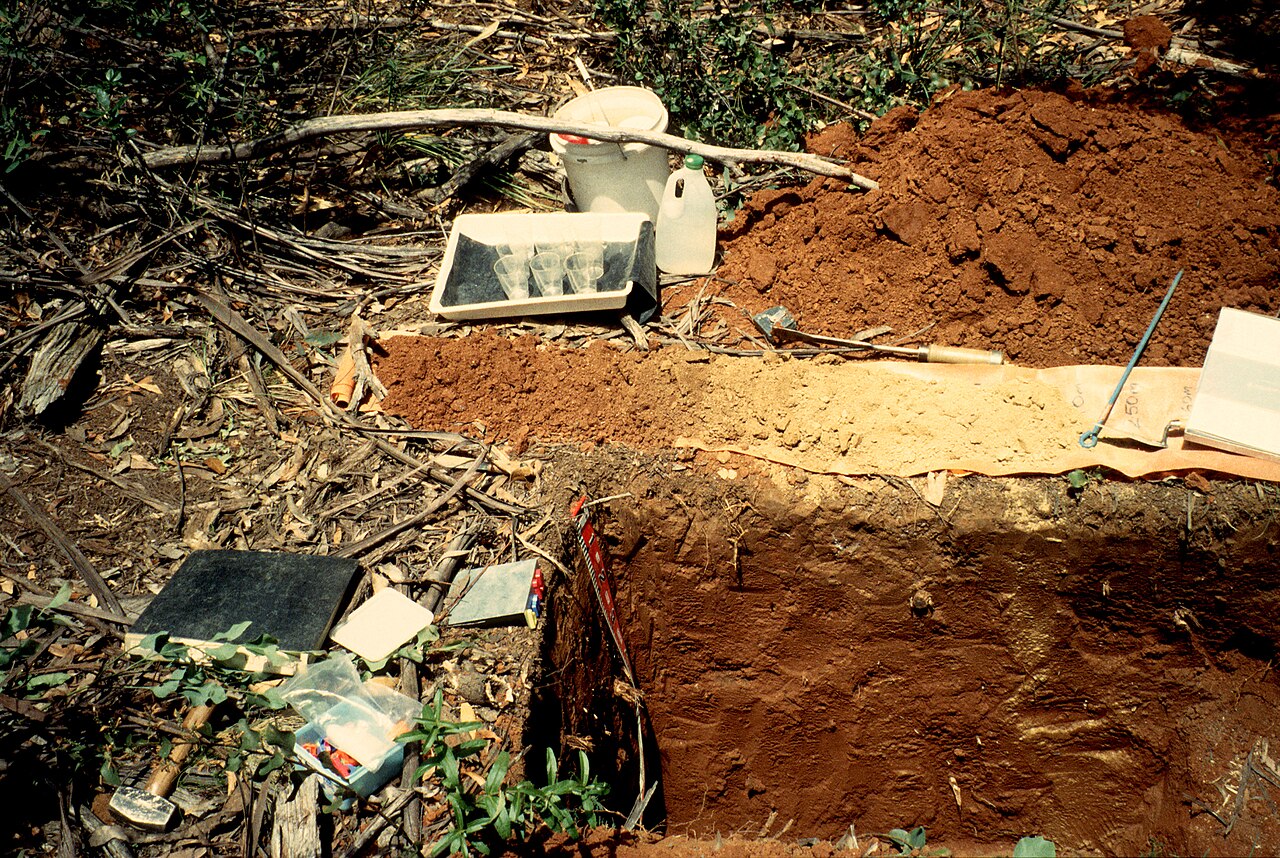
Samples are taken from several locations on the plot, by layer (e.g., 0–30 cm and 30–60 cm), and sent to an authorized laboratory. The laboratory issues a fertilization recommendation for the specific plot based on the results. Only based on these figures can one determine how much and what type of fertilizer to incorporate. In eastern Croatia, subsidized soil analysis has shown how real the problem is: according to data, about 35 % of soils contain no more than 1.5 % humus, meaning they are below the desired level for permanent orchards.
Target (optimal) values in soil
The following approximate values are most often cited as the goal that meliorative fertilization aims for. These values are informative and depend on the laboratory's analysis method and soil type.
| Indicator | Approximate Target Value | Note |
|---|---|---|
| pH (in KCl) | ≈ 5.5–7.2 | Hazelnut tolerates slightly acidic to neutral soils; consider calcification below ~5.5 |
| Humus | ≥ 3 % | A large part of Croatian soils is below this → need for humification |
| Phosphorus (P₂O₅) | ≈ 10–15 mg / 100 g soil | "Good supply"; goal of meliorative fertilization |
| Potassium (K₂O) | ≈ 15–30 mg / 100 g soil | Hazelnut yields better on soils well-supplied with potassium |
| Magnesium (Mg) | ≈ 10 mg / 100 g soil | Check the K:Mg ratio |
For comparison, guidelines from the Pacific Northwest of the USA (Oregon) and British Columbia cite target levels for woody crop soil tests of approximately 18–25 ppm P and 110–140 ppm K, with a pH around 6.5 for maximum phosphorus availability. These figures are not directly comparable to Croatian laboratory methods (ppm vs. mg/100 g, different extraction methods), but they confirm the same direction: raise P and K before planting, and keep pH close to 6.5.
Meliorative fertilization with phosphorus and potassium
Phosphorus and potassium are the backbone of meliorative mineral fertilization. The goal is to temporarily raise their soil reserve to a level that will, ideally, cover the plant's needs for the first three to four years of the orchard solely from the soil — so that young plants in that period are often topdressed almost exclusively with nitrogen.
The following approximate dosages for meliorative fertilization come from Croatian literature (per hectare, one-time before planting):
| Item | Approximate Dosage | Note |
|---|---|---|
| Complex mineral fertilizers | 1,200 – 3,000 kg/ha | Depends on soil fertility and analysis results |
| Typical formulations | NPK 7:20:30, NPK 8:26:26, NPK 5:15:30, MAP (NP 12:54), KCl | High P and K content; selected based on deficit |
| Lime materials (acidic soils) | 4 – 12 t/ha CaCO₃ | Only if analysis shows pH is too low |
How to read formulations
The label NPK 7:20:30 means 7 % nitrogen, 20 % P₂O₅, and 30 % K₂O. For meliorative fertilization, formulations with high P and K, and low N (e.g., 7:20:30 or 5:15:30) are chosen, because the goal is to fill the reserve of slowly mobile nutrients, not nitrogen. MAP (12:54) is used when a strong boost in phosphorus is needed.
A practical example from literature: at a dosage of the order of 400 kg/ha NPK 7:20:30, approximately 28 kg N, 80 kg P₂O₅, and 120 kg K₂O are incorporated per hectare — illustrating how nutrient ratios are "tailored" according to the analysis results through the choice of formulation and quantity. (Figures are illustrative; the actual dosage and formulation are determined by the laboratory recommendation.)
Connection with later orchard fertilization
The value of well-executed meliorative fertilization is visible in the first few years. If meliorative fertilization was performed after analysis and the soil is well-supplied with phosphorus and potassium, for the first four years, hazelnut is fertilized only with nitrogen, in early spring before vegetative growth begins, e.g., orientatively:
| Year after planting | Nitrogen fertilizer per bush (KAN 27 %) |
|---|---|
| 1st year | ≈ 0.5 kg |
| 2nd year | ≈ 0.6 kg |
| 3rd year | ≈ 0.8 kg |
| 4th year | ≈ 1.0 kg |
From the fourth to the eighth year, the orchard is fertilized with complex NPK fertilizers (spread in autumn) and KAN (in spring) over the entire area, and from the eighth year onward, the amounts of individual nutrients increase by about 35 % as yield increases. This proves the logic of "investing in advance": the better you fill the P and K reserve before planting, the calmer and cheaper the first years of the orchard will be.
Incorporation of organic matter and humus: the foundation of long-term fertility
Mineral nutrients address the chemical deficit, but organic matter addresses what mineral fertilizers cannot — soil structure, water-holding capacity, microbial activity, and long-term fertility. For hazelnut, organic matter has a special, almost irreplaceable role: it contributes to the development and activity of ectotrophic mycorrhiza on the roots, a symbiosis that facilitates the plant's uptake of water and nutrients. Therefore, soil supply with organic matter is emphasized more for hazelnut than for many other fruit species.
Humus is formed through humification — the microbial breakdown of dead organic matter into stable, permanent humus compounds. Humus content directly affects nutrient availability: humus binds cations, releases them to the plant, retains water, and feeds the soil microbiome. The problem is that intensive agriculture consumes humus faster than it is replenished — the top 30 cm of soil suffers the most, precisely the layer that hazelnut needs most.
Methods of incorporating organic matter before planting
| Source of organic matter | Approximate Dosage | Notes |
|---|---|---|
| Mature manure | 25 – 50 t/ha (lit. also cites ~40 t/ha) | Classic choice; deeply plow before planting |
| Pelleted organic fertilizers | 1,000 – 3,000 kg/ha | Dehydrated, pelleted (2–4 mm); lower dosage due to less moisture |
| Green manure (cover crops) | Sowing and plowing in inter-row space | If no manure is available — sow in the first years and plow in |
| Commercial humus-based additives | According to label | Humic/fulvic acid extracts; improve structure and water capacity |
Manure is the classic solution: literature recommends an incorporation of the order of 40 t/ha before planting (range 25–50 t/ha), with deep plowing. Manure can also be incorporated at planting or immediately after, provided it is deeply plowed in the first years. If there is no possibility for meliorative fertilization with manure, it is essential to sow cover crops for green manure (e.g., legumes that are plowed in during flowering) in the inter-row spaces during the first three years — this is a cheap and effective way to maintain organic matter and microbial activity.
In recent years, mature manure is increasingly being replaced by pelleted organic fertilizers (dehydrated, pressed material sized 2–4 mm). Due to lower moisture content, dosages are significantly lower — orientatively 1,000–3,000 kg/ha, depending on the existing level of organic matter in the soil — with easier application and more uniform distribution.
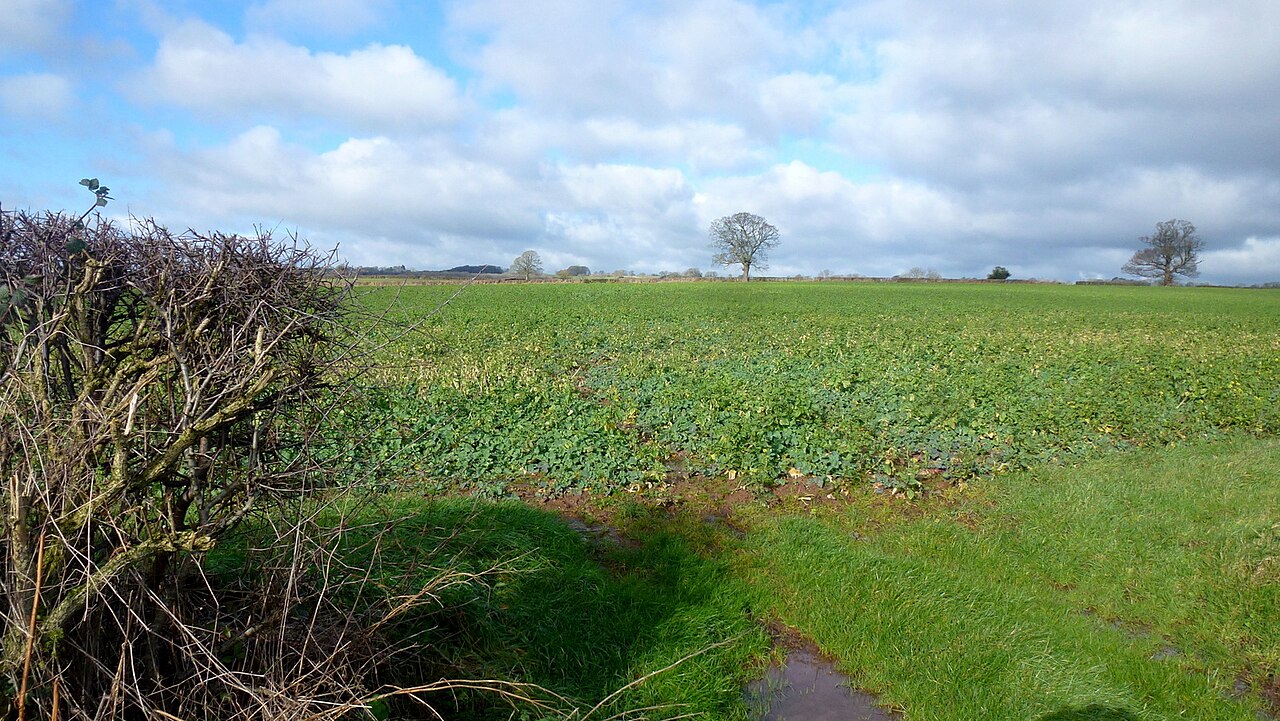
Deep tillage: how nutrients reach the roots
Meliorative fertilization and deep soil tillage are inseparable. After spreading fertilizers and organic matter, it is necessary to perform deep plowing or subsoiling to ensure nutrients reach the future root zone. From the literature:
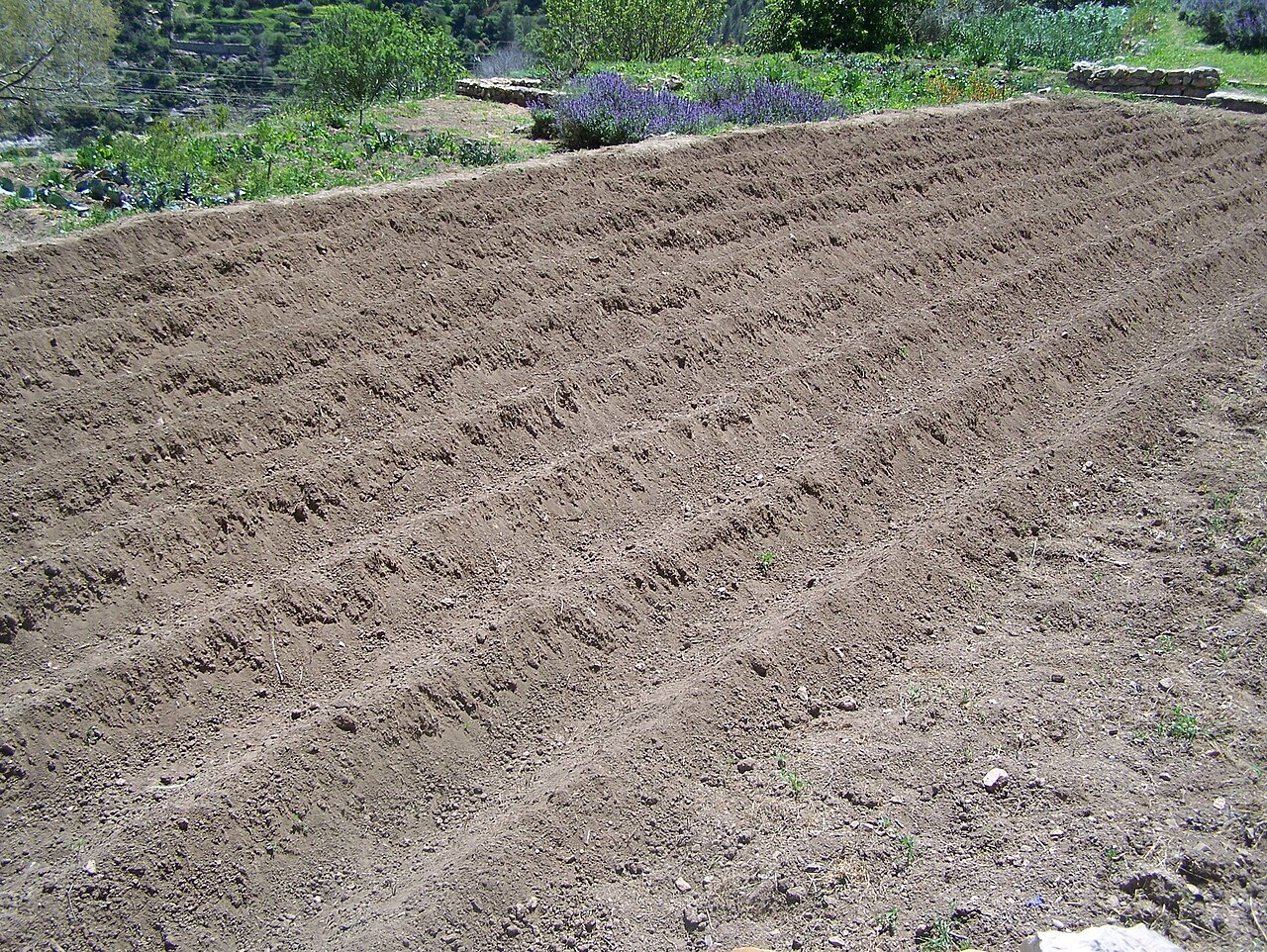
- Plowing is typically performed at a depth of approximately 30 cm, incorporating mineral and manure fertilizers into the root zone.
- Subsoiling (deep turning of the soil) is recommended at 40–50 cm, precisely because of the shallow spread of hazel roots; this "embeds" nutrients and organic matter deep into the soil, where roots will find them later.
- On impermeable sites, drainage should be addressed before planting; where subsoiling the entire area is not feasible, planting holes are dug (e.g., ~1 m wide, 70–80 cm deep).
Subsoil only when the soil is dry
Subsoiling should be performed when the soil is well-dried, and never when it is excessively wet — in unfavorable consistency, soil structure is destroyed rather than improved. The timing of execution, achieving the required depth, and the technique of turning furrows are crucial for success.
Timeline (calendar) of operations
| Phase | Timing | Operation |
|---|---|---|
| 1. Soil analysis | several months prior | Sampling + laboratory + recommendation |
| 2. Clearing/leveling | as needed | Removal of vegetation, leveling, drainage |
| 3. Spreading meliorative fertilizers | before deep tillage | P, K, organic matter, (lime) |
| 4. Deep plowing / subsoiling | for autumn planting: late summer | Incorporation at 30–50 cm depth |
| 5. Refinement (harrowing, tilling, leveling) | before planting | Preparation of the seedbed/planting layer |
| 6. Planting | autumn (recommended) or spring | — |
For autumn planting (which is most commonly recommended for hazelnuts), deep tillage should be performed in late summer. For spring planting, deep tillage can be carried out from summer to winter; winter freeze-thaw cycles further break down and loosen the soil.
Practical recommendations and common mistakes
Recommendations
- Always start with a soil analysis. The doses in this article are ranges from the literature — your specific dose comes from the laboratory recommendation for your plot.
- Apply P and K in a single application and plow them deep. This is your only opportunity to place them in the root zone.
- Do not skimp on organic matter. Manure (≈40 t/ha) or pellets (1–3 t/ha); if neither is possible — green manuring for the first three years.
- Coordinate liming with fertilization. If the soil is too acidic, incorporate lime material (4–12 t/ha CaCO₃) together, as pH below ~6.5 reduces phosphorus availability.
- Monitor current regulations. Nitrogen and organic fertilizer applications are subject to water protection rules (Nitrate Directive and national implementation regulations); orchards in incentive systems and organic production are subject to additional rules regarding permitted inputs.
Common mistakes
- Fertilizing "by guesswork," without analysis — leads to excess or deficiency, wasted money, or damage to the orchard. On soils already rich in phosphorus, additional P is a cost and an environmental risk.
- Surface spreading of P and K after planting — nutrients remain in the top layer and do not reach the roots.
- Subsoiling wet soil — permanent damage to soil structure.
- Neglecting organic matter — not visible in the short term, but in the long term the orchard falls behind, mycorrhiza is weaker, and fertility declines.
- Too shallow tillage — plowing only to 15–20 cm does not create the deep fertile zone that the shallow but widely spread hazel root system requires.
Gallery
Sources
This article is an AI summary created from an internal literature collection on hazelnuts (RAG corpus) and supplemented with publicly available sources. Figures and doses are taken from the cited sources and are for informational purposes only; the laboratory recommendation and official guidelines are authoritative. Main sources used:
- GUIDE FOR hazelnut cultivation — Ministry of Agriculture, Croatian Advisory Service (2024.) — savjetodavna.mps.hr
- Environmental Impact Assessment — establishment of permanent hazelnut and plum orchard (Grubišno Polje, 2020.) — bbz.hr (PDF)
- Environmental Impact Assessment — establishment of permanent hazelnut orchard (Općina Vojnić, AGRO UTINJA, 2021.)
- "Hazelnut: cultivation, fertilization, cultivars, planting" (Krpina et al., 2004.)
- "Mechanization in hazelnut production and processing at Minas-Zrno company" (2021.)
- "Hazelnut cultivation" (pdfcoffee, 2009.) — organic matter input, ectotrophic mycorrhiza
- Guide for foliar fertilization of hazelnuts (2021.) — gnojidba.info (PDF)
- "Cascade utilization of hazelnut and aronia by-products" (2025.) — humification and humus
- "Agrochemical indicators of soil fertility and the effect of subsidized soil analysis in eastern Croatia" (2019.)
- FitoEko catalogs (2023.–2025.) — humus-based additives (humic/fulvic acids)
- Hazelnut — specificities of planting and cultivation, Gospodarski list — gospodarski.hr
- "From planting to harvest of hazelnuts", Ministry of Agriculture (advisory) — savjetodavna.mps.hr
- Hazelnut nutrient management — Province of British Columbia — www2.gov.bc.ca
- Growing Hazelnuts in the Pacific Northwest: Orchard Nutrition — OSU Extension (EM 9080) — extension.oregonstate.edu