Root and Crown Rot Diseases (Phytophthora, Armillaria)
Content generated by artificial intelligence — verify before application
This article was automatically compiled from a collection of hazelnut literature using artificial intelligence and may contain errors or outdated information. It serves as a starting point for further research, not as professional advice. Dosages, products, and timing are informative and depend on the cultivar, location, and current regulations — always verify with advisory services and official sources before application.
Root and crown (crown collar) diseases are among the most insidious health problems in hazelnut (Corylus avellana) orchards. Unlike leaf spot or fruit rot, which are immediately visible, root rot often remains hidden underground: by the time the grower notices wilting, stunting, and drying of the canopy, the underground part of the plant is usually already severely damaged. The result is the decline of individual shrubs and trees, and with both main pathogens — Phytophthora spp. (root and crown rot) and Armillaria mellea (honey fungus, "creeper", white root rot) — the loss is typically permanent: infected trees are rarely saved. Therefore, the focus of protection is almost entirely on prevention — proper site selection and preparation, drainage, healthy planting material, and orchard hygiene.
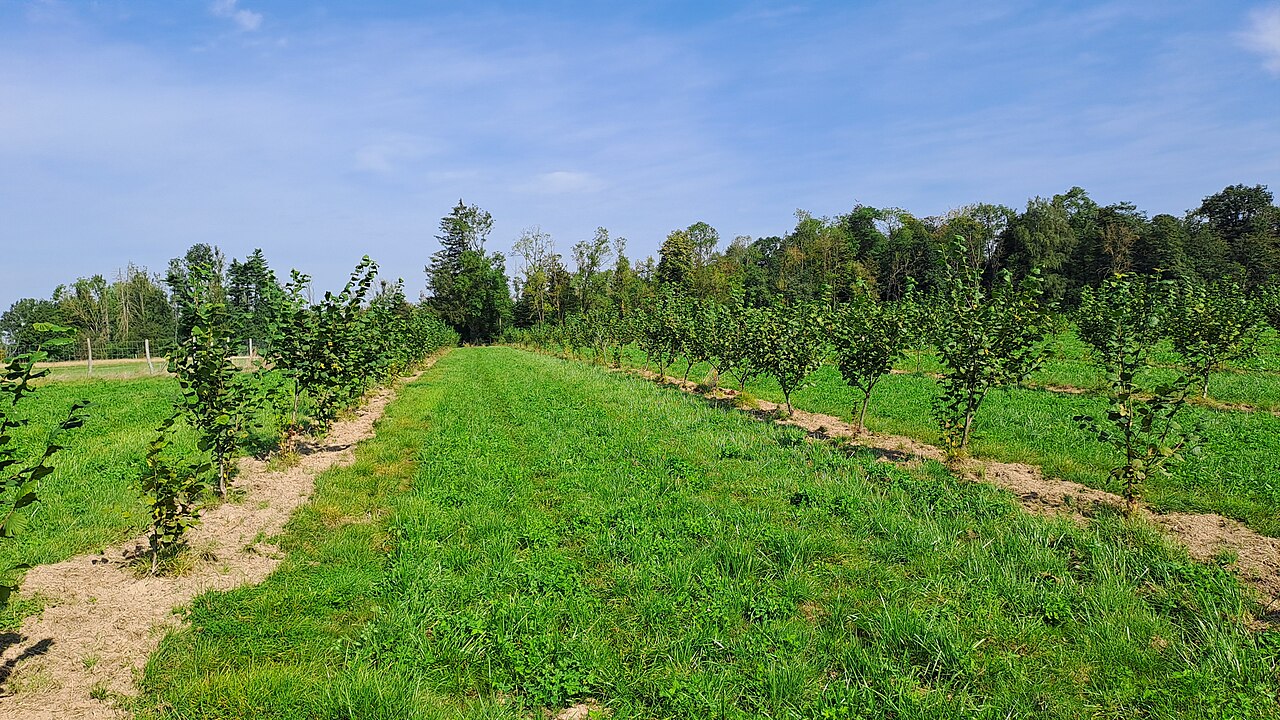
In addition to these, Verticillium spp. (Verticillium wilt) is also cited in Croatian orchards as a cause of hazelnut wilting and decline, so we will briefly address it because it is easily confused with root rots in practice.
Three Pathogens, Similar Outcome — Why Distinguish Them
All three diseases end similarly: wilting, decline, and drying of the shrub or tree. However, the causes, predisposing factors, and (limited) control measures differ, making correct diagnosis the first step.
| Feature | Phytophthora (root and crown rot) | Armillaria mellea (honey fungus) | Verticillium spp. (wilt) |
|---|---|---|---|
| Organism type | Oomycete (pseudofungus, "water mold") | True fungus (parasite and saprophyte) | True fungus (vascular) |
| Main trigger | Wet, poorly drained soil, waterlogging | Moist soil + woody debris (stumps, roots) | Infested soil, plant stress |
| Typical attack site | Fine roots and crown (root/collar junction) | Roots and crown collar, spreads to healthy roots | Vascular bundles (clogging) |
| Characteristic sign | Reddish-brown, wet necrosis of bark below soil level | White, fan-shaped mycelial layer under bark, fungal odor, honey-yellow fruiting bodies in autumn | No specific underground sign; wilting from late July |
| Speed | Slow decline over 1+ years or sudden collapse in spring | Gradual drying of branch tips → whole plant | Wilting can last several growing seasons |
| Saving infected tree | Very unlikely | Practically impossible | None |
Field Rule
Dig around the crown of a suspect plant. Reddish-brown, wet, and sharply defined bark necrosis below soil level indicates Phytophthora. White, firm mycelial layer between bark and wood, strong fungal smell, and clusters of honey-yellow mushrooms at the base in autumn indicate Armillaria. Wilting without these underground signs, starting in late July with light green, flaccid leaves, indicates Verticillium.
Phytophthora — Root and Crown Rot
What is Phytophthora and why is it dangerous
The genus Phytophthora are not "ordinary" fungi but oomycetes (pseudofungi, related to algae). For their spread and infection, water is essential: in saturated soil, they produce motile spores (zoospores) with flagella that swim to the roots and infect them. Therefore, this disease is primarily a wet soil disease — it appears and intensifies on heavy, compacted, poorly drained soils and where water stands after rain or where over-irrigation occurs.
Several species are described on hazelnut and other fruit crops; in literature, Phytophthora cactorum is classically cited for crown rot in fruit trees, while related species (e.g., P. ramorum, P. kernoviae) primarily threaten forest and ornamental plants, but demonstrate how the genus as a whole attacks woody species.
Predisposition (Risk Factors)
Phytophthora is a typical example of a disease where the site determines whether it will appear:
- Heavy, compacted, poorly drained soils and soils where precipitation water stands.
- Periodic flooding or puddles, zones where soil dries slowly.
- Excessive or irregular irrigation (wetting the crown, prolonged soaking).
- Temperatures favorable for the pathogen — most active in the range of around 13–21 °C with high soil moisture.
- Wounds and cracks on the crown (cultivation, mower damage, frost) are the main entry points for infection; susceptibility increases as the orchard ages.
- Deep planting and soil mounding against the trunk, which keeps the crown constantly wet.
Symptoms
Above-ground (what the grower sees first):
- reduced growth and vigor, stunting;
- yellowing and chlorosis of leaves, thin canopy, drying of tips;
- wilting and gradual decline over one or more years — or sudden collapse of a plant that appeared to start normally in spring but quickly dried out.
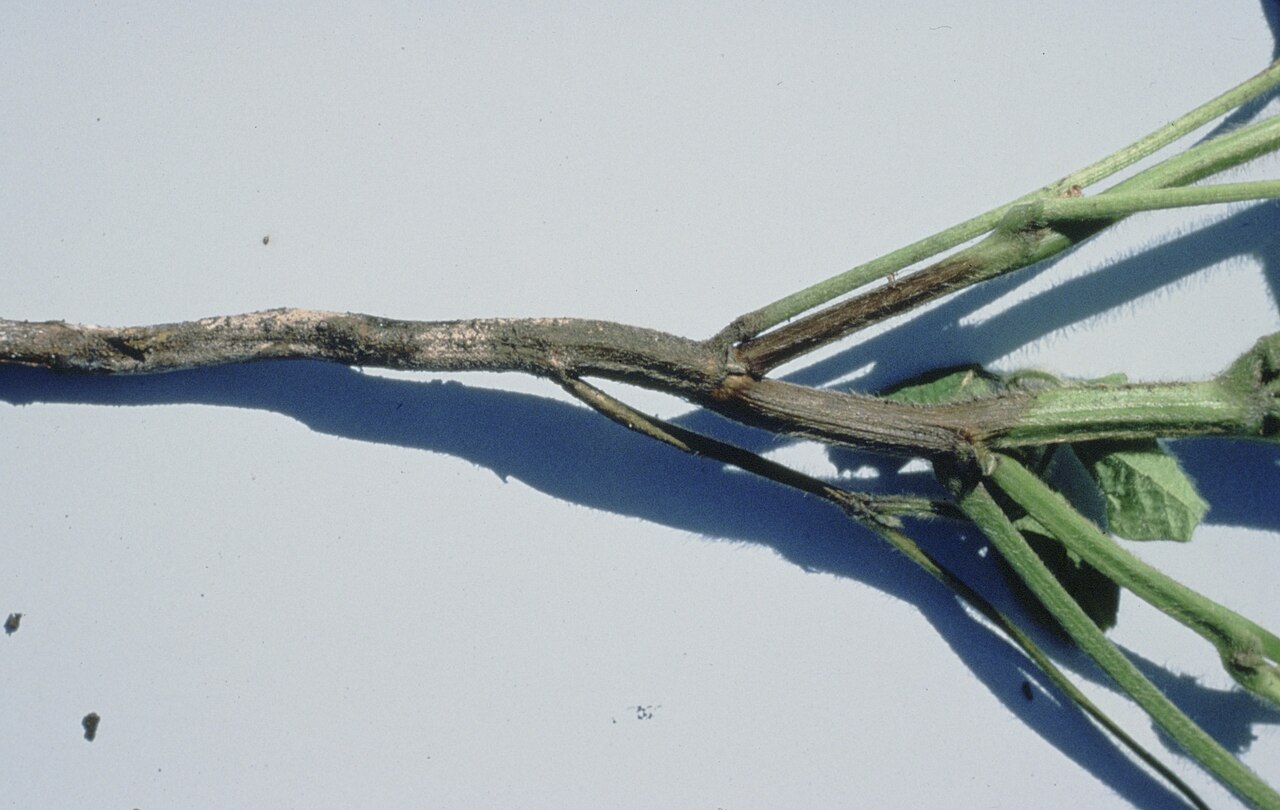
On the crown and roots (diagnostic key):
- reddish-brown to dark, wet necrosis of inner bark, often sharply defined, several centimeters below soil level;
- in crown rot, the bark at the infected site becomes reddish-purple and wet, and rotten tissue may have a smell of almond oil;
- decline of fine (absorptive) roots — the plant "starves" and "thirsts" even though the soil is moist.
Control and Prevention
In root rot, agronomy and drainage are worth more than any chemical.
Agronomic and preventive measures (most important):
- Establish the orchard on airy, permeable, and well-structured soils; avoid heavy, flood-prone, and slow-drying soils.
- Drain the soil so that precipitation water does not stand on the surface or in the root zone.
- Plant on mounds/berms (raised) — raising the crown above the zone of highest pathogen activity significantly reduces risk.
- Irrigate properly — avoid overwatering and wetting the crown itself; adjust irrigation to soil type.
- Systematically control weeds to keep the crown as dry as possible; avoid soil mounding and deep planting.
- Reduce trunk and crown injuries during cultivation and mowing (these are entry points for infection).
- Plant healthy, certified planting material; if available, use more resistant rootstocks/scions.
Chemical measures (supplementary, informative):
In fruit growing, phosphonates / phosphite preparations (e.g., based on potassium phosphites, "fosetyl-Al") and specialized fungicides (e.g., active substances from the oxathiapiprolin group, etc.) are used against Phytophthora, applied as soil drench, targeted soil treatment, or through irrigation systems, usually in spring when the root starts growing. Orientational dosages from foreign (American) literature for hazelnut cite, for example, phosphite preparations in the range of approximately 1–3 qt/ac and other preparations at label rates.
Dosages and approvals are binding information — check registration
The figures above are strictly informative and come from foreign literature. Registration of products for hazelnut in Croatia/EU is different and changes. Before any application, check approved products and dosages in the plant protection product database (FIS, fis.mps.hr) and consult advisory services. No fungicide compensates for a poorly drained site.
Armillaria mellea — Honey fungus (white root rot)
What is honey fungus
The causal agent of hazelnut root rot is the fungus Armillaria mellea (Vahl) P. Kumm., also known as honey fungus or the "oak root fungus". This is a strong parasite of woody species that also survives excellently as a saprotroph on dead wood — and it is precisely this dual nature that makes it so persistent. After a tree dies or is removed, the fungal mycelium survives in buried root remnants and stumps for years, serving as a source of infection (inoculum) for the next orchard.
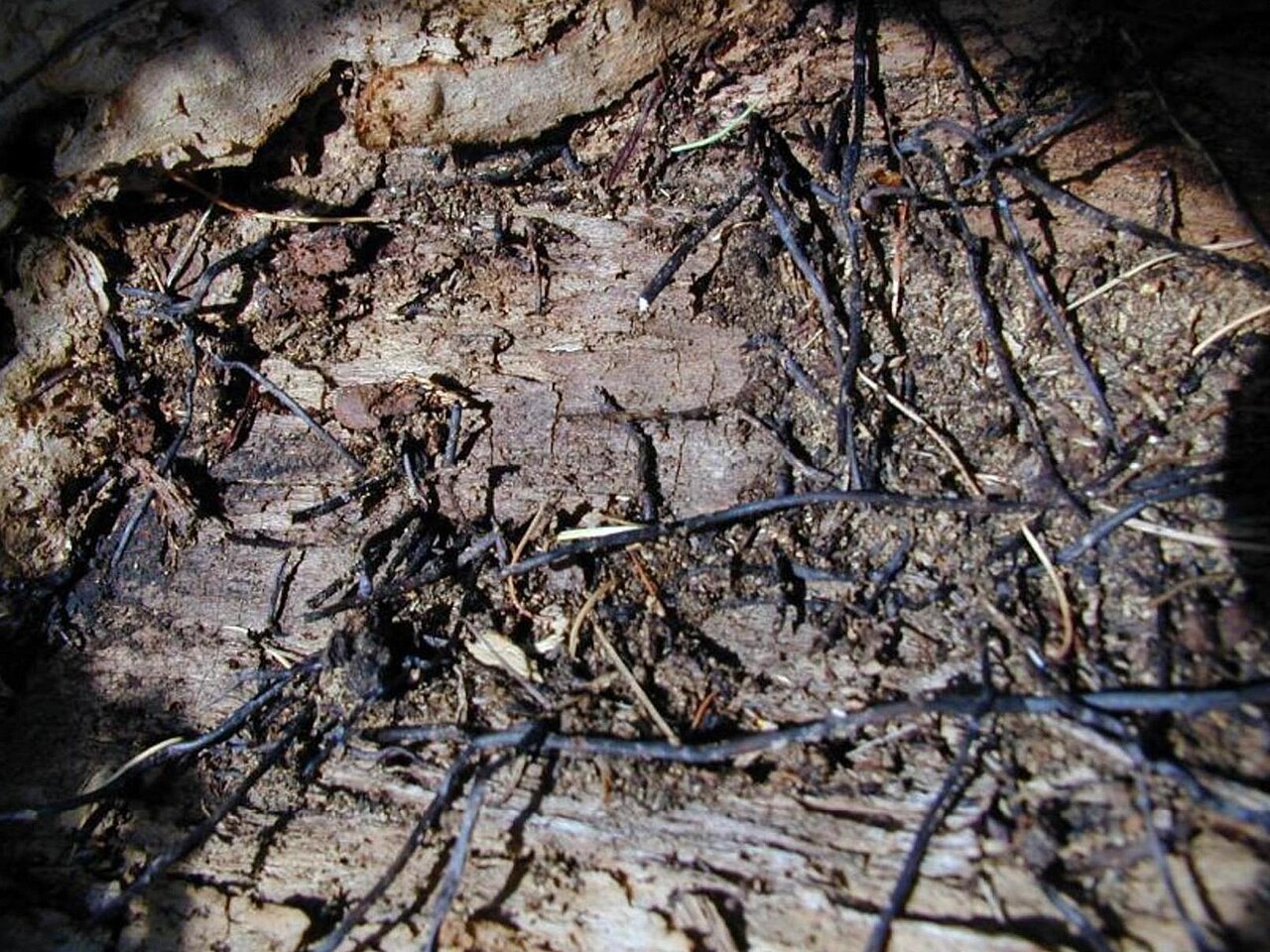
The fungus spreads in two ways: via rhizomorphs (dark, root-like strands) through the soil to healthy roots, and through direct root contact between infected and healthy plants. This is why the disease often spreads in "patches" around the initial focal point in the orchard.
Predisposition (risk factors)
- Soils rich in residual woody debris — orchards established on cleared forest land, oak woods, or old orchards (Armillaria is also called the "oak root fungus").
- Wet soil favors fungal activity and the spread of rhizomorphs.
- Plant stress (drought, poor nutrition, damage) accelerates the decay of already infected trees.
- Infected planting material and uncleaned soil before planting.
Symptoms
Above-ground:
- Drying of branch tips, thinning canopy, and leaf chlorosis; as the disease progresses, leaves turn brown;
- the entire plant dries out gradually — in hazelnuts, often the entire bush or tree;
- decay can proceed gradually, or suddenly under severe stress.
On the root collar and roots (diagnostic key):
- tissue at the root collar is soft and moist;
- characteristic fungal odor from the infected tree;
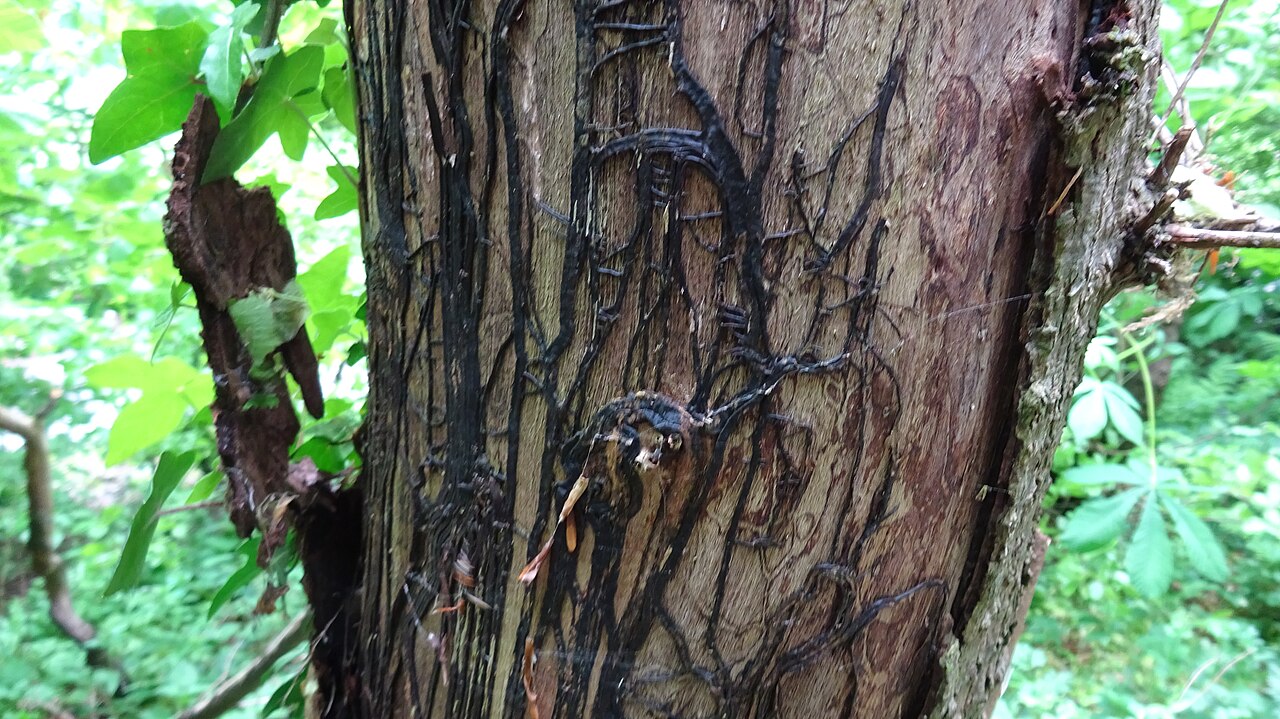
- white, fan-shaped mycelial layer between the bark and wood (white rot);
- dark, thread/strand-like rhizomorphs in the soil near the roots;
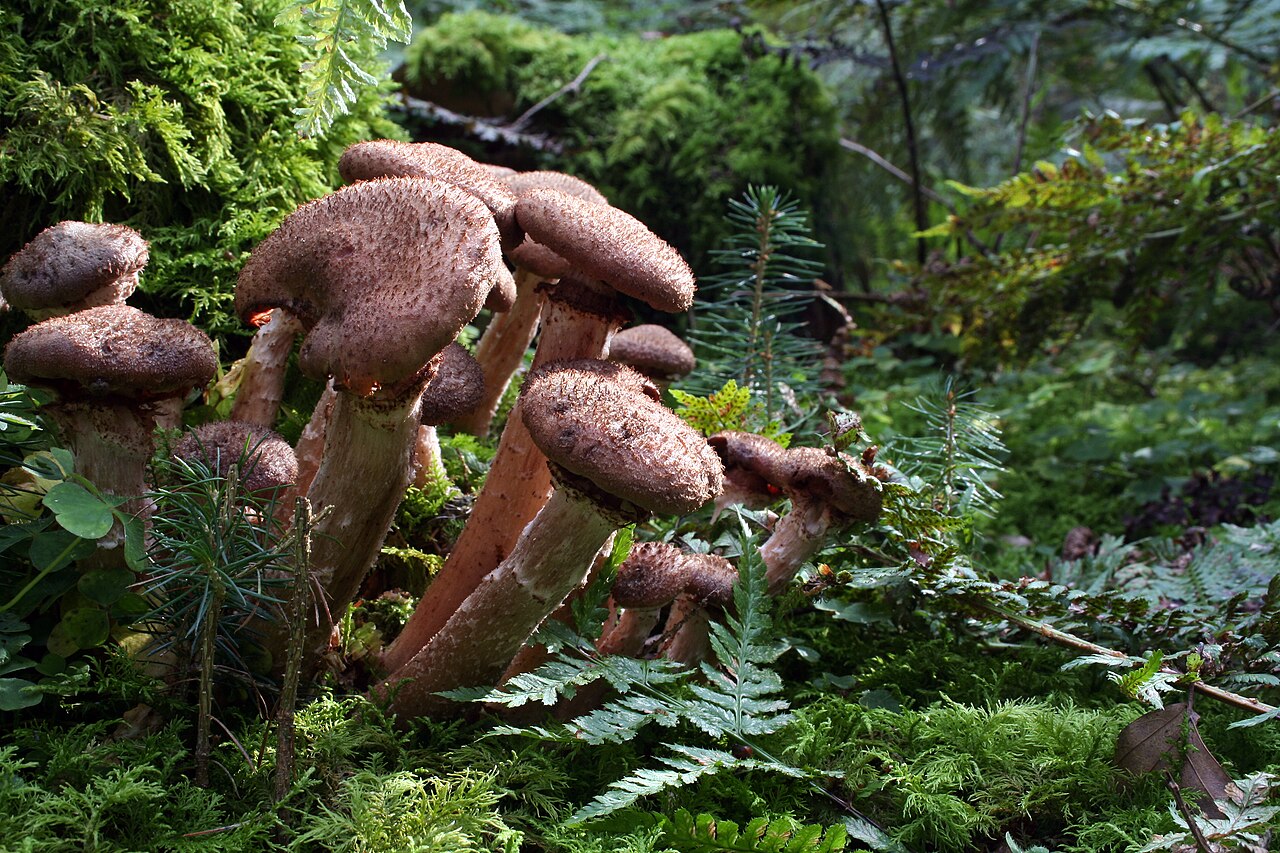
- honey-brown (honey-yellow) fruiting bodies (mushrooms) that appear in autumn in clusters at the base of the infected plant or in its immediate vicinity.
Control and prevention
For honey fungus, the rule is: once symptoms appear, the infected tree is practically unsalvageable. Everything comes down to preventing infection of new plants and stopping the spread within the orchard.
Prevention before planting (most effective):
- Avoid risky sites — do not plant on recently cleared forest/oak land or where honey fungus has been recorded.
- Thoroughly clean the soil: before establishing the orchard, dig up and burn stumps and large roots, deep-rip (riper) the soil to extract woody remnants.
- "Rest" the plot — in infected/risky areas, leave the soil under grass/pasture for several years (e.g., 2–3 years) so that fine roots rot away and the inoculum source disappears.
- Plant healthy, verified planting material, preferably grafted onto more resistant rootstocks/hybrids.
Measures for existing infections:
- Remove and destroy (burn) infected plants along with as much root system as possible — mycelium in remaining roots remains a source of infection.
- Root collar excavation: for newly infected but still valuable trees, the spread can sometimes be slowed by digging up the soil from the collar and upper roots and exposing the zone to air drying during the growing season (do not water or backfill).
- Physical barriers: around the focal point, a deep trench can be dug and lined with foil/barriers to prevent contact between healthy and diseased roots, thereby stopping the "patchy" spread.
- Pre-plant soil fumigation can reduce but not eradicate the infection and is not always available or permitted.
No 'cure' in a sprayer
There is no registered post-planting fungicide that can cure honey fungus. Research is emerging on, for example, injecting trunk triazole fungicides in other fruit trees, but this is experimental and not a standard recommendation. Rely on soil hygiene, drainage, and removal of infection sources.
Verticillium spp. — Hazelnut wilt (briefly, for differentiation)
In Croatian orchards, hazelnut wilt is attributed to Verticillium spp. (e.g., first recorded on the cultivar 'Istarski dugi'). This is a vascular fungus that clogs the vascular bundles.
Symptoms: changes are noticeable from late July — leaves become light green and lose turgor (wilt), growth lags, shoot growth ceases, and on nuts, forced (premature) ripening is visible. The plant usually dries out in the second or third year after infection.
Difference from root rot: wilting lasts longer (and across several growing seasons), without white mycelium or the honey-yellow fruiting bodies typical of Armillaria, and without the moist reddish necrosis of the root collar typical of Phytophthora. Measures are largely preventive: healthy planting material, avoiding infected soil, reducing stress, and removing dead plants.
Calendar and key measures throughout the year
| Period | Phytophthora | Armillaria |
|---|---|---|
| Before orchard establishment | selection of permeable soil, designing drainage, planting on mounds | clearing stumps/roots, ripping, "resting" the plot under grass |
| Spring (vegetation start) | checking soil moisture, possible permitted phosphite soil treatment; caution with irrigation | checking for sudden collapse; excavating root collars on suspect trees |
| Summer | avoid overwatering, maintain drainage, weed control around trunk | monitoring drying branch tips; exposing excavated collar to air |
| Autumn | repairing drainage before rains | looking for honey-yellow fruiting bodies at plant bases — confirming diagnosis; removing and burning focal points |
| Throughout the year | healthy planting material, avoiding root collar injuries | hygiene: digging up and destroying infected plants with roots |
Practical recommendations and common mistakes
Recommendations:
- Drainage is "fungicide number one" for Phytophthora. Invest in drainage and planting on raised beds before investing in chemicals.
- Dig up and inspect the root collar of every suspect plant — diagnosis is made below, not in the canopy.
- Do not plant on freshly cleared forest/oak land without prior cleaning and soil resting — this is a classic trap for honey fungus.
- Remove infected plants with roots and burn them; do not leave stumps and large roots in the soil.
- Purchase healthy, certified planting material and avoid introducing infected soil.
Common mistakes:
- Treating canopy wilting with foliar spraying while the real cause is below, in the roots.
- Over-irrigation and mounding soil around the trunk (keeps the root collar wet → inviting Phytophthora).
- Removing only the above-ground part of a dead plant, leaving the roots (for Armillaria = permanent source of infection).
- Planting a new plant in the same spot where the previous one died from root rot, without soil remediation.
- Relying on fungicides as if there is a "cure" — for these diseases, it practically does not exist.
Sources
This article is an AI summary prepared from an internal collection of hazelnut literature (RAG corpus) and publicly available professional sources. The content serves as a starting point; dosages, products, and timing are informative and subject to current regulations and labels. Main sources used:
From RAG corpus (hazelnut literature collection):
- Diseases and pests of hazelnut (repository diploma/final thesis, 2020.) — wilting (Verticillium) and root rot (Armillaria mellea), symptoms and tables of pathogens/fungicides; source: Šubić (2019.), Cvjetković (2010.), Kelčić.
- Diseases and hazelnut protection on a family farm (Baran, 2021.) — description of Armillaria mellea (honey fungus), symptoms on the root collar, fruiting bodies, mycelium survival in roots, and recommendation for healthy planting material/resistant rootstocks.
- Elaborate — Groundwater extraction / hazelnut orchard Dragodinac (2021.) — infection through flowers, lenticels, and damage; continuous removal of infected twigs and copper treatments; description of wilting and root rot.
- Root collar canker (Phytophthora cactorum) — template/table for fruit tree protection (2012.) — symptoms (reddish-purple, moist bark; almond oil smell), entry wounds at the root collar, and agrotechnical measures (permeable soil, drainage, weed control, avoiding injuries).
- Hazelnut diseases (Pinova / Plant Protection Bulletin) and advisory service notices — context of fungal diseases and the impact of climate/moisture on decay.
Public professional sources (web):
- Pacific Northwest Pest Management Handbooks — Hazelnut (Corylus avellana) — Wet Feet (Phytophthora) — https://pnwhandbooks.org/plantdisease/host-disease/hazelnut-corylus-avellana-wet-feet
- Pacific Northwest Pest Management Handbooks — Hazelnut (Corylus avellana) — Armillaria Root Rot — https://pnwhandbooks.org/plantdisease/host-disease/hazelnut-corylus-avellana-armillaria-root-rot
- UC IPM — Phytophthora Root and Crown Rot — https://ipm.ucanr.edu/home-and-landscape/phytophthora-root-and-crown-rot/
- UC IPM — Armillaria Root Rot (Oak Root Fungus) (Walnut/Almond) — https://ipm.ucanr.edu/agriculture/walnut/armillaria-root-rot-oak-root-fungus/
- Agriculture Victoria — Armillaria root rot (stone fruits) — https://agriculture.vic.gov.au/biosecurity/plant-diseases/fruit-and-nut-diseases/stone-fruits/armillaria-root-rot
- Clemson Extension — Armillaria Root Rot management — https://www.clemson.edu/extension/peach/commercial/diseases/armillaria-root-rot.html
- RHS — Phytophthora Root Rot: Prevention Guide — https://www.rhs.org.uk/disease/phytophthora-root-rot
- Croatian Plant Protection Products Database (FIS) — http://fis.mps.hr/trazilicaszb/