Soil surface management: Clean rows and grassed interrows
Content generated by artificial intelligence — verify before application
This article was automatically compiled from a collection of hazelnut literature using artificial intelligence and may contain errors or outdated information. It serves as a starting point for further research, not as professional advice. Dosages, products, and timing are informative and depend on the cultivar, location, and applicable regulations — always consult with an advisory service and official sources before application.
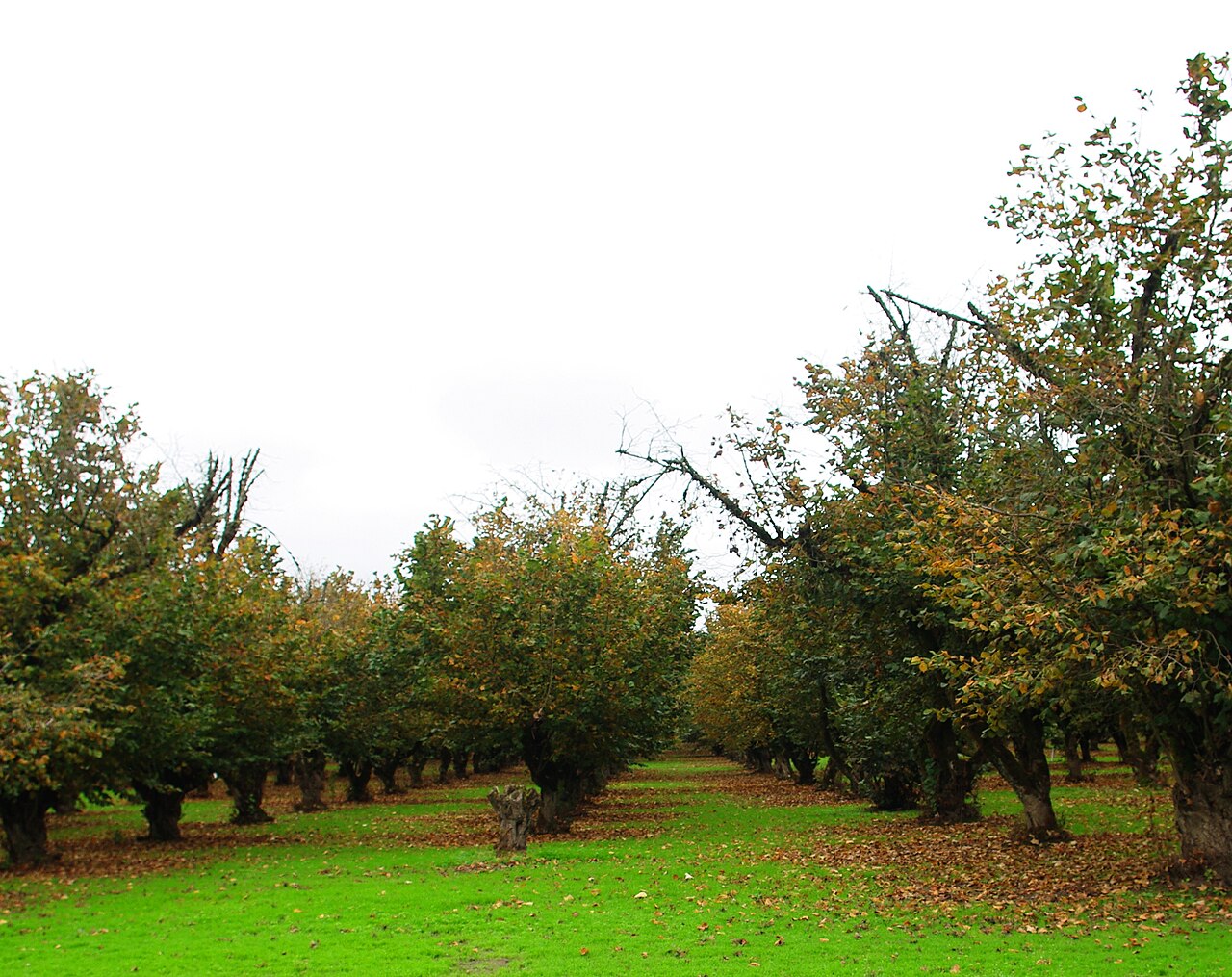
The way you manage the soil surface in a hazelnut orchard is one of the decisive factors for successful growth, productivity, and — often overlooked — the quality and cleanliness of the harvest. In modern, machine-harvested orchards, a two-zone model has become established: a clean (vegetation-free) strip in the row under the canopy and a permanent grass cover in the interrow space that supports machinery traffic. This article explains the logic behind this division, how each zone is established and maintained, the dosages and widths cited in literature, and which mistakes cost producers the most.
Why two zones, not one
Soil in an orchard can be managed in several ways: as fallow (black) land, bare ground, mulching, herbicides, cover crops, or green manure — and most commonly, a combination of the above. The classic compromise is: suppress weeds in the row (mechanically or with herbicides), and maintain a permanent grass sward in the interrows. The reason is that the two zones have opposing goals.
In the row, immediately below the canopy and over the root system, the goal is to remove competition. Grass and weeds in this zone directly compete with the tree for water and nutrients, and a dense grass cover near the trunk increases the risk of spring frost and provides shelter for rodents (voles, mice) that damage bark and roots. German research states this clearly: bare soil in the row means no competition and weed suppression, but bare soil in the aisle (Gasse) carries the risk of water and nutrient competition, increased frost risk, and rodents.
In the interrow space, the goal is reversed: soil bearing capacity for heavy machinery, erosion protection, precipitation infiltration, and preservation of soil structure. Here, permanent grass sward offers almost exclusively advantages — provided it is kept short regularly.
| Feature | Clean row strip | Grassed interrow |
|---|---|---|
| Main goal | removal of competition for water and nutrients | bearing capacity, erosion protection, infiltration |
| Typical maintenance | herbicide or mechanical cultivation/mulching | mowing/mulching of grass sward |
| Benefit | better growth and yield, cleaner harvest near trunk | less soil compaction, more organic matter |
| Risk if neglected | weeds near trunk, competition | ruts, compaction, erosion on slopes |
Clean row strip
Strip width and how to determine it
The strip is usually planned as a proportion of the interrow width. In practice and in protection plans, the protective strip under fruit trees is maintained at a width of approximately 30% of the interrow width. At typical hazelnut spacing (e.g., row spacing 4.5–6 m), this results in a row strip of approximately 1.5 m total (roughly 0.7–0.8 m on each side of the trunk). The Pacific Northwest (Oregon) cites practically the same standard: a vegetation-free strip of about 1.5 m wide in the row, with occasional mowing of the permanent grass in the aisle.
Figures are indicative
The specific width depends on the spacing, slope, irrigation system, and whether harvesting is machine-based. Always align working widths of attachments (mulcher, sprayer) and tractor track width with row spacing.
Regulated limitations for herbicide strips (integrated production)
This is the part that producers most often overlook. In integrated production systems and "verified quality" schemes, the width of the herbicide strip is legally limited:
| Rule | Value |
|---|---|
| Total herbicide-treated orchard area | maximum 1/3 of net area (with grassed interrows) |
| Hazelnut/walnut — from start of vegetation to ripening | maximum 1/4 of row spacing |
| Hazelnut/walnut — at ripening and harvest | allowed up to 2/3 of row spacing |
| Average rule for most fruit trees | up to 1/3 of distance between rows |
The logic is clear: by limiting the strip width, a permanent green cover is maintained, which preserves organic matter in the soil, prevents nutrient leaching, and reduces soil erosion and compaction under machinery — while also reducing herbicide consumption. An exceptionally wide strip (up to 2/3 of spacing) before harvest is justified precisely because a clean, flat terrain under the canopy facilitates machine harvesting of nuts from the ground.
Herbicide maintenance of the strip
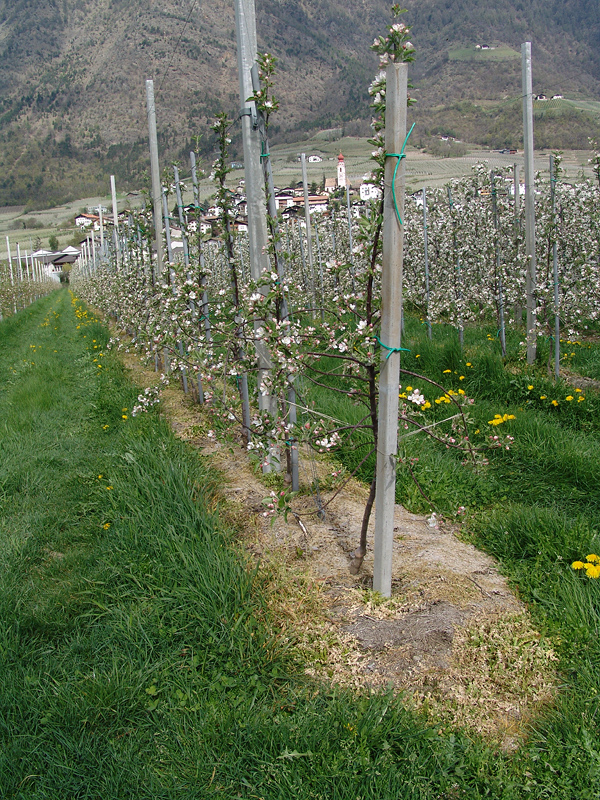
The classic approach: in the first two to three years, the strip in the row is hand-hoeed (with a hoe) or shallowly tilled near seedlings, and after that, the soil under fruit trees is treated with herbicides. Tilling near young trees in the first years has a dual role — incorporating fertilizer and improving the water-air regime.
Practical notes regarding herbicides (all indicative, according to label and current approval):
- Use only registered products for hazelnut/orchards and respect the dosage, pre-harvest interval (PHI), and restrictions on the label; check the list of approved products and dosages in the FIS database and with the advisory service.
- Protect young trees from drift — spray directed, at low pressure, with a nozzle guard.
- The strip must be clean from early spring to autumn, especially in the first few years after planting.
- Weed control in the strip can be combined with removal of root suckers (shoots), which must be removed regularly anyway as they drain the tree's energy.
Mechanical (herbicide-free) alternative in the row
In organic production and where herbicides are to be reduced or avoided, weeds in the row are controlled by machines with mechanical lateral movement of the working unit (inter-row/sub-row tiller heads, "sensor" star wheels, ring cultivators) that treat a narrow strip near the trunk, while the sensor avoids the trees. Additional mechanical and physical measures:
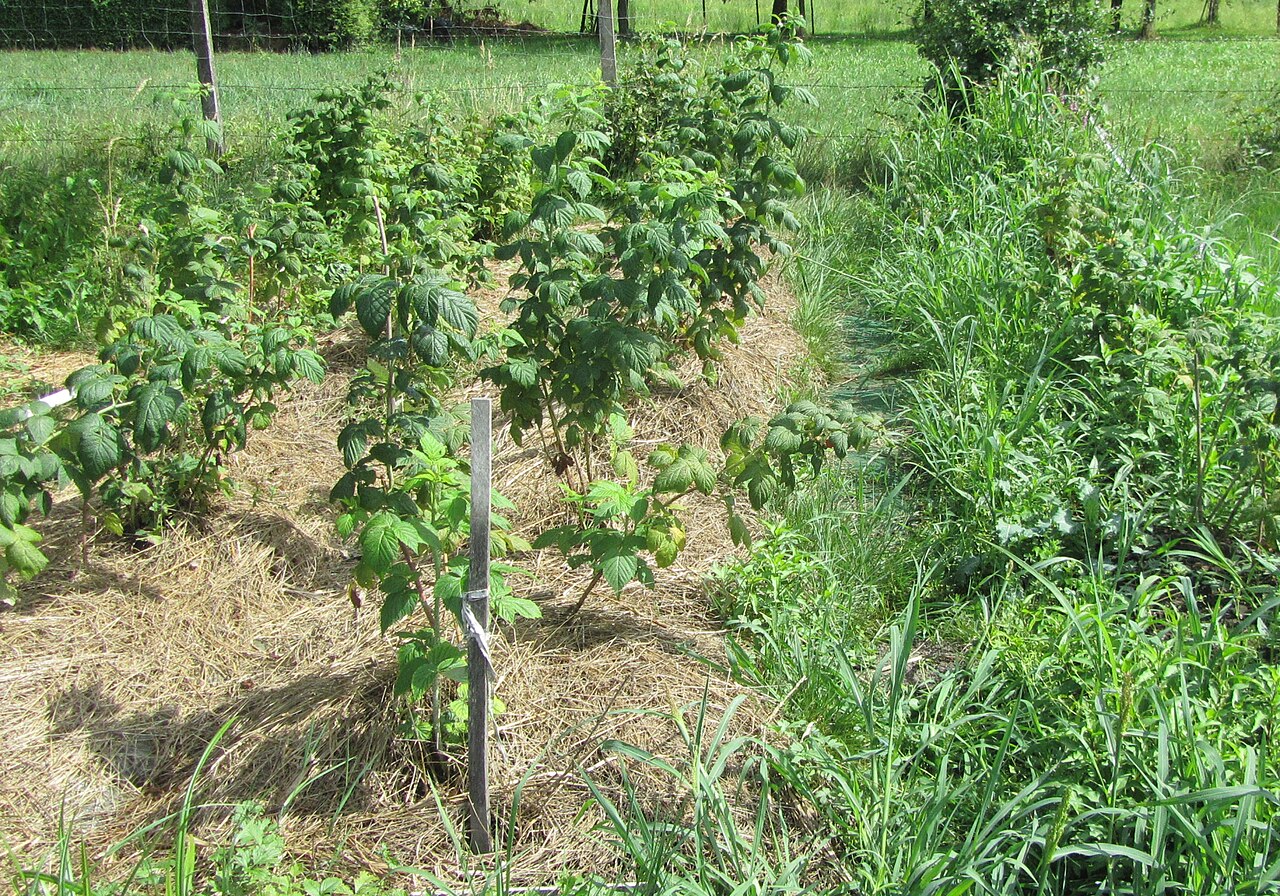
- Mulching with mowed biomass or applying organic mulch (wood chips, straw) suppresses weeds and conserves moisture; soil covering is cited as a direct alternative to herbicides.
- Tilling with a guard around seedlings after the hazelnut is well-established (usually after the third year).
- Hand hoeing near young trees in the initial years.
The mechanical approach is more expensive per pass and requires more passes, but eliminates the risk of phytotoxicity and residues and is necessary in organic orchards and sensitive zones (water protection).
Grassed interrow space
When to grass
The rule from Croatian literature is almost unanimous: the interrow space is grassed only 2–3 years after establishing the orchard. In the first three years, the soil is most often maintained by chiseling (loosening "in a cross") and hoeing near seedlings, so that young hazelnut does not suffer from competition while developing roots. An exception is sloped terrain with erosion risk, where grassing occurs in the first year for soil protection.
| Orchard Phase | Interrow Space | Row (near trunk) |
|---|---|---|
| 1st–3rd year | chiseling/cultivation, early grass sowing on slopes | hand hoeing, tilling near seedlings |
| after 3rd year | permanent grass sward, regular mulching | herbicide or mechanical clean strip |
| full production | managed low grass sward | maintained clean strip, leveled terrain for harvest |
Choice of mixture: natural vs. controlled grassing
Natural (spontaneous) grassing, where self-seeded vegetation is left and managed, is distinguished from controlled (artificial) grassing with sowing of a selected mixture. For controlled grassing, low-growing grasses resistant to trampling, with slower and denser growth and low evapotranspiration potential are recommended — i.e., species that consume little water and do not grow too fast.
Common are grass-clover and clover-grass mixtures:
- English (Lolium perenne) and Italian ryegrass,
- Fescue, meadow fescue (low, trampling-resistant grasses),
- White and red clover, bird's-foot trefoil (Lotus corniculatus) for biological nitrogen fixation.
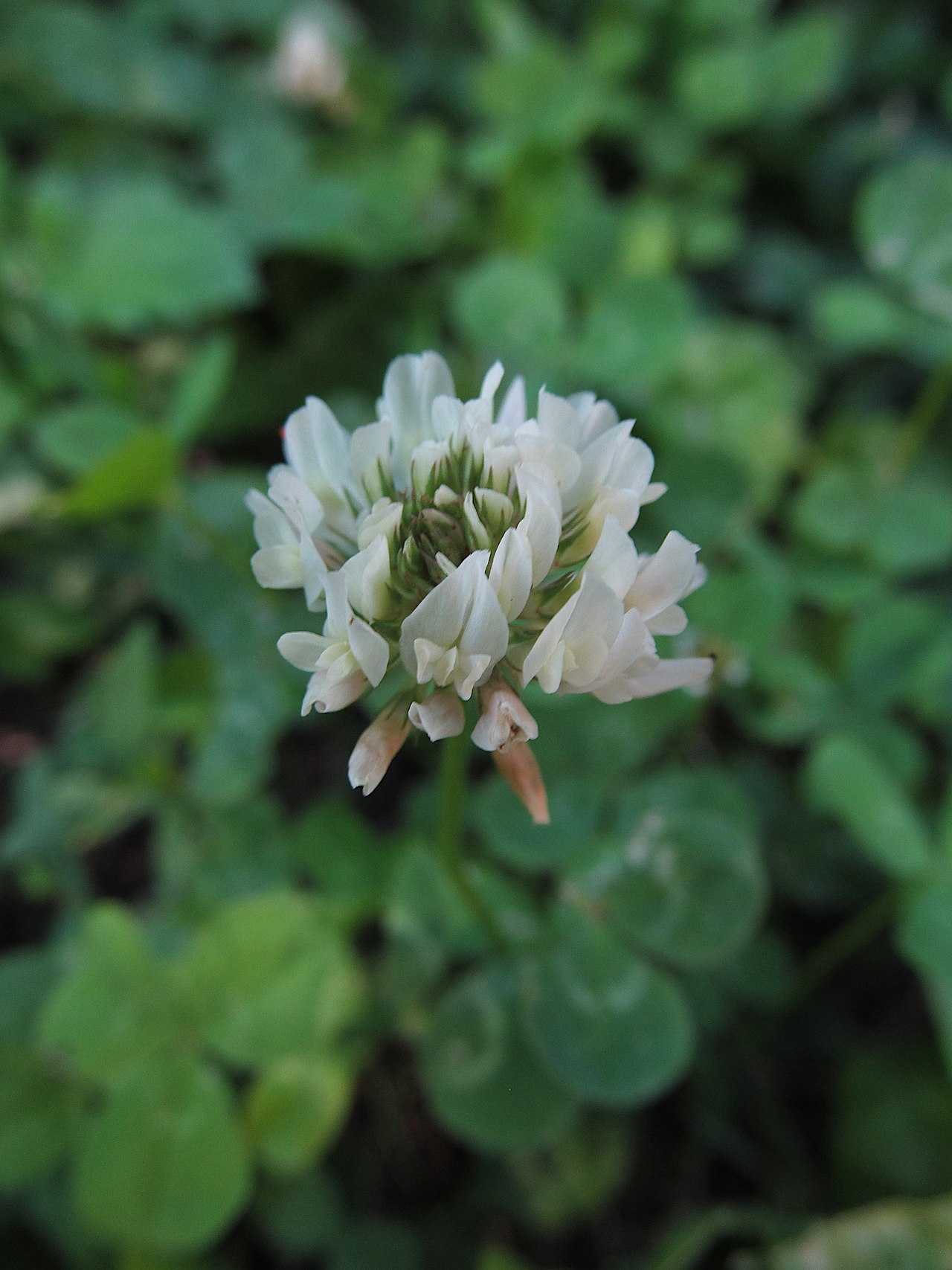
The clover component additionally feeds the orchard: regularly mulched and left on the soil, the biomass promotes microbiological activity, nitrogen fixation, and decomposition of organic matter, so that when hazelnut enters production, the root system is ensured a portion of nutrients. On heavy soils, grassing prevents harmful compaction during machinery passage.
Sward maintenance: mowing and mulching
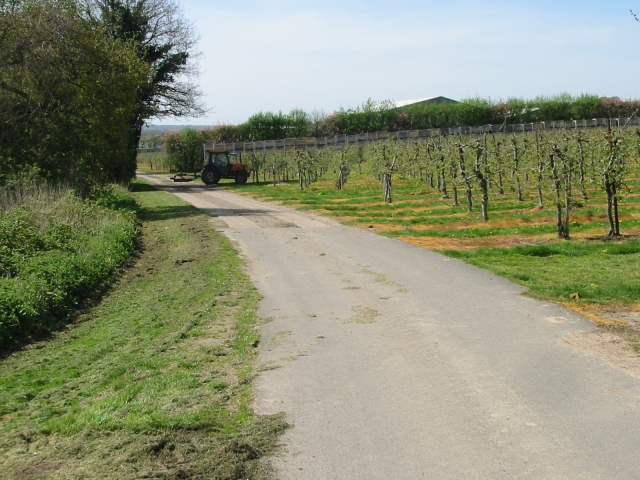
The sward must be short. Practical recommendations:
| Parameter | Indicative Value |
|---|---|
| Maximum grass height before mowing | up to ~20 cm (ideally mow at ~10 cm) |
| Number of mulchings per year | 3–6 times (often 4–6 during vegetation) |
| In a dry year | more frequently (grass consumes water needed by hazelnut) |
| In a wet year | less frequently |
| Before harvest | mandatory low mulching of sward with guard |
Mowed biomass is left on the soil as green manure — it increases organic matter content and improves the physical, chemical, and biological properties of the soil. The sward moderates soil temperature fluctuations (cooler in summer, warmer in winter, less freezing of upper roots), improves rain and snow absorption on slopes, and reduces erosion.
Sward and machine harvest — why cleanliness is crucial
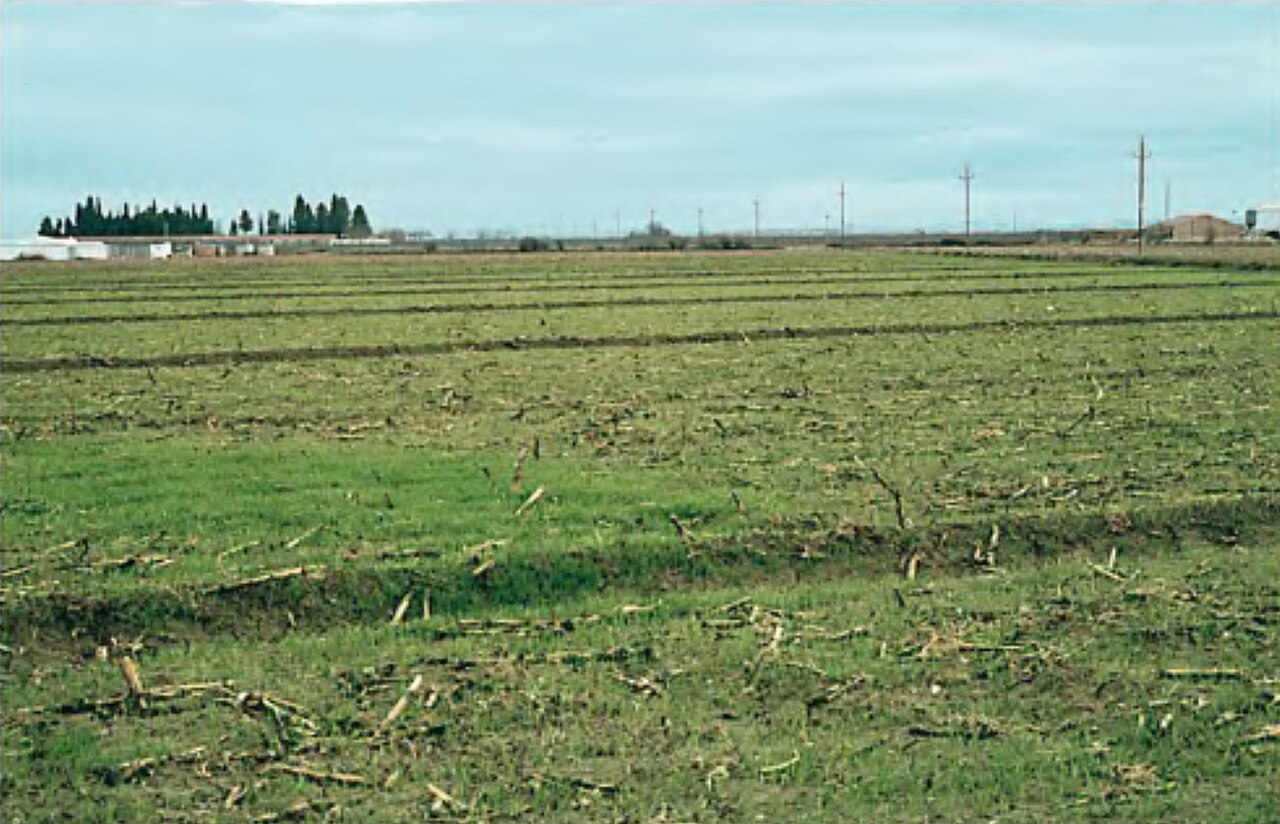
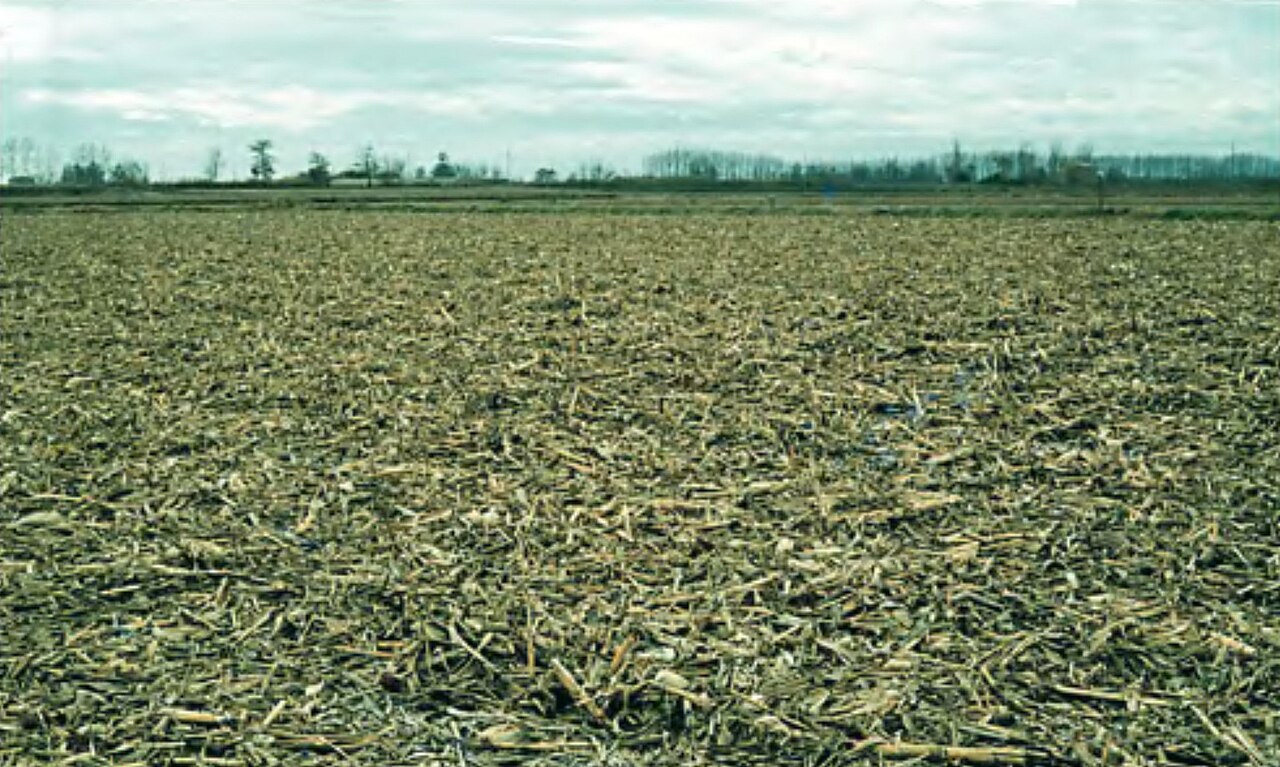
In hazelnut, there is a specific reason for impeccably maintained, short sward and a clean strip: nuts are harvested from the ground. Buying stations and processors insist on clean orchard soil because impurities that enter with the nuts — grass clumps, pebbles, soil clods, mud, and woody waste — slow down and damage cleaning and grading machines. Therefore, the sward is mulched low before harvest, and the terrain in the row is leveled. German guidelines for harvest technology additionally emphasize: protect soil and sod, adjust working widths and track width to row spacing, avoid deep ruts (tire width and pressure, axle load), and pay attention to time/soil moisture during machinery passage.
Practical recommendations and common mistakes
- Do not sow grass too early. Grass in the first three years suppresses young hazelnut trees through competition for water and nutrients. Exception: slopes with erosion risk.
- Do not allow grass near the trunk. Keep the strip around the trunk clear — dense grass near the bark attracts rodents and increases the risk of spring frost damage.
- Align widths. The working width of the mower/sprayer and the tractor track must fit within the row spacing; otherwise, untreated zones remain or the row is compacted.
- Respect prescribed herbicide strip widths (up to 1/4 of the row spacing during the growing season, up to 2/3 before harvest; total ≤ 1/3 of the net area) if you are in integrated production or a quality scheme.
- Mow on time. Tall grass (over 20 cm) makes mowing difficult and consumes water; mow more frequently during droughts.
- Remove root suckers along with maintaining the strip — combine operations to save passes.
- Watch out for soil compaction on heavy and wet soils: adjust tire pressure and do not drive on waterlogged soil.
- Check incentives. Grassing of permanent orchards is an IPARD measure for rural development in Croatia; conditions and support amounts change annually — check the current Regulation and evidence forms before planning based on support.
Summary
The proven model for hazelnut is a clean strip in the row + permanent low grass cover in the inter-row, implemented only after young trees have established roots (around the 3rd year, earlier only on slopes). The strip in the row is kept at a width of 30% of the inter-row spacing (≈1.5 m), subject to prescribed limits if you are in integrated production; it is maintained herbicidally or increasingly mechanically/mulched. The inter-row is grassed with a low, trampling-resistant grass-legume mixture and mulched 3–6 times a year, with mandatory low mulching before mechanical harvest. This simultaneously reduces root competition, preserves soil structure and organic matter, and ensures a clean, efficient harvest.
Gallery
Sources
This text is an AI summary from a collection of hazelnut literature (internal RAG corpus) and publicly available sources. Main sources used:
- Hazelnut Cultivation: A GUIDE FOR PRODUCERS — Ministry of Agriculture / savjetodavna.mps.hr (2024)
- Product Specification "Proven Quality — Fruit" — rules on herbicide strip (1/3, 1/4, 2/3)
- Technological guidelines for integrated fruit production — Ministry of Agriculture (herbicide strip width)
- Technology and economic efficiency of organic hazelnut production at OPG Hobolić — A. Huzjak (natural/controlled grassing)
- Environmental Protection Study — Agro Utinja hazelnut orchard, Vojnić (chiseling, grassing after 3rd year, mulching)
- Environmental Protection Study — Grubišno Polje / multi-year hazelnut orchards (inter-row 2–3 years, grass benefits)
- Establishment of new fruit orchards — technological-economic guidelines (2006); Economics and establishment of hazelnut orchards (OPG Balog, 2021)
- OSU Extension — Growing Hazelnuts in the Pacific Northwest: Orchard Floor Management — https://extension.oregonstate.edu/catalog/pub/em-9079-growing-hazelnuts-pacific-northwest-orchard-floor-management
- WSU Tree Fruit — Orchard Floor Management — https://treefruit.wsu.edu/orchard-management/orchard-floor-management/
- Fruit Growers News — Keeping Under Cover: The Ideal Look of an Orchard Floor — https://fruitgrowersnews.com/article/keeping-under-cover-the-ideal-look-of-an-orchard-floor/
- LfL Bayern — Haselnusstag 2015 (harvesting technology and orchard care) — https://www.lfl.bayern.de/mam/cms07/ilt/dateien/ilt_1_haselnusstag_2015.pdf
- Agroklub — Advantages of grassing and mulching fruit orchards — https://www.agroklub.com/vocarstvo/prednosti-zatravljivanja-i-malciranja-vocnjaka/67886/
- Regulation on the implementation of direct payments and IPARD rural development measures (NN) — https://narodne-novine.nn.hr/clanci/sluzbeni/2023_12_157_2415.html