Water relations of the plant and physiological response to drought stress
Content generated by artificial intelligence — verify before application
This article was automatically compiled from a collection of hazelnut literature using artificial intelligence and may contain errors or outdated information. It serves as a starting point for further research, not as professional advice. Dosages, products, and timing are informative and depend on the cultivar, location, and current regulations — always consult with an advisory service and official sources before application.
Water is one of the most important, yet simultaneously most limiting, factors for hazelnut (Corylus avellana L.) yield. Hazelnut is a species with a shallow root system and is sensitive to water deficit; therefore, understanding its water relations — water potential, stomatal conductance, and transpiration — is not just an academic topic, but a practical foundation for irrigation decisions. This article explains how water moves through the tree, how hazelnut regulates water loss through stomata, and how it physiologically responds to drought, as well as how to translate these insights into useful indicators of orchard status at the whole-tree level.
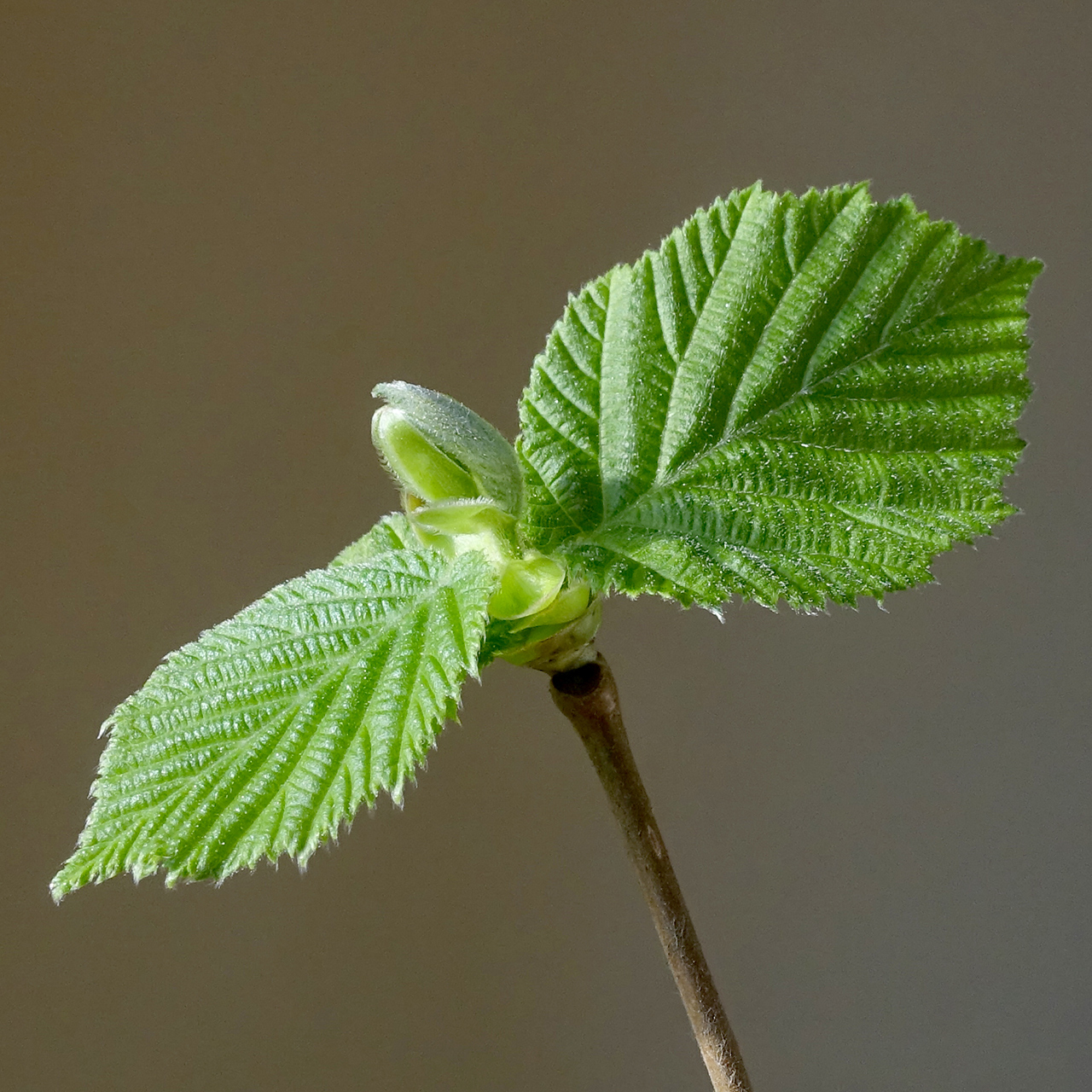
Why water relations are crucial specifically for hazelnut
Hazelnut develops a relatively shallow root system, making it highly sensitive to the drying of the upper soil layers. In Croatian literature, it is consistently emphasized that the dominant stress factor in hazelnut cultivation is the occurrence of high summer temperatures combined with a lack of precipitation. Since hazelnut develops a shallow root system, water deficit stress and high temperatures can significantly reduce fruit yield (Proceedings of the Croatian Fruit Growers, 2018).
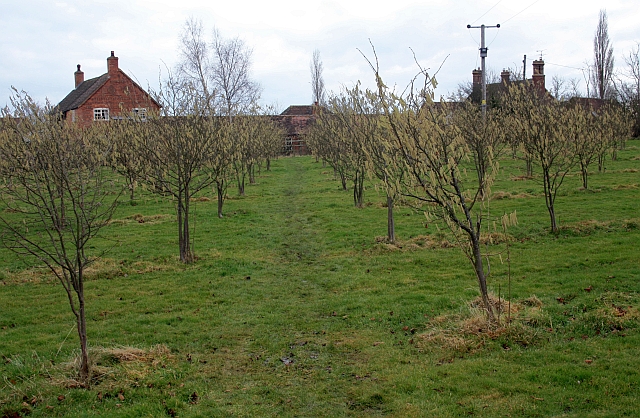
Water in the plant has multiple roles. As classical pomology literature states, water "serves as the starting substance in the synthesis of carbohydrates, as a solvent for substances as they move from cell to cell, as a substance that enables turgor and regulates tissue temperature through transpiration" (Šoškić, 2006, according to Krpina). In other words, water is simultaneously a structural component, a transport medium, a carrier of turgor (cell rigidity), and a cooling system for the leaf.
The optimal annual precipitation for hazelnut is 800–1200 mm, of which at least 350–400 mm should fall during the vegetation period (from April to September). From April to July, a total of approximately 280 mm, or about 70 mm per month, is recommended (Krpina, 2004). Critical periods are June, July, and August, when fruit growth and filling occur — a lack of water during this period directly reduces both quality and yield, and the consequences can carry over to the following year because the crop for the next season is being formed simultaneously.
| Indicator | Approximate Value | Note |
|---|---|---|
| Optimal annual precipitation | 800–1200 mm | depends on soil, cultivar, and site |
| Precipitation during vegetation (IV.–IX.) | 350–400 mm (min.) | distribution is more important than total sum |
| April–July | ~280 mm (~70 mm/mo.) | period of growth and fruit filling |
| Irrigation frequency (light soils) | every 1–3 days | adjust to soil moisture and ETc |
Values are informative and depend on soil type, cultivar, climate, and year; the distribution of precipitation throughout the vegetation is often more important than the total annual sum.
Water potential — how to measure the tree's "thirst"
Water potential (Ψ) is a physical quantity that describes the energy state of water in the plant and is expressed in megapascals (MPa) — almost always a negative value. The more negative the value, the greater the water stress on the plant, as more energy is required to extract water from the tissues. Water in the soil–plant–atmosphere system always flows from higher (less negative) to lower (more negative) potential: from the soil, through the root and xylem, to the leaf, and finally into the atmosphere.
In practice, two related quantities are measured:
- Leaf water potential (Ψleaf) — reflects the current water status of the leaf itself; measured with a pressure chamber (Scholander bomb) or psychrometer.
- Stem water potential (Ψstem) — measured on a leaf that has been previously wrapped (e.g., in a foil bag) to equilibrate with the potential of the branch/trunk; considered a more stable and reliable indicator of the whole-tree status.
Measuring leaf water potential and stomatal conductance allows for precise monitoring of hazelnut hydration and adjustment of irrigation (Turner, 1988; Jones, 1998). In pomology, it has been shown that midday stem water potential correlates well with midday vapor pressure deficit (VPD) and represents a reliable method for defining the degree of plant stress (Shackel et al., 1997). Research on almond, walnut, and grapevine has shown that the relationship between predawn and midday water potential predicts stomatal closure and loss of turgor under drought (Knipfer et al., 2020).
Predawn and midday potential
- Predawn water potential (measured before sunrise) is approximately in equilibrium with soil moisture in the root zone, as there is no transpiration at night. A more negative predawn value indicates dry soil.
- Midday water potential reflects the maximum load during the day, when transpiration is strongest. The difference between predawn and midday potential indicates how intensively the plant "pulls" water during the day.
Physiological thresholds in hazelnut
Recent research under controlled conditions (potted plants in a greenhouse) has provided the first concrete thresholds for hazelnut cultivars. The estimated threshold for minimum stomatal conductance (gs-min) was approximately −0.86 MPa for the 'Jefferson' cultivar and −1.16 MPa for 'Yamhill', while the turgor loss point (TLP) was approximately −1.76 MPa for 'Jefferson' and −2.06 MPa for 'Yamhill' (expansion of the Ψ-curve with included VPD, Plant Physiology, 2025). These numbers show two important things: (1) hazelnut closes stomata already at relatively mild negative potentials, and (2) there is a cultivar difference in resistance, so thresholds for one cultivar are not necessarily applicable to another.
| Cultivar | gs-min threshold (Ψ) | Turgor Loss Point (TLP) |
|---|---|---|
| 'Jefferson' | ~ −0.86 MPa | ~ −1.76 MPa |
| 'Yamhill' | ~ −1.16 MPa | ~ −2.06 MPa |
Values are from experiments under controlled conditions and are informative; in the field, they depend on cultivar, rootstock, tree age, and climate.
Stomatal conductance — the valve for water and CO₂
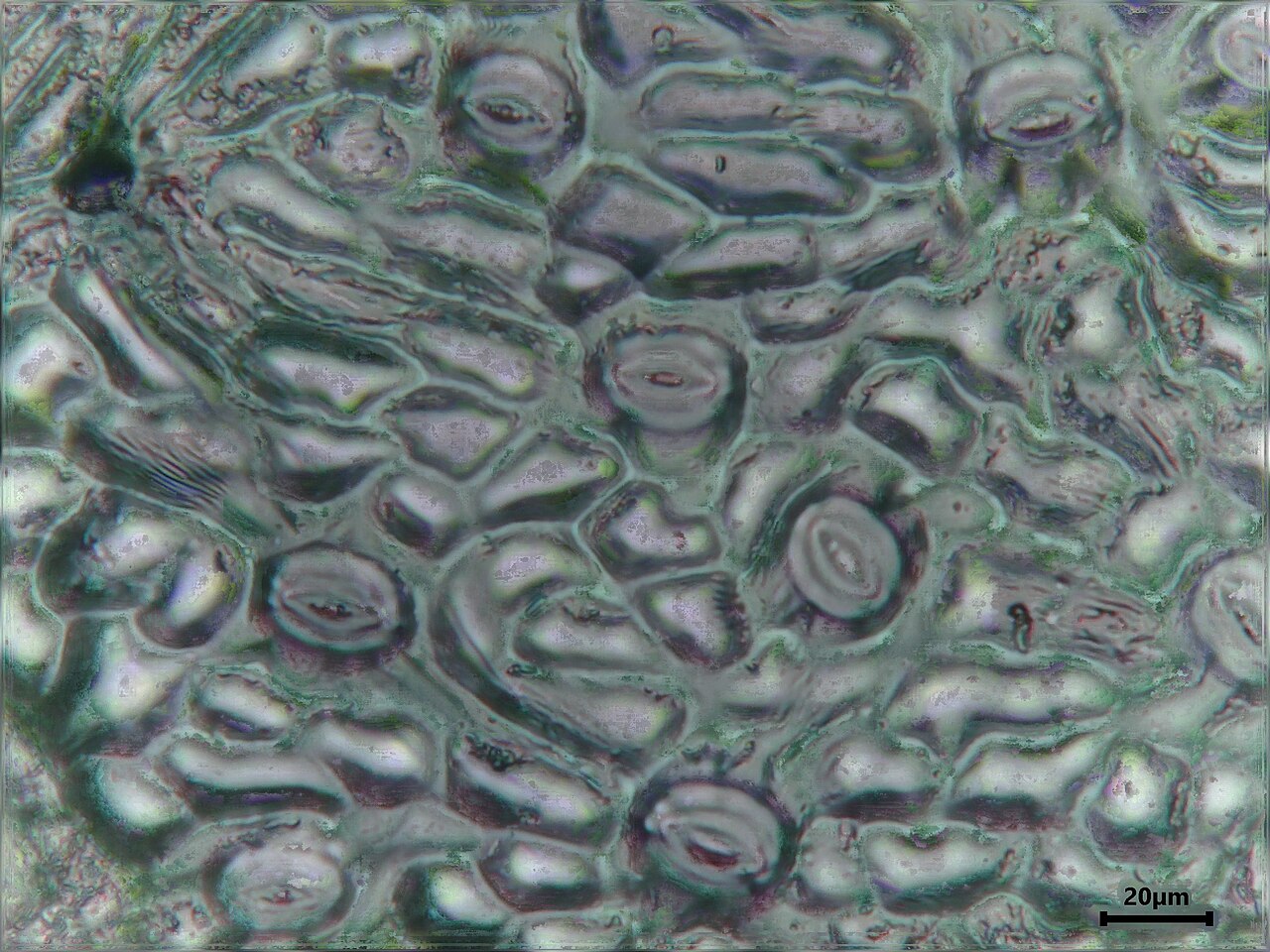
Stomata are microscopic openings on the underside of the leaf through which water vapor (transpiration) exits and carbon dioxide needed for photosynthesis enters simultaneously. Stomatal conductance (gs) measures how open the stomata are and is expressed in mol m⁻² s⁻¹ (or mmol m⁻² s⁻¹). High values mean well-opened stomata and good water supply; low values mean that stomata are closing to conserve water — at the cost of reduced photosynthesis.
Conductance is measured with a porometer and is considered a particularly sensitive and early indicator of stress in hazelnut. Compared to measuring leaf and stem water potential, leaf conductance measurements have proven useful, easy to understand, and highly sensitive, precisely because hazelnut actively regulates stomatal opening even under mild stress (Altieri et al., 2024).
Typical values in hazelnut
Measurements in orchards distinguish between irrigated and non-irrigated (rainfed) trees:
| Condition | Stomatal Conductance (gs) |
|---|---|
| Rainfed, 2nd cycle | ~0.25 mol m⁻² s⁻¹ |
| Irrigated, 2nd cycle | ~0.32 mol m⁻² s⁻¹ |
| Rainfed, 3rd cycle | ~0.23 mol m⁻² s⁻¹ |
| Irrigated, 3rd cycle | ~0.36 mol m⁻² s⁻¹ |
| Maximum, rainfed | ~0.32 mol m⁻² s⁻¹ |
| Maximum, irrigated | ~0.54 mol m⁻² s⁻¹ |
Conductance takes values above ~0.35 mol m⁻² s⁻¹ when VPD is below ~2.3 kPa; above this VPD threshold, conductance decreases over time (Hazelnut Corylus avellana L. response, 2024). The difference between irrigated and non-irrigated trees was statistically significant in multiple measurement cycles, confirming gs as a sensitive indicator.
Relationship with stem water potential
In a doctoral dissertation on the efficiency and sustainability of hazelnut orchards, a statistically significant (cubic) regression was established between stomatal conductance and stem water potential, of the form:
gs (mmol m⁻² s⁻¹) = 0.12 − 0.05 × Ψstem − 0.008 × Ψstem² − 0.0002 × Ψstem³ (P = 0.0018)
Although the explained variability was low (R² ≈ 0.06), the significance of the relationship confirms that as stem water potential decreases (increases in negativity), stomatal conductance decreases (Dito, doctoral dissertation, 2025). The low R² is also a warning: hazelnut stomatal behavior does not depend solely on water potential, but strongly on atmospheric dryness (VPD).
Where and when to measure — practical notes
Research in the Willamette Valley has shown that leaf position in the canopy and time of day significantly affect the reading:
- Canopy side: Conductance should be measured on the western (lowest values) and northern (highest values) sides of the canopy, as they encompass the range of conditions.
- Time of day: Measurements between 11:00 and 12:00 are most suitable for detecting stress.
This standardization of measurement location and time reduces variability and makes readings comparable.
Transpiration and vapor pressure deficit (VPD)
Transpiration is the loss of water vapor through stomata; it "drives" water flow through the plant and cools the leaf, but is simultaneously the main pathway for water loss. The intensity of transpiration depends on stomatal openness and the vapor pressure deficit (VPD) — a measure of how "dry" the air is, i.e., how much water vapor it can still absorb. High VPD (hot, dry air) strongly pulls water from the leaf.
A key feature of hazelnut is that it closes stomata very quickly as VPD increases, even when there is sufficient water in the soil. Experiments show that hazelnut sharply reduces stomatal conductance when VPD rises to 2 and 2.5 kPa during the daily cycle, and this occurs equally in irrigated and non-irrigated trees (Altieri et al., 2024). Therefore, stomatal conductance is an excellent early indicator of stress — it reacts before water potential shows a pronounced change.
Measuring devices in practice measure stomatal conductance and transpiration, which decrease as water stress becomes more severe (BMP Irrigation Management, 2004). In other words, transpiration is not just "loss" — monitoring it (along with gs and Ψ) provides a complete picture of the tree's water status.
Physiological Response of Hazelnut to Drought
When water stress develops, hazelnut undergoes a series of interconnected physiological responses aimed at conserving water and ensuring tissue survival, but at the expense of growth and yield.
1. Stomatal Closure and Decline in Photosynthesis
The first and most rapid reaction is stomatal closure. This reduces water loss but simultaneously restricts CO₂ entry, leading to a decline in photosynthesis. In hazelnut, stomatal regulation causes reduced photosynthetic activity and can lead to early cessation of kernel filling, directly resulting in losses in kernel mass and quality. Transpiration is strongly limited under these conditions, even with adequate soil water supply—a characteristic of species sensitive to VPD.
2. "Water-Saving" Behavior (Isohydric Tendency)
Hazelnut behaves as a water-saving species and prefers low VPD values to optimize stomatal conductance and carbon assimilation. This behavior—strict stomatal closure to maintain water potential above dangerous levels—corresponds to an isohydric strategy. The advantage is protection of the xylem from cavitation (breakage of the water column); the disadvantage is the loss of photosynthetic opportunity whenever the air is dry.
3. Loss of Turgor and Osmotic Adjustment
If stress progresses, cells lose turgor (internal pressure), leaves wilt, and growth processes (which depend most heavily on turgor) cease first. Many woody species respond with osmotic adjustment—accumulating solutes in cells to retain water and delay turgor loss (Bradford and Hsiao, 1982; Auge et al., 1986/1990, for other species). The turgor loss point (TLP) for hazelnut is estimated at approximately −1.76 to −2.06 MPa, depending on the cultivar (see threshold table above).
4. Long-Term Versus Short-Term Stress
It is important to distinguish between temporal scales of response. Classic research on Corylus avellana has shown that short-term changes in water status have little effect on stomatal conductance (even with water potential changes of several bars), whereas long-term water stress causes a gradual reduction in stomatal conductance—during which stomata still respond to air humidity (Planta, short-term and long-term effects of water deficit on stomatal response). Practically: a single hot day may not immediately "close" the tree, but prolonged drought progressively reduces assimilation capacity.
5. Consequences for Drying and Decline
Persistent and severe water stress, especially in combination with shallow or compacted soil and poor drainage, leads to stunted growth and, ultimately, tree decline. Hazelnut simultaneously does not tolerate excess water: water stagnation and high groundwater levels cause root asphyxiation (suffocation), stunting trees and leading to decline (Technological and Economic Characteristics of Cultivation, 2018). Water relations are therefore bidirectional—both deficit and excess water cause stress.
Practical Recommendations for Growers
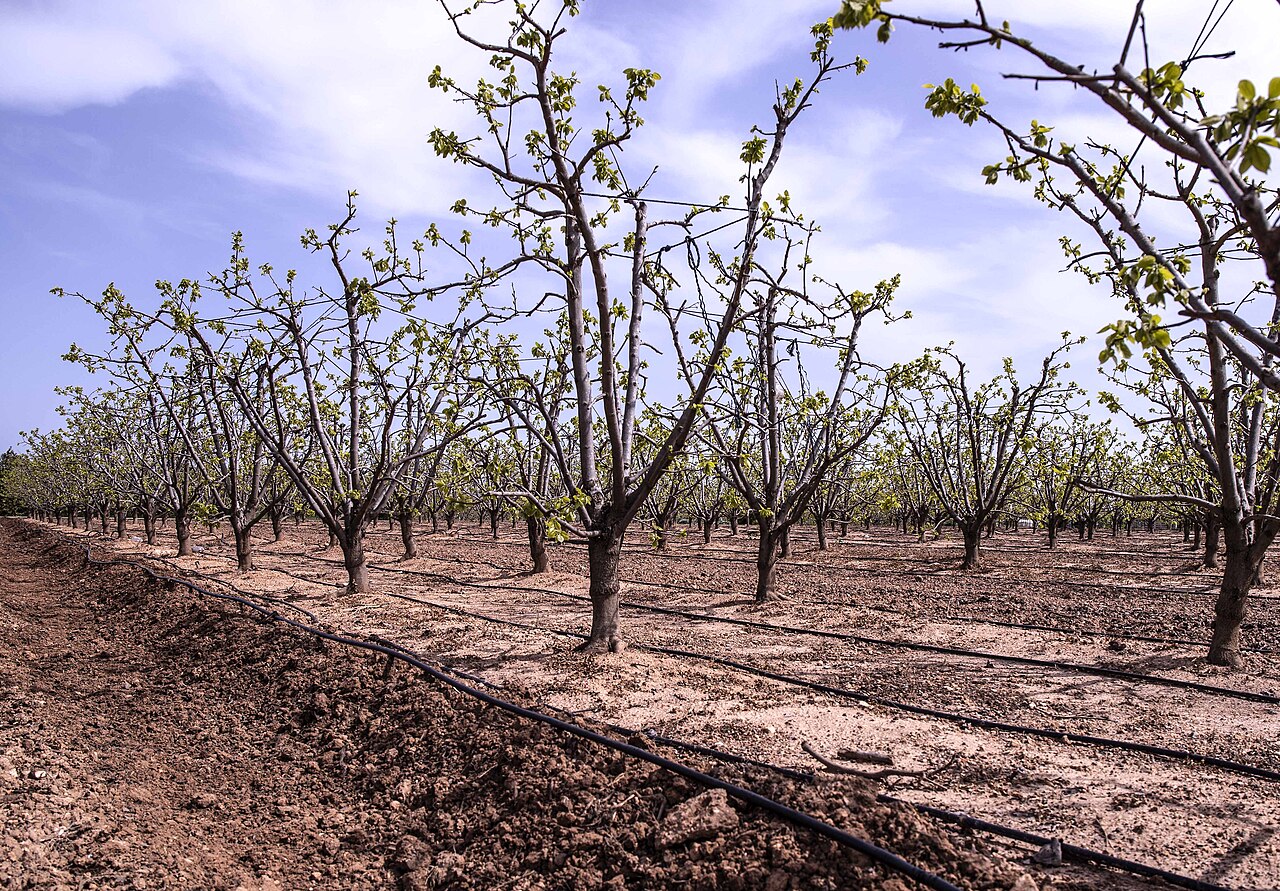
- Monitor multiple indicators, not just one. Combine soil moisture (tensiometers, watermark sensors), stem water potential (pressure chamber), and stomatal conductance (porometer). gs and transpiration respond earliest.
- Measure standardized. Measure conductance around 11 AM–12 PM, on the west and north sides of the canopy, to ensure readings are comparable throughout the season.
- Watch VPD, not just soil moisture. Hazelnut closes stomata already at a VPD of ~2–2.5 kPa, so the tree can be under stress even when the soil is moist. Measures that lower VPD in the canopy (e.g., spacing, avoiding overly dense plantings) help.
- Align irrigation with ETc and phenological stage. Adjust amounts based on evapotranspiration and plant requirements; on light soils, irrigation may be needed every 1–3 days. The most critical periods are June–August (growth and kernel filling).
- Know your cultivar. Physiological thresholds (gs-min, TLP) differ among cultivars; do not extrapolate numbers from one cultivar to another.
- Do not overwater. Stagnation and high groundwater are just as harmful as drought—ensure proper drainage.
Common Mistakes
- Relying solely on leaf appearance. By the time wilting is visible, the tree is already under significant stress; instrumental measurements detect stress earlier.
- Measuring at the wrong time of day or on the wrong side of the canopy — yields incomparable and misleading readings.
- Ignoring atmospheric dryness (VPD). Moist soil does not guarantee that the tree is not under stress on hot, dry days.
- A single "recipe" for all cultivars and locations — thresholds and water needs depend on cultivar, rootstock, soil, and climate.
Sources
This article is an AI-generated summary compiled from an internal literature collection on hazelnut (RAG corpus) and public internet sources. Content is synthesized from multiple sources in Croatian, English, and other languages; numerical values, doses, and thresholds are informative and should be verified against original works and advisory services before application.
Main sources used:
- The Basics of Watering Hazelnut Trees (2003) — leaf water potential and stomatal conductance as indicators (RAG corpus).
- Hazelnut Corylus avellana L. response to water management (2024) — gs values, VPD threshold ~2.3 kPa — https://doi.org/10.13125/2532-0289/4598
- Techniques for the improvement of economic efficiency and environmental sustainability of hazelnut orchards (Dito, doctoral dissertation, 2025) — gs/Ψstem regression (RAG corpus).
- Assessment of leaf water potential and stomatal conductance as early signs of stress in young hazelnut tree in Willamette valley (2024) — VPD 2–2.5 kPa, measurement location/time — https://www.sciencedirect.com/science/article/pii/S0304423823009858
- Altieri et al., Scientia Horticulturae (2024) — gs as an early stress indicator — https://doi.org/10.1016/j.scienta.2023.112817
- Extension of the triphasic water potential curve: accounting for air VPD under soil water stress, Plant Physiology (2025) — gs-min and TLP thresholds for 'Jefferson'/'Yamhill' — https://academic.oup.com/plphys/article/199/1/kiaf337/8220353
- Intra-specific variability of stomatal sensitivity to VPD in Corylus avellana L. — https://www.sciencedirect.com/science/article/abs/pii/S0176161718306357
- Short-term and long-term effects of plant water deficits on stomatal response to humidity in Corylus avellana L., Planta — https://link.springer.com/article/10.1007/BF00387804
- Grafting with non-suckering rootstock increases drought tolerance in Corylus avellana L., Physiologia Plantarum (2024) — https://onlinelibrary.wiley.com/doi/10.1111/ppl.70003
- Establishing hazelnut stem water potential baseline to improve water management, Frontiers in Plant Science (2026) — https://www.frontiersin.org/journals/plant-science/articles/10.3389/fpls.2026.1771736/full
- Proceedings of the 13th Scientific and Professional Conference of Croatian Fruit Growers (2018) — drought stress and shallow hazelnut root system (RAG corpus).
- Technology and Economic Efficiency of Organic Hazelnut Production (Huzjak, 2021) and Krpina (2004), Šoškić (2006) — role of water, rainfall requirements (RAG corpus).
- BEST MANAGEMENT PRACTICES — Irrigation Management (2004) — measurement of conductance and transpiration (RAG corpus).
- Environmental Protection Elaborate — Hazelnut Irrigation, Donji Hrastovac (2021) — sensitivity to water deficit, irrigation frequency (RAG corpus).